Columbia County Public Hunting Access
Finding good public hunting access in New York can sometimes feel like solving a complex puzzle, especially when you're looking outside the vast wilderness areas like the Adirondacks or Catskills. In Columbia County, where a beautiful mix of rolling hills, farmland, and smaller woodlands defines the landscape, securing a spot to chase deer, turkeys, or small game often means knowing precisely where to look and how to approach these more fragmented opportunities. This guide is here to walk you through the ins and outs of public hunting access in Columbia County, offering practical advice and insights to help you unlock its potential.
Understanding Columbia County's Hunting Landscape
Columbia County, nestled in the scenic Hudson Valley, presents a unique challenge and charm for hunters. It's not the deep wilderness that often comes to mind when thinking of New York hunting, but rather a mosaic of agriculture, suburban fringes, and smaller, often overlooked pockets of public land. Navigating this landscape effectively is key to a rewarding season.
The Challenge of Finding Public Access
Let's be honest, seeing "Posted, No Hunting" signs around every turn can be incredibly frustrating. In areas like Columbia County, where private ownership dominates much of the prime habitat, the temptation to give up on public land and focus solely on knocking on doors for permission can be strong. However, that would mean missing out on some truly fantastic opportunities. The challenge isn't that public land doesn't exist; it's that it's often less obvious, more fragmented, and requires a bit more effort to locate and understand. You're not looking for endless miles of uninterrupted forest, but rather strategic parcels that can hold surprising numbers of game once you learn their secrets.
Many hunters in more developed regions face the same dilemma. They drive past beautiful woodlots and brushy creek bottoms, only to find them marked private. This experience often leads to a sense of scarcity, making hunters feel like they have to compete fiercely for every acre. What's crucial to remember in Columbia County is that while the public parcels might be smaller, they are often less pressured simply because they don't jump out at you on a casual drive down the road. This means that a little dedicated research and legwork can lead to some truly special finds.
General Overview of Public Lands
Columbia County might not boast sprawling national forests, but it does offer a mix of State Forests and other smaller public access sites managed by the New York State Department of Environmental Conservation (DEC). These areas typically consist of reforested lands, often on marginal farmlands that were abandoned in the last century, now maturing into diverse woodlands. You'll find a mix of hardwoods, pines, and brushy edges – all prime habitat for whitetails, turkeys, and various small game. Hunting Western New York Farmland can be a great resource for understanding how agricultural landscapes influence deer movement, a concept that translates well to many areas of Columbia County.
Unlike the vast, remote tracts of the Adirondacks, public lands in Columbia County often sit adjacent to private property, sometimes forming irregular shapes. This proximity can be a blessing and a curse. It means deer often funnel between public and private grounds, offering unique ambush opportunities. However, it also demands an extra level of vigilance regarding property boundaries. These smaller parcels require a different approach than a wilderness hunt; think precision rather than expanse. Instead of covering miles, you might focus on dissecting a few hundred acres, looking for hidden benches, thickets, or drainages that concentrate deer movement.
Key Public Hunting Areas in Columbia County
When you're looking for public access in Columbia County, it’s all about knowing the names and characteristics of the specific parcels available. Each piece of public land has its own personality, offering different types of terrain, cover, and hunting experiences.
State Forests and Their Offerings
Columbia County is home to a few notable State Forests that provide significant public hunting opportunities. Two of the prominent ones are Beebe Hill State Forest and Harvey Mountain State Forest. Beebe Hill, located in the eastern part of the county, offers a good mix of hardwoods and conifer plantations, along with some steeper terrain that can deter casual hunters. This varied topography creates natural funnels and bedding areas, particularly where different timber types meet or where a ridge drops off into a hollow. Hunting these areas often involves careful still-hunting or setting up stands along known travel corridors, paying close attention to wind and thermals.
Harvey Mountain State Forest, further south and east, also presents a similar character with its rolling hills and diverse forest cover. These forests are managed for multiple uses, including timber production, which means you might encounter recent logging cuts. These cuts, while initially disruptive, can quickly become excellent bedding and browse areas, attracting deer and providing dense cover for turkeys. Learning to read these changes in the landscape, often found on satellite imagery from tools like onX Hunt, is crucial. Remember, these aren't pristine wilderness areas, but active, managed forests, and understanding that management can give you an edge. Hanging a Stand on an Adirondack Funnel offers insights into identifying such natural corridors, which can be adapted to the more modest funnels found in these state forests.
Wildlife Management Areas (WMAs) and Their Specifics
While Columbia County itself might not host a large, named WMA that's a household name among hunters, it benefits from the broader network of DEC-managed lands and access points in the Hudson Valley region. These smaller or less-publicized areas sometimes function similarly to WMAs in their wildlife-focused management. For example, some properties might be part of the "Public Access Cooperator Farms" program, which provides limited hunting opportunities on private lands by agreement. While not a WMA, these types of initiatives still offer managed public access. It's always worth checking the DEC website for the most up-to-date information on any specific parcels in or immediately bordering Columbia County that have wildlife management designations or special access rules.
Even if there isn't a massive WMA, smaller parcels are often managed with wildlife in mind, focusing on creating diverse habitats through forestry practices, food plots (sometimes), or managing wetlands. These are typically listed under "State Lands" on the DEC's interactive mapping tools. Understanding How New York WMAs Are Managed can give you a better grasp of the habitat work happening on any state land, even if it's not officially designated a WMA. These areas often have specific rules regarding vehicle access, camping, and even the types of stands or blinds you can use, so thorough research before your hunt is non-negotiable. Always consult the current hunting regulations guide for any unique rules pertaining to these specific public parcels.
Other Access Points and Opportunities
Beyond the larger State Forests, Columbia County might also offer smaller, less-obvious public access points. These could include utility line easements, old logging roads that technically cross public ground, or even smaller tracts of town-owned land that permit hunting. The key to finding these often-overlooked spots is diligent map scouting and sometimes, just a little bit of boots-on-the-ground exploration. These smaller parcels, because they don't immediately jump out as "hunting land," often receive less pressure, making them excellent candidates for a successful hunt.
Consider areas where public land might form a narrow finger between two large private holdings, or where a power line right-of-way cuts through a mix of private and state land. While hunting directly on utility easements can sometimes be restricted, these corridors often act as travel routes for deer moving between cover and food sources. Tools like onX Hunt or even the New York DEC's own Scouting With the New York HuntFishNY App are invaluable for identifying these subtle opportunities. They allow you to meticulously zoom in on every green swatch on the map, no matter how small, and analyze its connection to surrounding habitat. Sometimes, the most productive spots are the ones that require a little extra effort to find and access, leading you away from the crowds. Finding Ground Others Walk Past is a concept that applies perfectly here, as these smaller, trickier-to-access parcels are often neglected by less persistent hunters.
| Public Land Type | Typical Characteristics | Primary Game Species | General Hunting Pressure | Key Access Tip |
|---|---|---|---|---|
| State Forests | Reforested hills, mixed hardwoods/conifers, logging activity | Deer, Turkey, Small Game | Moderate to Low | Look for recent timber cuts and terrain features. |
| Wildlife Mgt. Areas | Managed habitats, specific conservation goals, diverse cover | Waterfowl, Deer, Turkey | Varies (check specific WMA) | Confirm specific WMA rules and allowed activities. |
| Other DEC Lands | Smaller parcels, easements, reforested areas | Deer, Small Game, Turkey | Low | Use mapping apps to identify and verify boundaries. |
Strategies for Successful Public Land Hunting in Columbia County
Hunting public land in Columbia County, with its unique blend of agriculture, scattered woodlands, and suburban interface, requires a strategic mindset. It’s not just about finding green on a map; it’s about understanding how to use that green effectively.
Leveraging Mapping Tools for Discovery
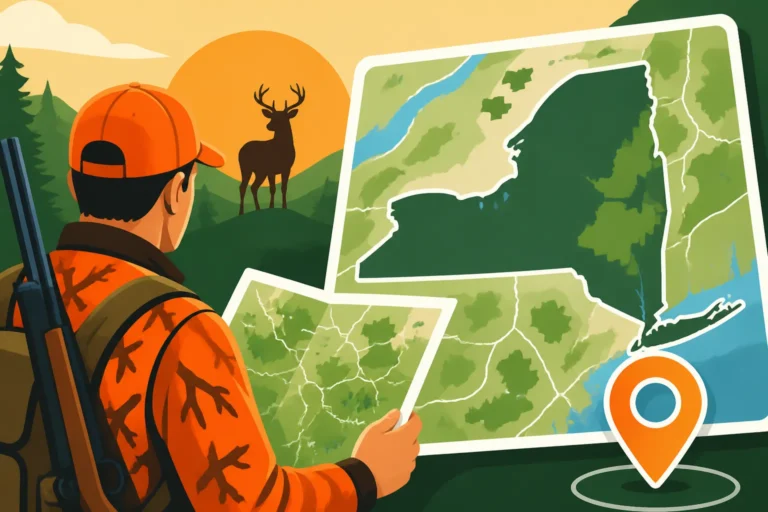
In a county like Columbia, digital mapping applications are not just a luxury; they are an absolute necessity. Forget trying to piece together paper maps; modern tools like onX Hunt and GoHunt allow you to visualize the hunting landscape in incredible detail. These apps offer layers that clearly differentiate public and private land, show property boundaries, and often include landowner information – critical for avoiding accidental trespass. You can scout from your couch, identifying potential access points, assessing terrain features like ridges, valleys, and creek beds, and marking areas of interest like thick cover or food sources (even if they're on adjacent private land). This level of detail helps you plan your approach, understand wind directions, and even identify subtle funnels that deer might use to travel through the landscape.
For instance, you might use onX Hunt to spot a narrow strip of state forest that runs between a large cornfield and a dense swamp, realizing this could be a major travel corridor. Or, you might use GoHunt to identify an old logging road that provides quiet foot access deep into a parcel that others might overlook due to a lack of obvious parking. These tools empower you to go beyond the obvious and discover the hidden gems. They're also indispensable for staying on the right side of property lines once you're on the ground, preventing unintentional encroachment and maintaining good relations with local landowners. Finding New York Property Lines is crucial for peace of mind, especially when hunting close to private holdings.
Scouting and Adaptability on the Ground
Even the best map scouting is only a prelude to real-world experience. Once you've identified promising public parcels on your map, it's time for boots on the ground. Pre-season scouting in Columbia County is paramount. Look for fresh deer sign – rubs, scrapes, tracks, and droppings – to confirm that deer are actually using the areas you've pinpointed. Pay attention to how deer are navigating the specific habitat: are they sticking to the thickest cover, moving along a specific ridge, or bedding in a particular stand of pines? Because these public parcels are often smaller and more influenced by surrounding private land, deer movement can be very nuanced. Scouting New York Public Land Before Season provides a great framework for this process, emphasizing looking for fresh sign.
Furthermore, be prepared to adapt. Hunting pressure, even light pressure, can quickly alter deer behavior in these more confined areas. If your initial plan isn't working, be ready to move, explore a different section of the parcel, or even try a completely different access point. This might mean adjusting your stand location mid-hunt or shifting your focus from a field edge to a deep, overlooked thicket. The deer in Columbia County are often accustomed to human activity, so finding those areas of refuge and understanding their movement patterns between bedding, feeding, and security cover is key. Sometimes the most successful strategy is to walk further or deeper than others are willing to go, finding those unpressured pockets within a seemingly busy public area.
Respecting Boundaries and Local Etiquette
Hunting in a mixed-use landscape like Columbia County means that respecting property boundaries and practicing good etiquette are not just good ideas, they are absolutely essential. Always know where you are in relation to private property. This is where those mapping apps with property line overlays become your best friend. A simple mistake can lead to a trespass accusation, damage the reputation of all hunters, and potentially result in legal trouble. If your deer runs onto private property, you generally need to obtain permission from the landowner before pursuing it. Knowing New York Trespass and Permission Law is critical before you ever step foot in the woods.
Beyond the legalities, consider the social aspect. You might be hunting near homes, farms, or hiking trails. Be mindful of noise, show courtesy to other users of the land, and always pack out everything you pack in. Leaving trash or cutting shooting lanes with a saw without permission reflects poorly on all of us. If you encounter a landowner near the property line, a friendly wave and a brief, polite conversation can go a long way in building trust. While Knocking on Doors in Southern Tier Farm Country specifically addresses private land, the underlying principle of respectful interaction applies universally, especially when hunting public land adjacent to private residents. Being a good steward and neighbor ensures that hunting opportunities remain available for years to come.
Disclaimer
This article is for general informational purposes only and does not constitute professional advice. Laws, prices and regulations vary by location and change over time. Consult a qualified professional for guidance on your specific situation.