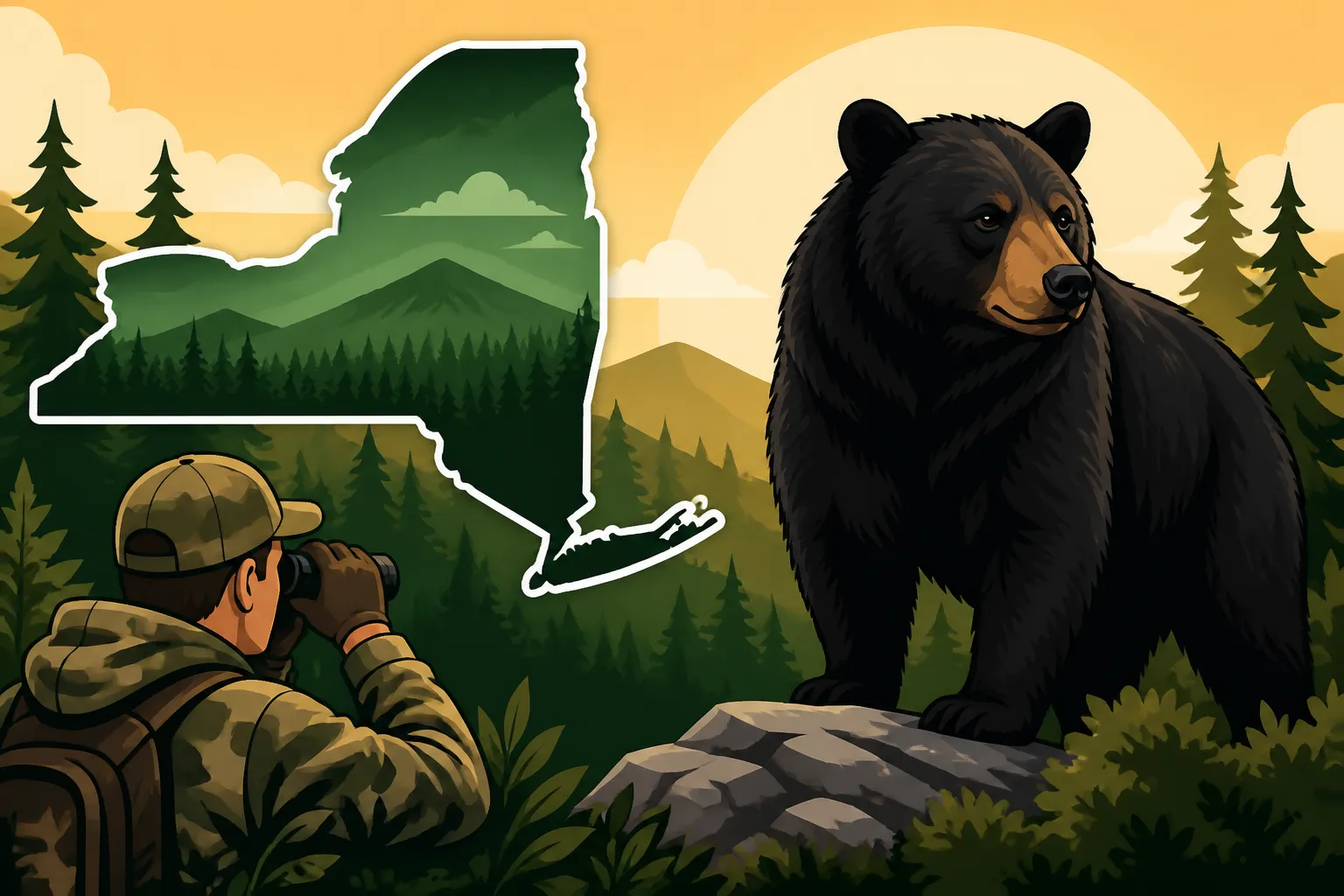
Best New York Ground for Public Land Bears
Finding prime public land for bear hunting in New York can feel like searching for a needle in a haystack, especially when you're looking for those elusive black bears in vast, wild country. It’s easy to get overwhelmed by the sheer size of the state's public hunting areas, wondering where to even begin your search for bear sign. This guide will help you pinpoint the best public ground across New York to focus your bear hunting efforts, detailing the characteristics of top regions and actionable strategies to find success.
Understanding Where New York Bears Roam on Public Land
New York's black bear population is a real success story, with a thriving and expanding range. However, bears aren't evenly distributed across the state. They have specific habitat preferences that tend to dictate where you'll find higher concentrations, especially on public lands where they can truly thrive without constant human disturbance. Knowing these preferences is your first step to narrowing down your search.
The Major Bear Habitats
Generally speaking, New York has two primary bear ranges: the vast, wild stretches of the Adirondacks in the Northern Zone, and the rugged, forested mountains of the Catskills and a portion of the Southern Tier. These areas offer the dense cover, diverse food sources, and solitude that black bears crave. While bears are occasionally sighted in other parts of the state, especially as their populations expand, these two regions are consistently where hunters find the most consistent action on public ground. It’s also important to consider New York's Black Bear Population trends to understand where their numbers are strongest.
In the Adirondacks, bears have truly immense tracts of wilderness to call home. Think deep forests, remote ponds, and miles of unbroken timber. Over in the Catskills, you're looking at steep elevation changes, mature hardwood forests, and plenty of hidden nooks and crannies. The Southern Tier, particularly the western Catskill foothills and adjacent state forests, offers a mix of dense woods and agricultural fringes, which can be attractive to bears seeking high-calorie foods before denning up. Understanding Where New York Bears Range is crucial for effective scouting.
Seasonal Movements and Food Sources
Black bears are creatures of opportunity, and their movements are heavily dictated by the availability of food throughout the seasons. This is especially true on public lands where they don't have consistent bait piles or human-sourced food to rely on. In spring and early summer, they're often found in lower elevations and south-facing slopes, munching on emerging greenery, grubs, and early berries. As summer progresses, they'll key into soft mast like raspberries, blackberries, and wild cherries, often found along old logging roads, clearings, or power lines.
But the real key to finding bears on public land, especially during the hunting seasons that largely fall in autumn, is understanding hard mast. Acorns, beechnuts, and even hickory nuts are absolute magnets for bears trying to put on fat for winter. A productive oak ridge in the Catskills or a stand of beech trees in the Adirondacks can be a game-changer. These food sources aren't always consistent year to year, so pre-season scouting for mast crop success is absolutely critical. If it's been a poor acorn year, bears might be more focused on other options, potentially moving more to find what they need.
Top Public Land Regions for Bear Hunting in New York
When it comes to putting boots on the ground for black bears, a few regions in New York consistently offer prime public land opportunities. These areas share common characteristics like vast forested tracts, diverse food sources, and sufficient remoteness to allow bears to thrive.
The Catskill Forest Preserve
If you're looking for a challenging but rewarding bear hunt, the Catskill Forest Preserve should be high on your list. This region, encompassing parts of Greene, Ulster, Sullivan, and Delaware counties, offers rugged terrain, steep ridges, and deep valleys blanketed in mature hardwood forests. It's truly beautiful country, but it demands physical effort. The mix of oak, beech, and cherry trees provides excellent fall food sources, and the thick undergrowth offers superb cover for bears.
Hunters often find success by focusing on the transition zones between dense cover and areas with good mast production. Bear sign here can include claw marks on beech trees, torn-up logs from foraging, and of course, scat. The sheer size of The Catskill Forest Preserve means you can often find solitude, even during busier seasons. However, the steep topography means you need to be prepared for difficult retrieves, especially if you're lucky enough to connect with a bear deep in a ravine. Scouting for travel corridors along ridge lines and saddles, or finding benches on steep slopes where bears might feed and rest, can pay dividends. Many hunters practice Spot-and-Stalk Tactics for Catskill Bears here, slowly moving through the timber.
The Adirondack Forest Preserve
For hunters seeking a truly wild experience, the Adirondack Forest Preserve is unparalleled. This massive park, especially the more remote "Wilderness" and "Wild Forest" areas, offers millions of acres of public land. While deer density might be lower in much of the Adirondacks compared to the Southern Zone, the bear population is strong and robust. The landscape here is characterized by vast forests, numerous lakes and ponds, and ancient mountains. Food sources can be more varied, including berries, beech nuts, and occasionally acorns in the lower, more fertile regions.
Hunting bears in the Adirondacks often means going deep. Access can be limited, and cell service is often non-existent, making robust navigation tools like onX Hunt invaluable for identifying remote basins, potential clearings, and tracking your progress. This is truly where Hunting Bears in the Adirondack Interior becomes a way of life. Look for areas with a mix of habitat types: dense conifer thickets for bedding, mixed hardwoods for mast, and wetlands that can hold summer berries. The sheer scale allows bears to grow old and large, making for a truly trophy-class opportunity. Just be prepared for potential encounters with other large wildlife, and always practice safe, ethical hunting in this magnificent wilderness.
New York State Forests and WMAs in the Southern Tier
While perhaps less epic in scale than the Adirondacks or Catskills, the numerous New York State Forests and Wildlife Management Areas (WMAs) scattered throughout the Southern Tier (think counties like Steuben, Chemung, Allegany, and Delaware outside the Catskill Preserve proper) offer excellent bear hunting, especially in the early seasons. These properties often feature a mix of mature hardwoods, regenerating timber, and sometimes even borders with agricultural fields. Bears living in these areas frequently use the state land for cover and bedding, while venturing onto private farmlands at night for easy food sources like corn or oats.
These state forests and WMAs can experience higher hunting pressure, so finding overlooked pockets is key. Look for parcels that are less accessible, perhaps requiring a longer walk in, or those with varied terrain that naturally funnels deer and bears. Utilizing tools like GoHunt or onX Hunt to layer public land boundaries, topography, and recent satellite imagery can help identify these hidden gems. Many of these areas are part of New York State Forest Hunting programs and are often well-managed for diverse wildlife. In these areas, bears are often more opportunistic and their movements might be more tied to specific crop rotations on adjacent private land.
Scouting and Strategy for Public Land Bears
Finding the best public land for bears is only half the battle. The real work begins with effective scouting and deploying smart hunting strategies tailored to these magnificent animals and their unique habits. Without baiting, which is illegal for bears in New York, your success hinges entirely on understanding bear behavior and habitat.
Leveraging Mapping Technology for Pre-Season Scouting
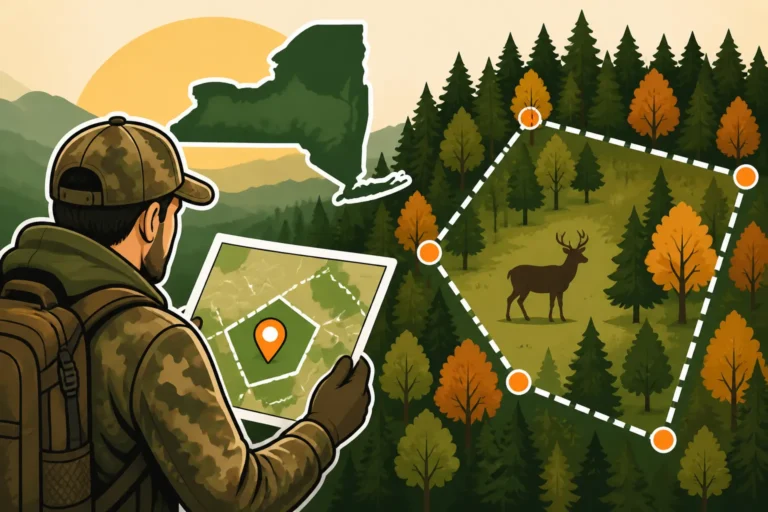
Before you ever step foot in the woods, the best bear hunters are putting in hours behind a computer screen, pouring over maps. Tools like onX Hunt or GoHunt are absolute game-changers for identifying potential bear habitat on public land. You can use these apps to:
- Identify Remote Access Points: Look for unmaintained roads, old logging trails, or areas requiring a longer hike to get away from road hunters. Finding Ground Others Walk Past is crucial.
- Locate Potential Food Sources: Use satellite imagery to identify areas with mature oak or beech stands, or recent timber cuts that might be growing berry bushes.
- Analyze Topography: Steep, north-facing slopes often hold good bedding cover, while south-facing slopes warm up earlier and can be great for spring foraging. Look for saddles, benches, and creek bottoms that act as natural travel corridors.
- Layer Public Land Boundaries: Ensure you're always on legal hunting ground and can plan your approach and exit accordingly. Scouting With the New York HuntFishNY App is another great resource that helps visualize these critical factors.
A good hypothetical example: you're looking at a state forest in the Southern Tier. Using your mapping app, you might find a section with a large, mature oak flat bordered by a dense hemlock thicket and a steep ravine. That combination screams bear habitat. You'd mark that area, plan a few different entry and exit routes, and then prioritize an on-the-ground scout before the season.
Identifying Bear Sign and Behavior
Once you're in the woods, becoming a detective is key. Bears leave plenty of clues if you know what to look for:
- Tracks: Distinctive five-toed tracks, often showing claw marks, especially in muddy areas or along old logging roads.
- Scat: Bear droppings vary greatly depending on their diet. Berry-filled scat indicates recent soft mast consumption, while scat packed with acorn shells or beechnut husks tells you they're hitting hard mast.
- Rubs and Claw Marks: Bears will rub against trees, often to mark territory, or climb trees, leaving visible claw marks on the bark, particularly on beech trees as they access nuts.
- Broken Branches and Torn Logs: Bears will tear apart rotten logs for grubs and insects, and often break branches off berry bushes or small trees to get at food.
- Day Beds: In thick cover, bears will often create simple beds where they rest. These can be tough to spot but indicate prime bedding areas.
Understanding these signs helps you piece together a picture of bear activity. If you're finding fresh sign, you're in the right neighborhood. If the sign is old, it might be time to adjust your search. For more specific tactics on how bears feed, consider Hunting Bears Over Natural Food Sources.
Still-Hunting and Stand Placement
Since New York hunting regulations prohibit baiting for bears, still-hunting and strategic stand placement become your primary methods.
- Still-Hunting: This involves slowly, methodically moving through the woods, stopping frequently to glass, listen, and scan for movement. Focus on areas with good visibility and consistent sign, such as along ridge lines, benches, or creek bottoms. Move into the wind, paying attention to thermals, especially in mountainous terrain, as bears have an incredible sense of smell. This method works particularly well in the Catskills' rugged terrain where long shots are rare and encounters are often close.
- Stand Placement: If you've located a hot food source, like a productive oak flat, placing a treestand or ground blind can be highly effective. Position your stand downwind of expected bear travel and feeding areas, ensuring good visibility but also enough cover to break up your silhouette. Consider the sun's angle and prevailing winds. Early morning or late afternoon sits are often most productive. Remember, bears are very wary, so silent entry and exit are paramount. For deeper dives into specific hunting methods, you might find Bear Hunting Without Bait in New York a valuable read, especially since it applies universally to public land.
| Public Land Region | Typical Terrain | Primary Food Sources | Hunting Pressure (General) | Notes |
|---|---|---|---|---|
| Adirondack Forest Preserve | Mountains, forest, swamps | Berries, beech nuts, some acorns | Low to Moderate (remote areas) | Vast wilderness, ideal for extended hunts, rugged. |
| Catskill Forest Preserve | Steep mountains, deep valleys | Acorns, beech nuts, cherries | Moderate | Demanding terrain, excellent mast crops. |
| Southern Tier State Forests/WMAs | Rolling hills, mixed woods | Acorns, various soft mast, agriculture | Moderate to High (accessible areas) | Good for day hunts, often near private farmland. |
No matter where you choose to hunt, always be aware of New York Bear Season by Zone as the dates can vary. It's also a good idea to refresh your knowledge on New York's No-Bait Bear Rule to ensure you're compliant with all regulations. Hunting black bears on public land in New York is a challenging but incredibly rewarding pursuit, offering a true wilderness experience. By understanding their habitat, effectively scouting, and employing smart strategies, you can significantly increase your chances of success.
Disclaimer
This article is for general informational purposes only and does not constitute professional advice. Laws, prices and regulations vary by location and change over time. Consult a qualified professional for guidance on your specific situation.