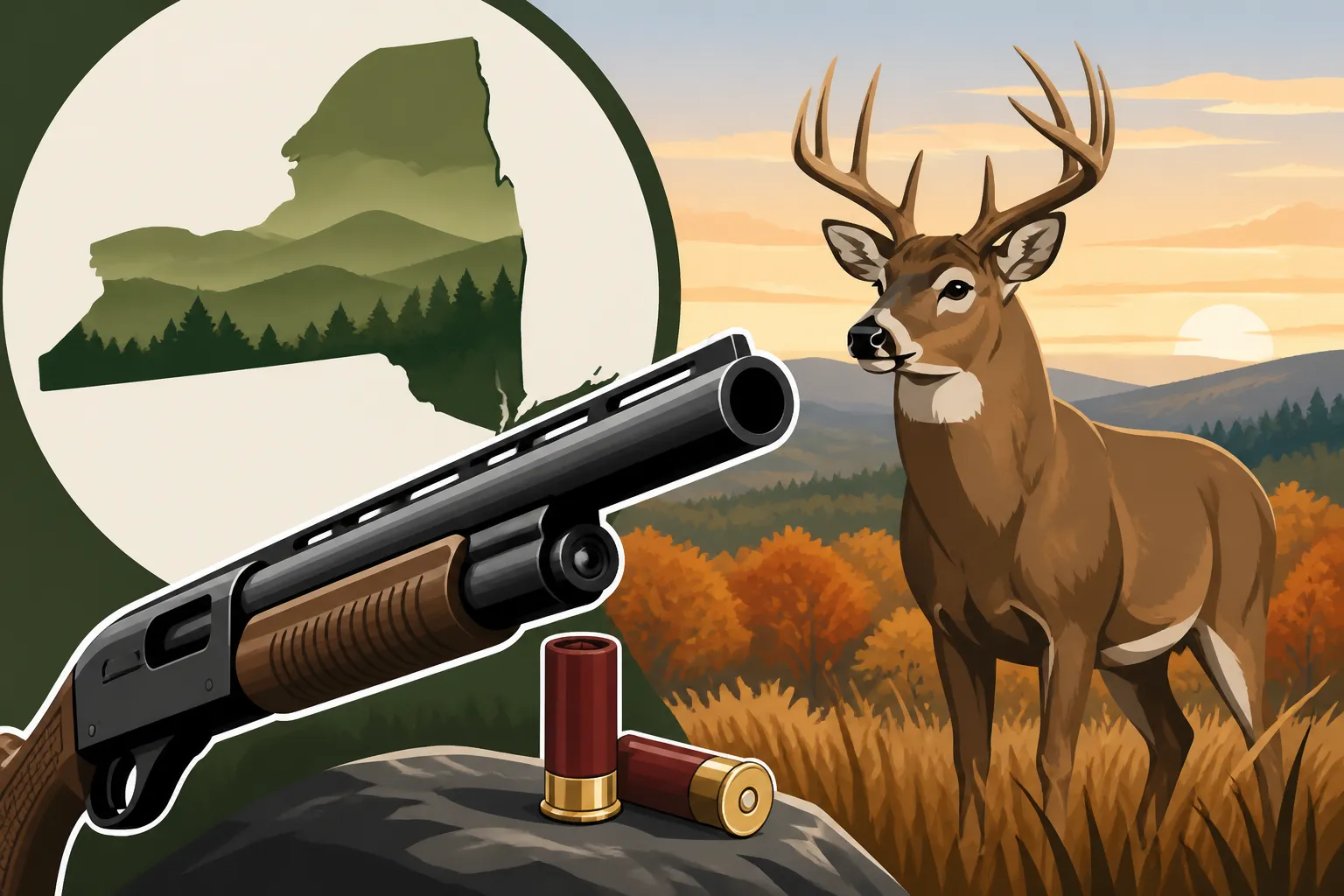
Shotgun Slug Guns for Southern Tier Deer
For many deer hunters in New York's Southern Tier, navigating the regulations and terrain can feel like a constant puzzle, especially when it comes to firearm choices. While a slick rifle might be your dream, the reality of thick cover, rolling farmland, and specific Wildlife Management Unit (WMU) rules often points to a different tool: the reliable shotgun slug gun. This guide is all about cutting through the confusion, helping you understand why these powerful shotguns are so effective in the Southern Tier, and how to get yours dialed in for deer season.
Why Shotgun Slug Guns are a Southern Tier Staple
The Southern Tier isn't the vast, open country of the West, nor is it the deep, wild Adirondack timber. It's a unique blend of agriculture, dense hardwoods, brushy thickets, and scattered residential areas. This diverse landscape, combined with specific hunting regulations, makes the shotgun slug gun an incredibly practical and often necessary choice for many deer hunters.
Navigating Rifle Restrictions in New York's Southern Zone
One of the primary reasons you'll find so many hunters toting a slug gun in the Southern Tier boils down to the rules. Much of New York's Southern Zone, which encompasses the Southern Tier, has traditionally restricted or prohibited centerfire rifles for deer hunting, especially in more populated WMUs. This isn't just a random rule; it's a safety measure designed to limit bullet travel in areas with a higher density of homes, roads, and non-hunting recreationalists. While some areas might permit certain pistol-caliber carbines or specific straight-wall rifle cartridges, the shotgun remains universally accepted across these zones.
This means if you're hunting those familiar woodlots behind your uncle's farm in Chemung County or a state forest block in Steuben County, a rifle might simply not be an option. Rather than feeling limited, savvy hunters embrace the slug gun, understanding that with the right setup, it’s a supremely effective tool for knocking down a whitetail. It’s about adapting to the conditions and regulations, and making the most of what’s allowed. You can learn more about the overall calendar by looking into New York's Southern Zone Firearm Season.
The Dynamics of Southern Tier Deer Hunting Terrain
Beyond the regulations, the very character of the Southern Tier's deer habitat lends itself perfectly to the capabilities of a slug gun. Picture those typical hunting spots: a dense brushy draw leading into a small standing cornfield, a series of steep, wooded ridges broken by thick creek bottoms, or the edge of a woodlot bordering a sprawling hayfield. Shots in these environments are rarely long. We're talking 20 to 100 yards, with the occasional 150-yard poke across a field if everything aligns perfectly.
A shotgun slug, particularly a modern saboted slug fired from a rifled barrel, is designed for exactly these distances. It carries significant energy and delivers a massive impact at closer ranges, perfect for dropping a deer quickly in tight cover. There’s no need for extreme long-range precision when you’re still-hunting a hedgerow or posting a drive through a swampy bottom. The slug gun thrives in these real-world hunting scenarios where quick, decisive shots are often the norm. This type of terrain is quite common for Hunting Southern Tier Farmland Deer.
Ethical Considerations and Effective Range
For any firearm, understanding its effective range is paramount for ethical hunting. With a shotgun slug gun, this is even more critical, as its ballistic properties differ significantly from a high-velocity rifle. Slugs, especially the heavier varieties, tend to drop more rapidly past 100 yards, and their accuracy can diminish. This isn't a flaw; it's just a characteristic you need to respect.
The beauty of hunting the Southern Tier with a slug gun is that its effective range often perfectly matches the typical shot opportunities. Most deer are taken well within 100 yards. By knowing your gun, practicing regularly, and understanding the slug’s trajectory, you can confidently make clean, ethical shots. The goal isn't to stretch the slug gun beyond its capabilities, but to master its strengths within its optimal range. A well-placed slug from a 12-gauge or 20-gauge at 75 yards is absolutely devastating and will put venison in the freezer just as effectively as any rifle round.
Types of Slug Guns: Finding Your Match
Stepping into the world of slug guns can feel a little overwhelming with all the options available. It’s not just about picking up any shotgun; it's about finding the right configuration that matches your hunting style, your budget, and the specific terrain you'll be navigating in the Southern Tier. The key is understanding the fundamental differences in barrels, actions, and gauges.
The Classic Smoothbore and Rifled Slug Options
When we talk about slug guns, the first distinction usually revolves around the barrel. Many hunters start with a standard smoothbore shotgun – perhaps a trusty old pump-action 12-gauge they also use for birds. For these guns, you'll be using "rifled slugs" (like the classic Foster or Brenneke slugs). These slugs have exterior fins or grooves that impart a spin as they fly, theoretically stabilizing them. They are designed to be shot through smoothbore barrels, and they perform best at shorter ranges, typically out to 75 yards, maybe 100 yards for an expert shooter with a perfectly matched gun and slug.
The upside of a smoothbore setup is its versatility and often lower cost, as you might already own the shotgun. The downside is accuracy. While perfectly capable of taking deer at close range, they generally won't deliver the consistent sub-3-inch groups at 100 yards that modern rifled slug guns can. However, if your hunting involves thick brush and typical shot distances are under 60 yards, a smoothbore with rifled slugs can be an economical and effective choice. Just be sure to pattern your gun extensively to understand its true limitations.
Then there are rifled barrels. These barrels feature spiral grooves, just like a rifle barrel, specifically designed to spin a bullet-shaped projectile. For these, you must use "saboted slugs." Sabots are plastic sleeves that encase a smaller, rifle-like projectile. The sabot engages the rifling, imparting spin, and then sheds away shortly after leaving the barrel, sending the projectile on a much more accurate, flatter trajectory. Rifled barrels, whether they're a dedicated slug gun or an interchangeable barrel for a multi-purpose shotgun, dramatically improve accuracy and extend the ethical range significantly, often out to 150-200 yards with practice and the right ammunition. This is a game-changer for covering those wider field edges or clear cuts in the Southern Tier. We have a whole article dedicated to Rifled Versus Smoothbore Slug Barrels.
Bolt-Action, Pump-Action, and Semi-Automatic Platforms
Once you've considered the barrel type, the action of the shotgun comes into play. Each offers distinct advantages for slug hunting.
-
Pump-Action: The quintessential workhorse. Pump-action shotguns are renowned for their reliability, ruggedness, and relatively low cost. Models like the Mossberg 500 or Remington 870 are incredibly popular and for good reason. They are simple to operate, easy to clean, and can cycle a wide variety of ammunition. For slug hunting, a pump-action provides a quick follow-up shot if needed, and the manual cycling means you have positive control over each round. Their simplicity makes them ideal for the rough-and-tumble nature of hunting dense Southern Tier woods.
-
Semi-Automatic: For hunters who prioritize speed and reduced recoil, a semi-automatic slug gun can be an excellent choice. The gas-operated systems in many semi-autos help absorb recoil, making subsequent shots faster and more comfortable. This can be particularly beneficial for smaller-framed hunters or those sensitive to the heavy recoil of a 12-gauge slug. Brands like Benelli and Winchester offer dedicated semi-auto slug guns that deliver impressive accuracy. The trade-off can sometimes be a higher price point and potentially more complex cleaning, but for many, the benefits outweigh these minor drawbacks.
-
Bolt-Action: When pinpoint accuracy is your absolute priority, a dedicated bolt-action slug gun often stands above the rest. These guns are built from the ground up to shoot slugs with rifle-like precision. They feature heavy, fully rifled barrels and often a robust receiver designed for consistency. Recoil can still be substantial, but the inherent accuracy of a bolt-action design means you can wring out every last bit of performance from your saboted slugs. Brands like Savage (with their 212/220 series) have made a name for themselves in this niche, offering slug guns that can rival some rifles in accuracy at typical slug ranges. If you’re hunting field edges where longer shots are more common, or you simply want the utmost confidence in your shot placement, a bolt-action slug gun is hard to beat.
Gauge Considerations: 12-Gauge vs. 20-Gauge
The classic debate in slug hunting often boils down to 12-gauge versus 20-gauge. Both are highly effective for deer, but they offer different experiences.
-
12-Gauge: This is the traditional powerhouse. A 12-gauge slug delivers maximum energy and a larger diameter projectile. This translates to immense knockdown power and often a larger wound channel, increasing the likelihood of a quick, humane kill. The drawback? Recoil. A 12-gauge slug, especially a 3-inch magnum, can really thump your shoulder. While manageable, it can lead to flinching for some shooters, impacting accuracy, particularly during practice sessions. However, with proper technique and perhaps a good recoil pad, a 12-gauge remains a top choice for those who want absolute stopping power. Shotgun Slugs for New York Deer is a great resource if you want to dive deeper into this topic.
-
20-Gauge: Often hailed as the "smart choice" by many experienced slug hunters, the 20-gauge offers a fantastic balance of manageable recoil and ample stopping power. Modern 20-gauge saboted slugs (like the 260-grain Federal Trophy Copper or the 250-grain Hornady SST) deliver impressive ballistic performance, often rivaling or even exceeding the accuracy and energy of older 12-gauge smoothbore slug setups. The lighter recoil means more comfortable practice, which in turn leads to greater shooter confidence and accuracy in the field. For many hunters, especially those who struggle with 12-gauge recoil, the 20-gauge is a revelation, providing all the performance needed for Southern Tier deer without the shoulder punishment. It's truly a compelling option worth serious consideration.
| Feature | Smoothbore Barrel | Rifled Barrel (Dedicated) |
|---|---|---|
| Ammunition | Rifled Slugs | Saboted Slugs |
| Typical Accuracy | 3-6 inches at 50 yards | 2-3 inches at 100 yards |
| Effective Range | 75-100 yards | 150-200 yards |
| Recoil (Avg. 12ga) | Moderate-High | Moderate-High |
| Versatility | High (can shoot shot) | Low (slugs only) |
| Cost (Barrel) | Standard | Higher |
| Best Use | Thick brush, drives, close shots | Field edges, longer shots, open woods |
Essential Optics and Ammunition for Accuracy
Having the right slug gun is only half the battle. To truly unlock its potential and make those critical shots count in the Southern Tier, you need to pair it with appropriate optics and the right ammunition. This is where precision and practice really come into play.
Choosing the Right Scope for Your Slug Gun
Unlike hunting wide-open plains where high-magnification scopes shine, Southern Tier deer hunting with a slug gun often means shorter shots in varying light conditions and thick cover. This is why specialized slug gun scopes, or scopes designed for brush guns and muzzleloaders, are often the best choice.
- Low Magnification is Key: Look for scopes with a low end of 1x, 2x, or at most 3x. Variable power scopes like a 1-4x, 1.5-5x, 2-7x, or even a fixed 3x or 4x are ideal. This lower magnification provides a wide field of view, which is absolutely crucial for quickly acquiring a moving deer in dense woods or when a buck steps out unexpectedly at close range. Higher magnification simply restricts your view and can make it harder to find your target in a hurry.
- Durability and Eye Relief: Slug guns, especially 12-gauges, produce significant recoil. Your scope needs to be built tough to withstand this punishment without shifting its point of impact. Look for reputable brands known for robust construction. Generous eye relief is also critical to prevent the scope from contacting your brow during recoil, especially if you're shooting from an awkward position or wearing a thick hat.
- Light Gathering for Low Light: Many prime deer hunting times – dawn and dusk – are low-light periods. A scope with a large objective lens (e.g., 32mm, 40mm) and high-quality glass will help gather what little light is available, giving you a clearer, brighter image when deer are most active.
- Reticle Choices: Simple duplex reticles are often perfectly adequate for slug hunting, as shots are generally within 150 yards. Some scopes offer specific ballistic reticles with holdover points for slug trajectories, which can be useful if you've done your homework and know your slug's drop at various distances. However, for most Southern Tier scenarios, a clear, uncluttered reticle is best for fast target acquisition.
Saboted Slugs: Precision for Rifled Barrels
If you're running a rifled barrel, your ammunition choice becomes a critical component of accuracy and performance. Gone are the days of just grabbing any box of slugs. Modern saboted slugs are highly engineered projectiles that can dramatically affect your gun's performance.
- Bullet Design: Saboted slugs come in various bullet designs, often resembling popular centerfire rifle bullets. You'll find offerings with polymer tips for enhanced ballistics and expansion (e.g., Hornady SST, Remington AccuTip), bonded designs for deep penetration (e.g., Federal Trophy Copper), and hollow points for rapid energy transfer. Each design has its strengths, but all are built for devastating terminal performance on deer.
- Match the Slug to Your Gun: This is arguably the most important tip: your slug gun will have a preference. What shoots incredibly accurately in one gun might scatter like birdshot from another, even if they're the same make and model. This means you need to buy several different brands and types of saboted slugs and test them at the range. Don't be surprised if your gun prefers one particular brand or weight. For instance, my hunting buddy's Savage 220 absolutely loves the 20-gauge Hornady SSTs, but shoots Federal Trophy Coppers into much larger groups.
- Ballistic Performance: Modern saboted slugs offer impressive ballistics for a shotgun projectile. They often leave the barrel at speeds between 1,800-2,000 feet per second and carry significant energy out to 150-200 yards. This flatter trajectory and retained energy are why rifled slug guns are such potent deer-getters. When planning your hunt or scouting a new piece of public land using resources like GoHunt, understanding how your chosen slug performs at different distances is key to confidently taking a shot.
Testing and Zeroing Your Slug Gun for Southern Tier Distances
Once you've mounted your chosen scope and acquired a selection of saboted slugs, the real work begins: testing and zeroing. Do not skip this step! Your first shots of the season should not be at a deer.
- Range Protocol: Start by firing groups at 25 yards to get on paper. This helps prevent wasted slugs and frustration. Once you're hitting consistently at 25 yards, move out to 50 yards, and then 100 yards. Always shoot from a stable bench rest with sandbags to eliminate human error and truly assess your gun's accuracy.
- Finding the Sweet Spot: Shoot at least three 3-shot groups with each brand of slug you're testing. Let the barrel cool between groups. You'll quickly see which slug your gun prefers. Focus your zeroing efforts on the most accurate load.
- Zeroing Distance: For Southern Tier hunting, zeroing your slug gun at 100 yards is a solid strategy. This will give you a point-blank range that covers most typical shots, allowing you to hold dead on from very close out to 100-125 yards, with minimal holdover or holdunder. If you anticipate shots stretching out to 150 yards, practice at that distance to understand your slug's drop and where to hold. A quick search for Zeroing at 100 Yards for Woods Hunting can provide even more insights into this critical process.
- Practice, Practice, Practice: Hitting a static target from a bench is one thing; making a clean shot on a deer in the field is another. Practice shooting from various field positions: kneeling, standing, leaning against a tree. Simulate real hunting scenarios. This practice builds confidence and muscle memory, ensuring you're ready when that Southern Tier buck steps out.
Setup and Tactics for Southern Tier Success
Getting your slug gun and optics dialed in is a huge step, but making it work effectively in the field requires thoughtful setup and tailored tactics. The Southern Tier's unique mix of terrain demands specific approaches to maximize your chances of success.
Mounts and Rings: The Foundation of Accuracy
You’ve got a fantastic slug gun and a quality scope, but if they're not connected properly, all that potential accuracy goes out the window. This is especially true for slug guns, which generate substantial recoil. Cheap or improperly installed mounts and rings are a recipe for frustration, leading to lost zero, shifting groups, or even a damaged scope.
- Heavy-Duty Construction: Invest in robust, high-quality steel or aluminum mounts and rings. Avoid anything flimsy. Look for designs that provide maximum clamping force to the receiver and secure hold on the scope tube. Weaver or Picatinny style bases, often paired with matching rings, are very common and reliable choices for slug guns. Some slug guns, particularly bolt-actions, come with integrated bases, which simplifies the process.
- Proper Installation: If you're not comfortable doing it yourself, have a qualified gunsmith install your mounts and rings. They'll ensure screws are torqued to spec, the scope is level, and there’s proper eye relief. A loose mount can shift under recoil, leading to frustrating misses that you can't explain. Don’t skimp here; it’s a small investment that protects a larger one and ensures consistent accuracy. Some slug guns might benefit from a cantilever mount if the barrel is removed for cleaning or if eye relief is an issue.
Carrying and Maneuvering in Thick Cover
Hunting in the Southern Tier often means traversing dense brush, navigating steep ravines, and pushing through thick stands of multiflora rose or honeysuckle. A slug gun, especially a 12-gauge with a heavy rifled barrel and scope, can be a weighty proposition.
- Comfortable Sling: A good, wide, comfortable sling is not optional; it’s essential. It distributes the weight of the gun, freeing up your hands for climbing, carrying a pack, or just making a long walk more bearable. A sling also allows you to quickly bring the gun to bear if a deer suddenly appears.
- Balance and Handling: Practice carrying your slug gun in a way that allows for quick, smooth mounting to your shoulder. In thick cover, you’re often carrying the gun at the ready, maybe cradled in your arm or held by the pistol grip, instead of slung over your shoulder. Be mindful of branches and brush snagging your scope or barrel. The overall length of a slug gun is generally shorter than most rifles, which is a big advantage when maneuvering through dense cover and preparing for a quick shot.
Hunting Strategies Tailored for Slug Guns
The effective range and powerful impact of a slug gun naturally lend themselves to certain hunting strategies commonly employed in the Southern Tier.
- Still-Hunting: This quiet, slow-motion stalk is perfect for slug guns in the Southern Tier's varied terrain. Moving slowly through woodlots, along ridge lines, or through creek bottoms allows you to cover ground effectively while staying within your effective shooting range. You'll be looking for signs, listening for crunching leaves, and being ready for a close-range encounter. Focus on natural funnels, pinch points, and areas of dense cover where deer feel secure. For example, when you are Reading a Ridge for Catskill Deer Movement or in an area like that, a slug gun is ideal.
- Stand Hunting: Whether from a treestand or a ground blind, stand hunting over a food source, scrape line, or travel corridor is a highly effective slug gun tactic. Many Southern Tier farms feature woodlots adjacent to agricultural fields. Setting up on a field edge, especially near a deer trail entering or exiting the woods, can provide excellent shot opportunities. A ground blind brushed into a fencerow or Setting Up on a Southern Tier Field Edge can conceal you effectively while offering stable shooting rests for your slug gun. Just remember to account for shot angles from an elevated position if using a treestand.
- Deer Drives: The powerful, brush-busting nature of a slug makes it a formidable choice for deer drives, particularly in the dense, broken cover of the Southern Tier. Whether you're a driver pushing deer towards standers or a stander waiting on a known escape route, the slug gun's capability to deliver a quick, decisive blow at typical drive distances is invaluable. Communication, safety, and knowing exactly where other hunters are located are paramount in any drive scenario. Remember to wear appropriate Blaze Orange Jackets Versus Vests for visibility and safety.
Maintenance and Longevity for Your Slug Gun
A slug gun that’s treated well will treat you well for many seasons. Especially after a cold, wet New York deer season, proper cleaning and storage are vital to maintain accuracy and prevent costly issues down the line.
Cleaning Rifled Barrels and Chokes
Cleaning a slug gun, especially one with a rifled barrel, requires a bit more attention than a smoothbore used only for birdshot.
- Rifled Barrels and Copper Fouling: When shooting saboted slugs, the bullet itself is usually made of copper or a copper alloy, and it's traveling at high velocities down a rifled barrel. This means you'll accumulate copper fouling, similar to a rifle. Neglecting this can lead to decreased accuracy over time. Use a good quality copper solvent (like Hoppe's Elite Copper Gun Cleaner or Bore Tech Eliminator) along with a proper-sized bronze brush and patches. Follow the solvent's instructions, allowing it to work before brushing and patching. Finish with a light coat of gun oil in the bore to protect it.
- Smoothbore Barrels and Interchangeable Chokes: If you’re using a smoothbore barrel, cleaning is simpler, but still important. Standard bore cleaner and a brush will remove powder and lead residue. If your smoothbore has interchangeable choke tubes (e.g., a rifled choke for slugs), remove them periodically to clean threads, apply anti-seize grease, and ensure they don't seize in place. Rust loves to hide in those threads!
Storage and Seasonal Preparedness
Proper storage protects your investment and ensures your slug gun is ready to perform when called upon.
- Clean and Dry: Always clean your gun thoroughly after each hunt, especially if it's been exposed to rain, snow, or damp conditions. Ensure it's completely dry before putting it away. Even a small amount of moisture can lead to rust.
- Protective Coating: After cleaning, apply a light coat of rust-preventative gun oil to all metal surfaces, inside and out. For long-term storage, a thicker grease or a silicone-treated gun sock can provide extra protection.
- Secure Storage: Store your slug gun in a secure location, unloaded, and separate from ammunition. A locked gun safe or cabinet is ideal. This not only protects your firearm from theft but also from unauthorized access, especially important in households with children.
- Pre-Season Check-Up: Before opening day, always perform a thorough pre-season check. Inspect your scope mounts, ensure all screws are tight, and give the gun a good once-over. Most importantly, hit the range! Fire a few shots with your chosen hunting ammunition to confirm your zero and refresh your shooting skills. This ensures you're confident and ready for success when that Southern Tier deer steps into your shooting lane. Carrying a versatile pack, such as those discussed in Packs for a Day on Public Land, can also help you carry your cleaning supplies and essential gear into the field.
Disclaimer
This article is for general informational purposes only and does not constitute professional advice. Laws, prices and regulations vary by location and change over time. Consult a qualified professional for guidance on your specific situation.