Shotgun Slugs for New York Deer
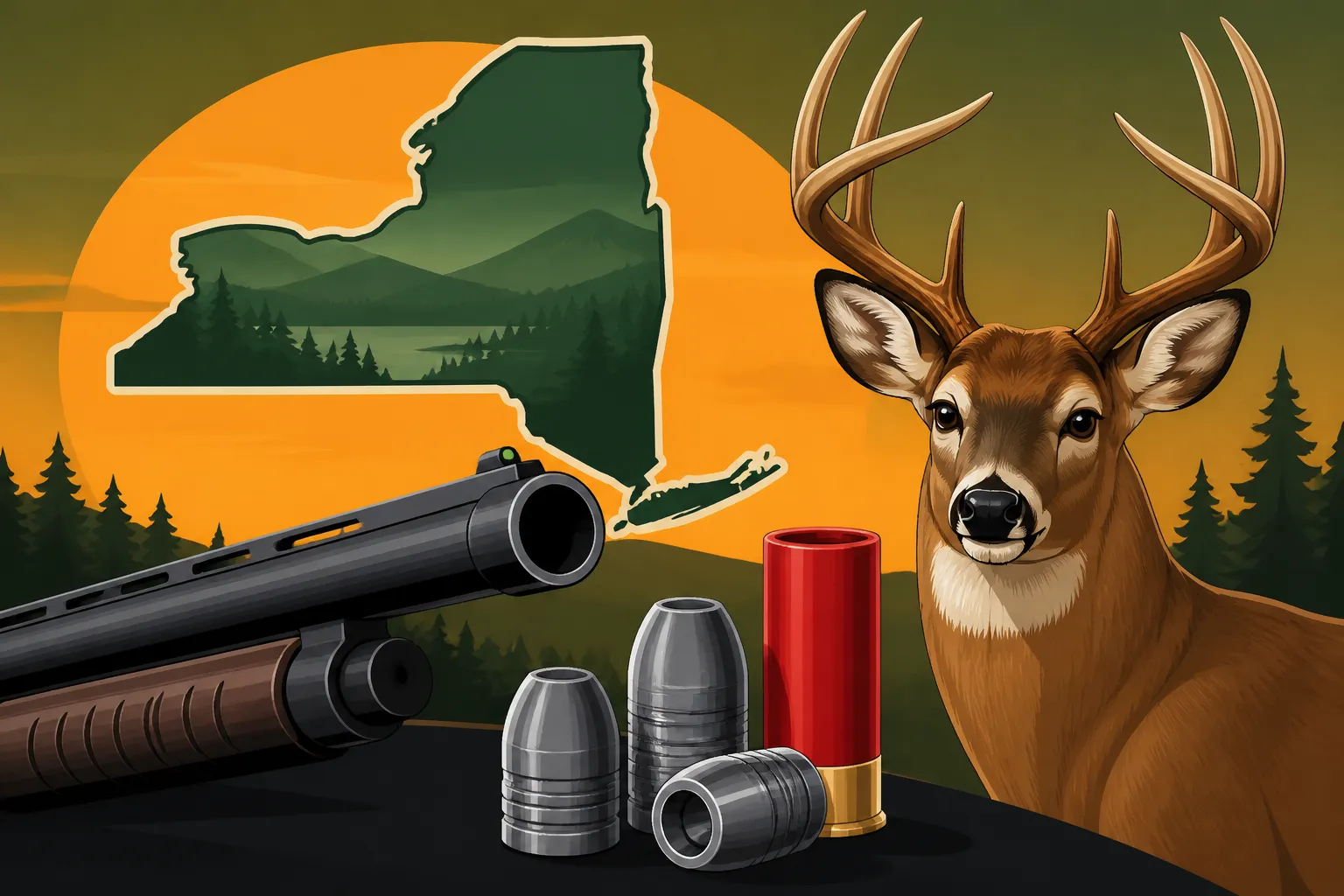
It’s a common frustration for deer hunters across New York: you’ve got your rifle, sighted in and ready, only to remember that where you hunt, a rifle might not even be legal. Many of us grapple with the unique regulations of New York's hunting zones, particularly when it comes to firearms. This guide is here to unravel the world of shotgun slugs, exploring why they're often your primary deer hunting tool in certain areas, how to choose the right one, and how to maximize your setup for success in the field.
Why Shotgun Slugs? Navigating New York's Zone Restrictions
For many New York hunters, the term "deer season" doesn't automatically conjure images of high-powered rifles. Instead, it’s often about slug guns. This isn't out of preference for everyone, but a direct consequence of the state's distinct hunting zone regulations. If you've ever felt limited by these rules, you're not alone. It can be a real head-scratcher trying to figure out what's legal and what's not, especially when you cross county lines or move between public and private lands. Understanding the "why" behind these restrictions is the first step to mastering your slug gun.
The Southern Zone's Historical Role
The Southern Zone, encompassing the vast majority of New York's population centers and agricultural land, has long maintained stricter firearm regulations compared to the more expansive, less populated Northern Zone. This distinction largely stems from safety concerns rooted in population density. Imagine hunting deer with a high-powered rifle in an area dotted with homes, farms, and roads. The potential for a bullet to travel great distances, far beyond the target and through brush, poses a significant risk to public safety. Shotguns, particularly when firing slugs, offer a much shorter effective range and a rapid drop in projectile energy, making them a safer choice in these more populated areas. While a slug can certainly travel a fair distance, its ballistic properties are inherently different from a rifle bullet, minimizing the risk of accidental injury or property damage far from the intended target. It's a compromise that allows hunting to continue safely in areas where it might otherwise be deemed too risky. For a deep dive into the regulations, check out New York's Southern Zone Firearm Season.
Rifle Zones vs. Shotgun/Muzzleloader Zones
New York effectively divides the state into zones where rifles are generally permitted, and those where they are not. The Northern Zone, with its vast tracts of wilderness like the Adirondack Forest Preserve, largely allows rifles for deer hunting. Here, the landscape is more forgiving, with fewer residential areas and greater distances between potential hazards. However, step into the Southern Zone, and the rules change dramatically. Outside of a few specific exceptions (like a handful of counties or specific WMUs that have recently allowed rifles), you're typically looking at shotguns, muzzleloaders, or archery equipment.
This means if you're hunting deer in the Catskills, the Finger Lakes, or most of the Southern Tier, your primary firearm options during the regular season are often limited to a shotgun firing slugs or a muzzleloader. This isn't just a suggestion; it's the law. Violating these rules can lead to serious penalties, so it’s crucial to know your specific WMU's regulations before you even step foot in the woods. Many hunters feel this distinction can be a bit unfair, especially when hunting what feels like "big woods" in the Southern Zone, but it's a critical safety measure that allows diverse hunting opportunities across the state. Using mapping tools like GoHunt can be invaluable here, as they often have layers showing weapon restrictions by WMU, helping you stay compliant.
Choosing the Right Slug: Sabots vs. Foster
Once you understand why you're using a slug gun, the next step is choosing the right ammunition. This isn't a one-size-fits-all situation, and picking the wrong slug for your shotgun can dramatically impact accuracy and effectiveness. It's like trying to put diesel in a gasoline engine – it just won't work right, or at all. The two main types of slugs you'll encounter are sabot slugs and Foster (or "rifled") slugs, and they are designed for very different shotgun barrel types.
Sabot Slugs for Rifled Barrels
Sabot slugs are the modern marvels of shotgun slug technology. "Sabot" (pronounced sa-BOW) is French for "shoe," and it refers to the plastic sleeve that encases the projectile itself. This plastic sleeve engages with the rifling in a dedicated rifled shotgun barrel, imparting a spin to the bullet-like projectile inside. When the slug leaves the barrel, the sabot separates, sending the aerodynamic projectile downrange with much greater accuracy and a flatter trajectory than traditional Foster slugs.
Think of it like a rifle bullet: the rifling stabilizes the projectile, making it far more precise at longer distances. If you have a shotgun with a dedicated rifled barrel – one that looks like a rifle barrel with lands and grooves spiraling inside – then sabot slugs are absolutely what you should be shooting. They allow your slug gun to perform much closer to a traditional rifle in terms of accuracy and range, often extending your ethical shooting distance out to 150-200 yards with practice and a well-matched gun/slug combination. However, they are more expensive than Foster slugs, and they perform poorly, if at all, when fired through a smoothbore barrel because there's no rifling to engage the sabot and impart spin. Companies like Federal, Winchester, and Hornady offer excellent sabot slugs that many New York hunters swear by for their accuracy. When scouting public land, understanding the capabilities of your sabot setup can help you plan your approach on terrain like that found in Hunting the Southern Zone Holiday Hunt.
Foster (Rifled) Slugs for Smoothbore Barrels
Foster slugs, often simply called "rifled slugs," are the traditional workhorse of shotgun deer hunting. These are what most people picture when they think of a shotgun slug: a solid lead projectile with angled "rifling" grooves on the outside. Don't be fooled by the name – these external grooves do not impart spin like true rifling. Instead, they are designed to allow the slug to compress slightly when passing through a choked barrel, and the weight distribution (heavier in the front) helps the slug maintain a nose-forward flight.
Foster slugs are designed to be fired through smoothbore shotgun barrels, which are the vast majority of standard shotgun barrels designed for birdshot. If your shotgun barrel is smooth on the inside, without any spiraling grooves, this is the slug for you. They are typically less expensive than sabot slugs and are very effective at closer ranges, generally within 75-100 yards. Beyond that, their accuracy falls off significantly due to their less aerodynamic design and lack of true spin stabilization. They deliver a tremendous amount of energy on impact, making them devastating on deer at appropriate ranges. Just remember, while they're often called "rifled," the rifling is on the slug itself, not in the barrel. Attempting to shoot sabot slugs through a smoothbore barrel will lead to poor accuracy and wasted ammunition, so always match your slug type to your barrel type.
Optimizing Your Shotgun Setup: Barrel, Optics, and Patterning
It's a common misconception that slug guns are inherently inaccurate. While they might not have the same precision as a dedicated hunting rifle, a well-tuned slug gun setup can be surprisingly accurate and extremely effective for deer hunting. Many hunters just slap a scope on an old bird gun and wonder why their groups are all over the place. To truly unlock the potential of your slug gun, you need to optimize its components, and that means paying attention to the barrel, your optics, and, crucially, patterning your load.
Dedicated Slug Barrels and Their Advantages
For hunters serious about maximizing the accuracy of their slug gun, investing in a dedicated slug barrel is often the game-changer. These barrels are specifically designed for slug ammunition, offering distinct advantages over general-purpose smoothbore barrels:
- Rifled Barrels: As mentioned with sabot slugs, a true rifled barrel is the gold standard for accuracy. The internal spiraling grooves impart a spin on the sabot, stabilizing the projectile and leading to much tighter groups at longer distances. Many popular shotgun models, like the Remington 870 or Mossberg 500, have interchangeable barrels, making it relatively easy to swap out your smoothbore bird barrel for a rifled slug barrel during deer season. This versatility is a huge plus, allowing you to use one firearm platform for multiple hunting pursuits.
- Shorter, Heavier Barrels: Dedicated slug barrels are often shorter and heavier than typical field barrels. The shorter length (often 18.5 to 24 inches) reduces barrel whip and makes the gun more maneuverable in thick cover, which is a common scenario when Hunting Southern Tier Farmland Deer. The increased weight helps dampen recoil and provides a more stable platform for shooting.
- Improved Sights: Many slug barrels come equipped with cantilever scope mounts, rifle sights (like adjustable iron sights), or fiber optic sights, all designed for precision aiming rather than the broad pattern of birdshot. This thoughtful design immediately improves your ability to aim accurately at a specific point on a deer.
Using a dedicated slug barrel, especially a rifled one, can transform your shotgun from a close-quarters blaster into a formidable deer hunting tool capable of surprising accuracy.
Mounting Optics for Slug Accuracy
Just like with a rifle, optics are paramount for precise slug placement. Trying to shoot slugs accurately with just a bead sight is an exercise in frustration. A good scope or red dot sight is practically a requirement for ethical slug hunting beyond very close ranges.
- Scopes: For rifled slug barrels, a low-magnification scope (e.g., 1-4x, 2-7x, or a fixed 2.5x or 3x) is ideal. You don't need high magnification, as the effective range of slugs, even sabots, rarely exceeds 200 yards. Focus on a scope with good light-gathering capabilities for those crucial low-light moments at dawn and dusk, especially in dense New York timber. Durability is also key; slug guns generate significant recoil, so ensure your scope is rated to withstand it. For advice on similar considerations, refer to Rifle Scopes for Low-Light Timber. Make sure your scope rings and base are solid and securely mounted to prevent any shift in zero.
- Red Dot Sights: For smoothbore barrels and shorter-range hunting (under 100 yards), a red dot sight can be an excellent choice. They offer fast target acquisition, are typically very durable, and are great in low light conditions. The lack of magnification can be an advantage in thick brush where quick, close shots are common. Brands like Leupold and Vortex offer rugged options perfect for the field.
- Cantilever Mounts: If your slug barrel has a cantilever scope mount, use it! These mounts attach directly to the barrel, not the receiver. This is critical because shotgun barrels can have some play when attached to the receiver, and a barrel-mounted scope ensures your optics always move with the barrel, maintaining zero regardless of any slight movement between barrel and receiver.
The Critical Importance of Patterning
This is arguably the most overlooked and most important step for any slug gun hunter: patterning. Unlike birdshot, where you're looking for an even spread, with slugs, you're looking for a tight group of impacts that consistently hit where you aim.
- Test Multiple Brands and Types: Every slug gun is unique, and what shoots well in one gun might be terrible in another, even of the same make and model. You absolutely must try several different brands and types of sabot slugs (if you have a rifled barrel) or Foster slugs (for smoothbore) to find what your gun "likes" best. Buy a box or two of 3-4 different varieties and head to the range.
- Shoot from a Rest: To accurately assess your gun's potential, shoot from a solid bench rest. This eliminates shooter error and allows you to see the true mechanical accuracy of your gun and ammunition combination.
- Test at Your Maximum Ethical Range: Don't just shoot at 50 yards. If you plan to shoot out to 100 or 150 yards ethically, practice at those distances. See what your groups look like. If you can't consistently put slugs into an 8-inch plate at 100 yards, then 100 yards is not your ethical range. Adjust your maximum shooting distance accordingly. GoHunt's rangefinding features can help you practice estimating distances in varied terrain.
- Practice from Hunting Positions: Once you find a load your gun likes, practice shooting from positions you'd use in the field: kneeling, standing (with support), or off shooting sticks. This builds confidence and familiarizes you with the recoil and handling. Remember, a slug gun kicks differently than a rifle, and mastering it takes practice. For general zeroing tips, consider Zeroing a Rifle for Mixed Distances – many principles apply.
By dedicating time to patterning, you'll gain confidence in your slug gun and ensure that when a deer steps out, you can make an ethical shot.
Effective Range and Ethical Considerations with Slugs
Hunting with a shotgun slug is a powerful and effective method for harvesting deer, but it comes with its own set of responsibilities and limitations. Understanding the effective range of your chosen slug and maintaining ethical hunting practices are paramount to ensure clean kills and minimize wounded game. It’s not just about what the gun can do, but what you should do as a responsible hunter.
Understanding Slug Trajectory
Slug trajectory is significantly different from that of a modern rifle cartridge. While sabot slugs fired from rifled barrels offer a flatter trajectory than traditional Foster slugs, neither will match the flat shooting characteristics of a high-velocity rifle round.
- Foster Slugs: These slugs drop rapidly after about 75 yards. If you zero a Foster slug at 50 yards, it might be several inches low by 75 yards and even more at 100. This steep trajectory means precise range estimation and knowing your holdover (or holdunder, depending on your zero) are crucial. For this reason, many hunters limit their shots with smoothbore guns to 75 yards or less, focusing on close-quarters hunting in thick cover.
- Sabot Slugs: While much flatter shooting, sabot slugs still have a noticeable arc compared to rifle bullets. A sabot slug zeroed at 100 yards might be 6-8 inches low at 150 yards and a foot or more low at 200 yards, depending on the specific load. This still requires you to practice at various distances and understand your specific ammunition's ballistic curve. Using a ballistic calculator and verifying at the range are critical steps.
Regardless of slug type, knowing your trajectory is key. Rangefinders are invaluable tools in the field to confirm distances, especially when sitting on a field edge or overlooking a clearing. Remember, a New York November often brings brisk temperatures, so dressing appropriately in layers of wool or synthetics is vital for those long waits. Consider reading Wool Versus Synthetics in Wet Snow for more tips on staying comfortable and focused.
Shot Placement and Knock-Down Power
Slug guns deliver a tremendous amount of kinetic energy to the target. A 12-gauge slug is a large, heavy projectile, and when it hits a deer, it delivers a powerful blow. However, "knock-down power" isn't a substitute for precise shot placement. A poorly placed shot with a slug, just like with a rifle, will likely result in a wounded animal and a difficult or lost recovery.
- Aim for the Vitals: Always aim for the deer's vital organs – the lungs and heart. This means placing your shot in the "boiler room" just behind the shoulder. A well-placed slug through both lungs or the heart will result in a quick, ethical kill.
- Avoid Shoulder Shots: While tempting, a direct hit to the shoulder blade can be problematic. Slugs can, and often do, penetrate the shoulder bone, but it can deflect the slug, reduce penetration to the vitals, and create excessive meat damage. It's almost always better to wait for a broadside or slightly quartering-away shot that allows for a clear path to the lungs and heart.
- Practice Under Pressure: The moment of truth in the woods is rarely calm and composed. Practice makes perfect, but practicing under simulated hunting conditions – quickly shouldering the gun, acquiring the target, and making the shot – can prepare you for the adrenaline rush. This is especially true when attempting to fill New York's 2026 Four-Permit DMP Change and looking for any opportunity. Knowing your effective range and sticking to it is an ethical imperative. If a deer steps out at 175 yards and you've only practiced effectively out to 100, letting that deer walk is the responsible choice. There will always be another opportunity.
Hunting deer with shotgun slugs in New York is a deeply rooted tradition and a highly effective method when approached with knowledge, practice, and respect for the animal. By understanding your equipment, optimizing your setup, and adhering to ethical shooting distances, you can confidently pursue whitetails across much of the Empire State.
| Slug Type | Barrel Type | Typical Effective Range | Advantages | Disadvantages | Common Brands |
|---|---|---|---|---|---|
| Foster (Rifled) Slugs | Smoothbore | 50-75 yards | Inexpensive, reliable in smoothbores, high impact energy, widely available. | Steep trajectory, limited accuracy beyond 75 yards. | Remington Slugger, Winchester Super-X, Federal Power-Shok |
| Sabot Slugs | Rifled | 100-200 yards | Superior accuracy, flatter trajectory, rifle-like performance. | More expensive, requires a rifled barrel, less effective if fired from smoothbore. | Hornady SST, Federal Trophy Copper, Winchester XP3 |
Disclaimer
This article is for general informational purposes only and does not constitute professional advice. Laws, prices and regulations vary by location and change over time. Consult a qualified professional for guidance on your specific situation.