Climbing Sticks for Adirondack Hardwoods
Heading into the vast, beautiful, and often unforgiving Adirondack hardwoods for a deer or bear hunt presents a unique set of challenges, not least of which is getting into a comfortable, elevated position where you can spot game without being seen. Forget those easy-access private land spots with manicured food plots; in the Dacks, you're often dealing with steep, rocky terrain, dense undergrowth, and a never-ending expanse of trees, many of which are far from ideal for traditional climbing stands. This guide is all about navigating those tough conditions, specifically focusing on how climbing sticks can be your best friend for securely and silently reaching your perch, helping you unlock prime hunting spots that others might overlook.
The Unique Challenges of Adirondack Hardwoods
Hunting in the Adirondack hardwoods isn't like hunting anywhere else in New York. It's a land of breathtaking beauty, but it demands respect and the right gear. The terrain itself dictates much of your strategy, and your climbing sticks need to be up to the task.
Steep, Rocky Terrain and Limited Access
One of the first things you'll notice when you venture into the Adirondacks is the sheer physicality of the landscape. Forget flat, easy walks; you're often hiking up and down steep inclines, navigating rocky outcrops, and crossing drainage bottoms that can turn into raging torrents after a good rain. This isn't just a physical challenge; it impacts your gear choices significantly. Every ounce you carry feels like ten after a few miles of climbing, which means heavy, bulky climbing sticks are often a non-starter. You need something lightweight that can be packed in efficiently, ideally on a frame pack designed for such excursions. Packs for a Backcountry Adirondack Hunt could be your best friend here.
Beyond the terrain, access is often limited. Many prime areas are deep within the forest preserve, far from paved roads or even well-maintained logging trails. This means long hikes, sometimes several miles, just to reach your hunting ground. When you're packing in for a multi-day hunt, possibly even for Hunting Bears in the Adirondack Interior, every piece of gear has to earn its place in your pack. Climbing sticks that are designed for quick, quiet deployment and easy portability become essential for reaching those remote, less pressured areas where big woods bucks and bears like to roam. The last thing you want is to drag heavy, cumbersome sticks through thick timber and over boulder fields, announcing your presence long before you even pick a tree.
Tree Selection and Irregular Trunks
Finding the "perfect" tree for a treestand in the Adirondacks can feel like searching for a needle in a haystack. Many of the hardwoods are old-growth, featuring irregular shapes, massive basal flares, and often multiple trunks or dense lower branches. Traditional ladder stands or even some climbing stands struggle with these characteristics. Climbing sticks, however, offer a distinct advantage here. Because they attach in individual sections, they can adapt to the unique contours of almost any tree. You can place them around a bulge, stagger them on an odd-shaped trunk, or even utilize two separate trunks if necessary, giving you far more flexibility in tree selection.
Consider a mature oak, for instance, which might have a huge, knotty section just ten feet up, making a one-piece ladder impossible. With individual climbing sticks, you can often work around these obstacles, placing each section where it finds the most secure purchase. You're not looking for a perfectly straight, limbless pole, but rather a solid anchor point for each stick. This adaptability opens up a much wider range of potential stand locations, allowing you to set up in the thickest cover or precisely on a travel corridor that might otherwise be inaccessible. This freedom in tree choice is paramount when you're trying to set up a stand to hunt New York's Black Bear Population or a wary Adirondack buck that relies on thick cover.
Weather Extremes and Durability Needs
The Adirondacks are famous for their sudden and dramatic weather changes. A crisp, clear morning can quickly turn into a driving rain or even an early-season snowstorm. Your gear needs to be able to withstand these elements not just for a single hunt, but for an entire season, year after year. Durability is not a luxury; it's a necessity. Climbing sticks are left out in these conditions, exposed to moisture, fluctuating temperatures, and UV radiation if not covered.
This means the materials, coatings, and connection points must be robust enough to prevent corrosion, degradation, and mechanical failure. You don't want a sticky cam lever or a rusted bolt compromising your safety when you're 20 feet up a tree in freezing rain. Furthermore, the constant exposure to moisture can make surfaces slick, which is why textured steps or aggressive gripping surfaces are crucial. Hunters often face periods of heavy dew, frost, and even ice on their sticks, so dependable foot traction is a must. Investing in sticks designed for all-weather performance will not only keep you safe but also ensure your gear lasts through many seasons of tough Adirondack hunting.
Understanding Climbing Stick Design and Functionality
Climbing sticks aren't all created equal. Their design and how they function play a massive role in their effectiveness and your overall hunting experience, especially in a demanding environment like the Adirondacks.
Material Matters: Aluminum vs. Steel vs. Carbon Fiber
The choice of material for your climbing sticks fundamentally impacts their weight, durability, and cost. Each material has its own set of pros and cons, and understanding them is crucial for making the right selection for Adirondack hunting.
- Aluminum: This is by far the most common material for climbing sticks due to its excellent strength-to-weight ratio. Aluminum sticks are relatively light, making them ideal for long hikes into the backcountry. They resist rust, which is a big plus in New York's often wet environment, but they can corrode over time if not cared for, especially at connection points with other metals. The main drawback is that aluminum can be noisier than steel if sticks clang together while packing, and they can sometimes flex slightly under heavy loads. However, for most hunters, lightweight aluminum sticks strike the perfect balance for portability and performance in the Adirondacks.
- Steel: Steel sticks are known for their extreme durability and rigidity. They can handle heavy loads with no perceptible flex and are generally the most affordable option. The trade-off is significant weight. Carrying a full set of steel sticks several miles into the Adirondacks can be exhausting, which often limits their use to shorter walks from a vehicle or for semi-permanent stand setups that aren't moved frequently. Steel is also prone to rust if not properly coated, and any chips in the paint can quickly lead to corrosion, which needs regular maintenance.
- Carbon Fiber: This is the high-end, premium option. Carbon fiber offers an incredible strength-to-weight ratio, often making these sticks lighter than their aluminum counterparts. They are also incredibly quiet, absorbing vibrations rather than echoing them. The downside is the cost; carbon fiber sticks are significantly more expensive. While their lightweight nature is a huge advantage for deep Adirondack penetrations, their price point often puts them out of reach for many hunters. They are also less tolerant of blunt force impacts than aluminum or steel, potentially cracking if severely mishandled, which is something to consider when you're navigating rocky terrain.
Attachment Methods: Straps, Chains, and Cams
How your climbing sticks attach to the tree is critical for stability, speed of setup, and quiet operation. There are a few primary methods, each with its own quirks.
- Cam-Buckle Straps: These are the most prevalent attachment method. A strong strap, usually made of polyester or nylon webbing, wraps around the tree and is secured with a cam buckle. The cam buckle allows for quick tightening and adjustment, and it can be released fairly easily, even with cold hands. Good quality straps are quiet, durable, and offer a secure hold. The main thing to watch for is ensuring the strap is fully seated and cinched down tightly to prevent any slippage or movement while climbing. Some straps can freeze up in extreme cold, but generally, they are reliable.
- Chains: Less common in modern climbing sticks, but still found on some older or more heavy-duty models. Chains offer immense strength and can be very quiet if properly wrapped and secured. They are also completely impervious to chewing by squirrels or other critters, unlike some straps. However, chains are heavier than straps, can be louder during setup if they clank, and may require a bit more effort to adjust perfectly tight around irregular tree shapes. They are generally seen on more permanent sets or stands that don't move much.
- Lever/Cam Systems: Many modern climbing sticks incorporate proprietary lever or cam systems that integrate directly into the stick's frame, often in conjunction with a strap. These systems are designed for rapid, one-handed attachment and removal. Think of them as a quick-release mechanism that leverages the strap's tension. Brands like Summit and XOP often utilize variations of these quick-connect systems. They are typically very secure and efficient once you get the hang of them, but it’s crucial to practice with them at home to ensure smooth operation in the field. These systems are particularly beneficial when you're trying to set up quickly and quietly in challenging conditions, minimizing your time exposed on the tree.
Stackable, Nesting, and Sectional Designs
The physical configuration of your climbing sticks directly impacts how easily they are transported and deployed.
- Stackable Designs: These sticks are designed so that each section can fit inside or clip onto the next, forming a compact, single unit for transport. This is highly advantageous for packing, as it reduces bulk and prevents individual sticks from rattling or snagging on branches. When you pull them from your pack, they're typically nested together, and you simply separate them as you go up the tree. This organized approach is great for navigating thick Adirondack brush.
- Nesting Designs: Similar to stackable, but often referring to how the steps or stand-offs nest tightly against the main beam of the stick, or how one entire stick fits inside another. This minimizes the profile, making them less likely to catch on brush or tree limbs while walking through dense timber. A low profile is a game-changer when you're weaving through thick conifer stands or alder swamps to reach a deer funnel.
- Sectional Designs: Almost all climbing sticks are sectional, meaning they come in individual segments (usually 20-36 inches long) that you attach one by one. This is key to their versatility, allowing you to build a ladder of custom height. You can carry as many sections as you need for your desired climbing height, rather than being limited by a fixed-length ladder. This modularity also allows for easier placement on irregular trees, as mentioned earlier. Some sticks even offer individual "mini-sticks" for those last few tricky foot placements to reach your stand platform.
Key Features to Look for in Adirondack Climbing Sticks
When you're outfitting yourself for the rugged terrain of the Adirondacks, certain features in your climbing sticks become non-negotiable. These aren't just niceties; they're essential for safety, efficiency, and stealth.
Weight and Portability for Long Hauls
As we touched on, the Adirondacks are not known for their easy access. Long walks are the norm, and every pound in your pack counts. This makes the weight of your climbing sticks a primary consideration. You're not just carrying the sticks; you're carrying your stand, your pack, your weapon, and potentially even some overnight gear. Opting for lightweight aluminum or even carbon fiber sticks can drastically reduce your overall carry weight, making those strenuous hikes much more manageable. Think about a stick that weighs between 2-3 pounds per section. If you need three or four sections to reach your desired height, that quickly adds up to 6-12 pounds just for the sticks.
Beyond raw weight, consider how they pack. Do they nest together cleanly? Do they have sharp edges that could snag on your pack or poke you during a long hike? Some manufacturers, like those featured on GoHunt, design their sticks with backpacking in mind, creating sleek, stackable profiles that integrate well with a hunting pack. The goal is to make them disappear on your back until you need them, leaving you focused on the terrain and the hunt, not on a cumbersome load. A good example of this kind of thinking is found in the "aider" systems that some hunters use to reduce the number of stick sections needed, cutting down on weight even further.
Stealth and Quiet Operation
Deer, especially Adirondack bucks, are incredibly wary. Any unnatural noise can send them packing long before you even draw your bow or shoulder your rifle. Your climbing sticks must be as quiet as possible, both during transport and during setup.
- Transport Noise: When packed, do your sticks clank together? Do the cam buckles rattle against the metal? Many high-quality sticks incorporate rubber coatings, padding, or bungee cords to secure sections tightly and eliminate metal-on-metal noise. If your sticks are noisy, you'll need to develop your own system with tape, elastic bands, or silent straps to quiet them down before heading into the woods.
- Setup Noise: The process of attaching sticks to the tree needs to be silent. This means smooth-operating cam buckles that don't loudly snap shut, straps that don't creak under tension, and steps that don't squeak when you apply weight. Some sticks have integrated stand-offs that silently grip the tree, minimizing any scraping or rubbing sounds. Practice setting up in your backyard to identify and eliminate any potential noise sources. In the vast, quiet expanse of the Adirondacks, even a small metallic ping can travel a surprising distance, alerting any nearby game. The focus on silence is paramount, particularly if you're trying to set up in areas known for Finding Sign in Big Adirondack Timber where wary animals live.
Stability and Secure Purchase on Irregular Trees
Adirondack trees, as noted, are often far from perfectly straight. Your climbing sticks need to provide a rock-solid platform regardless of the tree's shape. This isn't just about comfort; it's about safety.
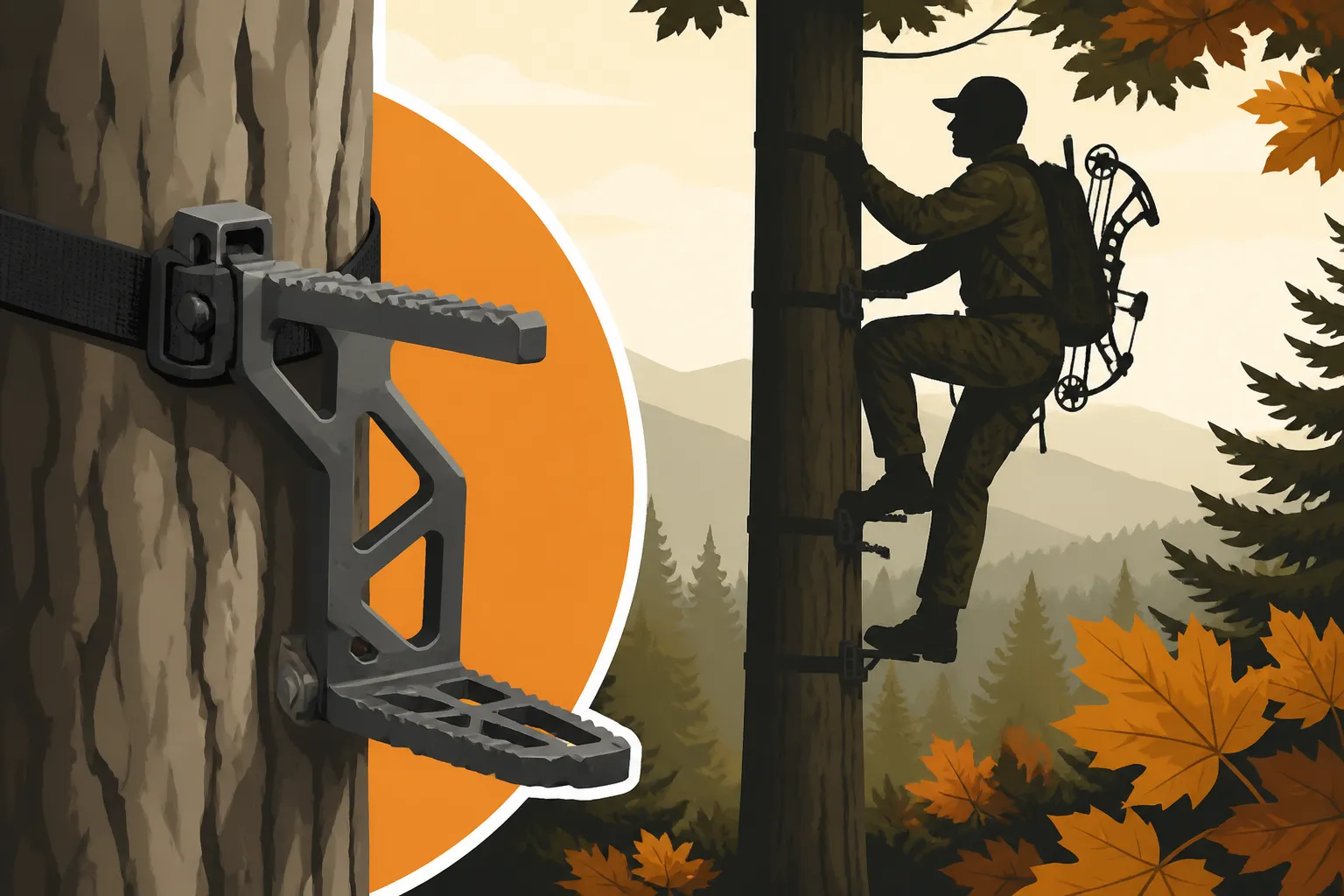
- Stand-offs: These are the arms that brace the stick away from the tree trunk. Look for stand-offs that are long enough to provide ample foot clearance, especially if you wear bulky winter boots. More importantly, they need a robust, non-slip texture or aggressive teeth to bite into the bark. This prevents the stick from twisting or sliding down the tree, especially when encountering wet or icy bark.
- Foot Platform/Steps: The steps themselves should be wide enough to comfortably support your foot, even when wearing heavy boots. Aggressive gripping surfaces, serrated edges, or even a slight upward angle can prevent your foot from slipping in wet or icy conditions. Some sticks feature double steps, allowing you to place both feet on one stick, which can be useful for stability or when pausing to pull up the next stick.
- Attachment System Security: The straps or cam systems must create a vice-like grip on the tree. Any perceptible movement or wobble in a stick section is a red flag. High-quality systems will lock down tightly and remain secure throughout your climb. Remember, you're relying on these sticks to get you safely up and down, so their ability to maintain a secure purchase on various tree diameters and bark types is non-negotiable. This secure feeling is critical when you're 20 feet up in a swaying tree. For more on ensuring your setup is safe, check out Treestand Safety Gear for Steep Ground.
Setting Up Your Climbing Sticks Safely and Effectively
Once you have the right sticks, knowing how to use them properly is just as important. Safety and efficiency are paramount, especially when you're deep in the Adirondack wilderness where help is a long way off.
Pre-Season Practice and Familiarity
I cannot stress this enough: practice, practice, practice! The last thing you want is to be fumbling with your climbing sticks for the first time in the pre-dawn darkness, in freezing temperatures, with deer potentially a hundred yards away. Before the season opens, dedicate several sessions to setting up and taking down your sticks in your backyard.
Start with a simple, straight tree. Learn how the straps work, how the cam buckles engage, and how to tighten them securely. Pay attention to any noise your system makes and find ways to eliminate it. Once you're comfortable with that, move to more challenging trees: one with a slight lean, one with a rough bark, one with lower limbs you need to work around. Practice getting your sticks leveled and spaced correctly. Get into a rhythm. This repetitive practice builds muscle memory, making the process smoother, faster, and quieter when it really counts. You should be able to climb confidently and efficiently, even with your hunting pack on. Don't underestimate the value of this familiarization; it could literally save your hunt, or even prevent an injury.
Optimal Stick Spacing and Height
Proper stick spacing is a delicate balance between efficiency and safety. You want enough distance between sticks to minimize the number of sections you need to carry and set, but not so much that you're struggling to reach the next step.
- Achieving Optimal Spacing: A common practice is to space sticks about 20-24 inches apart, which is roughly the distance from your knee to your hip. Some hunters prefer even wider spacing, especially if they are tall, to reduce the number of sticks. However, wider spacing can make climbing more strenuous and less stable. You'll need to experiment in your practice sessions to find what works best for your height and leg strength. Remember to always maintain three points of contact while climbing: two hands and one foot, or one hand and two feet.
- Determining Desired Height: How high do you need to go? In thick Adirondack hardwoods, getting above the immediate understory can be crucial for visibility and scent control. This often means 15-20 feet, sometimes more, depending on the terrain and density of the canopy. You'll need enough sticks to achieve this height comfortably, allowing one stick to be just below your stand platform. Consider that the highest stick should ideally be positioned so you can safely step onto your stand without reaching too far or making a dangerous lunge. This means your last stick might be at chest height when you're standing on your platform. Think about the overall setup when planning for Treestand Setups in Adirondack Hardwoods.
Incorporating a Safety Line and Harness
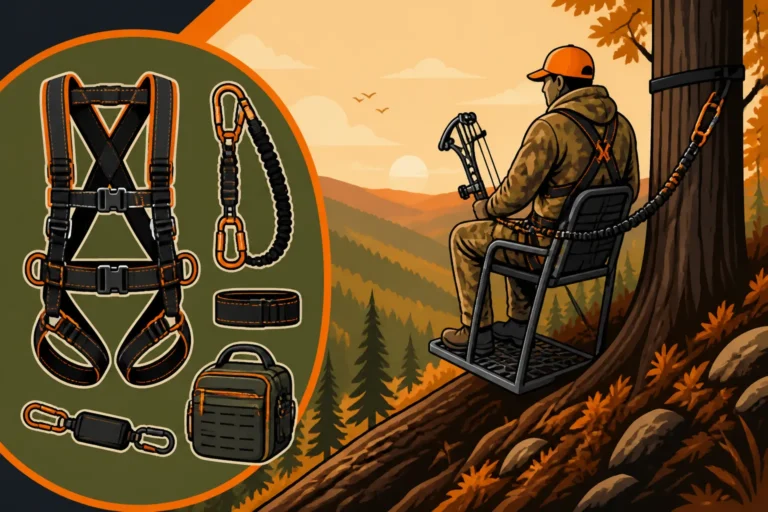
Safety is paramount when hunting from an elevated position. No matter how experienced you are or how sturdy your sticks feel, an accident can happen in an instant. This is why a full-body harness and a lineman's climbing belt are absolute non-negotiables.
- Lineman's Belt: A lineman's belt allows you to remain securely attached to the tree while you are attaching your climbing sticks and setting your stand. You clip it around the tree and to D-rings on your harness, keeping both hands free to work. As you climb, you move the lineman's belt up ahead of you, re-securing it each time before taking your next step or attaching another stick. This simple piece of gear drastically reduces the risk of falling during the most precarious part of your setup.
- Tree Safety Line: Once your stand is hung, a separate tree safety line (also known as a tether or lifeline) is essential. This rope attaches above your stand and extends to the ground, allowing you to clip into it with a prusik knot or similar device from the moment your feet leave the ground until you are safely back on terra firma. This ensures you are always tethered to the tree, preventing a fall should you slip on a stick, lose your balance on the stand, or have a component fail. Never, ever climb without being attached to a safety device. It's a fundamental rule of treestand hunting, and a non-negotiable for anyone who values their life.
Comparing Popular Climbing Stick Options for New York Hunters
With so many options on the market, choosing the right climbing sticks can feel overwhelming. Let's look at some common categories and what makes them suitable for New York's diverse hunting landscape, particularly the Adirondacks. We'll also naturally weave in a mention of GoHunt as a resource.
Lightweight Backpacking Sticks
For hunters who frequently venture deep into the Adirondack Forest Preserve or explore remote corners of state forests, lightweight backpacking sticks are the ultimate choice. These sticks prioritize minimal weight and a compact profile for easy transport over long distances. They are typically made from high-grade aluminum or carbon fiber.
Often, these sticks feature a "double-step" design, meaning each stick offers two steps, one on each side, or a single wide platform. This can reduce the number of individual sticks you need to carry for a given height, further cutting down on weight and bulk. Companies like Hawk, XOP, and Lone Wolf (often reviewed on sites like GoHunt) produce excellent examples in this category. Their attachment methods are usually quick-cinch cam buckles or proprietary lever systems, designed for fast and silent deployment. While they might cost a bit more than heavier options, the ease of carrying them several miles up a mountain or through a swamp is often worth every penny. These sticks are also ideal for a run-and-gun approach, allowing you to move stands quickly and efficiently if a spot isn't producing.
| Feature | Lightweight Backpacking Sticks | Robust, All-Weather Options | Budget-Friendly & Versatile Sticks |
|---|---|---|---|
| Primary Material | Aluminum, Carbon Fiber | Steel, Heavy-duty Aluminum | Steel, Standard Aluminum |
| Weight per Section | ~2-3 lbs | ~3-5 lbs | ~3-4 lbs |
| Portability | Excellent (Stackable/Nesting, low profile) | Good (Can be bulky/heavy) | Good (Often stackable but heavier) |
| Durability | Very Good (High-grade materials) | Excellent (Heavy-duty construction, weather-resistant coatings) | Good (Basic coatings, some rust potential) |
| Stealth | Excellent (Designed for silent operation, minimal rattle) | Good (Can be quieter than ultra-light if padded) | Fair (Often require hunter-added padding to quiet down) |
| Tree Adaptability | Very Good (Individual sections, versatile attachment) | Very Good (Solid attachment, but less forgiving on irregular trees) | Good (Basic attachment, may struggle with very irregular shapes) |
| Cost | High | Medium to High | Low to Medium |
| Best Use | Deep backcountry, long hikes, frequent stand moves, stealth hunts | Semi-permanent sets, short walks, extreme weather, heavy use | Beginners, multiple stands, budget-conscious, shorter walks |
Robust, All-Weather Options
Sometimes, sheer toughness and stability outweigh the need for ultra-lightweight portability. This is where robust, all-weather climbing sticks come into play. These are often made from thicker-gauge aluminum or steel and are designed to withstand years of abuse from the elements and heavy use. They might be a bit heavier than their backpacking counterparts, but they offer incredible rigidity and a sense of absolute security when you're 25 feet up a tree in howling wind and rain.
These sticks often feature larger steps with aggressive traction, thicker coatings for rust and corrosion resistance, and extremely strong attachment systems. They might not be your first choice for a five-mile trek, but for a stand you plan to leave up for a few weeks (where allowed) or for a hunting area that's a shorter, more accessible walk, they are fantastic. Brands like Muddy or some heavier-duty offerings from Summit fall into this category. They are often chosen for reliability in colder, wetter conditions, where the added weight is a trade-off for bulletproof performance. These are the workhorses that can handle a full New York's Southern Zone Firearm Season without a complaint.
Budget-Friendly and Versatile Sticks
Every hunter has to start somewhere, and budget is often a real concern. Thankfully, there are many climbing stick options that offer a good balance of affordability and functionality, making them perfect for new hunters or those looking to outfit multiple stand locations without breaking the bank. These sticks are typically made from steel or standard aluminum.
While they might not boast the lightest weight or the most advanced features of premium sticks, many budget-friendly options are surprisingly capable. They are often sectional and stackable, providing decent portability for shorter walks. You might find yourself adding a bit of stealth tape or bungee cord to quiet them down for transport, and the steps might not be as wide or grippy as higher-end models, but they absolutely get the job done. Brands like Rivers Edge or basic models from Academy Sports often fit this description. They are an excellent way to get into elevated hunting and prove whether climbing sticks are the right system for your style before investing in more expensive gear. These sticks are also great for setting up on private land or within shorter distances of parking on public land, where extreme weight savings aren't as critical. Checking hunting forums or product reviews, perhaps on a resource like GoHunt, can help you find solid, entry-level options that punch above their weight class.
Maintenance and Longevity of Your Investment
Your climbing sticks are a significant investment in your hunting safety and success. Proper care and maintenance will ensure they last for many seasons and remain reliable every time you climb.
Post-Season Cleaning and Inspection
Once the hunting season wraps up, don't just toss your sticks in a corner of the garage. Take the time to properly clean and inspect them.
- Cleaning: Use a stiff brush and warm, soapy water to remove all dirt, mud, blood, and sap. Pay close attention to any crevices, hinge points, and the gripping surfaces of the steps. Rinse thoroughly and allow them to air dry completely before storage. Any moisture left on metal components can lead to rust or corrosion over the off-season. For straps, inspect them for dirt or debris and clean them gently if needed, but avoid harsh chemicals that could degrade the material.
- Inspection: This is crucial. Check every single component. Look for:
- Cracks or Bends: Inspect all aluminum or carbon fiber sections for hairline cracks, especially around welds or connection points. For steel sticks, look for bends or dents that could compromise structural integrity.
- Loose Fasteners: Check all bolts, screws, and rivets to ensure they are tight. If anything is loose, tighten it carefully, but don't over-tighten, which can strip threads or distort components.
- Strap/Chain Wear: Examine straps for fraying, cuts, sun damage, or excessive wear. For chains, look for stretched links, rust, or weak points.
- Cam Buckle/Lever Function: Test all attachment mechanisms to ensure they operate smoothly and engage securely. Lubricate with a dry lubricant if they are sticky, avoiding wet lubricants that can attract dirt.
- Foot Grips/Texturing: Ensure the steps still provide adequate traction. If they're excessively worn, they might need replacing or texturing.
If you find any significant damage during this inspection, err on the side of caution. Your life depends on this gear.
Replacing Worn Components
One of the great advantages of quality climbing sticks is that many components are replaceable. You don't necessarily have to buy an entirely new set if a single part wears out.
- Straps: The straps are often the first component to show wear, especially with repeated use and exposure to the elements. Most manufacturers sell replacement straps specifically designed for their sticks. Don't try to jury-rig a solution with generic webbing; always use manufacturer-approved replacements to ensure a safe and secure fit. Some hunters, particularly those using older sets, may even swap out standard straps for higher-quality, quieter aftermarket versions if they are compatible.
- Cam Buckles: If a cam buckle becomes sticky, bent, or fails to engage properly, it's a critical safety issue. These can often be replaced, either individually or as part of a replacement strap kit. Again, stick to manufacturer parts to ensure proper function.
- Rubber Boots/Pads: Many sticks have rubber caps on the ends or padding on the stand-offs to protect the tree and reduce noise. These can wear out or fall off. Replacing them helps maintain stealth and prevents metal-on-tree contact.
- Steps/Hardware: While less common, some manufacturers offer replacement steps or specific hardware (like specialized bolts) if they become damaged. Always check with the manufacturer's customer service or website for availability of replacement parts. Regular checks, like those you'd do for your primary stand Climber Stands on Straight Trunks, are vital here.
Proper Storage for Off-Season
How you store your climbing sticks during the off-season can significantly impact their longevity.
- Clean and Dry: After cleaning and inspecting, ensure your sticks are completely dry before storing them. Any residual moisture can lead to rust or mildew on straps.
- Cool, Dry Place: Store them in a cool, dry environment, ideally indoors. Avoid extreme temperature fluctuations, direct sunlight (which can degrade straps and coatings), and damp basements or sheds where rust can flourish.
- Organized Storage: Keep them organized. Stack or nest them neatly. This prevents accidental damage from other gear, keeps them from becoming a tripping hazard, and makes them easy to retrieve when it's time for pre-season practice. A dedicated gear tote or a designated spot on a garage shelf works well.
- Rodent Protection: If you store them in an area where rodents might be present, consider placing straps in a sealed container or bin. Mice and squirrels are notorious for chewing through webbing, which can ruin a set of sticks overnight.
By following these maintenance practices, your climbing sticks will be ready to tackle the challenges of Adirondack hardwoods for many seasons to come, keeping you safe and helping you reach those elusive elevated vantage points.
Disclaimer
This article is for general informational purposes only and does not constitute professional advice. Laws, prices and regulations vary by location and change over time. Consult a qualified professional for guidance on your specific situation.