Turkey Shotguns and Chokes
There's nothing quite like the heart-stopping thunder of a gobble echoing through the crisp New York spring air. You've scouted your birds, practiced your calls, and put in the legwork, but when that moment comes and a big tom steps into range, you need to know your shotgun is going to deliver. Too many hunters overlook the fine details of their turkey gun setup, leading to frustration and missed opportunities. This guide is all about dialing in your turkey shotgun and choke combination, ensuring you're ready when that boss gobbler makes his grand entrance, whether you're working the edges of a southern tier field or deep in the hardwoods of the Adirondacks.
Understanding the Fundamentals of Turkey Shotguns
When it comes to pursuing New York gobblers, your shotgun isn't just a tool; it's a critical extension of your calling and scouting efforts. Choosing the right platform is the first step in building a reliable setup that you can confidently carry through varied terrain, from the thickest cover to more open forest edges.
Gauge and Action Types for New York Gobblers
For most New York turkey hunters, the 12 gauge shotgun remains the undisputed king. Its ability to handle a wide range of heavier payloads, especially the modern tungsten-based shots, means you can throw a devastating pattern downrange. You're looking for maximum pellet count and energy on target, and the 12 gauge consistently delivers. However, don't discount the 20 gauge. Advancements in ammunition technology, particularly with those super-dense tungsten alloys, have made the 20 gauge a truly viable and even preferable option for many, especially those who prioritize lighter weight and reduced recoil for longer treks or younger hunters. A 20 gauge can be an absolute hammer on turkeys when paired with the right choke and load, often outperforming older 12 gauge setups using traditional lead shot.
When considering action types, you'll primarily be looking at semi-automatic and pump-action shotguns. Semi-autos offer the advantage of reduced felt recoil and faster follow-up shots, though the latter is rarely needed in turkey hunting where a single, well-placed shot is the goal. Their gas-operated systems can absorb some of the kick from heavy turkey loads, making them more comfortable for patterning sessions. Pump-action shotguns, on the other hand, are renowned for their rugged reliability and simplicity. They're often less expensive, easier to maintain, and can cycle virtually any load, regardless of its power. For a dedicated turkey hunter who might only shoot a few rounds a year at the pattern board and then one in the field, a solid pump like a Remington 870 or Mossberg 500 is often more than enough. Both types are perfectly capable of anchoring a gobbler, so the choice often comes down to personal preference for feel, recoil tolerance, and budget.
Barrel Length and Balance in the Turkey Woods
Turkey hunting often involves moving through dense cover, sometimes crawling on your hands and knees to get into position or carefully maneuvering through brush. This is where barrel length becomes a significant factor. While longer barrels might offer a smoother swing for flying birds in upland hunting, for turkeys, a shorter barrel (typically 20-24 inches) is a distinct advantage. A compact shotgun is far easier to handle in tight spots, reducing the chance of snagging on branches or revealing your position when a gobbler is close. It allows for quicker, more precise adjustments when shouldering the gun as a tom comes into view, whether he pops up directly in front of your blind or skirts the edge of your setup.
However, it's not just about length; balance plays a crucial role too. A well-balanced shotgun feels natural in your hands, points instinctively, and doesn't feel overly front-heavy or butt-heavy. When you're lying prone or sitting against a tree, waiting for that moment, you want a gun that feels stable and comfortable to hold at the ready. A shotgun that’s too unwieldy can lead to fatigue or fumbled movements at the moment of truth. Consider how the gun feels when you mount it quickly to your shoulder, as this is often how you'll be reacting to a turkey that suddenly appears. Some hunters might even modify their stock length or add weights to achieve their ideal balance point. The right balance, combined with a manageable barrel length, helps ensure you can get on target swiftly and steadily when that tom finally commits.
The Critical Role of Turkey Chokes
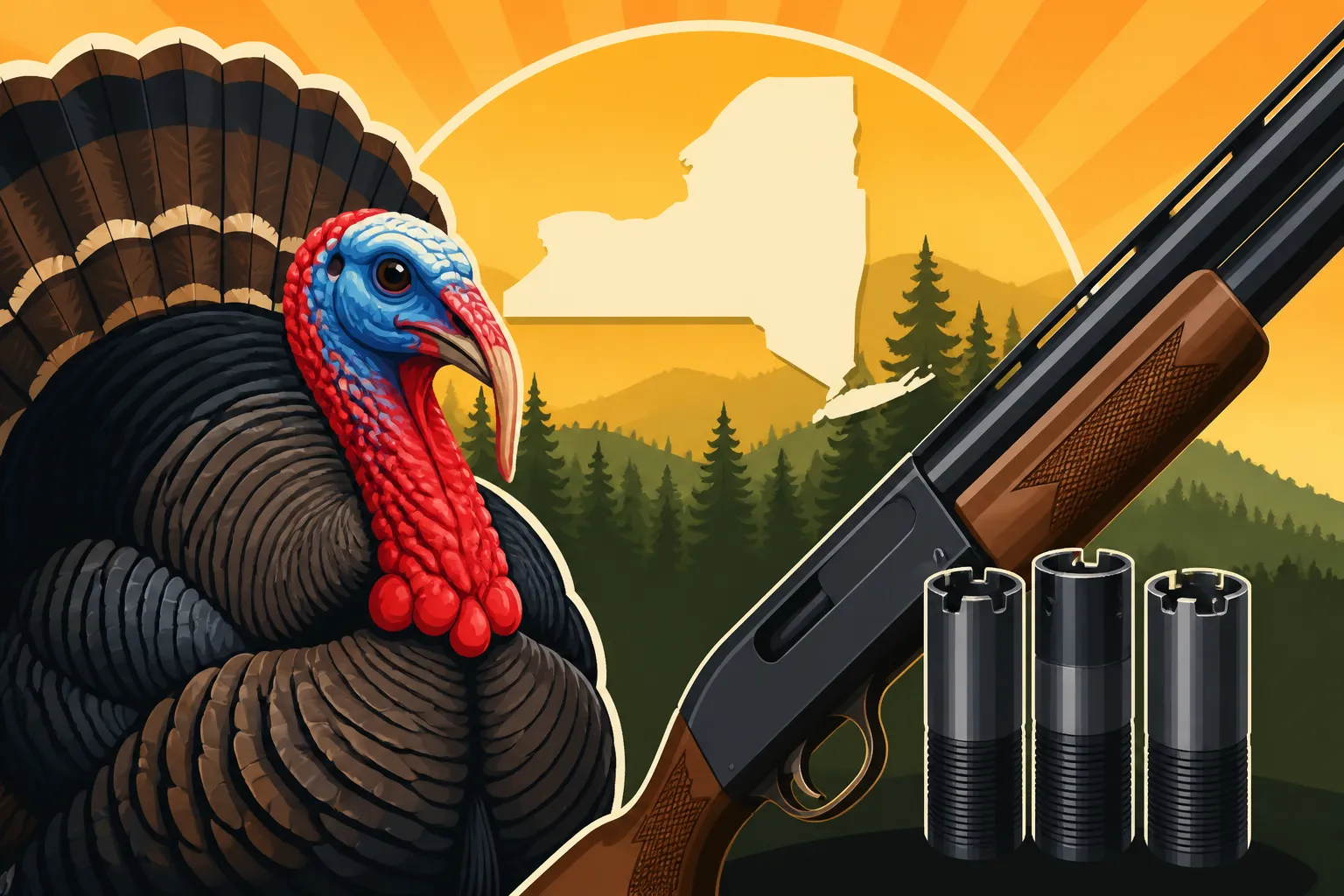
If your shotgun is the engine, the choke tube is the steering wheel, dictating exactly where and how your payload impacts its target. For turkey hunting, where precision and dense patterns are paramount, the choke becomes arguably the most critical component in your entire setup, after the ammunition itself.
Fixed Chokes Versus Interchangeable Systems
Shotguns traditionally came with fixed chokes, meaning the constriction was permanently machined into the barrel. You'd buy a "full" choke gun or a "modified" choke gun, and that was that. While some older, classic shotguns still feature fixed chokes, modern turkey hunters almost universally benefit from interchangeable choke tube systems. These allow you to screw different choke tubes into the end of your barrel, effectively changing the constriction on the fly. This flexibility is a game-changer for turkey hunters. One day you might be hunting open timber where a slightly less constricted pattern is acceptable, and the next you might be in a thick patch of pines needing an ultra-tight pattern for close-range shots.
The ability to swap chokes means you can fine-tune your pattern to different ammunition types, pellet sizes, and hunting scenarios. With modern ammunition, especially tungsten super shot (TSS), a choke that performs beautifully with one brand and shot size might perform poorly with another. An interchangeable system lets you experiment until you find the perfect match for your specific gun and load. This is why many hunters, even those with beloved older guns, often seek out newer models or have their existing barrels threaded for interchangeable choke tubes. The versatility offered by these systems is simply too valuable to pass up in the pursuit of a consistently dense and lethal turkey pattern.
Understanding Constriction and Pattern Density
A choke works by constricting the end of the shotgun barrel, forcing the shot charge into a tighter column as it exits. The degree of this constriction is what determines the "tightness" of your pattern. For turkeys, you're almost always looking for the tightest possible pattern to ensure maximum pellet density in the head and neck region, which is the only reliable kill zone. This means moving beyond "full" chokes and into the realm of "extra full," "super full," or dedicated "turkey specific" chokes. These chokes typically have constrictions ranging from .650 to .690 inches, depending on the bore diameter of your particular shotgun and the manufacturer's design. The actual measurement, rather than just the generic name, is often more important for truly understanding its performance.
The goal is to achieve a dense, consistent pattern with enough pellets (usually 100-150 pellets in a 10-inch circle) to ensure a clean kill at your intended maximum range. This isn't about hitting the turkey with a single pellet; it's about hitting it with multiple pellets simultaneously in the brain and spinal column, which leads to immediate incapacitation. A loose pattern, even with plenty of pellets, means a higher risk of merely wounding a bird. That's why understanding terms like "pattern density" and "point of impact" is crucial. When you hear hunters talk about "patterning their gun," they're meticulously testing different choke and shell combinations to find the one that puts the most pellets into a turkey head target at various distances, looking for that sweet spot of lethal coverage. It’s an exercise in precision, not just volume. Patterning a Turkey Gun at 40 Yards is an article worth checking out for a detailed guide.
Selecting the Right Choke for Your Hunting Style and Location
Choosing a turkey choke isn't a one-size-fits-all decision. What works for one hunter, gun, or location might not be ideal for another. Your hunting style, the specific ammunition you plan to use, and even the type of terrain you frequent in New York all play a role in making the best choice.
Matching Chokes to Ammunition Types
This is where things get really specific and where "turkey specific" chokes earn their keep. Gone are the days when most turkey loads were just heavy lead shot. Today, hunters have a plethora of options, including lead, bismuth, and various forms of tungsten super shot (TSS). Each of these materials behaves differently as it travels down the barrel and through the choke. Lead shot is softer and can deform more, leading to wider patterns if the choke constriction is too aggressive. Bismuth is harder than lead but softer than steel, offering a good balance of density and pattern forgiveness. TSS, however, is a game-changer. It's incredibly dense and hard, meaning smaller pellets carry more energy and maintain their shape exceptionally well. This allows for tighter patterns and extended range, even with smaller gauges.
When you're dealing with hard, non-toxic shot like TSS, you generally want a choke designed to handle it. Many modern turkey chokes are specifically engineered to produce optimal patterns with these dense alloys, often featuring slightly different internal geometries and constrictions than traditional lead-only chokes. An overly tight choke with hard shot can sometimes blow out patterns or even damage the choke or barrel, while a choke that's too open might not take advantage of the shot's inherent ability to pattern tightly. Always check the choke manufacturer's recommendations for specific shot types. Don't be afraid to experiment with different brands of turkey loads—Federal, Winchester, and Apex Ammunition all make excellent turkey-specific loads, and your gun might prefer one over the others. The goal is to find the choke-ammo marriage that gives you the densest, most consistent pattern at your maximum ethical shooting distance.
Considerations for Public Versus Private Land Hunts
New York offers a wide array of turkey hunting opportunities, from sprawling public lands to more intimate private parcels. Your choke choice can subtly reflect the demands of these different environments. On public land, especially in areas like the Finger Lakes National Forest or vast state forests, you might be covering significant ground, employing tactics like Run-and-Gun Turkey Tactics on Public Land. You might encounter birds at varying ranges, or find yourself trying to set up quickly in less-than-ideal cover. In such scenarios, a choke that offers a very dense pattern but perhaps a slightly wider "fringe" could be beneficial, providing a bit more forgiveness if a bird moves unexpectedly or your setup is slightly off.
Conversely, on smaller private tracts or when hunting over meticulously placed decoys on a Turkey Tactics for Southern Tier Field Edges setup, you might be able to dictate the range more precisely. If you know your shots will likely be within a tight 30-yard window, you can opt for an ultra-aggressive choke that puts an incredibly tight, concentrated pattern exactly where you want it. The key is to match your choke to the expected shot distance and the level of control you anticipate having over the scenario. Always remember, though, that tighter patterns mean less room for error. While a super-tight choke is lethal when centered, it's also less forgiving if your aim is off by just a few inches. Knowing your hunting grounds and your comfort zone with different shot distances is crucial.
Patterning Your Shotgun: The Non-Negotiable Step
I cannot stress this enough: if you plan to hunt turkeys, you must pattern your shotgun. It's not optional; it's absolutely essential for ethical and effective hunting. Skipping this step is like driving blind, hoping for the best. The perfect shotgun and choke combination on paper means nothing if it doesn't perform with your specific gun and your chosen ammunition.
The Pattern Board Process
Patterning your shotgun is a straightforward, albeit often noisy and shoulder-bruising, process. Here’s how it typically goes:
- Gather Your Gear: You'll need your turkey shotgun, various choke tubes you want to test, several boxes of your chosen turkey ammunition (don't skimp here!), large sheets of paper or cardboard (at least 3×3 feet), a sturdy rest (sandbags or a shooting bench), a permanent marker, and a measuring tape. Also, bring a turkey head target printout to staple onto your larger paper.
- Set Up Your Range: Find a safe place to shoot, like a designated shooting range. Set up your target sheets at your anticipated maximum ethical hunting range. For most hunters, this is often 30-40 yards, but if you’re running TSS and an aggressive choke, you might test out to 50 yards. Be realistic about your range.
- Shoot From a Rest: This isn't a free-hand shooting drill. You want to eliminate shooter error as much as possible, so use a solid rest. Aim precisely at the center of your turkey head target.
- Shoot Multiple Times: Fire at least three to five shots with each choke and ammunition combination. Why multiple shots? Because shotguns pattern differently from shot to shot, even with the same setup. Averaging helps you see the true pattern. Mark each shot with a different number or symbol so you can track performance.
- Record Everything: Label your targets with the shotgun, choke, ammunition type (brand, shot size, load), and distance. This data is invaluable as you compare results. You can use the GoHunt app or a simple notebook to keep track of your findings, which will help you refine your choices over time.
This methodical approach takes time and effort, but it pays dividends when a gobbler finally struts into view. It builds confidence, and that confidence is a huge part of success in the turkey woods.
Analyzing Your Pattern and Making Adjustments
Once you've fired your test shots, it's time for the analysis. Walk down to your target and carefully examine the results. What are you looking for?
- Point of Impact: Does the center of your pattern align with your aiming point? If your pattern is consistently hitting high, low, left, or right, you might need to adjust your sights or optics. Many dedicated turkey shotguns come with adjustable fiber optic sights, or you might be running a Red Dots on a Turkey Shotgun which allows for easy adjustment.
- Pattern Density: This is critical. Draw a 10-inch circle around the densest part of your pattern (ideally centered on the turkey's head and neck). Count the number of pellets within that circle. For a clean kill, you're looking for a minimum of 100-150 pellets, depending on pellet size and shot material. Tungsten often achieves this with fewer, smaller pellets due to its increased density.
- Consistency: Are your patterns consistent from shot to shot? If one shot is super tight and the next is blown out, that particular choke/ammo combination might be too volatile for your gun.
- Voids or Holes: Look for any significant gaps in your pattern. A large void could mean a clean miss on a critical area of the turkey's head, even if the overall pattern density is good.
After analyzing, you might decide to try a different choke, a different shot size, or even a different brand of ammunition. Sometimes a slightly less constricted choke will surprisingly pattern better with a particular load in your gun. Don't be afraid to experiment. The goal is to find the combination that consistently puts a lethal number of pellets into the target's vital zone at your chosen distance. This might mean investing in a few different choke tubes or trying various turkey loads from Federal Premium, Apex Ammunition, or other quality manufacturers until you discover what your specific shotgun truly "likes."
| Choke Constriction Type | Typical Constriction (12 Gauge) | Pellet Spread at 40 Yards (Approx.) | Ideal Use Case | Considerations |
|---|---|---|---|---|
| Full | 0.690 – 0.700 inches | Moderate to Tight | General hunting, less specialized turkey loads | Can be too open for modern TSS; good starting point |
| Extra Full | 0.670 – 0.690 inches | Tight | Common for lead and bismuth turkey loads | Good balance of density and forgiveness with lead |
| Turkey Specific | 0.650 – 0.670 inches | Very Tight | Optimal for dense tungsten (TSS) and long range shots | Less forgiving of aiming errors; requires patterning |
| Super Full/Custom | < 0.650 inches | Extremely Tight | Maximize range and pellet count with specific loads | Very little room for error; specialized |
Note: These are general guidelines. Actual performance varies significantly by shotgun, ammunition, and choke manufacturer.
Key Features and Accessories for Turkey Shotguns
Beyond the core gun and choke, a few additional features and accessories can significantly enhance your effectiveness and comfort in the turkey woods. These are often the details that seasoned hunters obsess over, because they know small advantages can make a big difference.
Sights, Slings, and Camouflage Finishes
For pinpoint accuracy on a turkey's head and neck, standard bead sights often fall short. Most serious turkey hunters upgrade to adjustable fiber optic sights, which provide a clear, bright aiming point even in low light. These sights typically consist of a front and rear sight, allowing for precise elevation and windage adjustments. Even better, many hunters are now opting for miniature red dot sights. These optics offer a single, illuminated aiming dot that is parallax-free, meaning wherever the dot is, that's where the pellets will go, regardless of slight head movement. This can be a huge advantage for quick, accurate shots in the field, especially when a gobbler appears suddenly at an awkward angle. Red Dots on a Turkey Shotgun elaborates on this popular trend.
A good sling is another non-negotiable accessory for turkey hunting in New York. Whether you're making a long walk into your hunting area on public land or just shifting positions on a private farm, carrying a shotgun for hours can be tiring. A comfortable, wide sling allows you to distribute the weight, freeing up your hands for calls, binoculars, or trekking poles. Look for slings with non-slip backing that stay put on your shoulder. Finally, a non-reflective, camouflage finish on your shotgun is crucial for blending in. Most modern turkey guns come with a factory camo pattern, but if yours doesn't, consider camouflage tape or a gun sock to break up the outline. Every bit of concealment helps when a sharp-eyed gobbler is trying to pinpoint your position.
Recoil Management and Fit
Turkey loads are powerful. They need to be to deliver the energy required for a clean kill. However, that power comes with recoil, and significant recoil can lead to flinching, poor shooting habits, and an unpleasant patterning experience. Modern turkey guns often incorporate recoil-reducing features like advanced recoil pads, gas-operated semi-automatic actions, or even specialized internal recoil reduction systems. Investing in a good aftermarket recoil pad, like those from Limbsaver or Pachmayr, can make a world of difference in your comfort, especially during those crucial patterning sessions where you'll be firing multiple heavy loads.
Beyond recoil, the overall fit of your shotgun is surprisingly important for turkey hunting. A gun that fits you well will shoulder quickly and naturally, with your eye aligning perfectly down the barrel or through your optic without having to strain or adjust your head. This might mean adjusting the length of pull (the distance from the trigger to the end of the stock) or the comb height (where your cheek rests). Some shotguns offer adjustable stocks and comb risers, allowing you to customize the fit. A proper fit ensures that when a gobbler finally struts into range, you can quickly and smoothly get on target, minimizing movement and maximizing your chances of a clean shot. Don't underestimate how much a well-fitting gun contributes to confidence and accuracy when the pressure is on.
Maintenance and Care for Your Turkey Shotgun
You’ve invested time, money, and effort into setting up your perfect turkey shotgun. To ensure it performs flawlessly when it counts, proper maintenance and care are absolutely vital. A neglected firearm can lead to misfires, malfunctions, or pattern inconsistencies—none of which you want when a New York longbeard is within range.
Keeping Your Gun Field Ready
After every hunting trip, especially if the weather was wet or damp, your shotgun needs a thorough cleaning. New York spring weather can be notoriously unpredictable, swinging from warm sunshine to cold rain or even late snow showers. Moisture is the enemy of firearms, leading to rust and corrosion. Break your shotgun down according to the manufacturer's instructions and clean all components. Pay particular attention to the barrel, removing any powder residue, plastic fouling from the wads, and lead or tungsten build-up. A good quality bore cleaner, brushes, and patches are essential. Don't forget to wipe down all metal surfaces with a light coat of gun oil to protect against moisture.
Choke tubes are especially important to maintain. They are subjected to immense pressure and can become seized in the barrel if not properly cared for. After each use, remove your choke tube, clean the threads on both the choke and the barrel, and apply a fresh coat of anti-seize lubricant. This small step prevents corrosion and ensures you can easily remove and swap out chokes as needed. A stuck choke can be a major headache. Regularly check all screws and mounting points, especially for optics like red dots, to ensure they remain tight and secure against the vibrations of shooting. A loose sight can throw off your point of impact dramatically, leading to a missed bird. New York Hunter Education Requirements always emphasize safe gun handling, but good maintenance is also a part of responsible gun ownership.
Safe Handling and Storage
Beyond cleanliness, safe handling and storage are paramount. Always treat every firearm as if it's loaded. Keep the muzzle pointed in a safe direction, keep your finger off the trigger until you are ready to shoot, and be absolutely sure of your target and what is beyond it. In the field, this means being mindful of where your muzzle is pointed when crawling or moving, especially when hunting with others. Ensure your gun is unloaded before crossing fences, climbing into a vehicle, or entering camp. This is not just a rule; it's a fundamental principle of firearms safety that protects you and everyone around you.
When not in use, your turkey shotgun should be stored securely and unloaded. A locked gun safe is the best option, keeping your firearm out of unauthorized hands and protecting it from theft. Ammunition should be stored separately. Before heading afield, double-check that your safety mechanisms are functioning correctly. A quick function check of the safety and trigger mechanism ensures everything is in working order. Transporting your shotgun to and from your hunting grounds also requires care. Many states, including New York, have specific regulations regarding the transport of firearms. Typically, this means an unloaded firearm in a case, out of reach of the driver. Always consult the most current regulations to ensure you're in compliance. Taking care of your shotgun means it will be ready to perform its best year after year, helping you bring home those hard-earned New York gobblers.
Disclaimer
This article is for general informational purposes only and does not constitute professional advice. Laws, prices and regulations vary by location and change over time. Consult a qualified professional for guidance on your specific situation.