Layout Blinds for New York Cut Corn
There's nothing quite like the sight of a massive flock of Canada geese cupping their wings, preparing to land right in front of you. But if you've ever tried to hunt them in a vast, open cut cornfield in New York, you know the frustration: where do you hide? Geese and even many duck species have incredible eyesight, and trying to hunker down behind a few meager cornstalks just doesn't cut it. This guide is all about helping you master the art of disappearing into those barren fields, transforming a challenging landscape into your secret weapon, specifically through the strategic use and setup of layout blinds.
Why Cut Cornfields Are Waterfowl Magnets in New York
New York State, with its diverse agricultural landscape, offers incredible opportunities for waterfowl hunting beyond just marshes and rivers. Those expansive cut cornfields, particularly in regions like the Southern Tier, Finger Lakes, and Western New York, become prime feeding grounds for thousands of ducks and geese, drawing them in like a powerful magnet.
The Irresistible Draw of Residual Grain
After the harvest, cut cornfields are far from empty. There's always a scattering of residual grain left behind, whether it's whole kernels, shattered pieces, or even entire dropped ears that the combines missed. For waterfowl, especially large flocks of Canada geese and many puddle duck species like mallards and pintails, this is an absolute goldmine of high-energy food. As the temperatures drop in the late fall and early winter, these birds are driven by an instinctual need to build up fat reserves for migration or to simply survive the cold New York nights.
Imagine a crisp November morning in the Finger Lakes region. The air is cold, and the geese have spent the night on a nearby lake. As dawn breaks, their natural inclination is to seek out the most calorie-rich, easily accessible food source. A freshly cut cornfield, particularly one with a good amount of waste grain, offers just that. They don't have to dive, swim, or fight currents; they can simply waddle through, picking up kernels. This makes these fields a primary destination, especially for large, established flocks. Understanding these patterns, like knowing what constitutes Late-Season Food Sources for New York Whitetails, can often give you a leg up, even if the species is different, as the concept of animals seeking sustenance remains the same.
The Challenge of Concealment in Open Fields
Now, here's where the rubber meets the road: while cut cornfields are undeniably attractive to waterfowl, they present a monumental challenge for hunters trying to hide. Unlike hunting in a cattail marsh or within the cover of a timber stand, an open field offers very little natural concealment. Geese, in particular, are renowned for their keen eyesight and wariness. They've learned to spot anything out of place from hundreds of yards, often circling high above, scrutinizing the ground below before committing to land.
Many a hopeful hunter has tried to simply squat behind a few sparse cornstalks or drape a camo net over themselves, only to watch flock after flock flare off at the last moment. The flat, often uniform landscape of a cut cornfield means that any vertical lines or unnatural lumps instantly stick out. This extreme lack of cover is precisely why specialized equipment and meticulous setup are not just helpful, but absolutely essential for consistent success when targeting these field-feeding birds. Without a proper strategy for disappearing into the environment, you're essentially just waving to the geese as they fly by.
Understanding Layout Blinds: Your Ultimate Field Hide
Given the challenges of hunting open fields, a dedicated concealment solution is paramount. This is where layout blinds shine, offering a level of invisibility that traditional methods simply can't match. They are designed to make you part of the landscape, allowing you to intercept wary waterfowl on their feeding grounds.
What Exactly Is a Layout Blind?
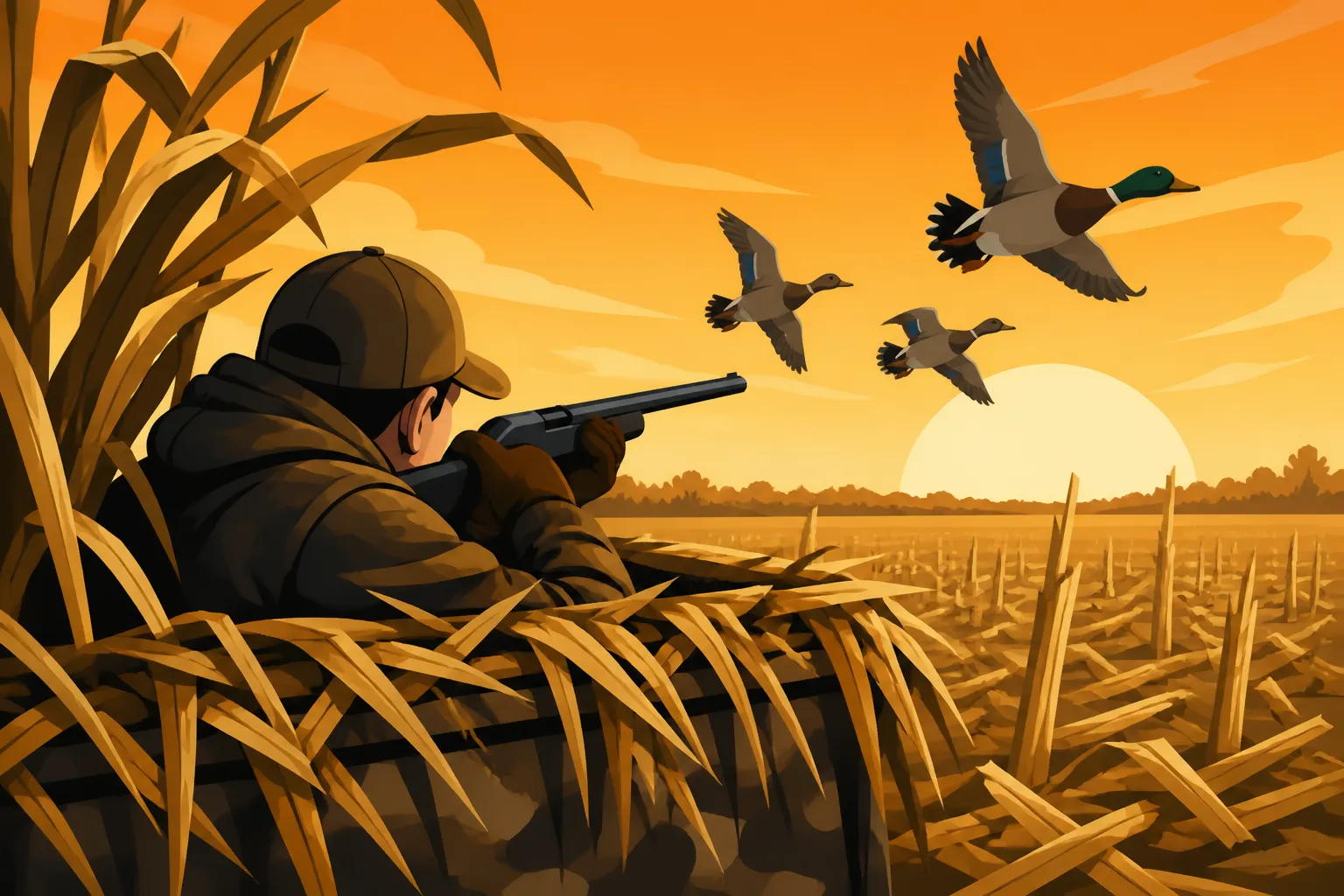
At its core, a layout blind is a low-profile, portable hunting shelter designed to completely conceal a hunter in an open field. Think of it as a personal coffin-sized tent, but instead of being tall, it's built to hug the ground. Typically, it consists of a lightweight metal or fiberglass frame covered with a durable, weather-resistant fabric shell, often in camouflage patterns. The hunter lies down inside, usually on a padded seat or backrest, keeping their body horizontal to minimize their profile.
The magic happens when birds approach. Most layout blinds feature a spring-loaded lid or doors that can be quickly opened, allowing the hunter to sit up or even stand to take a shot. The goal is to appear as just another bump or variation in the field until the very last second. This design dramatically reduces the visible footprint of a hunter compared to a sitting or standing position. Many models even come equipped with stubble straps or pockets on the exterior fabric, specifically designed to hold local vegetation, allowing you to "brush in" your blind and make it truly disappear into the surroundings. When you're lying in one, perfectly blended into a Layout Blind Hunting Finger Lakes Fields scenario, it's amazing how close those birds will come.
Key Features to Look For in a New York Layout Blind
Choosing the right layout blind can make a big difference in your comfort and success, especially given New York's variable weather and diverse terrain. Here are some critical features to consider:
- Durability and Weather Resistance: New York hunting can throw everything at you, from driving rain to heavy snow and bitter winds. You need a blind built to withstand these conditions. Look for robust, waterproof fabrics and sturdy frames that won't bend or break with repeated use or strong gusts. Reinforced stitching and quality zippers are indicators of a well-made blind that will last more than a season.
- Ease of Setup and Takedown: You might be moving your spread frequently based on where the birds are hitting the field. A blind that takes forever to assemble or collapse will eat into your valuable hunting time. Look for designs that are intuitive, quick to set up, and pack down efficiently. Some models even feature a "pop-up" style frame for ultra-fast deployment.
- Comfort and Insulation: Hunting waterfowl often means long, cold waits. A comfortable blind with good padding, especially for your back and head, can make those hours much more bearable. Pay attention to insulation properties; some blinds offer thicker bases or can accommodate extra padding to help keep the cold ground from sapping your body heat. Consider the internal dimensions – can you fit comfortably with all your layers and gear?
- Weight and Portability: You'll likely be hauling your blind, decoys, shotgun, and other gear across muddy fields, sometimes for considerable distances. A lighter blind makes this chore much easier. Look for integrated backpack straps or a design that can be easily carried. While you might be using a mapping application like GoHunt to scope out your fields, remember that digital tools don't carry your gear, so portability is key.
- Effective Stubble Straps/Loops: This is perhaps the most important feature for concealment. The exterior of your blind should have ample, well-placed stubble straps, loops, or pockets where you can weave in natural vegetation from the field. Without these, brushing in your blind becomes a much more difficult and less effective task. The more places you have to attach cornstalks, grass, and weeds, the better your chances of truly disappearing.
Consider your primary hunting style and typical New York conditions when making your selection. A minimalist, super-light blind might be great for quick, mobile hunts, while a more robust, feature-rich blind could be ideal for all-day sits in freezing weather.
Mastering the Art of Brushing In Your Layout Blind
A layout blind out of the box, no matter how good its camo pattern, is essentially a brightly colored, low-slung tent. To be truly effective in a New York cut cornfield, it needs to become one with the environment. This is where the critical art of "brushing in" comes into play – transforming your blind into an invisible part of the field.
The Crucial Role of Natural Camouflage
Waterfowl, especially geese, possess an uncanny ability to spot anything unnatural in their environment. From hundreds of yards up, a solid block of camo-patterned fabric, even if low to the ground, can stand out against the subtle, varied textures and colors of a harvested field. The goal of brushing in isn't just to cover your blind; it's to break up its outline and mimic the surrounding vegetation.
Think about it like this: if every cornstalk around your blind is broken, bent, and varying in height, but your blind presents a perfectly smooth, straight line, it's going to be a red flag to incoming birds. You need to create a visual continuity between your blind and the field around it. This means using the exact materials found on the ground you're hunting—cornstalks, dry grass, weeds, and dirt—to make your blind look like just another natural, random lump in the field. Ignoring this step is akin to wearing a bright orange vest in a deer stand and expecting to go unnoticed. It’s the difference between merely being camouflaged and being truly invisible.
Step-by-Step Brushing In for Cut Corn
Brushing in isn't just about throwing a few stalks on top; it's a systematic process that ensures maximum concealment.
- Gathering Your Materials: Before you even set up your blind, take a few minutes to walk the field and gather plenty of cornstalks, broken cobs, dry grasses, and any other prevalent weeds. You'll need more than you think, so don't be shy. The key is to use the exact materials that are naturally occurring in that specific field. If the field is mostly dry, brittle corn stubble, that's what you want to use. You can often find areas with denser, taller stubble near the field edges or in drainage ditches that provide excellent material. Sometimes, checking mapping tools like GoHunt can give you an idea of the field's history and potential vegetation if you're scouting new ground.
- Strategic Placement of Stubble: Begin by weaving cornstalks and other larger pieces of vegetation into the stubble straps or loops on the sides of your blind. Start from the bottom and work your way up. Don't lay them flat; angle them, break them, and crisscross them to create a natural, unkempt look. The goal is to eliminate any straight lines or obvious edges of the blind. Pay extra attention to the corners and the connection points of the lid. When practicing your setup for Brushing In a Blind on a Field Edge, these principles are identical.
- Layering for Depth and Texture: Once the main structure is covered, start layering in smaller pieces of broken corn cobs, loose kernels, and dried grass on top and around the blind. This adds texture and depth, further breaking up the blind's silhouette and making it look more like settled field debris. If the ground is muddy, lightly smear some mud on the blind's fabric (especially on new blinds) to dull any sheen and further blend it in.
- Eliminating Shadows and Gaps: From an overhead perspective (the waterfowl's view), shadows and dark gaps are dead giveaways. Ensure that the stubble is thick enough to prevent any dark voids under the blind, and that it casts natural-looking shadows. If the sun is at a low angle, even a well-brushed blind can cast a revealing shadow, so try to use broken stubble to blend the shadow line.
- Head and Face Concealment: Your head and face are often the highest points of exposure when you pop up. Ensure that the brushing around the headrest area is sufficient to allow you to peek out without being seen, but also dense enough to hide your profile until you're ready to shoot. Many hunters add a small handful of stubble to the top of their blind's lid as well. This final detail is crucial for making your Layout Blind Hunting a Cut Cornfield experience successful.
Remember, the goal is not to make your blind look pretty or neat; it's to make it look like nothing at all. Take a step back and look at your setup from different angles, and even have a friend walk away and approach, asking for their honest feedback on how well it disappears.
Strategic Placement and Decoy Spreads for Success
Even a perfectly brushed-in layout blind won't do you much good if it's placed in the wrong spot or if your decoy spread isn't convincing. Successful field hunting for waterfowl is a chess game of observation, understanding bird behavior, and presenting an irresistible invitation to land.
Reading the Field: Where to Place Your Blinds
Waterfowl are creatures of habit and efficiency. They fly specific routes, land in preferred spots, and generally follow the path of least resistance. Your job as a hunter is to observe these patterns and set up accordingly.
- Observation is Key: Before hunting a field, spend time scouting. Watch from a distance (even a day or two before) to see where birds are entering the field, where they're landing, and where they're feeding. Are they consistently hitting one corner? Are they landing in the middle? Do they seem to follow a particular tree line or ditch? This intelligence, often gatherable through tools like the GoHunt app which can display property lines and terrain, is invaluable. For example, understanding Hunting a Standing Cornfield in Farm Country often involves noting how deer use edges; waterfowl often use similar patterns.
- Wind Direction is Non-Negotiable: Waterfowl, especially geese, almost always land into the wind. This is crucial for their flight control. Therefore, your layout blinds must be positioned with your back to the prevailing wind, facing the direction the birds will approach. This allows you to pop up and shoot at birds that are slowing down and presenting a broad target. Never set up with the wind at your face, as birds will be landing behind you, flying away from your shooting zone.
- Utilize Subtle Terrain Features: While cornfields often appear flat, they frequently have subtle dips, swales, or slight rises. These natural depressions are excellent places to position your blinds, as they provide even more natural concealment and further break up your profile. A low drainage ditch or the edge of a slight knoll can offer those precious extra inches of cover. Likewise, look for fencerows, small clumps of weeds, or even tractor tire ruts that can aid in hiding the blind. Using the detailed aerial imagery on the GoHunt platform can help you identify these subtle terrain changes even before you step foot in the field, much like how you might use aerial photos when Reading Aerial Photos for Southern Tier Deer.
- Consider Sun Position: Try to place your blinds so that the sun is at your back or to your side. This illuminates the approaching birds while keeping your position in shadow, making it harder for them to spot you. Glare in your eyes can also make shooting difficult.
Effective Decoy Spreads for Wary Waterfowl
Your decoy spread is your advertisement to the birds, telling them, "It's safe to land here, and there's plenty of food!" The type of spread depends heavily on the species you're targeting.
- Goose Spreads: When hunting Canada geese, bigger is often better, but realism is paramount. Use full-body decoys if possible, or high-quality silhouettes, to create a convincing flock. A common setup is a main feeding flock with a "landing strip" or "kill hole" directly in front of your blinds. This landing strip should be clear of decoys, giving the birds an inviting place to set their wings. You might have smaller groups of "loafing" geese nearby or even a few "sentry" geese with their heads up at the edges of the spread. Don't be afraid to experiment; sometimes a tight bunch works, other times a more scattered, natural-looking spread is key. For more on this, check out Early Goose Season Tactics in New York.
- Duck Spreads: For puddle ducks like mallards that hit cornfields, you'll generally use fewer decoys than for geese. A dozen or two mallard decoys, often with a few pintails or other dabblers mixed in, can be very effective. Again, create that open landing zone in front of your blinds. Movement is crucial for ducks; a few spinning-wing decoys (where legal and appropriate) or a jerk rig can add lifelike motion that seals the deal. The same principles apply whether it’s for Decoy Spreads for New York Divers on open water or dabblers in a field—natural movement and a welcoming landing zone are key.
- Placement and Orientation: Ensure your decoys are facing into the wind, just like real birds. Vary their head positions—some feeding, some loafing, a few with heads up. Avoid perfectly symmetrical patterns; nature is messy. Place your decoys so that incoming birds will commit to landing directly in front of your blinds, giving you a clean shot. The distance is important; you want them close enough for an ethical shot, but far enough that they don't land directly on top of your blinds, potentially flaring.
- Flags and Motion Decoys: A goose flag can be incredibly effective for grabbing the attention of distant birds and giving the impression of an active, feeding flock. Use it sparingly to simulate a goose flapping its wings as it lands or takes off. Spinning-wing duck decoys, while sometimes controversial among hunters, can draw in ducks from long distances. Always check local regulations on motorized decoys.
By meticulously scouting, understanding wind dynamics, leveraging subtle terrain, and setting a realistic and inviting decoy spread, you dramatically increase your chances of pulling those wary New York waterfowl right into your carefully concealed layout blinds. It’s a rewarding challenge that makes every successful hunt feel earned.
| Brushing Material | Pros | Cons | Best For |
|---|---|---|---|
| Corn Stalks | Abundant, natural, excellent breaking up | Can be brittle, easily blown away if not secured | Any cut cornfield, provides good vertical texture |
| Dried Grass/Weeds | Adds fine texture, good for blending edges | Less structure for breaking large outlines | Filling gaps, softening edges, blending into stubble |
| Dirt/Mud | Dulls sheen, provides natural color | Messy, can add weight, not for all blind types | New blinds, dulling shiny fabric, blending into darker soil |
| Hay/Straw | Soft, easily shaped, good insulation | Less common in cornfields, can look out of place | If nearby fields have hay, adds bulk and warmth |
| Tree Branches | Strong, good for breaking hard lines | Not natural in open cornfields, can be too bulky | Only if hunting very close to a woodline, use sparingly to avoid looking out of place |
Disclaimer
This article is for general informational purposes only and does not constitute professional advice. Laws, prices and regulations vary by location and change over time. Consult a qualified professional for guidance on your specific situation.