Rubber Boots for Swamp Walking
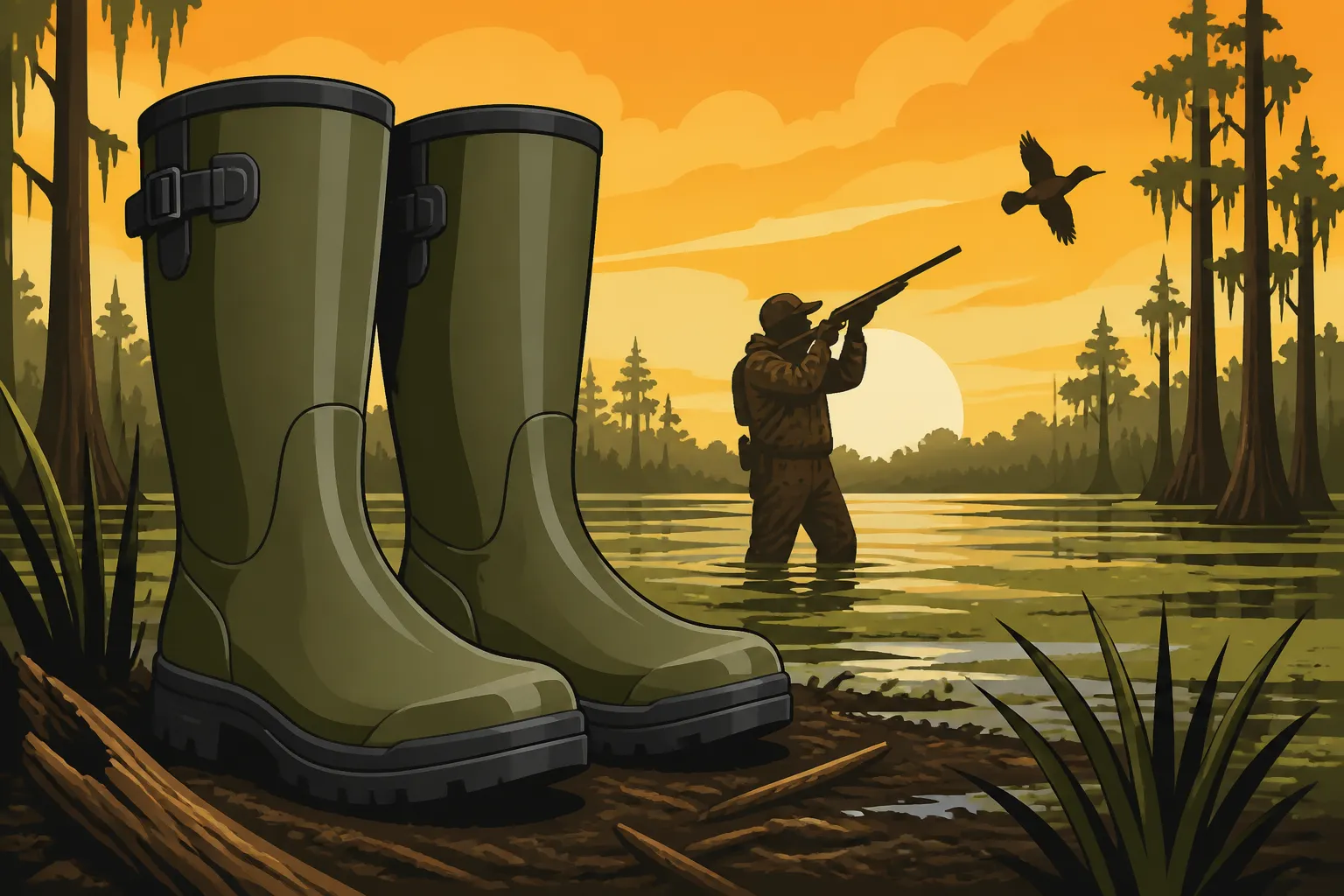
There's nothing quite like the crushing disappointment of cold, wet feet seeping into your boots when you're deep in the New York woods, especially when you're trying to sneak through a cattail marsh or cross a beaver-dammed creek. That bitter cold feeling can ruin an otherwise perfect hunt, sending you back to the truck long before you intended. Whether it's the squishy mud of the Southern Tier's creek bottoms or the icy slush of an Adirondack swamp in late season, proper footwear is paramount. This guide is all about helping you understand why quality rubber boots are indispensable for navigating New York's waterlogged terrain and how to choose and care for the pair that will keep you dry, warm, and comfortable, no matter how much water stands between you and your game.
The Unforgiving Reality of New York's Swamps and Wetlands
New York State is a mosaic of habitats, and a significant portion of that includes swamps, marshes, bogs, and flooded timber. From the vast cattail stands bordering the Great Lakes to the winding creek bottoms of the Catskills, and the sprawling beaver flows of the Adirondacks, you’re almost guaranteed to encounter water, mud, or both when pursuing game. Trying to hunt these productive areas with inadequate footwear is a recipe for misery, and often, failure.
Why Standard Hunting Boots Just Don't Cut It
Many hunters make the mistake of thinking their waterproof leather or synthetic hiking boots will suffice for swamp country. While these boots are fantastic for dry to damp conditions, they simply aren't designed for sustained submersion or wading through deeper water. The "waterproof" membrane in a typical hunting boot might repel a splash or a short walk through wet grass, but introduce it to knee-deep mud or a prolonged soak, and that membrane will inevitably fail. Water finds a way, seeping in through seams, laces, or even over the top if the water level rises unexpectedly.
Imagine you've been Scouting New York Public Land Before Season and found a perfect pinch point for deer movement, but it requires crossing a narrow, mucky creek. You try to tiptoe across, but your "waterproof" leather boots sink deeper than anticipated, and within minutes, you feel that tell-tale cold seep. Now your socks are soaked, your feet are freezing, and the quiet stalk you had planned turns into a squishy, uncomfortable trudge. Worse, in colder weather, wet feet rapidly lead to hypothermia concerns. You might as well pack it in. Fabric and leather boots, while breathable and comfortable for hiking, absorb water, become heavy, and lose their insulating properties once wet. They take forever to dry, which is a significant issue if you're on a multi-day hunt or need to be back out early the next morning.
Beyond Just Keeping Your Feet Dry: Comfort and Safety
While keeping your feet dry is the primary goal, quality rubber boots offer much more. New York's swamps aren't just wet; they're often cold, slippery, and full of hidden hazards. Early archery season might see you sloshing through tepid water, but come late muzzleloader season, that same water could be near-freezing, or even covered with a thin, brittle layer of ice.
The right rubber boot provides crucial insulation against the cold water. Without it, your feet will quickly lose warmth, leading to discomfort, numbness, and a reduced ability to react quickly. Beyond temperature, stability is key. Muck, submerged roots, moss-covered rocks, and slippery logs all present tripping hazards. Standard boot treads might pack up with mud, turning your footing into a treacherous slide. A good pair of rubber boots will feature aggressive, self-cleaning outsoles designed to grip in these challenging conditions, helping you maintain your balance and preventing a potentially dangerous fall. If you're Hunting the Lake Champlain Marshes or Hunting a Funnel Between Two Swamps, you'll appreciate every bit of extra grip and warmth. The peace of mind that comes with knowing your feet are secure and protected allows you to focus on the hunt, not on your uncomfortable footwear.
Essential Features for Your New York Swamp Boots
When it comes to selecting rubber boots for swamp walking in New York, you can't just grab any old pair. There are specific features that elevate a good boot to an indispensable piece of gear for serious hunters. Ignoring these details will leave you disappointed, uncomfortable, and potentially wet.
Material and Construction: The Waterproof Foundation
The very essence of a swamp boot is its waterproof nature, and that comes down to the materials and how they're put together. Most quality swamp boots are made from either vulcanized rubber or neoprene.
Vulcanized rubber boots, often just called "rubber boots," are the traditional choice. They offer excellent durability and puncture resistance, which is vital when you're pushing through thick Rabbit Hunting Thick New York Brush or stepping over broken branches and briars. The manufacturing process involves heating and pressing rubber layers, creating a truly impermeable barrier with seamless construction. These boots tend to be stiffer than neoprene, which can be a pro or con depending on your preference for ankle support versus flexibility. Look for robust, thick rubber that can stand up to abuse. On the downside, traditional rubber can be less flexible in extreme cold and sometimes heavier than neoprene.
Neoprene boots, often seen as a hybrid, combine the waterproof nature of rubber with the insulating and flexible properties of neoprene (the same material used in wetsuits). These boots usually have a rubber lower section for durability and a neoprene upper for flexibility and warmth. The neoprene upper is fantastic for comfort, conforming to your leg, and providing an inherent insulation value even when submerged. This flexibility is a huge advantage when navigating tricky terrain or needing to bend your ankle frequently. However, neoprene can be more susceptible to snags and tears from sharp objects like barbed wire or aggressive briars compared to pure heavy-duty rubber. Always inspect the seams and attachment points, as these are critical areas for maintaining waterproof integrity. Many hunters use resources like GoHunt to research specific boot models and read user reviews focusing on durability in harsh environments.
Insulation: Battling the Chill
New York's hunting seasons span a wide range of temperatures, from mild early archery days to bone-chilling late-season firearm hunts. The insulation in your rubber boots is crucial for warmth, especially when you're sitting still for extended periods or wading into cold water.
Manufacturers use various insulation materials, with popular options including Thinsulate, foam, and fleece linings. Thinsulate is a synthetic microfiber insulation known for its ability to provide warmth without excessive bulk. Boots can range from uninsulated (for warm weather or active early season hunts) to heavily insulated with 1000g or more of Thinsulate for extreme cold. For late-season hunts where you might be Cold-Weather Sitting Strategy in New York in a stand overlooking a marsh, heavy insulation is non-negotiable. Even on milder days, wading into cold water can quickly draw heat from your body if your boots aren't adequately insulated.
When choosing insulation, consider your typical hunting style and the temperatures you expect to face. If you primarily hunt early archery in October, a lighter insulation like 200-400g might be sufficient, or even uninsulated boots if you're layering with thick wool socks. For Muzzleloader Tactics in December Cold or hunting when there's snow and slush, you'll want at least 800g of insulation, possibly more. Remember that neoprene itself offers some inherent insulation, so a neoprene boot with 600g of Thinsulate might feel as warm as a pure rubber boot with 800g. It's a balance between warmth, bulk, and weight, and paying attention to this detail will prevent frozen toes.
Outsole and Tread: Grip in the Gloom
The outsole, or sole, of your rubber boot is your connection to the ground, and in swampy, muddy, and often slippery New York terrain, its design can make or break your hunt, or even prevent an injury. You need reliable traction.
Look for deep, aggressive lugs on the sole. These pronounced patterns are designed to bite into soft mud, loose soil, and uneven ground, providing superior grip compared to shallower, more street-friendly treads. A "self-cleaning" tread pattern is also highly beneficial. This means the lugs are spaced in such a way that mud and debris naturally shed as you walk, preventing the sole from caking up and turning into a slick, ineffective slab. This is particularly important when moving from a mucky marsh into drier woods or vice versa.
The material of the outsole also matters. Softer rubber compounds tend to offer better grip on wet, hard surfaces like submerged rocks or slick roots, but might wear faster. Harder compounds are more durable but can be less grippy. A good balance is usually found in quality hunting boot brands. Consider the terrain you'll be navigating. If you're constantly walking over submerged logs and rocks, a sole with good edge traction will be crucial. If it's mostly thick, soft mud, the depth and spacing of the lugs will be your priority.
Fit and Support: Long Days on Wet Ground
Even the most waterproof and insulated boot is useless if it doesn't fit properly or causes discomfort over a long day. A good fit is essential for both performance and preventing fatigue.
Rubber boots typically offer less adjustability than lace-up boots, so getting the sizing right is critical. You want a snug fit that prevents your foot from sliding around inside the boot, which can lead to blisters and instability. However, you also need enough room to wear the appropriate socks – often a thin liner sock and a thick wool sock for warmth. Trying on boots with the socks you intend to wear is crucial. Stand up, walk around, and simulate different movements like bending your ankle.
Ankle support, while not as rigid as in a traditional hiking boot, is still important. A well-designed rubber boot will provide enough support to prevent excessive ankle roll on uneven ground. Some boots feature an internal support structure or a contoured fit around the ankle. Look for designs that prevent heel lift within the boot, as this is a common cause of blisters. Many hunters consult online reviews and guides, some offered by platforms like GoHunt, to gauge real-world fit and comfort before committing to a purchase. Pay attention to the calf fit as well; too tight and it can restrict circulation, too loose and it can cause chafing or allow water to splash in.
Choosing the Right Height and Style for Your Hunt
The world of rubber hunting boots isn't one-size-fits-all. The height and style of the boot play a significant role in how effective and comfortable they'll be for your specific New York hunting adventures. Picking the wrong height can mean the difference between dry feet and a day of regret.
Calf, Knee, or Hip: How High Do You Go?
The height of your boot directly correlates to the maximum water depth you can confidently traverse. It's a simple equation: the higher the boot, the deeper you can go.
- Calf-High Boots (around 12-14 inches): These are generally the shortest option in dedicated hunting rubber boots. They're great for situations where you expect wet grass, shallow puddles, or damp ground, but not significant wading. They offer good flexibility and are lighter, making them more comfortable for extensive walking where deep water isn't a constant concern. If you're mostly Hunting a Standing Cornfield in Farm Country where drainage might be poor, but major water crossings are rare, calf-high might suffice. However, for true swamp walking, they're often too short.
- Knee-High Boots (around 16-18 inches): This is the most popular and versatile height for New York swamp hunters. Knee-high boots offer a good balance of protection and mobility. They allow you to wade confidently through most shallow creeks, flooded timber, and marsh edges without fear of water topping over. This height is ideal for most scenarios where you expect intermittent wading, like navigating a beaver flow or moving through a cattail marsh to set up for waterfowl. They provide ample protection for crossing most muddy sections and smaller bodies of water encountered during deer, turkey, or small game hunts.
- Hip Waders (Full-Length, extending to your waist): While not technically "boots" in the traditional sense, hip waders are worth mentioning for hunters who anticipate consistent deep wading, but don't need full chest waders. These are essentially knee-high boots integrated with waterproof pants that extend to your waist, often with suspenders. They're excellent for specific tasks like setting decoys in deeper water during Hunting Western Zone Diver Ducks or if you know you'll be traversing long stretches of water that are consistently above knee level. The trade-off is often reduced mobility compared to standalone boots, and they can be hotter for extensive walking on dry land. For general swamp hunting where wading is occasional, knee-high boots are usually more practical. However, if your plan involves serious water like Trapping New York Muskrat and Beaver, hip waders, or even full chest waders, might be necessary.
Boot Styles: Pull-On, Zipper, or Gusset?
Beyond height, how you get into and out of your boots affects convenience and fit.
- Pull-On Boots: These are the most common style. They feature a wide opening at the top and are simply pulled on. The advantage is their simplicity and robust waterproofness, as there are no zippers or gussets to potentially leak. Many models include "kick-off" lugs on the heel to make removal easier. The downside is that they offer the least adjustability for calf size, so if you have very large calves or want to tuck bulky pants in, ensure the opening is wide enough.
- Zipper Boots: Some rubber boots incorporate a full-length side zipper, often on the inside of the leg, to make donning and doffing easier. This can be a godsend if you struggle with pull-on boots or have an injury that makes bending difficult. However, zippers are a potential point of failure for waterproofness. Look for heavy-duty, waterproof zippers that are backed by a gusset or flap to prevent water ingress. While convenient, they add complexity and a potential weak point compared to a seamless pull-on.
- Gusseted Boots: These boots often feature an adjustable strap and buckle or cinch cord around the calf, sometimes over a gusseted (expandable) section of material. This design offers a custom fit around the calf, which can be great for keeping debris out, tightening the fit over different layers of clothing, or accommodating various calf sizes. The gusset itself needs to be carefully designed and sealed to maintain waterproof integrity, usually with a neoprene or rubber flap underneath the adjustable strap. This style offers a nice compromise between the simplicity of a pull-on and the adjustability of a zipper, often preferred by hunters who need a secure fit over varying clothing.
No matter the style, ensure that the top opening is not so wide that splashes or debris can easily enter, especially if you'll be active or frequently stepping over obstacles.
Maintenance and Longevity: Protecting Your Investment
You've invested in a good pair of rubber boots to keep your feet dry and comfortable in New York's challenging wet environments. Now, it's essential to protect that investment with proper care. These aren't throw-away items; with a little attention, they can last for many seasons. Neglecting them, however, will lead to premature cracking, leaks, and a much shorter lifespan.
Post-Hunt Care for Peak Performance
The dirt, mud, and grime of a New York swamp are hard on gear, especially rubber. Your post-hunt routine doesn't need to be extensive, but it does need to be consistent.
First, immediately after your hunt, clean the exterior of your boots. Use a hose or a bucket of water to rinse off all mud, dirt, and debris. A stiff brush can help remove stubborn clumps from the tread and upper. Mud, if left to dry on rubber, can draw moisture out of the material, leading to premature cracking. It can also harbor bacteria and odors. For tougher stains or to deep-clean, you can use a mild soap and water solution. Always rinse thoroughly to remove any soap residue.
Next, focus on the interior. While the goal is to keep your feet dry, sweat and moisture can still accumulate inside. If your boots have removable insoles, take them out to dry separately. For the boot interior, allow them to air dry completely. Never use direct heat sources like a campfire, radiator, or direct sunlight, as intense heat can damage the rubber, causing it to crack, delaminate, or become brittle. A boot dryer, which gently circulates warm air, is an excellent investment for consistent and safe drying. If you don't have one, stuff crumpled newspaper inside the boots to absorb moisture; change it out every few hours until dry. Position the boots upside down or on their side in a well-ventilated area away from direct heat. Proper drying prevents mildew, funk, and extends the life of internal linings. Some GoHunt forum discussions even detail ingenious DIY boot drying setups for deer camp.
Finally, proper storage is key. Store your rubber boots upright in a cool, dry place, out of direct sunlight. UV rays are a major enemy of rubber, causing it to degrade, crack, and lose its elasticity over time. Avoid storing them in hot attics, garages, or directly in front of sunny windows. If you can, store them in a way that prevents them from folding or creasing for long periods, which can create stress points in the rubber.
Dealing with Punctures and Leaks
Even with the best care, sometimes a sharp stick, a hidden piece of barbed wire, or simply wear and tear can lead to a puncture or a leak. It’s frustrating, but often, it doesn't mean your boots are trashed.
First, identify the leak. Fill the boot with water and watch for drips on the outside, or submerge the boot in a tub of water and look for air bubbles. Mark the location of the leak clearly. For small punctures or minor tears in the rubber, a repair kit designed for rubber products (like those used for waders or inflatable rafts) can be a lifesaver. Products like "shoe goo" or flexible, waterproof adhesives can also be very effective. Clean the area thoroughly, rough it up slightly with sandpaper for better adhesion, apply the patch or adhesive according to the instructions, and allow ample curing time.
For neoprene sections of the boot, dedicated neoprene repair kits or patches designed for wetsuits work best. These often involve a flexible cement that bonds with the neoprene without making it brittle.
However, there's a point of no return. If a boot has multiple leaks, significant cracking, or structural damage (like a sole separating), it might be time to replace them. A patched boot, while functional, might not offer the same reliability as a new pair, especially if you're venturing into truly remote or cold environments where dry feet are critical for safety. Before you decide to repair or replace, consider the age of the boot, the extent of the damage, and the conditions you plan to hunt in. Sometimes, the cost of a new, reliable pair is a small price to pay for comfort, safety, and a successful hunt.
Hunting New York's Wet Spots with Confidence
Equipping yourself with the right rubber boots is only half the battle. To truly succeed in New York's swamps and wetlands, you need to combine that gear with smart scouting, tactical navigation, and a deep understanding of how game uses these waterlogged environments.
Scouting and Planning with Your Boots in Mind
Effective hunting always starts with thorough scouting, and that's doubly true for wet areas. Before you even set foot in the field, use maps and aerial photos to identify potential swampy areas, beaver flows, creek bottoms, and marshes. Digital mapping tools, often available through platforms like GoHunt, allow you to toggle different layers, including topographic maps and satellite imagery, which can reveal subtle changes in elevation, water bodies, and vegetation that indicate wet ground.
Pay attention to seasonal changes and recent weather. Heavy rains can turn a normally damp area into a shallow lake, while a drought might dry up a small marsh. Knowing these dynamics helps you anticipate water levels and choose the appropriate footwear and tactics. For example, if you're eyeing a specific funnel between two swamps for deer, understanding how water levels affect access and deer movement is critical. Reading Aerial Photos for Southern Tier Deer can often reveal old logging roads or slightly higher ground that allows easier access through otherwise impenetrable wetlands. Look for pinch points where deer are forced through narrow, drier strips adjacent to water, or areas where thick swamp cover offers bedding and security.
When you're actually out scouting, wear the boots you plan to hunt in. This allows you to test their performance in real-world conditions and gives you a feel for how far you can wade, how much traction you have, and how comfortable they are over varied terrain. If you plan to set up a treestand in flooded timber, ensure your boots will handle the depth and your approach path.
Tactics for Navigating Waterlogged Terrain
Once you're in the field, wearing your sturdy rubber boots, you can employ specific tactics to maximize your effectiveness and minimize your disturbance in wet environments.
- Slow and Deliberate Movement: Swamps are not places for hurried movement. Take slow, deliberate steps, testing the ground ahead with each foot. Submerged logs, deep muck holes, and hidden obstacles can cause a stumble or a splash. A walking stick or your bow/rifle can be used to probe the ground ahead, ensuring solid footing. This careful movement also reduces noise, crucial for sneaking up on wary game.
- Utilize High Ground and Edges: Even in the wettest swamps, there are usually slightly higher humps of ground, old beaver dams, or natural ridges that offer firmer footing. Deer, bear, and other game will often use these "high spots" as travel corridors, especially during wet periods. Look for game trails running along the edges of marshes or through slightly elevated islands within the swamp. Focusing your travel along these routes conserves energy and keeps you quieter. For waterfowl hunters, understanding the precise depths to set your decoys is key to a good spread, and your boots enable you to get out there. Many duck hunters in areas like the St. Lawrence River Marshes rely on high-quality rubber boots, often paired with Waders for New York Marsh Hunting, for their success.
- Embrace the Water: Sometimes, the path of least resistance for game is directly through the water. If your boots are truly waterproof and insulated, don't be afraid to embrace wading. Often, moving quietly through shallow water creates less noise than crunching through dry leaves or breaking twigs in the woods. This can be a huge advantage when trying to approach animals that are bedded or feeding near the water's edge. This is a common tactic when Hunting the Rut in the Southern Zone if bucks are cruising wet bottomlands for does.
- Consider Wind and Thermals: Just like in any other hunting scenario, understanding wind and thermals is critical in wet environments. Water often has a cooling effect, influencing air currents, especially around larger bodies of water. For example, cold air tends to sink and flow downhill, following creek beds and low-lying swampy areas. Use these natural air movements to your advantage to approach game undetected. A platform like GoHunt provides weather overlays that can help you anticipate these conditions.
- Pressure Points: Wet areas are often overlooked or avoided by other hunters, particularly on public land. This means they can be sanctuaries for deer and other game, especially after opening day when Hunting Pressure on New York Public Land is high in drier, more accessible areas. If you're willing to put in the effort and have the right gear – like those reliable rubber boots – you can often find unpressured game in these less-traveled wetlands. This could mean a significant advantage when trying to fill your tag.
By combining the right rubber boots with intelligent scouting and tactical movement, you'll be well-prepared to tackle New York's challenging wet landscapes, turning potential misery into successful and memorable hunts.
Disclaimer
This article is for general informational purposes only and does not constitute professional advice. Laws, prices and regulations vary by location and change over time. Consult a qualified professional for guidance on your specific situation.