Hunting a Funnel Between Two Swamps
There's nothing quite as frustrating as watching deer seemingly vanish into the thick, mucky depths of a New York swamp, only to know they'll eventually emerge on the other side. These formidable wetlands often act as natural sanctuaries and travel lanes, creating incredibly predictable movement patterns if you know how to read them. This guide will walk you through everything you need to know about successfully hunting those subtle, yet high-traffic funnels that connect one swampy haven to another.
Understanding New York's Swamp Funnels
Swamps in New York, whether they're vast cattail marshes, dense alder thickets, or low-lying cedar bogs, are more than just obstacles; they are vital components of the whitetail deer habitat. Understanding why deer use them and how they navigate them is the first step to unlocking some incredible hunting opportunities.
The Magnetic Pull of Swamps for Whitetails
Deer are drawn to swamps for a multitude of reasons, making these areas prime targets for observant hunters. First and foremost, swamps offer unparalleled cover. The dense vegetation, often impassable for humans, provides excellent security from predators, including us. A mature buck feels incredibly safe bedding down in the middle of a thick swamp, knowing that he's almost impossible to approach undetected. This security is especially crucial during hunting season when pressure is high. Secondly, swamps often hold consistent food sources, even when uplands might be browsed out. Things like tender aquatic vegetation, browse from alders or willows, and even hard mast that falls on higher ground within the swamp can sustain deer. Lastly, water is always a necessity, and while deer don't typically drink directly from stagnant swamp water, the cool, moist environment and proximity to clearer seeps or streams makes these areas attractive, especially during warmer periods of early season or the rut.
Pinpointing Natural Movement Corridors
The key to hunting swamps isn't to dive headfirst into the muck, but to identify the "bridges" or "corridors" that deer use to travel through or around them. These are your funnels. A funnel between two swamps is essentially any strip of higher, drier ground that connects two larger areas of wetland. It could be a subtle rise, a narrow ridge, a line of mature timber, or even a old, abandoned logging road that stays slightly elevated. These funnels condense deer movement because they offer the path of least resistance. Instead of struggling through deep water and tangled vegetation, deer will naturally opt for the easier, drier route. Your job is to find these bottlenecks, because once you do, you've located a high-percentage ambush point.
Leveraging Topography and Water Features
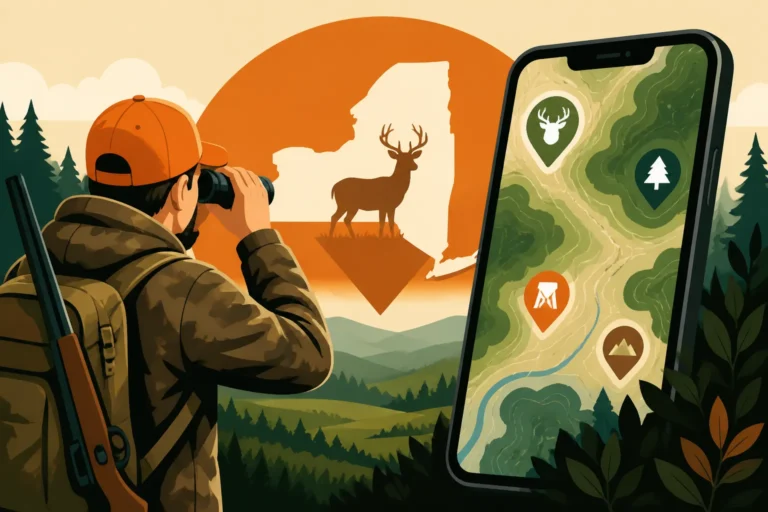
To effectively find these funnels, you need to become a master of map scouting. High-quality aerial imagery, like what you find on the GoHunt platform, is invaluable here. Look for dark green areas indicating dense, wet cover, and then search for lighter green or brown ribbons connecting them. These often represent drier ground. Pay close attention to subtle elevation changes shown on topographic maps; even a one or two-foot rise can make all the difference to a deer trying to avoid deep water. Identify how water bodies, like creeks, streams, or even drainage ditches, run through or alongside these swamps. Often, deer will use the banks of these waterways as travel corridors, especially where they narrow or offer a solid crossing point. The transition zones where a swamp meets an upland forest edge can also create funnels, drawing deer along the perimeter before pushing them through a narrower section of passable ground.
Effective Scouting for Swamp Edge Opportunities
Finding a potential funnel on a map is one thing, but confirming it and understanding current deer behavior requires diligent boots-on-the-ground scouting. The swamp environment presents unique challenges and opportunities for gathering intel.
Pre-Season Digital Reconnaissance
Before you ever step foot in the woods, spend significant time poring over digital maps. Use tools like GoHunt to zoom in on those swampy areas. Look for pinch points created by human infrastructure, like old fencelines or forgotten clearings, or natural features like narrow land bridges, points of land extending into the swamp, or even changes in timber type that indicate drier ground. Consider how deer might move between known bedding areas within or adjacent to the swamps, and feeding areas that could be a mile or more away. Those connecting lines are your funnels. Don't forget to study historical weather data for average water levels in specific areas; a funnel that's dry in August might be underwater by November. Analyzing Reading Aerial Photos for Southern Tier Deer can provide great insights applicable to any region.
Once you've identified a few promising spots, use the mapping tools to mark potential access routes. Remember, deer in these areas are often less accustomed to human presence, so a quiet, low-impact entry and exit is paramount. Look for routes that offer concealment, perhaps along a subtle ridge or an old logging trail that runs parallel to the swamp but far enough away not to disturb the core. Understanding the layout before you go will save you a lot of wasted time and effort, and minimize your footprint.
Boots-on-the-Ground Sign Reading
When it's time to hit the woods, dress for the conditions. Waterproof boots are a must, and knee-high rubber boots are often preferred when Rubber Boots for Swamp Walking is on the agenda. Start by confirming what you saw on the map. Walk the edges of the swamps, looking for fresh tracks, droppings, and rub lines. Deer sign along the funnel itself will be significantly more concentrated than in the general woods, indicating heavy usage. Look for "super highways" – multiple deer trails converging into a single path through the narrowest part of the funnel. Pay attention to how deer enter and exit the swamp. Are they crossing a specific log? Using a particular bank? Are there preferred bedding areas just inside the swamp edge, or on small, dry islands within it?
Rub lines can be particularly telling in these funnels. Bucks will often work over saplings and small trees along these travel corridors as they move between bedding and feeding areas, or search for does during the rut. The size and freshness of the rubs can give you clues about the caliber of bucks using the area and how recently they've been there. Scrapes, while less common right in the wettest parts, might be found on the slightly elevated ground within the funnel or just at its mouth, indicating a buck checking for estrous does. Remember to Scouting New York Public Land Before Season isn't just about finding deer, but understanding their habits.
Strategic Trail Camera Placement
Trail cameras are your eyes in the woods when you can't be there, and they are especially effective on swamp funnels. Set your cameras directly on the most active trails within the funnel itself. Don't be afraid to put them slightly off the main trail, angled to catch deer moving both ways, to avoid spooking wary bucks. Make sure your camera is high enough to avoid being submerged if water levels rise slightly, and secure it well to prevent theft or tampering. You'll want to aim your cameras along the length of the funnel, capturing which deer are using it, at what times, and in what direction. This data is invaluable for predicting peak movement.
Consider placing a second camera deeper into the swamp if there's a small, dry island or a hidden trail that might offer a glimpse into security cover. This can help you confirm bedding locations and understand exit/entry patterns. Checking your cameras frequently can disrupt deer, so try to time your visits strategically, perhaps during midday or on days with high wind to mask your scent and sound. A good trail camera strategy will help you build a comprehensive picture of deer activity, revealing movement patterns that inform your stand placement and hunting times.
Hunting Tactics for Boggy Backwoods
Once you've scouted and identified a prime swamp funnel, it's time to plan your hunt. The unique challenges of these environments require specific tactics to maximize your chances of success.
Mastering Wind and Thermals in Low Areas
Wind direction is always crucial, but it takes on an even greater importance in swampy, low-lying areas due to thermals. Thermals are air currents created by temperature changes; they typically rise as the ground warms in the morning and fall as it cools in the evening. In a swamp funnel, these air currents can be tricky. Early morning, cold air will often drain down into the lowest points, like the swamp itself, before slowly beginning to rise. In the evening, as the air cools, it will fall back into these low areas. This means your scent can be carried in unexpected directions. Always consult detailed wind forecasts and understand how local topography will influence air movement.
When setting up your stand or ground blind, position yourself so that the prevailing wind, combined with anticipated thermal drift, carries your scent away from the funnel. This might mean placing your stand on the downwind side of the funnel, or slightly higher up an adjacent ridge to catch rising thermals. If you're hunting during the midday lull, thermals tend to be less pronounced, making a crosswind setup more forgiving. Never rely solely on a general wind app; carry a wind checker and observe how the air is truly moving at your specific location throughout the day. Paying close attention to Wind and Thermals on a Catskill Ridge can give you similar insights for lowland areas.
Optimal Stand and Blind Locations
The choice between a treestand and a ground blind depends heavily on the specific funnel and available cover. If the funnel has mature trees along its edges, a treestand offers an elevated vantage point, helping to spread your scent above the deer's nose and giving you a better view over the dense undergrowth. Think about Treestand Setups in Adirondack Hardwoods and adapt them for swamp edges – identify key travel routes and set up to intercept deer moving naturally. Look for trees that offer good cover to break up your silhouette, and ensure your entry and exit routes are concealed.
If suitable trees are scarce, or if the cover is extremely thick, a ground blind can be incredibly effective. A pop-up blind brushed in carefully can virtually disappear into the vegetation, and it offers excellent concealment from wary deer. When considering Using a Ground Blind on New York Public Land, remember that blending in with the surroundings is paramount. Place your blind slightly off the main trail, perhaps tucked against a large downed log or a cluster of thick evergreens, allowing you to intercept deer without being directly in their line of sight. Always clear shooting lanes before the season, but do so minimally to avoid drawing attention to your setup.
Still-Hunting and Calling Strategies
While a static setup is often best for targeting funnels, still-hunting through a swamp edge or a larger land bridge can be productive, especially during the rut. Move slowly, deliberately, taking a few steps and then pausing for several minutes to scan for movement. The dense cover often means shorter shot opportunities, so be prepared to react quickly. Focus on areas where sign is particularly concentrated, such as where multiple trails converge, or where a point of land juts out into the swamp.
Calling can also be very effective in these environments, particularly for drawing in a buck that might be cruising the edges of the swamp looking for does. Soft grunts, tending grunts, or even a subtle doe bleat can pique a buck's curiosity without alerting him to danger. During the peak of Hunting the Rut in the Southern Zone, rattling antlers can sometimes draw a territorial buck out of the security cover of the swamp, especially if you set up within sight of the funnel itself. Use calls sparingly and realistically; the goal is to sound like another deer, not a human imitating one.
Essential Gear for New York Swamp Hunts
Hunting swamp funnels often means dealing with wet, muddy, and sometimes unforgiving conditions. Having the right gear isn't just about comfort; it's about safety, effectiveness, and ensuring you can stay in the woods longer.
Waterproof Protection and Footwear
Your primary defense against the damp environment of a New York swamp is reliable waterproof gear. This starts with your footwear. As mentioned earlier, knee-high rubber boots are practically non-negotiable for navigating shallow water and mucky terrain. Brands like Muck Boot Company or LaCrosse are popular choices among New York hunters for their durability and comfort. Look for insulated options for late-season hunts to keep your feet warm in freezing conditions. Beyond boots, a good pair of waterproof pants or bibs, and a waterproof jacket, are essential. You might not be in a torrential downpour, but brushing against dew-soaked vegetation or splashing through puddles will quickly leave you wet and cold without proper rain gear.
Consider a waterproof pack as well, or at least a pack cover for your Packs for a Day on Public Land. Keeping your extra layers, lunch, phone, and other essentials dry can make a huge difference in your overall comfort and the success of your hunt. Being damp and miserable is a surefire way to cut your hunt short, so invest in quality waterproof outer layers.
Scent Control in Humid Conditions
Swampy, humid environments present unique challenges for scent control. The moist air tends to hold and carry scent more effectively than dry air, and it's easy to pick up foreign odors from the damp vegetation itself. A rigorous scent control regimen is vital. Start with a shower using scent-eliminating soap before your hunt. Wear clean, scent-free clothing that has been washed in scent-eliminating detergent and stored in airtight bags or containers. Layering is key, as sweating while walking in can quickly negate your efforts. Strip down to base layers for the hike in, then put on your outer layers once you reach your stand.
Using scent-eliminating sprays on your boots and outer clothing can help, but remember that nothing completely eliminates human scent. The best defense is always to hunt the wind correctly and minimize your physical exertion. Consider using natural cover scents like pine or earth if they match the local environment, but use them sparingly. Many hunters find that ozone-generating equipment, like those from Ozonics, can be beneficial for breaking down scent molecules in the air around their stand, adding an extra layer of protection in these challenging conditions.
Navigation and Game Recovery
Navigating through thick, swampy terrain can be disorienting, even in daylight. A reliable GPS unit or a smartphone with a dedicated hunting app like GoHunt (which allows for offline maps) is absolutely essential. Mark your truck, your stand location, and any key terrain features or trails. Don't rely solely on cell service, as many prime hunting areas in New York, especially deep in public land, will have spotty or no reception. A compass and a physical map are also wise backups.
Game recovery in a swamp environment is often the biggest challenge. A downed deer in thick, wet cover can be incredibly difficult to find and extract. Always take your time after the shot, especially if you're not confident in the hit. Wait at least 30 minutes for a good hit, and several hours for a questionable one. Mark the spot of the shot, and the last place you saw the deer. When tracking, move slowly and look for the smallest signs – a disturbed leaf, a broken twig, a single hair. Blood can be hard to spot in mud or standing water. If you're tracking into darkness, a powerful headlamp is critical. A deer sled or a heavy-duty game cart might be useful if the terrain permits, but often in deep swamp conditions, quartering the animal and packing it out is the most realistic option. Learning how to effectively quarter a deer and use game bags can make all the difference, especially on warm days. Consider practicing Tracking a Deer in Fresh New York Snow if those conditions are more typical for your late-season hunts.
| Gear Category | Recommended Features for Swamp Hunting | Why It Matters |
|---|---|---|
| Footwear | Knee-high, insulated rubber boots | Essential for staying dry and warm in mud and shallow water; easy to clean. |
| Outerwear | Waterproof/breathable jacket & pants | Keeps you dry from rain, dew, and splashes; breathable to prevent sweating. |
| Scent Control | Scent-eliminating soap, detergent, storage | Reduces human odor, which is easily carried in humid air; crucial for close encounters. |
| Navigation | GPS unit with offline maps (e.g., GoHunt) | Prevents getting lost in disorienting terrain, especially off-trail; marks key locations and retrieves game. |
| Stand/Blind | Lightweight hang-on stand or pop-up blind | Adaptable to varied tree cover; pop-up blinds offer excellent concealment when trees are sparse. |
| Tracking | Bright headlamp, flagging tape, game bags | Critical for night recovery; marks blood trails; game bags simplify quartering and packing out in difficult terrain. |
Disclaimer
Hunting involves inherent risks, including but not limited to those associated with firearms, archery equipment, treestands, and outdoor conditions. Always prioritize safety, follow all New York State Department of Environmental Conservation regulations, and be aware of your surroundings. This guide is for informational purposes only and should not replace proper hunter education or professional advice.