Hunting Western Zone Diver Ducks
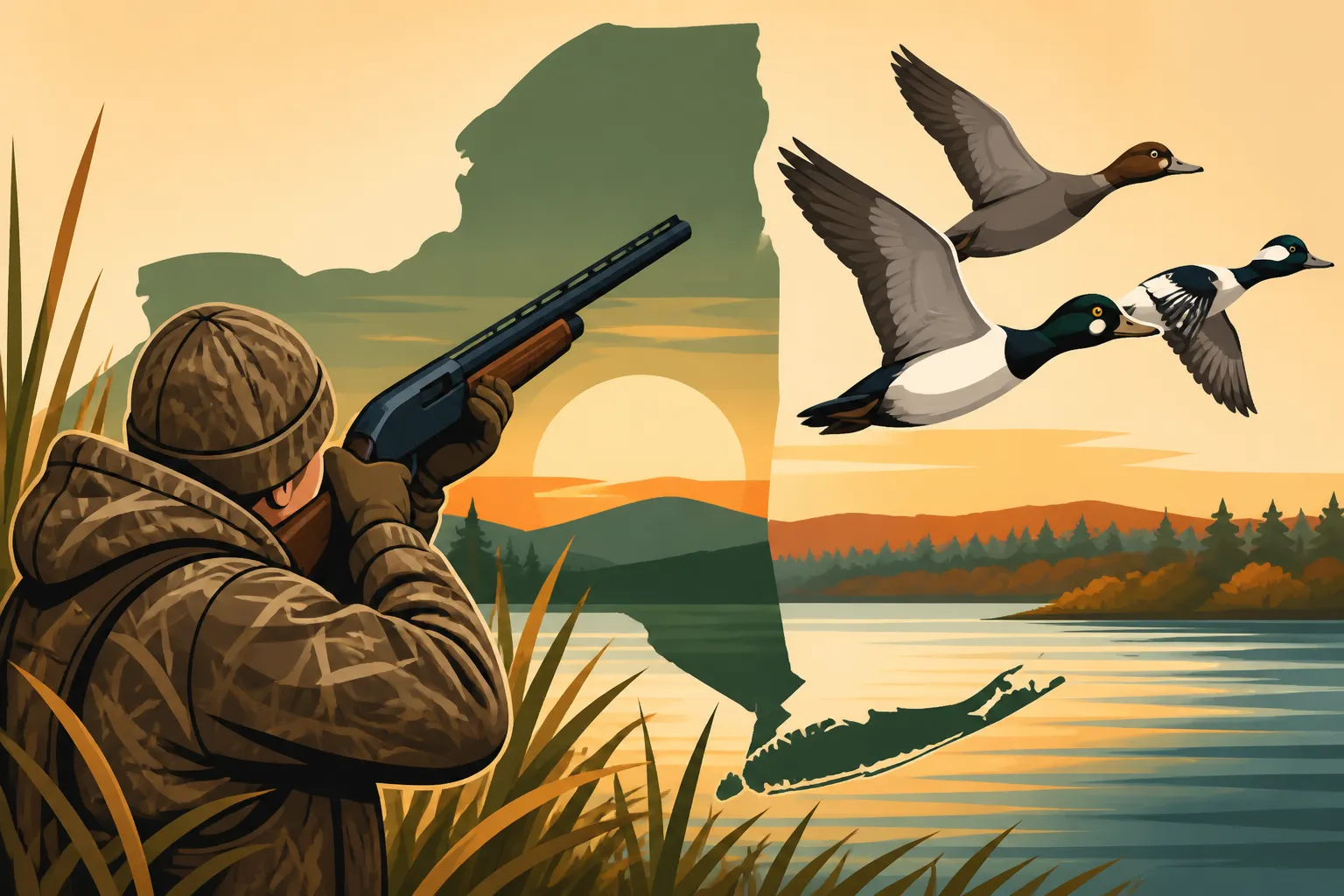
The wind howls off Lake Ontario, kicking up whitecaps that seem to laugh at your little boat, and the frigid spray coats everything in a thin sheet of ice. This isn't your daddy's puddle duck hunt in a cattail marsh; chasing diver ducks in New York's Western Zone is a whole different beast, demanding specialized knowledge, equipment, and a healthy respect for big water. If you've ever felt overwhelmed by the sheer scale of the Great Lakes or the challenges of hunting these fast-flying, deep-diving birds, this guide is for you. We're going to break down everything you need to know to successfully hunt diver ducks in this unique and challenging region.
Understanding Western Zone Diver Duck Habitat
Hunting divers in New York's Western Zone is truly unique, largely because this zone encompasses some of the largest, deepest, and most dynamic bodies of water in the entire state. We're talking about the vast expanse of Lake Ontario, but also a network of other significant inland lakes and tributaries that serve as critical stopovers and wintering grounds for these incredible birds. You can't approach this like a typical marsh hunt; the sheer scale dictates a completely different strategy.
Lake Ontario's Deep Water
Lake Ontario is the undisputed crown jewel for diver hunting in the Western Zone, particularly its eastern basin. This is where you'll find true open-water diver hunting, a pursuit that tests both your hunting skill and your seamanship. Divers, unlike dabblers, feed primarily on aquatic vegetation, mollusks, and small fish found in deeper waters. Lake Ontario, with its expansive rocky shoals, underwater weed beds, and rich invertebrate populations, provides exactly what they need. Think about areas around Stony Point, Henderson Harbor, and the broader eastern shoreline towards Oswego. The birds here aren't just passing through; many will spend significant portions of the late fall and early winter gorging themselves before pushing further south. Understanding the bathymetry—the underwater topography—is crucial. Look for transition areas where shallow flats drop off into deeper channels, or where prominent reefs rise from the depths. These are the underwater highways and feeding grounds for thousands of birds. The downside, of course, is the weather. Lake Ontario can turn from glassy calm to a raging tempest in minutes, making safety paramount. You need a boat built for big water, and you need to keep a constant eye on the forecast.
Inland Lakes and Reservoirs
While Lake Ontario gets most of the glory, don't overlook the substantial inland lakes and reservoirs scattered throughout the Western Zone. Lakes like Cayuga, Seneca, Oneida, and even some of the larger reservoirs in the Finger Lakes region can hold impressive numbers of diver ducks, especially later in the season when shallower waters begin to freeze over. These lakes often offer a slightly more sheltered hunting experience compared to the massive expanse of Ontario, but they still present their own challenges. Divers will use the deeper sections of these lakes, often rafting up in large numbers during the day in the middle of the lake, then moving to shallower, protected coves or bays to feed in lower light. The key to hunting these areas is often understanding the prevailing winds. Divers will almost always raft up and approach decoys into the wind, much like an airplane landing. Identifying key points, islands, or submerged structures that create current breaks or feeding opportunities is vital. Sometimes, access can be an issue on private lakes, but many offer public boat launches and access points. For those looking for quieter waters, especially on days when Lake Ontario is too rough, these inland gems can be incredibly productive. You'll often find a mix of species here, from the common scaup to the more sought-after canvasbacks.
River Systems
While not traditionally thought of as diver havens, the larger river systems that feed into Lake Ontario and the Finger Lakes can sometimes hold pockets of divers, particularly during migration or when ice pushes them off larger bodies of water. Rivers like the Oswego River, the Genesee River, and even sections of the Niagara River, while more known for dabbling ducks, will see divers utilizing deeper pools, eddies, and stretches of slower current. These river habitats often provide crucial sanctuary during severe weather, offering more protected feeding areas than the open lake. Hunting rivers requires a different approach, often focusing on jump-shooting tactics or setting up small spreads in key travel corridors or feeding areas that are less prone to heavy current. Scouting is absolutely essential here. You're looking for those specific stretches where divers are consistently found, not just a random group passing through. Access can be easier on rivers with numerous public launches, and you can often hunt from shore or a camouflaged boat blind tucked into the bank. Just be mindful of current and boating traffic, as rivers can be busy places.
Key Species and Their Behaviors
Diver ducks are a fascinating group of waterfowl, each with their own unique quirks and preferences. To be a successful hunter in New York's Western Zone, you need to be able to identify them on the wing and understand what makes them tick. They don't decoy like a mallard, nor do they always feed in the same places. A little natural history goes a long way out on the big water.
Canvasbacks and Redheads
These two species are often considered the royalty of diver ducks, highly sought after for their striking appearance and excellent table fare. Canvasbacks are magnificent birds, easily recognized by their sloping forehead and long, straight bill, with males sporting a rich red head and neck. Redheads, while also having a red head, have a more rounded crown and a bluish bill with a white band. Both species are often found on larger, open bodies of water like Lake Ontario and the deeper Finger Lakes. They are primarily vegetarians, favoring the tubers and rhizomes of submergent aquatic vegetation. This means they will often congregate in areas with extensive weed beds, even those that might be 10-20 feet deep.
Their behavior is distinct: Canvasbacks are incredibly wary birds, often circling high before committing to a decoy spread. They fly fast and direct, and when they decide to come in, they commit hard. Redheads can be a bit more curious, often decoying well, but still maintaining that characteristic fast, direct flight. Both species tend to raft up in large groups during the day in open water, providing safety in numbers. Successful hunting often involves using large, realistic decoy spreads, sometimes up to several hundred decoys, set far from shore or in open water. You'll need to be well-hidden in a layout boat or a large boat blind to avoid flaring these sharp-eyed birds. The challenge with these birds, beyond their wariness, is their incredible speed on the wing. You have to lead them much more than you might a slower-flying dabbler.
Bluebills Scaup
Bluebills, or scaup, refer to both Greater Scaup and Lesser Scaup, though they are often lumped together by hunters. Greater Scaup tend to prefer large, open bodies of saltwater and freshwater, while Lesser Scaup are more common on smaller freshwater lakes and ponds, though their ranges overlap considerably in migration. In New York's Western Zone, especially on Lake Ontario, you'll encounter both. Males are striking with their black heads and chests, white flanks, and a blue bill. Females are similar but duller brown with a distinctive white patch at the base of the bill. Scaup are omnivores, feeding heavily on mollusks like zebra mussels, which are unfortunately abundant in many of New York's waters, as well as insects and some plant matter.
They are known for forming enormous rafts, sometimes numbering in the thousands, especially on Lake Ontario. When these rafts take flight, it's an incredible spectacle. Scaup are generally less wary than canvasbacks or redheads and can be quite aggressive in decoying, often pitching in quickly. They fly fast and erratically, often in tight flocks that can make for challenging shooting. When hunting scaup, you'll still want a substantial decoy spread, but you might find them more forgiving of smaller, less intricate setups compared to the "big two." Look for them where zebra mussels are prevalent, often on shallower shoals or flats off points. Their willingness to decoy makes them a favorite for many Western Zone diver hunters, providing consistent action throughout the season.
Goldeneyes and Buffleheads
These two species are often associated with colder weather and can be found later into the New York season, even as ice begins to form. Common Goldeneyes are mid-sized divers with a distinctive triangular white patch between their golden eye and black bill. Buffleheads are much smaller, almost comical in their appearance, with a large, puffy head and a prominent white patch running from the eye to the back of the crown. Both species are primarily insectivores and molluscivores, often diving repeatedly in quick succession to feed. They prefer a mix of open water and protected bays or estuaries, and can sometimes be found closer to shore than their larger diver cousins.
Goldeneyes are tough birds, able to withstand incredibly cold temperatures, and are often among the last ducks to leave New York before truly deep freezes. They fly swiftly and with a characteristic whistle of their wings. Buffleheads, despite their small size, are incredibly fast and agile flyers. They often decoy well, zipping in and out of spreads with astounding speed. Hunting these species can be particularly fun. While they might not provide the sheer volume of birds seen in a scaup raft, their bold decoying behavior and late-season presence make them excellent targets. Smaller decoy spreads can often be effective for these birds, sometimes even just a handful of blocks in a protected cove or along a rocky shoreline. They are also known for being excellent table fare, especially if properly handled.
Essential Gear for Diver Duck Hunting
Diver hunting, especially on the large, open waters of New York's Western Zone, isn't just a matter of grabbing your shotgun and a few decoys. The conditions, the birds, and the sheer scale demand specialized gear. Without the right equipment, you're not just risking a poor hunt, you're risking your safety. Think of it as an investment in both success and survival.
Decoy Spreads for Divers
This is where diver hunting truly diverges from dabbler hunting. Puddle ducks might come to a dozen blocks, but divers, especially on big water, respond best to mass. We're talking about spreads that can range from 50 to several hundred decoys. The visual impact of a large raft of decoys signals safety and feeding success to incoming birds. You'll want a mix of species, predominantly bluebills and redheads, with some canvasbacks if they are a target species. Full-body, keeled decoys are preferred, as they ride the waves naturally. One innovative approach is the "long-line" system, where multiple decoys are clipped to a single mainline, often anchored at both ends. This allows for quick deployment and retrieval of large numbers of decoys, critical in cold, windy conditions.
Consider using motion decoys sparingly; while some hunters use them, the sheer number of decoys often creates enough movement with the natural rocking of the waves. The setup is also crucial. Diver spreads are typically set in a "J" or "V" shape, with the open end facing into the wind. This creates a landing zone directly in front of your blind, funnelling birds into shooting range. Having a few "confidence decoys" like geese or swans set slightly outside the main spread can sometimes help attract distant birds, signaling an even safer feeding area. Remember, retrieving these large spreads in heavy chop can be a chore, so heavy-duty anchors and retrieval grappling hooks are indispensable. For those really trying to maximize their scouting, using tools like GoHunt can help identify potential holding areas on vast lakes, pinpointing depths and bottom structure that might hold the right food sources for divers.
Boats and Motors
Your choice of boat is arguably the most critical piece of equipment for Western Zone diver hunting. This is not the place for a small johnboat. You need a stable, seaworthy vessel capable of handling unpredictable large-lake conditions. Fiberglass or aluminum deep-V boats, typically 16-20 feet in length, are standard. They offer the stability and freeboard necessary to navigate choppy water safely and carry a substantial load of decoys, gear, and hunters. Important features include a high transom, self-bailing deck, and ample storage.
Equally important is the motor. You'll need reliable power to get to distant hunting spots quickly and, more importantly, to get back safely if the weather turns. A powerful outboard motor, usually 50-150 horsepower depending on boat size, is essential. Having a kicker motor (a smaller auxiliary outboard) is highly recommended for safety. If your main motor fails miles from shore in freezing conditions, that kicker motor could be a lifesaver. Navigation electronics are also critical: a reliable GPS with detailed mapping (like what you'd find integrated with a GoHunt subscription for land mapping, but specifically for marine charts) will help you find your way in fog or darkness, and a marine-band VHF radio is non-negotiable for communicating with other boaters or summoning help in an emergency. Remember to always carry all required safety gear, including PFDs for everyone onboard, a throw cushion, flares, a horn, and a fully charged battery.
Cold Weather Waders and Layering
Diver hunting is a cold sport, often taking place in late fall and early winter when air and water temperatures are plummeting. Staying warm and dry is not just about comfort; it's about survival. High-quality waders are paramount. Neoprene waders, typically 5mm thick, offer excellent insulation, but many hunters now prefer breathable GORE-TEX waders with multiple layers underneath for superior mobility and moisture management. Make sure they are well-insulated in the boot foot, as cold feet are a common complaint. Chest waders are a must, providing protection against waves washing over the boat gunwales.
Beyond waders, intelligent layering is key. Start with a moisture-wicking base layer (wool or synthetic, never cotton) to pull sweat away from your skin. Add insulating mid-layers, such as fleece or down, to trap body heat. Your outer shell should be waterproof and windproof to protect against the elements. A good quality, insulated hunting jacket designed for cold, wet conditions is essential. Don't forget accessories: a warm, waterproof hat that covers your ears, insulated gloves or mittens (often with convertible finger slots for shooting), and thick wool socks. Many experienced hunters also bring hand warmers and toe warmers to tuck into pockets and boots. The goal is to be able to add or shed layers as conditions change throughout the day, ensuring you remain comfortable and focused, ready for those fast-flying birds. Remember, hypothermia is a real threat on big water, so be prepared for the worst. For more cold-weather preparedness tips, check out our guide on Cold-Weather Sitting Strategy in New York.
Effective Hunting Tactics and Strategies
Hunting diver ducks in the Western Zone requires tactics that are as unique as the environment itself. These aren't birds that sneak into small ponds; they're open-water specialists, and your strategy needs to reflect that. From how you set your decoys to how you hide, every detail counts when you're dealing with such wary and fast-flying quarry.
Layout Blind Hunting
Layout blind hunting is perhaps the most iconic and often most effective method for pursuing diver ducks on vast, open waters like Lake Ontario. This tactic involves using specialized, low-profile blinds that float on the water's surface, designed to make you virtually invisible amidst your massive decoy spread. Hunters lie down inside these blinds, camouflaged to look like another piece of floating debris or a small boat. The advantage here is that you are right in the heart of the action, with birds often committing to within feet of your blind.
The typical setup involves deploying a large spread of decoys, sometimes 100 or more, in a formation that creates a large landing zone directly in front of the layout boat. This "hole" is where the ducks are encouraged to land, bringing them into optimal shooting range. Communication with your boat tender, who stays a safe distance away in the main "mother ship" to monitor the spread and retrieve downed birds, is crucial. Layout boats are designed for stability, but they are still small, and conditions on Lake Ontario can change rapidly. Safety considerations are paramount: wearing an inflatable PFD, having a reliable marine radio, and understanding the weather are non-negotiable. This method offers an incredibly immersive and exhilarating experience, giving you an eye-level view of incoming divers. For more on getting set up, our article on Layout Blinds and Marsh Boats has some great advice.
Open Water Boat Blinds
When conditions are too rough for layout boats, or if you prefer a more traditional boat-based hunt, open water boat blinds are another excellent option. This involves camouflaging your primary hunting boat to blend into the surrounding environment, essentially turning it into a floating blind. Larger deep-V boats are ideal for this, as they offer more stability and space for hunters and gear. The blind itself can be custom-built or a commercially available system that attaches to your boat's gunwales, using natural vegetation, artificial grass mats, or camouflage netting to break up the boat's outline.
The strategy is similar to layout hunting: deploy a large diver spread, creating a landing zone. However, with a boat blind, you might anchor closer to a prominent point, a shoal, or an island that acts as a natural funnel or staging area for ducks. The elevated position in a boat blind can sometimes make shooting easier, but concealment is still critical. You need to pay attention to your silhouette against the sky and ensure no shiny objects are visible. This method offers greater comfort and safety in rougher seas, and it allows for easier access to retrieve downed birds without relying solely on a tender boat. You might also find this method more versatile, allowing you to quickly move if the birds aren't working your current location. Just remember, these birds are fast, so you'll want to choose a shotgun and choke combination that can handle the speed and distance.
Shoreline and Island Setups
Sometimes, the best diver hunting isn't miles offshore. Shoreline and island setups can be surprisingly effective, particularly during migration when birds might be seeking sheltered areas, or late in the season when ice pushes them closer to land. This tactic involves setting up a blind directly on a point of land, a rocky outcropping, or a small island that divers are flying past or using as a resting area. These spots often provide natural windbreaks and can funnel birds along predictable flight paths.
When choosing a spot, look for points that extend into the water, islands with sheltered leeward sides, or areas where current creates a natural food source accumulation. Your blind can be a portable ground blind, a natural hide built from driftwood and vegetation, or simply wearing good camouflage and sitting still. Decoy spreads here can be smaller than open-water setups but should still be arranged to draw birds into a shooting lane. A mix of diver and confidence decoys (like Canada geese) can work well. The advantages include easier access, often less exposure to extreme open-water conditions, and sometimes a more relaxed hunting experience. However, you're more susceptible to other hunters or boat traffic, and you might not encounter the massive rafts of birds seen in deeper water. Scouting these areas thoroughly, potentially using mapping tools like GoHunt to analyze shorelines and depths, is key to finding those overlooked gems. This method is also often ideal for targeting smaller divers like goldeneyes and buffleheads, which tend to frequent these types of habitats.
Navigating Regulations and Safety
Hunting diver ducks in New York's Western Zone is a thrilling experience, but it comes with serious responsibilities. Big water hunting is inherently more dangerous than still-hunting a woodlot, and the migratory nature of waterfowl means a different set of regulations than deer or turkey hunting. Ignoring either can lead to dangerous situations or costly legal trouble.
Western Zone Specific Seasons
New York State is divided into different waterfowl zones, and it's absolutely crucial to understand the specific season dates for the Western Zone. These dates can vary significantly from the Long Island or Northeastern zones, and they are set annually by the DEC in consultation with federal guidelines. Typically, the Western Zone duck season opens in mid-October and runs through December or early January, often with a split season that includes an early opening, a mid-season closure, and a later reopener. This split is designed to coincide with different migration pulses and to manage harvest pressure.
Beyond the general season dates, you need to be acutely aware of bag limits and species-specific restrictions. Divers often have lower daily bag limits than dabblers, and some species like canvasbacks or redheads might have even more restrictive limits. For example, you might be allowed six ducks total, but only two canvasbacks and two redheads within that limit. These regulations are designed to protect populations of more vulnerable species. Always consult the current year's New York State Migratory Bird Hunting Regulations Guide, available on the DEC website or through the HuntFishNY app, before every hunt. Ignorance of the law is not an excuse. Knowing New York Waterfowl Zones and Seasons is the first step to a legal hunt.
Migratory Bird Certification
Hunting migratory birds in New York, which includes all ducks and geese, requires more than just a standard hunting license. You must also obtain a New York State Migratory Bird Harvest Information Program (HIP) certification. This is a federal requirement, administered by the state, that helps the U.S. Fish and Wildlife Service gather data on migratory bird harvests. It's usually free and involves answering a few simple questions about your previous year's hunting activity. Without HIP certification, you cannot legally hunt ducks or geese.
In addition to HIP, if you are 16 years or older, you must also possess a valid Federal Migratory Bird Hunting and Conservation Stamp, commonly known as a "Duck Stamp." This stamp, which you sign across its face, must be carried with you while hunting migratory waterfowl. The funds generated from Duck Stamp sales are vital for conserving wetlands and waterfowl habitat across the country, so it's a direct contribution to the future of our sport. You can purchase these stamps at post offices, many sporting goods stores, or through the DEC's online licensing system. Ensure both your HIP certification and your Federal Duck Stamp are current and with you, along with your hunting license, whenever you're afield. Our guide on New York Federal Duck Stamp Requirement provides further details.
Safety on Big Water
Hunting on large bodies of water like Lake Ontario presents unique safety challenges that demand the utmost respect and preparation. The biggest threat is the weather, which can change without warning, transforming calm waters into treacherous conditions in minutes. Always check multiple weather forecasts (marine forecasts are best) before heading out, and be prepared to cancel or cut short a hunt if conditions are questionable. A sudden squall, heavy fog, or unexpected ice formation can quickly become life-threatening.
Everyone on board must wear a properly fitting U.S. Coast Guard-approved personal flotation device (PFD) at all times. Cold water immersion is extremely dangerous, and a PFD is your best chance of survival if you go overboard. Your boat must be properly maintained, with all required safety equipment, including navigation lights, a horn or whistle, visual distress signals (flares), a fire extinguisher, and extra fuel. File a float plan with someone on shore, letting them know where you're going, who's with you, and when you expect to return. Carry a fully charged cell phone in a waterproof bag, but don't rely on it as your sole means of communication; a marine-band VHF radio offers a more robust option on big water. Lastly, never overload your boat, especially with heavy decoys, and always operate it sober. Respect the water, respect the weather, and make safety your absolute top priority.
Planning Your Western Zone Diver Hunt
Embarking on a Western Zone diver hunt requires meticulous planning. It's not just about showing up with a shotgun; it's about scouting, understanding bird movements, coordinating with your hunting party, and being adaptable. Without a solid plan, you're often just burning gas and risking a frustrating, or even dangerous, outing.
Scouting and Location Selection
Effective scouting is the bedrock of any successful diver hunt. Divers, especially on large lakes, can be here today and gone tomorrow, or shift their patterns based on wind, weather, and food availability. Before the season even begins, spend time glassing large bodies of water. Use powerful binoculars or a spotting scope from high vantage points overlooking Lake Ontario or the Finger Lakes. Look for rafts of birds, paying attention to where they congregate, where they feed, and their flight paths between resting and feeding areas.
During the season, continued scouting is vital. The best way to scout is often from a boat, navigating cautiously through areas where you've seen birds. Pay attention to water depth, bottom composition (divers often prefer harder bottoms for mussels or specific weed beds), and current breaks. Tools like GoHunt or similar mapping applications can be invaluable for studying bathymetry maps, identifying underwater shoals, humps, and drop-offs that will attract divers. These apps allow you to mark waypoints for promising locations, understand land access for launching, and even track weather patterns in specific areas. Identifying multiple potential spots is key, as conditions (especially wind direction) might make one spot unfishable or unsafe on a given day. Look for areas with minimal hunting pressure, if possible, although that can be a challenge on popular lakes. Our guide on Scouting New York Public Land Before Season offers broader tips that apply here too.
Timing Your Hunt and Weather Considerations
Timing is everything in diver hunting, and it's inextricably linked to weather. The best diver hunting typically occurs during cold fronts, particularly those that bring strong, consistent winds. These winds often push birds off vast open water and can concentrate them in more predictable areas, or even push them south. Days with heavy overcast skies and a good chop on the water are often ideal, as birds feel more secure working decoy spreads in less clear conditions. Sunny, calm days, while pleasant for boating, often make for tougher hunting as birds can easily spot blinds and are less inclined to move.
Pay close attention to long-range and short-range weather forecasts. Marine forecasts, specifically, will give you vital information on wind speed and direction, wave height, and water temperatures. Never underestimate the power of big water. Wind and wave predictions are crucial for determining if a particular spot is safe to hunt or if your boat can even handle the conditions. For instance, a strong northwest wind might make a bay on the south shore of Lake Ontario perfect, but the north shore completely unhuntable. Be flexible with your schedule; waiting for the right weather window is often more productive and infinitely safer than forcing a hunt in marginal conditions. Understanding New York Waterfowl Migration Timing can also help you predict peak hunting periods.
Decoy Placement and Boat Blind Concealment
Once you've selected your location and the weather cooperates, proper decoy placement and blind concealment are the final pieces of the puzzle. For diver ducks, "mass" is usually the name of the game. A large spread, often 50-100+ decoys, set on long lines or gang rigs, creates a visual beacon for passing birds. Position your spread in a "J" or "U" shape, with the open end facing directly into the wind, creating a calm "landing strip" for incoming ducks. This landing strip should be within effective shooting range of your blind, typically 25-35 yards. Include a mix of species, predominantly bluebills, redheads, and canvasbacks if they are legal and present.
Concealment is absolutely critical. Divers have excellent eyesight and are incredibly wary, especially on open water where cover is scarce. Whether you're in a layout boat or a traditional boat blind, you must blend seamlessly into your surroundings. Use natural vegetation from shore, artificial grass mats, or camo netting to completely break up the outline of your blind. Pay attention to your face and hands, which can shine brightly; wear a face mask and gloves. Avoid any unnatural movements in the blind. If you're using a boat blind, position it so that any approaching birds are looking into a dark background (like a shoreline or dark sky) rather than silhouetting you against the lighter horizon. Minimizing movement, calling sparingly, and staying absolutely still until it's time to shoot will make all the difference in decoying these sharp-eyed birds.
Responsible Hunting and Conservation
Hunting diver ducks in New York's Western Zone offers incredible opportunities, but it also carries significant responsibilities. As hunters, we are stewards of the resource, and practicing ethical hunting methods, ensuring proper game care, and contributing to conservation efforts are paramount to preserving this tradition for future generations.
Ethical Shot Selection and Retriever Use
Ethical hunting demands clean, swift kills and diligent game recovery. Diver ducks are notoriously tough birds, and they fly incredibly fast. This means you need to practice your lead and ensure you are shooting within your effective range. Taking excessively long shots often leads to wounded birds that are difficult to recover. A good rule of thumb is to limit your shots to 35-40 yards, especially when dealing with powerful fliers like canvasbacks or scaup. Use appropriate shotgun chokes and non-toxic ammunition (which is required for all waterfowl hunting) designed for ducks. Pattern your shotgun before the season to understand its effective range with your chosen load.
Equally important is game recovery. Wounded divers can dive deep and swim long distances, making retrieval challenging. This is where a well-trained retriever dog becomes invaluable. A good retriever can quickly mark downed birds, even in choppy water, and bring them back efficiently, minimizing losses. If you don't hunt with a dog, ensure your boat tender is ready to move quickly to the downed bird. In rough water, marking the exact spot a bird falls is crucial, as waves can quickly obscure it. Never leave a downed bird unrecovered. Ethical hunting means doing everything in your power to ensure every bird you shoot is recovered and put to good use.
Game Care and Processing
Once you've harvested a diver duck, proper game care immediately begins to ensure the quality of the meat. Divers are sometimes unfairly maligned for their taste, but much of this comes down to diet and immediate care. As soon as the bird is recovered, bleed it out quickly if it hasn't already. In cold weather, you might not need to gut immediately, but getting the birds on ice or in a cool spot as soon as possible is crucial, especially on warmer early season days. Avoid piling them in a warm boat bilge.
Upon returning to shore, process your birds promptly. Plucking offers the best eating experience, as the skin and fat layer contribute flavor and protect the meat during cooking. If plucking isn't an option, breasting out the birds is quicker. Remove all fat, especially any yellow fat, which can impart a strong, "fishy" flavor. Trim away any bruised or shot-damaged meat. Rinse the meat thoroughly and pat it dry. Immediately package the meat in vacuum-sealed bags or freezer paper, dating it, and freezing it for later use. Proper field dressing, chilling, and processing will turn any diver duck into a delicious meal.
Contributing to Conservation
Every time you buy a hunting license, HIP certification, and a Federal Duck Stamp, you are directly contributing to waterfowl conservation. However, your involvement shouldn't stop there. Consider joining and supporting conservation organizations like Ducks Unlimited or the Delta Waterfowl Foundation. These groups actively work to conserve and restore wetland habitats, conduct vital research, and advocate for sound waterfowl management policies.
You can also contribute by participating in citizen science projects, such as reporting banded birds. If you harvest a duck with a metal leg band, report it to the USGS Bird Banding Lab. This data is critical for understanding migratory patterns, survival rates, and population dynamics, which directly inform bag limits and season lengths. Educate new hunters on the importance of conservation and ethical practices. The future of diver hunting in New York's Western Zone, and across the continent, depends on a strong conservation ethic within the hunting community. Being a responsible hunter means giving back to the resource that provides us with such incredible experiences.
| Diver Duck Species | Primary Habitat | Diet | Decoying Behavior | Notes |
|---|---|---|---|---|
| Canvasback | Large, open lakes | Aquatic vegetation | Wary, often circle high, commit hard | Fast flight, excellent table fare |
| Redhead | Large lakes, some marshes | Aquatic vegetation, mollusks | Generally good, can be curious | Fast flight, good table fare |
| Greater Scaup | Large, open lakes/coastal | Mollusks, insects | Aggressive, often in large rafts | Erratic, fast flight |
| Lesser Scaup | Smaller lakes, ponds, large rivers | Mollusks, insects | Aggressive, often in large rafts | Slightly smaller than Greater Scaup |
| Common Goldeneye | Large lakes, rivers, bays | Insects, mollusks, small fish | Decoy well, especially in small spreads | Whistling wings, hardy in cold |
| Bufflehead | Lakes, ponds, rivers, bays | Insects, mollusks, crustaceans | Bold, zip into spreads | Very small, fast, and agile |
Disclaimer
Hunting is an inherently dangerous activity. This guide provides general information and recommendations. Always consult the most current New York State Department of Environmental Conservation (DEC) hunting regulations and local laws before hunting. Prioritize safety, understand your equipment, and ensure you have the necessary skills and experience for the conditions you face. The author and publisher are not responsible for any accidents, injuries, or legal infractions that may occur.