New York Waterfowl Migration Timing
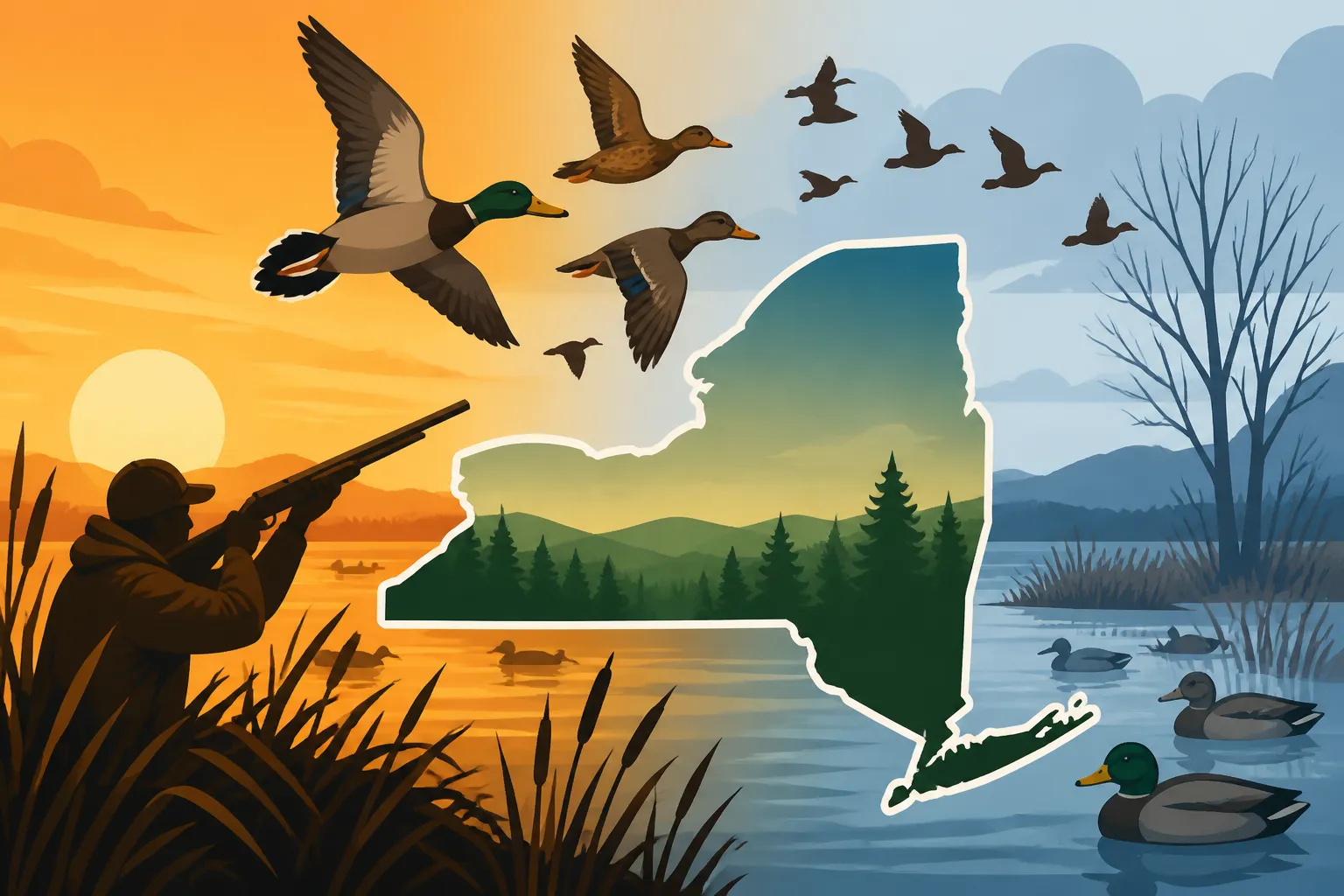
If you've spent any time sitting in a duck blind or hunkered down in a cattail marsh in New York, you know the frustration: one week the sky is alive with birds, the next it's eerily quiet. Trying to predict the movements of ducks and geese can feel like chasing a ghost, making it incredibly tough to plan your hunts effectively. This guide is here to help lift some of that fog, breaking down the typical waterfowl migration timing across New York so you can better anticipate when those different waves of birds are likely to arrive and pass through our diverse landscape.
New York's Position on the Atlantic Flyway and Its Impact
New York isn't just a state; it's a funnel. Situated squarely within the Atlantic Flyway, our varied geography, from the Great Lakes to the Atlantic coast, the vast Adirondacks to the fertile Southern Tier, makes us a crucial pit stop, staging area, and even a wintering ground for countless waterfowl. Understanding this big picture is the first step to successful hunting.
The Significance of the Atlantic Flyway for New York Waterfowl
The Atlantic Flyway is one of four major migratory bird routes across North America, stretching from the Arctic breeding grounds all the way down to the Caribbean and South America. New York, with its intricate network of rivers, lakes, wetlands, and coastal estuaries, offers vital sustenance and resting spots for birds making this epic journey. Think of it as a superhighway for ducks and geese, and New York is a series of well-stocked service stations and comfortable motels along the way.
Because of this strategic location, New York witnesses an incredible diversity of waterfowl. We see everything from the common mallard and Canada goose, which have strong resident populations, to a vast array of dabblers like wigeon, gadwall, and green-winged teal, as well as an impressive parade of divers such as scaup, canvasbacks, and goldeneyes. Each species has its own internal clock and preferred habitat, influencing when and where they show up in our state.
This unique position means that New York hunters often get multiple "waves" of birds throughout the season. First, you'll be targeting local birds, then early migrants, followed by the main push from the far north, and finally, those hardy late-season birds that tough out the winter. It’s a dynamic and ever-changing landscape that rewards adaptability and a keen eye on the weather and local conditions.
Understanding New York's Waterfowl Zones
To help manage this migratory spectacle and tailor hunting regulations to regional differences, New York is divided into several distinct waterfowl zones. These aren't arbitrary lines on a map; they reflect significant variations in habitat, climate, and the timing of bird movements. You'll find zones like the Western Zone, Northeastern Zone, Southeastern Zone, and the Long Island Zone, each with its own set of season dates and bag limits. Understanding these zones is crucial for knowing when you can even legally be in the blind. For a full breakdown, check out our guide on New York Waterfowl Zones and Seasons.
The boundaries of these zones often follow major geographical features or population centers, acknowledging that ducks and geese behave differently whether they're coming off Lake Ontario in the west or flying down the Hudson River corridor. What constitutes "early season" in one zone might be a bit different in another, especially concerning the availability of open water or agricultural fields that act as prime feeding grounds.
Beyond the official zones, local conditions within those zones play an enormous role. A mild autumn might keep birds farther north longer, delaying their arrival in your favorite marsh. Conversely, an early, severe cold snap or heavy snow cover in Canada can send birds streaming south into New York much faster than expected. This localized variability means that while the zones provide a framework, paying attention to what's happening right in your backyard, or at least in your region, is paramount.
The Early Season Push: September and October Waterfowl
When the calendar flips to September, many New York hunters start feeling that familiar pull towards the marsh. Early season waterfowl hunting can be a completely different ballgame than the brutal cold of late November, often characterized by milder temperatures and a mix of resident birds and the first wave of migrants.
Resident Birds and Early Migrants
As September arrives, the initial focus for many New York waterfowl hunters is on the birds that called our state home all summer. Resident Canada geese, having finished their molting and raised their broods, are abundant and often concentrated in agricultural fields or large parks. These birds provide excellent early opportunities, and their patterns are usually more predictable as they're tied to local food sources and roosting areas. Don't forget our local mallards, wood ducks, and even some black ducks, which are already present and offer fast-paced shooting, especially in the mornings.
Soon after, the first true migrants begin to show up. Blue-winged teal are typically the earliest to depart their northern breeding grounds, often pushed south by the slightest hint of a cold front. You'll find them buzzing through marshes and shallow ponds, usually in small, tight flocks. Green-winged teal follow shortly after, often overlapping with the tail end of the blue-wings. Wood ducks also begin their migration in earnest during this time, though many will stay until the first hard freezes lock up their preferred wooded swamps.
Hunting these early birds requires different tactics than later in the season. Decoy spreads might be smaller and less aggressive, relying more on realism and accurate calling. Hunters often target smaller, more secluded waters or field edges where these birds are feeding before the big pushes from the north begin. For specific strategies on targeting these early arrivals, you might want to review our article on Early Goose Season Tactics in New York.
Impact of Early Cold Fronts and Water Conditions
While September and October generally bring pleasant weather, early cold fronts can dramatically alter migration patterns. A significant dip in temperatures, especially if it brings freezing conditions to areas further north in Canada, acts like a switch, sending waves of birds pouring down the Atlantic Flyway. What seemed like a slow start to the season can turn into an explosion of activity overnight, making it crucial to monitor long-range weather forecasts.
Beyond just temperature, water conditions are a massive factor in New York. If local marshes and ponds are experiencing low water levels due to a dry summer, birds might bypass those areas in favor of larger rivers, lakes, or coastal estuaries where water is more reliably available. Conversely, heavy rains can create new temporary wetlands, drawing birds to unexpected spots. Tools like GoHunt can be incredibly useful here, allowing hunters to quickly identify accessible waterways and map out potential new feeding or resting areas based on recent precipitation data.
Hunters need to be adaptable. If your go-to spot is dry, don't be afraid to scout new locations, perhaps focusing on larger bodies of water or river systems that maintain consistent levels. Understanding how these early season factors influence bird movement means you’re not just hoping for birds, but actively anticipating their next move.
The Heart of the Migration: November's Main Event
For many New York waterfowl hunters, November is the month we live for. This is when the true spectacle of the Atlantic Flyway migration unfolds, as countless birds from the far north begin their serious push south, bringing with them a renewed sense of excitement and a whole new set of challenges and opportunities.
The Arrival of Northern Ducks and Geese
As October gives way to November, and especially once the first truly significant cold fronts sweep down from Canada, New York experiences a dramatic surge in new waterfowl. This is the time when the "new" birds arrive – birds that haven't seen a decoy spread or heard a call since their journey began. The skies often darken with massive flocks of Canada geese, often larger and more wary than their resident cousins. These northern geese are on a mission, fueled by a primal drive to reach wintering grounds.
But it’s not just geese. November marks the peak arrival of many duck species. Divers like scaup, redheads, ring-necked ducks, and especially the revered canvasbacks, start showing up in force on larger bodies of water like the Great Lakes and the Finger Lakes. Simultaneously, more dabblers such as American wigeon, gadwall, and additional waves of green-winged teal join the mallards and black ducks already present. You'll also see northern pintails, known for their elegant flight and often found in open water or large agricultural fields.
This period typically brings the highest concentrations of waterfowl to New York, as birds stage in rich feeding grounds along our major river systems, agricultural areas, and coastal bays. It’s a truly awe-inspiring time to be out, witnessing the sheer volume of birds on the move. Their presence transforms familiar hunting grounds, making even previously quiet spots come alive with activity.
Peak Activity and Hunter Strategy
The peak of the migration in November demands heightened scouting and strategic planning. Major weather systems, particularly sustained cold fronts with strong northwest winds, are the primary triggers for these mass movements. Hunters who pay close attention to weather models can often anticipate a big push of birds a day or two in advance, allowing them to prepare. You'll want to be in the blind during and immediately after these front passages, as birds are often disoriented and actively seeking new feeding and resting areas.
During this time, competition for prime hunting spots, especially on public land, can increase. It’s vital to have multiple locations scouted and be flexible with your plans. Strategies often involve larger, more diverse decoy spreads to attract the attention of passing flocks. On big water, hunters might employ specialized tactics like those described in Layout Blind Hunting Finger Lakes Fields or Diver Hunting on Eastern Lake Ontario. In the marsh, a well-placed spread and effective calling can make all the difference. For hunters targeting the diverse species found around major waterways, adapting to local conditions is key, whether it's setting up in the St. Lawrence River Marshes or chasing flocks along the larger rivers.
Hunters might also leverage mapping tools or apps, such as those offered by GoHunt, to analyze habitat features, access points, and identify potential funnel points or feeding grounds that become active with the increased bird traffic. Staying informed about what birds are being seen in your region, often through local reports or fellow hunters, is also a critical component of maximizing your success during this prime migratory window.
Late Season and Wintering Waterfowl in New York
As November fades and the harsh realities of December and January set in, New York's waterfowl landscape undergoes another transformation. The frenetic energy of the peak migration gives way to a more localized, gritty hunt, focused on the hardy birds that choose to brave the New York winter or the last stragglers making their way south.
The December and January Holdovers
Even as ice begins to form and temperatures plummet, New York remains an important wintering ground for a significant number of waterfowl. These "holdovers" are typically the toughest birds, often mature individuals that are incredibly wary. Species like black ducks, goldeneyes, buffleheads, and certain populations of Canada geese are particularly resilient to the cold, often staying as long as they can find open water and food. The challenge and reward of hunting these late-season birds is unique.
Black ducks, in particular, become a primary target in the late season, especially in coastal estuaries and tidal marshes, as discussed in detail in our feature on Black Ducks on the Atlantic Flyway. Their cunning nature and preference for brackish waters make them a formidable quarry. Larger rivers that resist freezing, such as sections of the Hudson or Mohawk, and the vast expanses of the Great Lakes and Finger Lakes, become critical sanctuaries.
Success in the late season hinges on understanding where these birds can find two essential resources: open water and reliable food sources. Fields of waste grain, especially corn, remain a draw for geese and mallards until deep snow covers them. But open water, free from ice, is perhaps the biggest magnet. These birds are constantly moving between roosting areas and feeding sites, and hunters must pinpoint these patterns.
Open Water and Ice Conditions as Drivers
There's no single factor that dictates late-season waterfowl movement more than ice. As smaller ponds, shallow marshes, and even river backwaters begin to freeze solid, birds are forced onto larger, deeper bodies of water that remain open longer. This natural constriction often concentrates birds in predictable ways, although finding access to these areas can be challenging. Think of the vast open areas of Lake Ontario, Lake Erie, the deeper Finger Lakes, or the coastal bays around Long Island.
Hunting late in the season often means contending with extreme cold, frozen gear, and the logistical complexities of accessing open water. For diver hunters, this could mean battling rough waves and icy conditions on the Great Lakes, a pursuit often covered in our guide on Diver Hunting on Eastern Lake Ontario. For goose hunters, it might involve finding the few remaining open fields near a large river or lake where geese are attempting to feed. Even on Long Island, the salt marshes offer unique late-season opportunities, which we explore in Hunting the Long Island Salt Marshes.
A Markdown Table of Typical Waterfowl Arrivals in New York
| Species | Early Season (Sept-Oct) | Mid-Season (Nov) | Late Season (Dec-Jan) | Key Habitats |
|---|---|---|---|---|
| Canada Goose | Resident populations, early migrants | Main northern migration, large flocks | Significant wintering populations | Ag fields, large lakes, rivers |
| Mallard | Resident populations, early migrants | Northern migrants, increasing numbers | Hardy wintering populations | Marshes, ponds, ag fields, open water |
| Black Duck | Resident populations, scattered migrants | Increasing numbers, coastal migration | Strong coastal and open water presence | Salt marshes, coastal bays, large rivers |
| Wood Duck | Abundant, resident populations | Migrating south, numbers decrease | Few remaining, generally gone | Wooded swamps, beaver ponds |
| Blue-winged Teal | Earliest migrants, strong early push | Mostly passed through | Very few, rare | Shallow marshes, small ponds |
| Green-winged Teal | Strong early migrants | Peak migration, abundant | Small numbers in mild winters | Marshes, shallow water |
| American Wigeon | Early migrants, growing numbers | Peak migration | Small numbers on open water | Marshes, fields, open water |
| Gadwall | Early migrants, growing numbers | Peak migration | Small numbers on open water | Marshes, ponds, open water |
| Northern Pintail | Scattered early migrants | Peak migration | Small numbers on open water | Open marshes, large fields |
| Scaup (Bluebills) | First arrivals on larger water | Peak migration, abundant | Large numbers on Great Lakes, coastal bays | Great Lakes, Finger Lakes, coastal bays |
| Canvasback | First arrivals, increasing | Peak migration, strong numbers | Significant on large open water | Large lakes, bays, shallow vegetated areas |
| Redhead | First arrivals, increasing | Peak migration | Moderate numbers on large open water | Large lakes, bays, shallow vegetated areas |
| Goldeneye | First arrivals on large water | Increasing numbers | Abundant wintering on large open water | Large rivers, Great Lakes, Finger Lakes, coast |
| Bufflehead | First arrivals, increasing | Increasing numbers | Abundant wintering on large open water | Coastal bays, large lakes, rivers |
Predicting and Adapting to Migration Patterns
You can't control the weather, and you certainly can't tell a duck where to fly. But you can become a more effective hunter by understanding the forces that drive migration and by learning to adapt your strategies to the ever-changing natural world. It's about being prepared, not just hopeful.
Key Weather Indicators for Waterfowl Movement
Waterfowl are incredibly sensitive to weather, using it as a cue for their migratory journeys. Major cold fronts, especially those accompanied by strong, sustained north or northwest winds, are perhaps the most significant trigger for mass movements. These fronts signal a shift in conditions further north, pushing birds out of freezing waters and depleting food sources. When you see such a front on the forecast, understand that a wave of new birds is likely on its way.
Heavy snow cover in Canada or even in northern New York also acts as a powerful motivator. Snow blankets feeding grounds, making it impossible for dabbling ducks and geese to access waste grain or natural vegetation. This forces them to seek open ground further south. A sustained period of low pressure followed by a high-pressure system can also influence their flight patterns, often bringing clear skies and stable air that birds prefer for long-distance travel. Keeping a close eye on regional and continental weather patterns, perhaps by utilizing tools like GoHunt's weather overlays, will give you a significant advantage in predicting bird arrivals.
Beyond these major indicators, even subtle changes can make a difference. A series of cloudy, damp days might keep birds hunkered down, while a bright, sunny morning after a cold night can spur them to feed actively. Learning to "read" the weather not just as a human, but as a duck or goose might, is a skill honed over many seasons but invaluable for predicting when to be in the blind.
Scouting and Local Knowledge
While understanding broad migration patterns is essential, there's absolutely no substitute for boots-on-the-ground scouting and accumulating local knowledge. Birds might follow general migratory paths, but their exact resting and feeding locations are dictated by hyper-local conditions. Pre-season scouting allows you to identify potential hotspots, assess water levels, and locate food sources before the birds even arrive. This initial legwork is the foundation of a successful season.
Once the season is underway, scouting needs to become an ongoing process. Drive around, look for fresh birds, observe their flight paths, and identify new patterns. Pay attention to how birds use different areas depending on the wind, time of day, and hunting pressure. Are they holding tight in a secluded backwater, or are they constantly trading between a large lake and a distant cornfield? Online forums, local hunting reports, and even conversations with fellow ethical hunters can provide invaluable real-time intelligence about what's happening on the ground. You might learn about excellent opportunities in areas like Hunting the Lake Champlain Marshes or newly flooded fields in the Southern Tier.
Finally, adaptability in your hunting tactics is paramount. If the first wave of birds is wary of your traditional decoy spread, adjust it. If your calling isn't bringing them in, try a different sequence or volume. Knowing that the New York Duck Harvest Numbers are directly tied to hunters adapting to these conditions, you understand the importance of change. Whether it's shifting your setup for a new wind direction, changing your Decoy Spreads for New York Divers, or even just relocating to a less pressured area, being able to pivot quickly can make all the difference between a slow day and a successful hunt.
Disclaimer
This article is for general informational purposes only and does not constitute professional advice. Laws, prices and regulations vary by location and change over time. Consult a qualified professional for guidance on your specific situation.