New York Bear Harvest Trends
Many New York hunters find themselves constantly wondering about the state's bear population. Are there more bears around than last year? Are my chances of success getting better, or is it just getting harder? The truth is, bear harvest trends in New York tell a fascinating and often complex story about population health, hunter effort, and the dynamic relationship between wildlife and their environment. This guide will dive deep into the numbers, exploring what they reveal about New York's black bear population and what you, as a hunter, can expect and learn from these ever-changing trends.
Understanding New York's Bear Population Dynamics
It’s easy to feel like the black bear population is a bit of a mystery, but the data tells a clear story of growth and resilience. For hunters, understanding these broader population dynamics is key to anticipating where and when you might find bears.
The Current State of the Bear Population
The excellent news for anyone who enjoys seeing (or hunting) black bears in New York is that their population is genuinely thriving. We've seen a remarkable comeback over the past several decades, evolving from a time when bears were restricted to mostly wilderness areas to their current widespread distribution. This isn't just a hopeful guess; the numbers reported through annual harvest summaries consistently back up the fact that we have a healthy and robust bear population across the state. This success is a testament to effective wildlife management strategies and the incredible adaptability of these intelligent animals to various landscapes.
Furthermore, this thriving population isn't static. It's constantly shifting, influenced by everything from annual food availability to changing habitat. As a hunter, it’s important to appreciate that a healthy bear population provides consistent opportunities, even if success rates fluctuate year to year based on external factors.
Population Growth and Range Expansion
New York's bears aren't just holding their own; they're actively expanding their territory into areas where they haven't been common residents for a long time. While traditional strongholds like the Adirondacks and Catskills remain vital, we're seeing more and more bears appearing in the Southern Tier, the Finger Lakes region, and even venturing into areas closer to urban and suburban communities. This expansion isn't just a neat fact; it means new opportunities for hunters in places that might not have been considered prime bear country even a decade or two ago. It also means that even if you're primarily focused on deer, you need to be increasingly aware of the potential for a bear encounter, as they’re becoming a more common sight across the landscape. The DEC's ongoing monitoring of Where New York Bears Range clearly illustrates this eastward and westward movement beyond the core habitats.
This range expansion also brings with it new challenges, both for wildlife managers and for hunters learning to adapt to their presence in new types of terrain. It underscores the success of conservation efforts, but also the need for ongoing education for both hunters and the general public on how to coexist with a growing bear population.
Impact of Habitat and Food Availability
The health of the bear population and, consequently, the annual harvest trends, are intimately tied to the quality of their habitat and the availability of natural food sources. Bears are opportunists, and their lives revolve around finding enough calories, especially as they prepare for hibernation. Years that blessed us with abundant mast crops—think of those heavy acorn harvests in the Catskills or a bumper crop of beechnuts in the Adirondacks—tend to see bears entering denning season healthier and heavier. This leads to better cub survival rates through the winter and contributes to a stronger, more prolific population in the subsequent years.
Conversely, lean years, when natural food sources are scarce, can significantly impact bear behavior. Bears might travel vast distances in search of food, sometimes pushing them into agricultural areas or closer to human settlements, or they may enter their dens earlier. This increased travel can make them both more spread out and potentially more vulnerable to hunters in unexpected places, but can also reduce overall body condition. Understanding these natural food cycles is an invaluable piece of the puzzle when it comes to locating bears; if you're scouting, paying close attention to what the nut and berry crops are doing will be a critical piece of information. Many hunters use advanced mapping resources, like those offered by GoHunt, to identify prime habitat features and potential food sources from their couch, long before they ever set foot in the woods.
Historical Overview of Bear Harvests in New York
Looking back at the history of bear harvests in New York provides a fascinating window into how far conservation efforts have come and how hunting regulations have adapted. It's a journey from scarcity to abundance, marked by significant milestones.
Early Management and Regulatory Changes
New York's approach to bear hunting regulations has undergone profound changes over the decades, always aiming to balance conservation with recreational opportunity. There was a time, not so long ago, when black bears were far less common across the state. Regulations back then were often more restrictive, designed primarily to protect and help rebuild struggling populations. These early, stringent measures were crucial in allowing the bear population to recover and expand.
As bear numbers steadily rebounded and their range began to grow, the DEC wisely adjusted seasons, bag limits, and legal hunting methods to allow for a sustainable harvest. These shifts in regulatory policy are directly reflected in the harvest numbers, demonstrating how responsive management can guide population levels. From expanding season lengths to allowing crossbows in certain seasons, each regulatory change has played a role in shaping New York Bear Harvest Trends over time.
Notable Peaks and Valleys in Harvest Data
When you examine the historical bear harvest data, you'll invariably notice distinct peaks and valleys. Some years stand out with exceptionally high harvest numbers, often due to a perfect storm of conditions. This might include an outstanding mast crop that keeps bears active and concentrated, coupled with favorable weather conditions and a high level of hunter participation. Conversely, other years might see lower harvest numbers. These dips can be attributed to poor food availability, unusually harsh winters that encourage bears to den earlier, or challenging hunting conditions like prolonged periods of heavy rain or early, deep snow that can limit hunter access and effort.
For example, a late-season snowstorm might completely alter bear movement and denning patterns, making them almost impossible to find for late-season hunters. Understanding these historical patterns and the factors that influenced them can provide valuable context for current season expectations. It also highlights the dynamic nature of wildlife populations, which are rarely static.
Comparing Harvests to Population Estimates
It's important to grasp that annual harvest numbers, while incredibly informative, are not the sole indicator of the overall bear population size. Rather, they serve as a crucial piece of a much larger puzzle. The New York State Department of Environmental Conservation (DEC) meticulously uses harvest data, alongside other sophisticated surveys, research, and population modeling, to estimate the true size and health of New York's Black Bear Population. For instance, a year with a high harvest doesn't automatically signal a shrinking population; more often, it reflects a healthy, robust bear population that can comfortably sustain that level of hunting pressure.
By analyzing trends in harvest numbers against their independent population estimates, the DEC can determine if hunting pressure is appropriate, too high, or too low. This ensures that management strategies promote the long-term health and sustainability of the bear resource for future generations of New York hunters. Tools like GoHunt can help you visualize these trends and compare them across different regions or years, giving you a comprehensive overview of historical success.
Factors Influencing Annual Bear Harvest Numbers
The annual bear harvest isn't just a random number; it's a complex reflection of many interacting variables. From the whims of Mother Nature to the dedication of hunters, numerous factors play a significant role in shaping how many bears are brought home each season.
Weather Conditions and Their Role
Few things impact a hunting season as dramatically as the weather, and bear hunting is no exception. A warm, extended fall can be a blessing for bear hunters. It often keeps bears active later into the season, providing a longer window for encounters as they continue to forage. Conversely, an early, heavy snowfall or an abrupt, sustained cold snap can drastically change the game. Bears, driven by instinct, will often accelerate their denning process in response to such conditions, making them incredibly difficult to find and leading to a noticeably lower overall harvest.
Beyond these major shifts, day-to-day weather also matters. Heavy rain, high winds, or unusually warm temperatures on opening weekend can significantly reduce hunter participation and effort, which in turn suppresses harvest numbers. These unpredictable elements ensure that every bear hunting season is unique, demanding adaptability from hunters. Understanding how New York Bear Denning Behavior is influenced by these conditions can give you a crucial edge.
Hunter Participation and Effort
The sheer number of hunters who take to the woods, combined with the amount of time and effort they invest, directly influences the annual bear harvest. More hunters, especially those specifically dedicated to pursuing bears, naturally increase the likelihood of more bears being harvested. However, hunter effort isn't always constant. Factors such as general economic conditions, fuel costs for traveling to prime hunting areas, and simply the amount of vacation time available can all impact how many days hunters are able to spend afield.
When we consider methods like Bear Hunting Without Bait in New York, which is the only legal method, success often boils down to persistence, covering significant ground, and thorough scouting. This type of hunting inherently requires more time in the woods compared to baited approaches. Therefore, any dip in overall hunter days spent pursuing bears will almost certainly be reflected in the final harvest numbers.
Food Sources and Bear Movement
This factor is arguably one of the most critical environmental influences on bear harvest. Bears are incredibly food-driven creatures, and their daily and seasonal movements are largely dictated by the availability and distribution of calories. In years blessed with a bumper crop of natural mast—like a heavy acorn yield in the Catskill Mountains or an abundance of beechnuts in the Adirondacks—bears will often concentrate in these areas. This predictability, while still requiring significant effort, can make them somewhat easier for diligent hunters to locate. Concentrated food sources often mean concentrated bears.
However, in lean years, when acorns, berries, or other natural foods are scarce, bears become far more nomadic. They will travel vast distances, sometimes moving into less traditional habitats, as they desperately search for sustenance. This wider dispersion makes them much more challenging for hunters to pinpoint. Paying close attention to which natural food sources are abundant in your hunting area is paramount. Understanding how to scout for and hunt over Hunting Bears Over Natural Food Sources can turn a tough year into a successful one.
Regional Differences in Bear Harvests Across New York
New York is a big, diverse state, and its bear populations reflect that. What works in the Adirondacks might not be the same as the Catskills or a growing bear population in the western part of the state.
The Adirondack Region's Contribution
The Adirondack Park, with its sprawling wilderness and vast tracts of public land, represents New York's quintessential wild country. This region consistently contributes a substantial portion of the state's total bear harvest each year. While bear densities might not be as high as in some more southern regions, the sheer immensity of available habitat and the challenges inherent in Hunting Bears in the Adirondack Interior mean that successful hunters often truly earn their bears here. The Adirondacks' expansive New York Bear Season by Zone and diverse terrain, which ranges from dense spruce thickets and cedar swamps to open hardwood ridges, all contribute to its strong and consistent harvest numbers.
Hunters here often face tougher conditions, longer hauls, and truly wild bears. Success often means getting deep into the backcountry, far from roads and other hunters. The ruggedness of the terrain and the wild nature of the bears make hunting here a unique and deeply rewarding experience for those up to the challenge.
Catskill Region's Consistent Productivity
The Catskill Region is widely regarded as the historical heart of New York's bear country, renowned for its relatively high bear density and consistently high annual harvest numbers. The unique blend of public and private lands, combined with excellent food sources like oak and beech, and ideal cover, makes it a perennial hotspot for bear hunting. Hunters who focus on traditional still-hunting or Spot-and-Stalk Tactics for Catskill Bears, rather than relying on baiting (which is illegal in New York), often find remarkable success here. They do so by utilizing their knowledge of bear movement patterns and natural funnels.
The Catskills frequently lead the entire state in overall bear harvest, a testament to the region's prime habitat and robust bear population. Hunters here often report seeing multiple bears in a season, and the opportunities for harvesting a bear are consistently some of the best in the state. If you're looking for high-probability areas, the Catskills are often at the top of the list.
Emerging Bear Activity in Western New York
While the Adirondacks and Catskills have long been celebrated for their bear hunting opportunities, Western New York—encompassing counties like Allegany, Cattaraugus, Chautauqua, and even parts of Wyoming County—has witnessed a steady and significant increase in both bear activity and harvest over the past decade. This expansion of the bear population into new territories is a clear indicator of the state's overall thriving population and the bears' adaptability. These are often agricultural landscapes interspersed with woodlots, which offer a different set of challenges and opportunities.
Hunters in these western areas, many of whom have traditionally focused solely on deer, are now increasingly encountering and harvesting bears. This shift is creating exciting new opportunities and fundamentally changing the dynamic of hunting in these regions. It means that whether you're hunting near Buffalo or further south, staying informed about bear activity is becoming more and more relevant. The DEC's data continues to show this trend, making Western New York an increasingly important part of the statewide bear management picture.
Reporting and Management of Bear Harvests
The partnership between hunters and the New York State Department of Environmental Conservation (DEC) is absolutely vital for effective wildlife management. Your role as a hunter goes far beyond pulling the trigger; it's about contributing to the bigger picture through reporting and participation.
The Importance of Hunter Reporting
Every single time a hunter successfully harvests a bear in New York, reporting that harvest to the DEC is not just a legal obligation; it's a critical contribution to the overall health and management of the species. This vital data, which typically includes the location of the kill, the date, and the sex of the bear, allows the DEC to precisely monitor population health, assess the immediate impact of hunting pressure, and make informed, data-driven decisions about future hunting regulations.
Imagine trying to manage a stock portfolio without any real-time market data—it would be impossible! The same principle applies here. Without accurate and timely reporting from every hunter, the DEC's data becomes incomplete, potentially leading to less effective management strategies that could, in the long run, negatively impact both the bears and hunting opportunities. So, remember, when you report your bear, you’re playing a direct role in conservation.
DEC's Data Collection and Analysis
The DEC doesn't just collect harvest reports; they meticulously compile and analyze this wealth of information. Their experts scrutinize it for subtle trends, identify shifts in bear range, and track changes in the age and sex ratios of harvested bears. This detailed analysis helps them understand the demographics of the population. Furthermore, hunters are required to submit a premolar tooth from each harvested bear. This New York Bear Tooth Reporting Rule provides an invaluable piece of biological insight: by examining the tooth, biologists can accurately determine the bear's age, offering crucial data on the age structure, reproductive health, and overall vitality of the bear population.
This rigorous, scientific approach to data collection and analysis ensures that bear hunting in New York remains sustainable, ethical, and based on the best available science. It's a continuous feedback loop that allows for adaptive management, reacting to real-world population changes rather than guesswork.
Management Strategies Based on Harvest Trends
All this extensive data collection isn't just for show; it directly informs and drives the DEC's management strategies. If harvest numbers show a consistent decline in a particular region, for example, the DEC might consider adjusting season lengths, modifying bag limits, or even changing hunting methods to reduce pressure and allow the population to rebound. Conversely, if harvest numbers are consistently high and all other population indicators suggest a robust, healthy, and growing population, they might maintain or even expand hunting opportunities. This could be done to help manage the population effectively, potentially mitigating human-bear conflicts that often arise when bear numbers increase in populated areas.
This adaptive management approach is fundamentally vital to ensuring that New York's black bear population remains healthy and balanced for the long term. It’s a dynamic process that uses hunter participation as a cornerstone for responsible stewardship.
What the Trends Mean for New York Bear Hunters
Understanding the detailed tapestry of bear harvest trends in New York isn't just about statistics; it's about empowering you as a hunter. This knowledge can directly influence your preparation, your tactics, and ultimately, your success in the woods.
Adapting Hunting Strategies to Trends
Armed with knowledge of bear harvest trends, you can become a more effective and adaptable hunter. If regional harvests are consistently strong, it generally points to a healthy and relatively accessible bear population, which might encourage you to focus your efforts there. Conversely, if harvest numbers in your preferred area have been consistently down, it might signal a need to adjust your tactics significantly. This could mean dedicating more time to scouting for ephemeral natural food sources, expanding your hunting area to explore new territory, or even considering different parts of the state.
Knowledge of the specific New York Bear Season by Zone and closely following local reports on natural food availability—like the annual acorn or beechnut crop—can help you decide when and where to concentrate your precious hunting efforts. When looking at specific WMUs or public land tracts, tools like GoHunt become invaluable for dissecting past success rates and identifying consistent bear sign, helping you fine-tune your approach. Don't forget that even within a zone, microclimates and specific habitat features can drastically alter local bear activity.
Understanding Long-Term Success Rates
While every hunter knows that individual success in the field is never guaranteed and often hinges on a bit of luck, looking at the long-term bear harvest trends can provide a realistic and grounded expectation for bear hunting in New York. The overall picture is undeniably positive: New York's black bear population is robust and well-managed, meaning that opportunities for hunters are generally good and stable. However, these trends also clearly illustrate that bear hunting, even with a healthy population, remains a challenging and demanding pursuit. It requires dedication, skill, and patience.
Success often comes down to a combination of persistent effort, meticulous scouting, understanding bear behavior, and sometimes, simply being in the right place at the right time. Don't let a tough season or a string of unsuccessful hunts discourage you; the long-term outlook for bear hunting in the Empire State is genuinely bright, offering consistent opportunities for those willing to put in the work. The challenge is part of the allure, after all. For those seeking true wilderness experiences, pursuing Heaviest Bears Killed in New York often means venturing into the state's most remote areas.
The Future of Bear Hunting in New York
Given the current trajectory of bear harvest trends and population health, the future of bear hunting in New York appears strong and eminently sustainable. The New York State DEC remains deeply committed to managing the black bear population responsibly, employing science-backed strategies to ensure that these magnificent animals continue to thrive for generations to come. As bears continue to expand their range into new corners of the state, it's highly likely that new hunting opportunities will emerge, further diversifying the hunting landscape. Existing hunting grounds will also remain robust, offering consistent experiences.
Hunters themselves play an absolutely vital role in this success story, not only through their participation and passion but also, critically, through their adherence to all hunting regulations and their diligent, accurate reporting of harvests. This partnership between hunters and wildlife managers is the cornerstone of sustainable wildlife populations. It's an exciting and promising time to be a bear hunter in the Empire State, with a healthy population and ongoing opportunities awaiting those who venture into the wild.
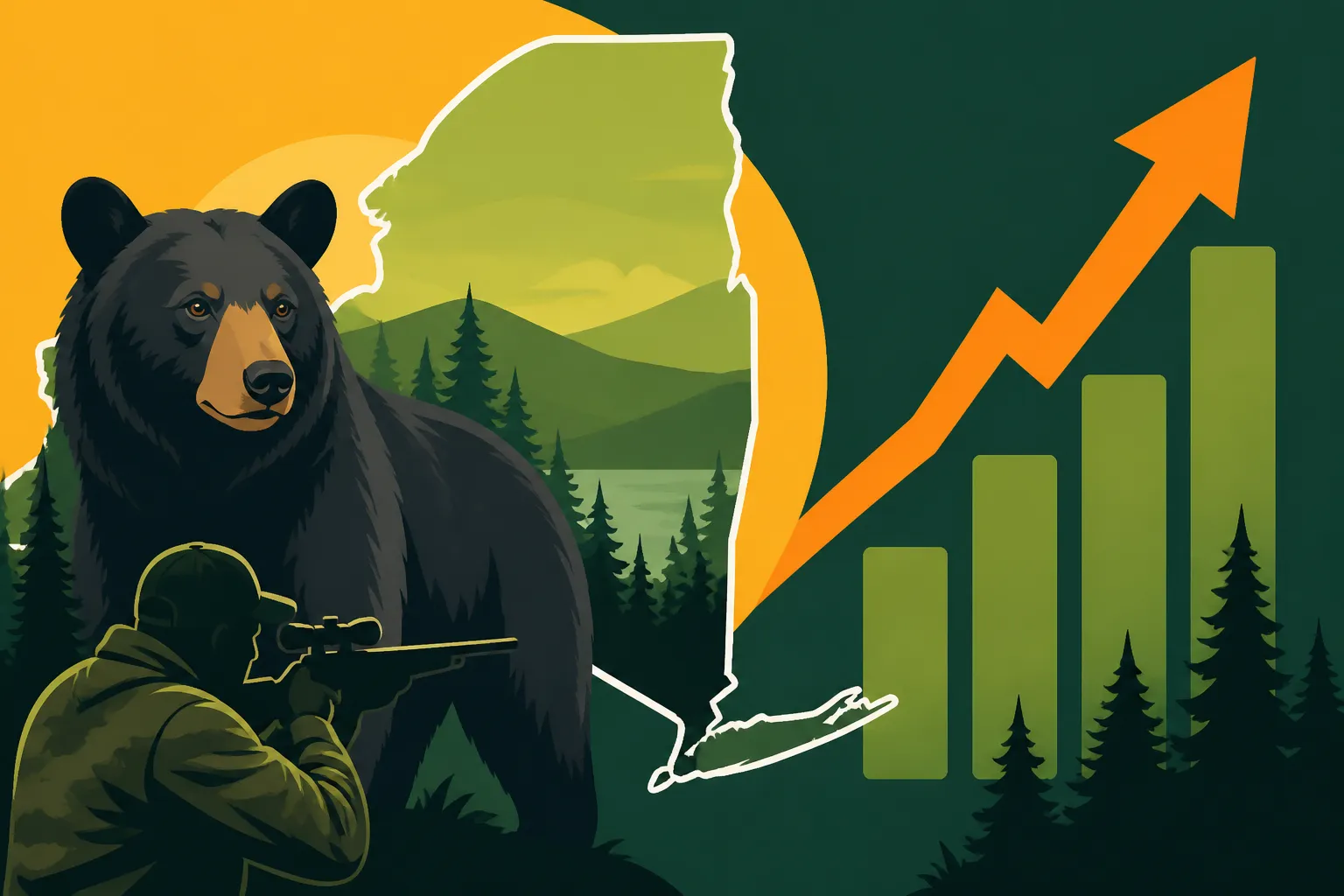
Here's a look at recent New York bear harvest numbers by region, illustrating these trends:
| Year | Adirondack Region Harvest | Catskill Region Harvest | Western New York Harvest | Total State Harvest |
|---|---|---|---|---|
| 2023 | 850 | 1,220 | 310 | 2,380 |
| 2022 | 810 | 1,190 | 305 | 2,305 |
| 2021 | 1,020 | 1,450 | 380 | 2,850 |
| 2020 | 950 | 1,380 | 350 | 2,680 |
| 2019 | 780 | 1,100 | 290 | 2,170 |
These numbers are approximate based on general trends and official New York State Department of Environmental Conservation (DEC) reports for illustrative purposes. Actual final numbers may vary slightly.
Disclaimer
The information provided in this guide is for general informational purposes only and is not intended as legal advice. Hunting regulations, seasons, and licensing requirements can change, so always consult the most current official New York State Department of Environmental Conservation (DEC) hunting guide and local regulations before planning any hunting activity. Always prioritize safety and ethical hunting practices.