Catskill Bear Density Compared to the Adirondacks
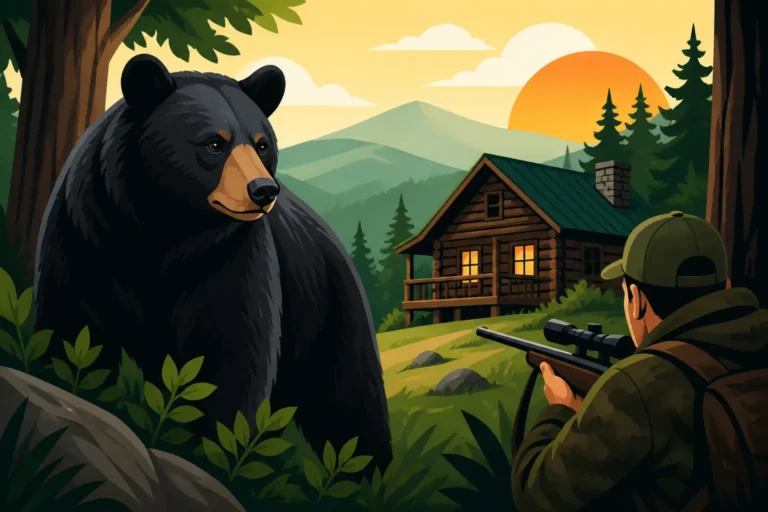
If you're a New York bear hunter, you've probably heard the old campfire debates about where the biggest bears live, or which region holds the most bruins. It's easy to get caught up in anecdotes and old tales, but understanding the actual differences in black bear density between New York's two major bear hunting regions – the Catskill and Adirondack Mountains – is crucial for planning successful hunts. This guide aims to clear up some of that confusion, diving deep into what makes each area unique and how that impacts the bear populations you'll encounter.
Understanding New York's Black Bear Landscape
New York State boasts a robust and healthy black bear population, a true testament to successful wildlife management and the adaptability of these incredible animals. However, thinking of the state as one homogeneous bear habitat is a mistake many hunters make. The reality is far more nuanced, with distinct regional characteristics profoundly shaping where bears live, how many thrive, and how best to pursue them.
The Statewide Black Bear Comeback Story
It wasn't always this way. Decades ago, New York's black bear population was far more limited, mostly confined to the deep wilderness of the Adirondacks and a smaller foothold in the Catskills. Through careful management, reintroductions, and changing land use patterns, bears have made an incredible comeback, expanding their range significantly into central and western New York, and even popping up in the Hudson Valley and beyond. This expansion means more opportunities for hunters, but it also means understanding these dynamic populations. The overall health of New York's Black Bear Population is something we can all be proud of, but local nuances are what truly matter on the ground.
Why Regional Differences Matter for Hunters
For us hunters, these regional differences aren't just academic curiosities; they dictate everything from our scouting strategies to our choice of gear. A tactic that works wonders in the sprawling, rugged Adirondack interior might be entirely ineffective in the fragmented woodlots and agricultural fields of the Catskills. Understanding density helps us anticipate bear behavior, predict where they'll find food and cover, and ultimately, put ourselves in a better position to harvest a bear. It's about knowing if you're hunting a region where bears are spread thin over vast areas, requiring extensive searching, or if you're in a hotspot where you might encounter multiple bears in a smaller area.
The Catskill Bear Habitat and Population Dynamics
The Catskill Mountains, often considered the "southern zone" for bear management in New York, present a different kind of challenge and opportunity for bear hunters. While not as vast or remote as the Adirondacks, their rugged terrain, mixed forests, and proximity to human development create a unique environment for black bears.
Habitat Characteristics and Food Sources in the Catskills
The Catskills are characterized by steep, hardwood ridges interspersed with thick, brushy valleys, old farmsteads, and a fair bit of agriculture. Unlike the vast evergreen forests of the Adirondacks, the Catskills are dominated by oak, maple, and beech, which provide critical hard mast — acorns and beechnuts — that are irresistible to bears. This abundance of cyclical food sources, coupled with proximity to orchards, cornfields, and even suburban bird feeders, means that Catskill bears often have a more diverse and readily available diet, especially in years when natural mast crops are good. This can lead to fatter, healthier bears, but also means their movements can be highly influenced by seasonal food availability. If you're wondering how bears adjust their feeding habits, exploring Hunting Bears Over Natural Food Sources can offer valuable context.
Human-Bear Interactions and Management in the Catskills
With more people living within or near bear habitat, human-bear interactions are a more common occurrence in the Catskills compared to the remote Adirondacks. This means bears in the Catskills are often more habituated to human presence and might even frequent areas close to rural residences, especially if easy food sources are present. The New York State Department of Environmental Conservation (DEC) actively manages the Catskill bear population, balancing hunter opportunity with public safety concerns. Management strategies often involve encouraging hunters to harvest bears to help control numbers and prevent nuisance situations. This makes bear hunting in the Catskills a vital tool in maintaining a healthy ecosystem and minimizing conflicts.
Tracking Bear Density in Southern New York
When we talk about bear density in the Catskills, we're generally looking at areas within the core range like Greene, Ulster, Sullivan, and Delaware counties. The DEC monitors these populations through various methods, including harvest data, research projects, and public sightings. Historically, the Catskills have shown a higher density of bears per square mile in some core areas, particularly those rich in mast crops and with good cover. This doesn't mean every square mile is teeming with bears, but rather that localized populations can be quite concentrated. This density can lead to more opportunities for hunters who focus on smaller, high-yield areas rather than trying to cover vast tracts of land.
The Adirondack Bear Habitat and Population Dynamics
Now, let's shift our focus north to the majestic Adirondack Park, a vast expanse of wilderness that challenges even the most seasoned bear hunter. The Adirondacks represent a different kind of bear country, one defined by immense scale, diverse ecosystems, and often, more extreme environmental conditions.
Wilderness and Food Abundance in the Adirondacks
The Adirondack Park is over 6 million acres, much of it "Forever Wild" Forest Preserve. This means huge tracts of unbroken forest, a mix of hardwoods, softwoods, and extensive wetlands. Bears in the Adirondacks thrive in this wilderness, relying heavily on natural food sources like berries, nuts (when available), and herbaceous plants. While mast crops exist, they can be less consistent or widespread than in the Catskills. Bears often have to travel significant distances to find enough food, especially in poor mast years. This translates to a more nomadic existence for many Adirondack bears, making them harder to pinpoint. If you're planning a trip to this wild region, understanding Hunting Bears in the Adirondack Interior will be incredibly helpful.
Factors Influencing Adirondack Bear Numbers
Several factors influence the bear population in the Adirondacks. The sheer size of the habitat supports a large overall population, but the density per square mile can vary significantly. Harsher winters in the Adirondacks often lead to longer denning periods and can impact cub survival rates. Additionally, the availability of high-calorie natural foods is critical. Unlike the Catskills, where bears might raid an apple orchard, Adirondack bears depend more on wild blueberries, raspberries, and beechnuts. When these natural foods are scarce, bears may range more widely, sometimes pushing into lower-elevation areas or even suburban fringes, though this is less common than in the Catskills.
Hunting Pressure and Bear Behavior in the Northern Zone
Hunting pressure in the Adirondacks tends to be more dispersed due to the vastness of the public lands. While certain accessible areas might see more hunters, the deep wilderness offers plenty of room to roam for both bears and hunters seeking solitude. Adirondack bears, particularly those in remote areas, are generally less habituated to humans than their Catskill counterparts. They often exhibit more natural, wary behavior, making them incredibly challenging to hunt. This requires a different approach, often favoring long-distance scouting, quiet still-hunting, and an intimate knowledge of the terrain. The expansive nature of this region makes a tool like GoHunt, with its detailed mapping and land ownership layers, invaluable for scouting and navigating.
Comparing Catskill and Adirondack Bear Density
So, what does all this mean when we pit the Catskills against the Adirondacks in terms of bear density? It’s not a simple one-size-fits-all answer, but there are clear trends that emerge when you look at the available data and the ecological factors at play.
Key Environmental Influences on Population Density
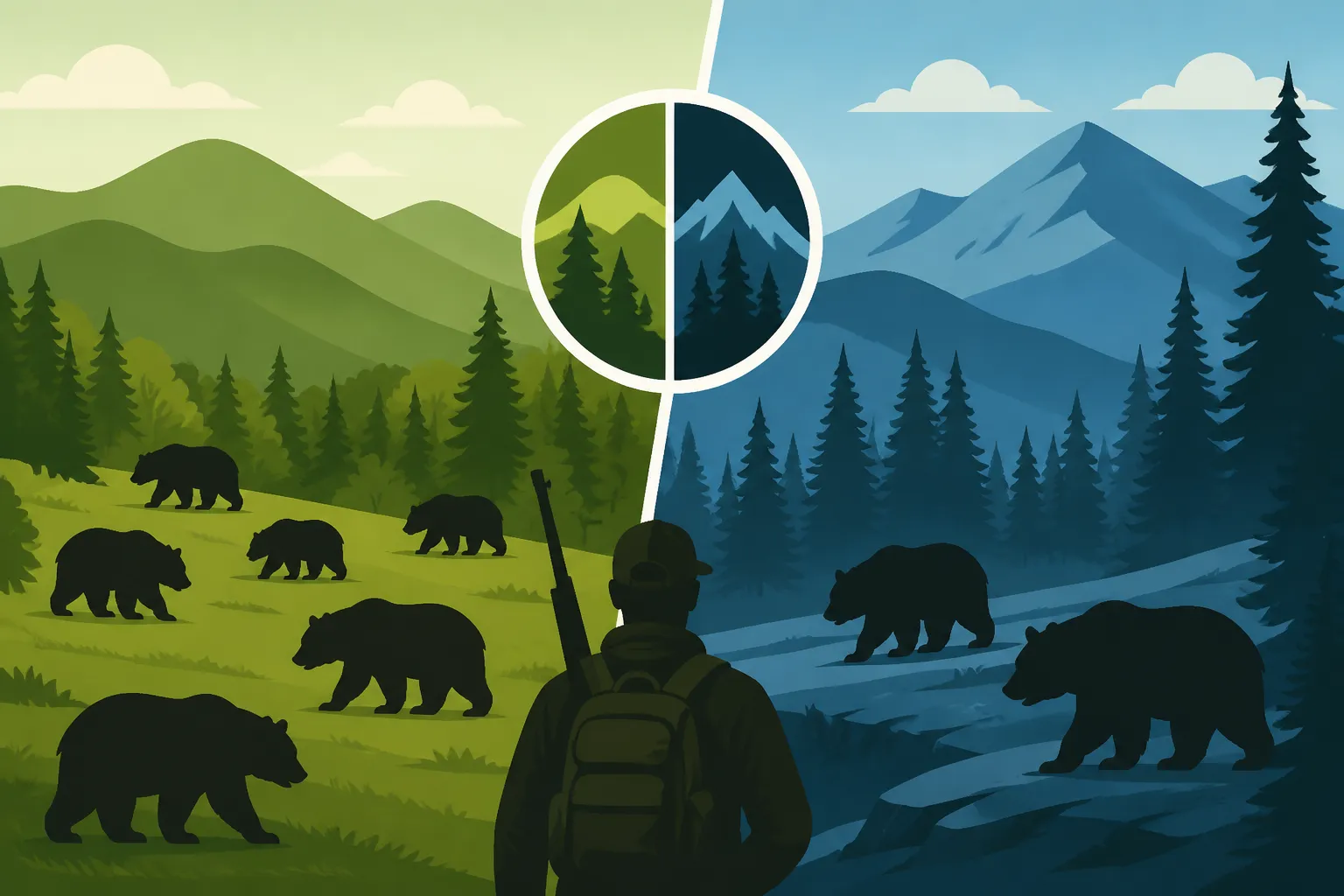
At a high level, the Catskills tend to have a higher localized bear density in many of its prime habitats, while the Adirondacks support a much larger overall population spread across an immense area. Think of it like this: if you have a pie, the Catskills might have smaller slices but more filling in each, while the Adirondacks have massive slices that are a bit more spread out.
Catskills:
- Food Availability: Greater access to diverse, high-calorie food sources (hard mast, agriculture, human-derived foods) leads to better survival and reproduction rates. This means more bears can thrive in a smaller geographical area.
- Habitat Fragmentation: While there are large blocks of forest, the interspersion of agriculture and human development can create "edge" habitats that bears exploit, often leading to concentrated activity in certain zones.
- Winter Conditions: Generally milder winters mean shorter denning periods and potentially better cub survival, contributing to higher growth rates in the population.
Adirondacks:
- Food Availability: While vast, natural food sources can be less consistent and more dispersed. Bears often need larger home ranges to find adequate nutrition, reducing density in any single area.
- Vast Wilderness: The sheer scale of unbroken wilderness means bears are spread across millions of acres. While there are plenty of bears, you're less likely to find them concentrated unless you hit a very specific food source.
- Winter Conditions: Harsher, longer winters can impact bear cub survival and put more stress on the general population, which naturally limits density increases compared to milder climates.
Here's a quick comparison to summarize some of these points:
| Feature | Catskill Mountains (Southern Zone) | Adirondack Mountains (Northern Zone) |
|---|---|---|
| Typical Terrain | Steep hardwood ridges, mixed forests, agriculture, rural development | Vast wilderness, mixed hardwoods/softwoods, extensive wetlands, high peaks |
| Primary Food Sources | Abundant hard mast (oak, beech), agriculture, some human sources | Natural berries, herbaceous plants, less consistent hard mast |
| Bear Density | Higher localized density in prime areas | Lower density per square mile but larger overall population |
| Human Interaction | More frequent human-bear interactions | Less frequent, generally wilder bears |
| Winter Severity | Generally milder, shorter denning periods | Harsher, longer denning periods |
| Hunting Style Favored | Still-hunting, stand hunting, targeting specific food sources | Spot-and-stalk, long-distance scouting, wilderness hunting |
Management Strategies and Harvest Data Divergence
The DEC's bear management reflects these ecological differences. In the Catskills, management often aims to stabilize or even slightly reduce populations in areas with higher human-bear conflict, leading to more flexible hunting opportunities, including longer seasons and sometimes additional tags. This means harvest numbers in the Catskills can be quite substantial.
In contrast, Adirondack management focuses more on maintaining a healthy, stable population within its vast natural ecosystem. Harvest quotas are carefully set, and hunting seasons, while generous, might reflect the lower density in some areas. Looking at New York Bear Harvest Trends provides insight into how these numbers fluctuate year to year and between zones. The differing strategies are a direct response to the distinct population dynamics of each region.
Hunter Implications for Both Regions
For hunters, these density differences mean you should adjust your expectations and strategies. In the Catskills, especially in WMUs known for high bear numbers, you might focus on scouting specific mast crop areas, old orchards, or choke points between feeding and bedding areas. A well-placed stand over a consistent food source could be highly effective.
In the Adirondacks, you're often covering much more ground. Success might come from extensive scouting over multiple days, looking for subtle signs in remote timber, or focusing on vast berry patches. It’s a hunt that demands patience, physical endurance, and a deeper understanding of wilderness navigation. Your chances of just "stumbling" into a bear might be lower, but the reward of harvesting a true wilderness bear is immense. Knowing how to adapt your approach to New York's Northern Zone Firearm Season or New York's Southern Zone Firearm Season can make all the difference.
Practical Insights for New York Bear Hunters
Whether you're heading to the Catskills or the Adirondacks, understanding bear density is the first step. The next is translating that knowledge into actionable strategies in the field.
Scouting Strategies Based on Regional Density
Scouting is paramount for bear hunting success, and your approach should be tailored to the region's bear density.
Catskills:
- Focus on Food: In high-density areas, bears will heavily exploit prime food sources. Spend time pre-season locating mast crops (oak flats, beech ridges), abandoned apple orchards, and any agricultural fields bordering dense cover. Look for scat, claw marks on trees, and disturbed ground.
- Trail Cameras are Gold: Because bears can be concentrated, trail cameras are incredibly effective for monitoring activity on specific food sources or travel corridors. You might catch multiple bears using the same area.
- Find Pinch Points: Bears will often use the path of least resistance. Look for saddles, narrow ridges, or strips of cover connecting larger blocks of timber. These are natural funnels where a higher density of bears might converge.
Adirondacks:
- Cover More Ground: The lower density means you need to scout larger areas. Focus on vast berry patches, remote beaver swamps, and areas with diverse habitat that offers both food and sanctuary.
- Topographic Scouting: Use maps (physical or digital) to identify remote basins, high-elevation ridges, and areas with thick, dark timber that might serve as bedding cover. Bears will often use these areas for security.
- Less Predictable Food: Adirondack bears might be more opportunistic. While they'll hit a berry patch hard, their movements can be less predictable day-to-day than a Catskill bear tied to a small, isolated apple orchard. Be prepared to adapt and cover ground. Consider carrying packs for a multi-day backcountry hunt to sustain your efforts.
Adapt Your Approach to Local Bear Behavior
A bear is a bear, right? Not entirely. The environment shapes their daily routines and wariness.
Catskills:
- Stand Hunting: Due to higher density and often more predictable food sources, stand hunting can be highly effective. Bears might move more consistently to a known food source, especially during early morning and late evening.
- Spot-and-Stalk Caution: While possible, spot-and-stalk can be tricky in the fragmented Catskill landscape. You're more likely to bump other hunters or inadvertently spook a bear in dense cover. Spot-and-Stalk Tactics for Catskill Bears are best employed in specific, open scenarios.
- Hunting Pressure: Be aware that some Catskill areas can experience significant hunting pressure, especially on public land. Bears here might become more nocturnal or utilize thicker cover quickly. Consider less accessible spots or mid-week hunts.
Adirondacks:
- Still-Hunting and Spot-and-Stalk: These methods are often more effective here. The vastness allows for covering ground slowly and deliberately, glassing open hillsides, or sneaking through timber.
- Remote Tactics: Bears in the deep woods are wilder. Minimize scent, move slowly, and pay attention to wind and thermals, especially when hunting steep terrain.
- Patience and Endurance: An Adirondack bear hunt is often a marathon, not a sprint. Be prepared for long days, difficult terrain, and the possibility of going days without seeing a bear. But when you do, it’s truly earned. Ensure you have reliable navigation tools, perhaps GPS Units for Adirondack Backcountry Hunts for peace of mind.
Leveraging Technology for Bear Hunting Success
Regardless of which region you choose to hunt, modern technology can be a powerful ally in your bear hunting pursuits. This is where tools like GoHunt really shine. With its advanced mapping features, you can analyze public and private land boundaries, identify prime habitat characteristics like elevation changes, water sources, and potential bedding areas.
For example, in the Catskills, you can use GoHunt's satellite imagery to pinpoint those isolated apple trees or small clearings within dense cover that might be a bear magnet. You can mark potential stand sites and plan your entry and exit routes meticulously to avoid detection. In the Adirondacks, GoHunt becomes indispensable for understanding the vast terrain. You can identify remote logging roads, trail systems, and potential high-country basins that hold late-season food, helping you navigate and prioritize your scouting efforts over huge distances. Its ability to layer different maps and data can save you countless hours of unproductive walking, helping you narrow down your search even in areas with lower bear density. Utilizing Trail Cameras on New York Public Land, paired with mapping apps, can provide critical real-time intel on bear movements.
No matter where you choose to hunt bears in New York, understanding the unique characteristics of each region, particularly their bear densities, will be a game-changer. Both the Catskills and the Adirondacks offer incredible opportunities for bear hunters, but they demand different strategies, mindsets, and preparation. Good luck out there!
Disclaimer
Hunting is a challenging and potentially dangerous activity. Always adhere to all New York State Department of Environmental Conservation (DEC) regulations, local laws, and ethical hunting practices. Safety should be your top priority. This guide provides general information and recommendations, but individual hunting situations vary. Always scout thoroughly, understand the specific area you are hunting, and obtain proper licenses and permits. The author and publisher are not responsible for any accidents, injuries, or legal issues that may arise from the use of this information.