Bobcat Range and Harvest in New York
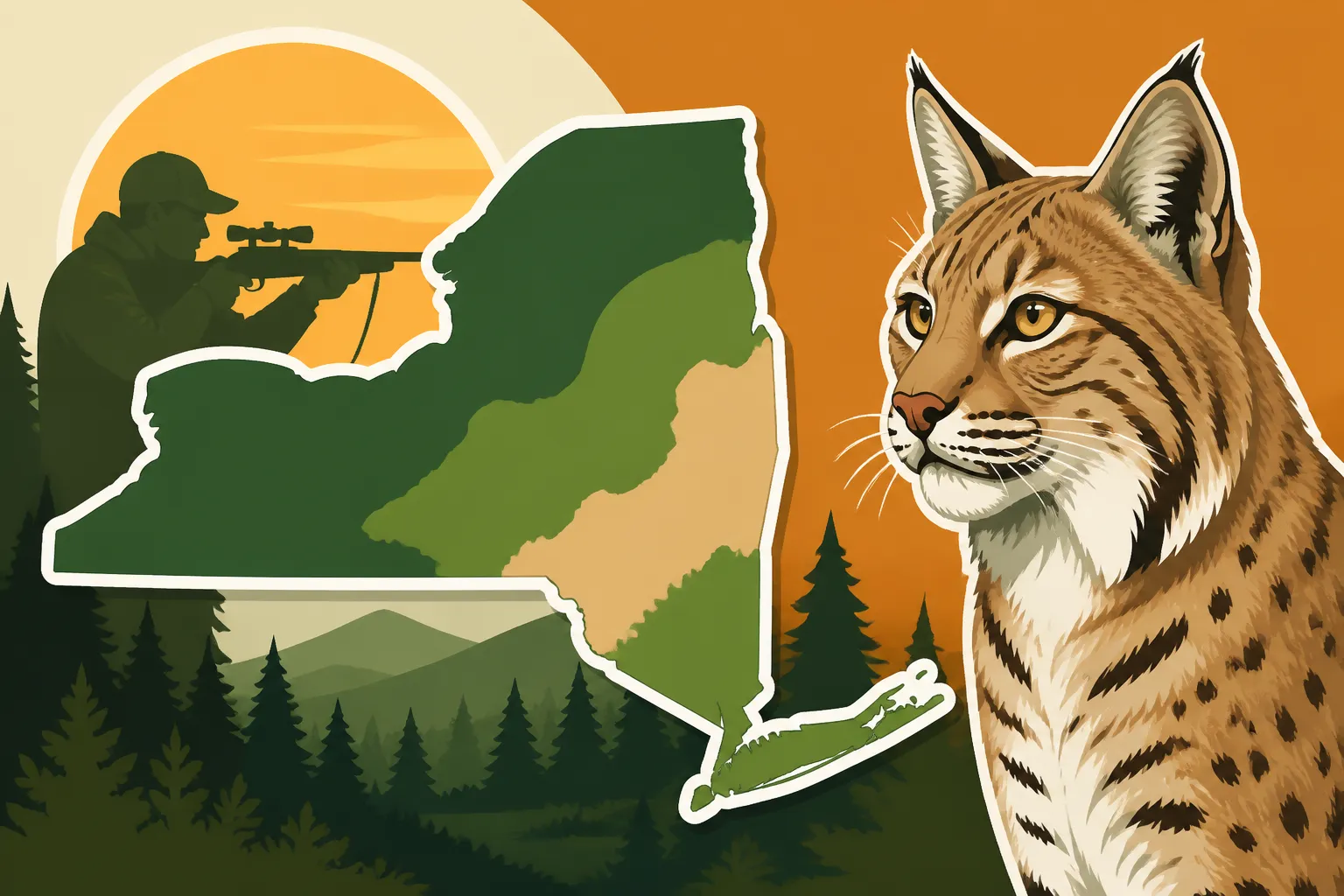
Bobcats in New York are one of those elusive creatures that many hunters and trappers only dream of encountering, let alone harvesting. It's a common frustration to spend countless hours in the woods, hearing tales of sightings, but never quite putting the pieces together yourself. This comprehensive guide is designed to cut through that mystery, shedding light on where these magnificent furbearers roam, the specific regulations governing their harvest, and proven strategies to increase your odds of success.
Understanding Bobcat Distribution Across New York
New York State is a diverse landscape, from dense northern forests to rolling southern farmlands, and bobcats have carved out a niche in many of these varied environments. However, their presence isn't uniform, and understanding their preferred haunts is the first step to finding them.
The Elusive Nature of New York's Bobcats
If you've spent any significant time in the New York woods, you know just how secretive bobcats can be. Unlike a deer or even a coyote that might cross a field in plain sight, a bobcat is a master of stealth, often moving through the densest cover imaginable. This natural elusiveness means that many hunters and trappers, even seasoned veterans, can go an entire lifetime without a definitive bobcat sighting, leading to questions about whether they're truly present in an area. Their camouflage, a beautiful tawny coat with dark spots and bars, blends seamlessly with dappled sunlight and shadows, making them incredibly difficult to pick out even when they are relatively close.
Adding to their mystique is their generally nocturnal or crepuscular activity patterns, meaning they are most active during dawn and dusk. This coincides with times when human activity in the woods might be lower, further reducing encounters. They’re not prone to lingering in open areas, preferring to stick to the edges of clearings or use dense thickets as travel corridors. This secretive behavior is a key survival strategy, allowing them to thrive even in areas with some human presence, but it certainly makes them a challenging quarry. Their ghost-like reputation is well-earned, making any successful harvest a testament to skill and persistence.
Primary Habitats and Strongholds
While bobcats can theoretically be found across a good portion of the state, there are definite strongholds where populations are more robust and encounters are more likely. These areas typically offer the perfect trifecta of dense cover, varied topography, and abundant prey. The Catskill Forest Preserve, with its rugged mountains, rocky outcrops, and extensive hardwood forests interspersed with thick regenerating clearcuts, is a prime example. Here, the landscape provides ample denning sites in rock crevices and fallen logs, as well as endless ambush points for hunting. Similarly, certain parts of the Adirondack Forest Preserve, particularly the "Wild Forest" areas with a mix of timber types and extensive swamps, harbor healthy bobcat numbers. While these areas are known for Where New York Black Bears Live, they also provide excellent bobcat habitat.
Beyond the major preserves, the Southern Tier of New York, characterized by its rolling hills, mixed deciduous forests, and brushy creek bottoms, also provides excellent bobcat habitat. These areas often have a patchwork of older growth timber, younger successional forests, and agricultural lands that offer a consistent food source of rabbits, hares, squirrels, and small rodents. The transition zones between these habitat types are often key. Look for areas where dense evergreens meet hardwoods, where old logging roads cut through thick brush, or where rocky slopes offer both vantage points and escape routes. These features provide the necessary cover for stalking and resting, as well as crucial travel corridors. A helpful tool like GoHunt can provide detailed topographical maps and satellite imagery to help identify these prime habitat features.
Expanding Range and Less Common Sightings
For many years, bobcats were considered primarily creatures of the deep woods in New York. However, there's growing evidence and anecdotal reports suggesting that their range might be subtly expanding, or at least they're becoming more tolerant of human-modified landscapes. Sightings are becoming more frequent in areas that were historically considered less traditional bobcat territory, such as portions of the Hudson Valley or even the fringes of some suburban developments, particularly those bordering larger tracts of undeveloped land.
This observed expansion could be attributed to several factors. A rebound in general wildlife populations, including their primary prey species, combined with reduced trapping pressure in some regions and possibly their adaptable nature, may be contributing to their increased presence. As coyotes, another prevalent New York predator, thrive across the state, including in agricultural and suburban areas, bobcats might be learning to coexist, often by being more active during different hours or utilizing different types of cover. This often means they're found in fragmented habitats, moving through woodlots, fencerows, and creek beds that provide enough concealment. While an occasional bobcat might be seen crossing a Hunting the Southern Tier Farmland Deer field, it's important to differentiate between transient individuals and a stable, breeding population. These less common sightings highlight their opportunistic nature but don't necessarily indicate a shift in their primary strongholds for sustained harvest opportunities. Understanding this broader distribution helps in comprehending Bobcat Range and Numbers in New York.
Navigating New York's Bobcat Harvest Regulations
Harvesting a bobcat in New York isn't as straightforward as punching a deer tag. Due to their status as a managed furbearer, bobcats come with specific seasons, zones, and reporting requirements that can be a bit of a maze for the uninitiated. Ignoring these rules can lead to significant penalties, so it's crucial to be well-informed before heading afield.
Season Dates and Management Units
The complexity of bobcat regulations often boils down to specific Wildlife Management Units (WMUs) and zones. New York State divides itself into various regions for managing furbearer seasons, and bobcats are no exception. Typically, bobcat hunting and trapping seasons are not statewide, but rather confined to designated zones where populations are deemed robust enough to support a harvest. For instance, the general trend usually sees longer and more liberal trapping seasons in areas with higher bobcat densities, such as the Catskill region or parts of the Adirondacks, compared to hunting seasons, which may be shorter and more restricted. This nuanced approach allows the state to manage populations precisely.
It's not uncommon for trapping seasons to open earlier and run later than hunting seasons for bobcats, sometimes spanning several months during the colder parts of the year when pelts are at their prime. Hunting seasons, by contrast, might be much shorter, often aligning with portions of the deer season or specific furbearer hunting windows. This means that a hunter pursuing deer in the Southern Zone might incidentally encounter a bobcat, but must ensure they are in a legal WMU and during the appropriate season to take it. These varying dates and locations are a prime example of why checking the most current New York State Department of Environmental Conservation (DEC) regulations every single year is non-negotiable. Don't rely on last year's pamphlet; seasons and boundaries can change based on population surveys and management goals. For detailed information on broader furbearer seasons, you can always refer to New York Trapping Seasons and Tagging or Predator and Furbearer Hunting in New York.
Tagging and Reporting Requirements
Unlike deer, where an online harvest report is usually sufficient, bobcats fall under a more stringent tagging and reporting protocol due to their value as a furbearer and the need for detailed population data. If you are fortunate enough to harvest a bobcat, whether by hunting or trapping, you are typically required to have the pelt legally sealed by a DEC officer. This isn't just a suggestion; it's a mandatory step that must be completed within a specific timeframe after the harvest, often within a few days. The exact locations and times for pelt sealing clinics are usually published by the DEC, and you'll need to make arrangements to get your animal or pelt to one of these stations.
During the pelt sealing process, a DEC officer will affix a special tag to the pelt, which verifies that it was legally taken. More importantly for wildlife management, they will often collect biological data from the animal. This can include sex, age (often determined by taking a tooth sample), method of take, and the specific location of the harvest. This information is invaluable to the DEC, helping them track population trends, understand harvest impacts, and make informed decisions about future season structures and bag limits. It’s a direct contribution from hunters and trappers to the conservation of the species. Without this data, effective management would be much harder. Ensure you understand this process fully before attempting to harvest a bobcat, as an unsealed pelt can lead to legal issues.
Legal Hunting and Trapping Methods
New York offers both hunting and trapping opportunities for bobcats, each with its own set of legal methods and nuances. For hunters, bobcats can typically be taken with legal firearms (rifles, shotguns) or archery equipment during the designated hunting season in open WMUs. Rifle caliber restrictions, where they exist, will align with those for big game in the given zone. For instance, a common centerfire rifle suitable for deer would also be permissible for bobcats. Shotguns loaded with appropriate shot sizes are also legal. Archery equipment, including compound bows, recurves, and longbows, adhering to minimum draw weight and broadhead specifications, is another viable method. Crossbows may also be permitted under specific state regulations. The key is to check the general big game and small game hunting regulations to ensure your chosen weapon is legal for furbearers in your specific hunting zone.
Trapping, however, is often the more common and effective method for harvesting bobcats, given their elusive nature. New York permits the use of various trap types, including foothold traps and body-gripping traps, but with very strict regulations on size, setting locations, and reporting. Foothold traps must meet certain jaw spread limits and often require swivels and appropriate anchoring to minimize injury to the animal and prevent escape. Body-gripping traps (like Conibear-style traps) are also regulated by size and may have restrictions on their use on land, often requiring placement in water or in enclosed cubby sets to prevent non-target captures. Trappers are also legally bound to check their traps within a set timeframe, usually every 24 hours, to ensure humane dispatch of captured animals and to release any non-target species. This emphasizes responsible trapping practices, which are critical for both ethical considerations and maintaining public support for trapping. For more on general furbearer trapping, consult Trapping New York Furbearers and Running a Trapline in the Adirondacks.
Successful Strategies for Hunting and Trapping Bobcats
Given the bobcat's reputation for stealth and elusiveness, success in harvesting one often comes down to meticulous scouting, strategic calling, and precise trap placement. It's not about luck so much as it is about understanding their habits and leveraging that knowledge.
Scouting for Bobcat Sign
Because bobcats are so rarely seen, finding fresh sign is absolutely critical. This isn't a species you'll typically stumble upon by chance. You need to be actively looking for clues that they're in the area. Start by studying their tracks. Bobcat tracks are typically rounder than a domestic cat's, and larger, usually without claw marks visible since their claws are retractable. Look for a leading toe, often slightly ahead of the others, and a distinct "M" shape in the heel pad. These tracks are often found along old logging roads, game trails, streambeds, and the edges of dense cover. Learning to differentiate them from the tracks of Coyotes Across New York State or domestic dogs is a crucial skill.
Beyond tracks, keep an eye out for scat. Bobcat scat often contains hair, bone fragments, and sometimes even feathers from their prey, and it's typically segmented. They may leave scat in prominent locations to mark their territory. Scratch marks on trees, particularly smaller trees or stumps, can also indicate a bobcat sharpening its claws or marking its presence. Kill sites, while rare to find intact, might reveal partially consumed prey cached under leaves or snow. Focus your scouting efforts on prime bobcat habitat: rocky ledges and outcroppings (perfect denning sites and ambush points), dense thickets of multiflora rose or evergreen stands, stream crossings, and narrow funnels between larger blocks of cover. Using trail cameras, especially those deployed in these high-traffic areas, can be an absolute game-changer, providing invaluable intel on their movement patterns and preferred routes without disturbing the animals. For more general advice, check out Scouting New York Public Land Before Season and for camera deployment specifics, consult Trail Cameras on New York Public Land.
Calling and Ambush Hunting Tactics
For hunters, calling can be one of the most effective ways to bring a bobcat into range. These opportunistic predators have keen hearing and a strong prey drive, making them susceptible to various distress calls. Rabbit or bird distress calls are often the most successful. A jackrabbit distress call, for instance, mimics a wounded prey animal, which can pique a bobcat's interest. Some hunters also find success with rodent squeakers or even fawn distress calls, although these might also attract coyotes or other predators. The key is to start with soft, intermittent calls, gradually increasing volume and duration, mimicking a struggling animal. Bobcats are known for their cautious approach; they won't charge in headfirst like some canids.
When calling, patience is paramount. Set up in an area with good visibility but also ample cover for yourself, ensuring you're downwind from where you expect the bobcat to approach. They will often circle downwind to scent-check the source of the sound before committing. A good ambush spot might be a small opening in a dense woodlot, a field edge bordering thick cover, or a natural funnel point on a ridge. Use elevated positions if available, as this can give you a better vantage point. Silence after a call is critical; let the sound of the distressed animal linger in the air. Remain absolutely still and scan the surrounding area carefully, especially in thick shadows or along edges, using quality Optics for Adirondack and Catskill Timber to pick out their camouflaged form. The shot opportunity will likely be brief and require a steady hand.
Effective Trapping Setups
Trapping offers a higher success rate for bobcats than hunting, primarily because it allows you to consistently target their travel routes and curiosity over time. Effective trapping relies on understanding bobcat behavior and crafting compelling sets. Cubby sets are a classic: a small, enclosed structure (natural or man-made) with bait or lure placed inside, and a trap carefully positioned at the entrance. This appeals to their denning instinct and curiosity. Dirthole sets mimic a cache of prey: a small hole dug in the ground, baited and lured, with a well-camouflaged foothold trap placed carefully nearby. Flat sets are similar but use a scent post or visual attractor rather than a hole.
Location is everything. Place sets along natural travel corridors like game trails, old logging roads, fencerows, or pinch points where bobcats are forced to pass through a narrow area. Stream crossings or the base of large, distinctive trees are also excellent spots. Scent is crucial: high-quality bobcat lures, curiosity scents, and even gland lures can draw them in. Some trappers also use fresh meat bait (like beaver or muskrats) to entice them. Always ensure your traps are clean, scent-free (using scent-eliminating sprays or by boiling them), and perfectly bedded so they don't rock or shift when stepped on. Camouflage is vital; bobcats are wary, so hide your trap and blend the set naturally with the surroundings. Remember to always adhere to New York's specific regulations regarding trap size, type, and check times. Responsible and ethical trapping is key, minimizing non-target catches and ensuring quick, humane dispatch.
The Role of Bobcats in New York's Ecosystem
Beyond the challenge and reward of harvesting one, bobcats play a fascinating and important role in the delicate balance of New York's wild places. They are more than just a furbearer; they are an integral part of the natural community.
Predator-Prey Dynamics
Bobcats are efficient and adaptable meso-predators, meaning they occupy a middle tier in the food chain. While they're not at the apex like a mountain lion (which isn't native to New York), they exert significant predatory pressure on a wide variety of smaller animals. Their diet primarily consists of rabbits and snowshoe hares, squirrels, mice, voles, and other small rodents. They are also opportunistic, and will readily take advantage of other prey like grouse, wild turkeys, and occasionally even young deer fawns if the opportunity arises. This diverse diet makes them incredibly resilient, allowing them to thrive even when one prey population might be temporarily low.
By preying on these smaller mammals and birds, bobcats help regulate their populations, which in turn benefits the overall health of the ecosystem. For instance, by keeping rabbit numbers in check, they can reduce browsing pressure on certain plant species. Their presence also helps ensure that the remaining prey populations are generally healthy, as predators often target the weak or sick, contributing to natural selection. Their impact is distinct from larger, more generalist predators like Coyotes Across New York State, which often hunt in packs and target larger prey more frequently. The bobcat's role is a vital one, a silent manager of the smaller wildlife populations that often go unnoticed but are the foundation of forest health.
Conservation and Management Efforts
Thankfully, New York's bobcat population is healthy and stable, a testament to decades of careful wildlife management. Bobcats are not listed as an endangered or threatened species in the state; rather, they are classified as a managed furbearer. This designation allows for regulated hunting and trapping seasons, which are carefully structured to ensure sustainable populations for future generations. The information gathered from mandatory pelt sealing and reporting, as discussed earlier, is fundamental to this management approach. Biologists analyze data on harvest numbers, sex ratios, age structures, and distribution to assess the health of the population and predict future trends.
These scientific insights directly inform decisions on season lengths, bag limits, and the specific Wildlife Management Units where harvest is permitted. If surveys indicate a decline in a certain area, seasons might be shortened or closed. Conversely, if populations are robust, managers might open more opportunities. New York's approach demonstrates that regulated hunting and trapping, when based on sound science, are powerful tools for wildlife conservation. They provide an incentive for individuals to participate in monitoring and allow the DEC to gather data that would be impossible to collect otherwise. It also funds various conservation programs through license and permit fees. Responsible hunters and trappers are, therefore, essential partners in ensuring the long-term viability of New York's magnificent bobcat population.
Disclaimer
This article is for general informational purposes only and does not constitute professional advice. Laws, prices and regulations vary by location and change over time. Consult a qualified professional for guidance on your specific situation.