Best New York Counties for Big Bucks
It’s a question every serious deer hunter in New York asks: where can I truly increase my odds of encountering a mature, heavy-racked buck? With so much diverse landscape, from dense Adirondack timber to vast Southern Tier farmlands, figuring out where to focus your efforts for a shot at a wall-hanger can feel like a daunting task. This guide is here to cut through the guesswork, diving deep into what makes a New York county consistently produce impressive whitetails and pointing you toward the regions that tend to hold the biggest potential.
What Drives Big Buck Potential in New York Counties
Before we can point to specific regions, it’s crucial to understand the underlying factors that contribute to a county’s ability to grow big bucks. It's not just luck; it's a complex interplay of environmental conditions, deer demographics, and even human influence. Hunters often overlook these fundamental truths, but grasping them can shift your focus from merely hunting deer to truly hunting trophy deer.
Habitat and Nutrition: The Foundation for Growth
A mature whitetail buck's antler growth and overall body size are direct reflections of the quality and abundance of food available to him, especially during the spring and summer antler-growing months. Think of it this way: a deer is what it eats. Counties with rich, fertile soils that support diverse and nutritious forage will naturally produce bigger, healthier deer with greater antler potential. This isn't just about vast cornfields, though those certainly help! It's also about a variety of natural browse, soft mast like apples and pears, and hard mast such as acorns and beechnuts. The better the buffet, the better the bucks.
Areas that haven't been heavily logged in recent decades, or those that have active timber management for diversity, tend to offer a patchwork of early successional growth, mature hardwoods, and thick cover. This variety provides both sustenance and security, creating ideal conditions for deer to reach their full potential. Furthermore, access to reliable water sources, especially during dry spells, is non-negotiable for deer health. When assessing a county, look beyond just the numbers and consider the actual lay of the land, the health of its forests, and its agricultural output. These are the ingredients for superior antler development.
Age Structure and Management Strategies
You can have the best habitat in the world, but if all the bucks are shot as yearlings, you'll never see truly mature animals. This is where age structure comes in. Counties that have a healthy proportion of older-age-class bucks (3.5 years old and up) are prime big buck territory. This age structure isn't accidental; it's often a result of either less hunting pressure, specific antler restrictions, or a combination of both. When bucks are allowed to survive a few seasons, their bodies and antlers have time to develop fully, often leading to impressive racks.
New York's deer management strategy, including the various New York Deer Management Permits Explained available, plays a significant role here. Some Wildlife Management Units (WMUs) have antler point restrictions (APRs) in place, requiring bucks to have a certain number of points on one side before they can be harvested. While not statewide, these local regulations are designed to increase the number of older bucks in the population. Even in WMUs without APRs, a strong local hunting culture of "letting them go to let them grow" can lead to a similar effect. Understanding these nuances, especially when considering Why Western New York Grows Older Bucks, is key to targeting counties with a proven track record for bigger bucks.
Hunter Pressure and Deer Behavior
It's an unfortunate truth that heavy hunting pressure can make deer more nocturnal and harder to hunt, and it can also lead to a higher harvest rate of younger bucks. In counties with very high hunter density, deer are constantly on alert, seeking out the thickest cover and moving primarily under the cloak of darkness. This doesn't mean big bucks don't exist in pressured areas, but they are often ghosts, incredibly difficult to pattern and even harder to get a shot at during legal shooting hours.
Conversely, counties or specific areas within counties that see less pressure, often due to difficult terrain, limited access, or simply lower hunter populations, tend to have deer that are more relaxed and follow more predictable patterns. These bucks might move more freely during daylight, providing better hunting opportunities. When you're Hunting Pressure on New York Public Land, identifying those pockets of overlooked habitat can be a game-changer. It's often not about avoiding hunters entirely, but about finding areas where hunters aren't willing to go, or where the sheer vastness of the land dilutes the pressure.
Pinpointing New York's Top Big Buck Regions
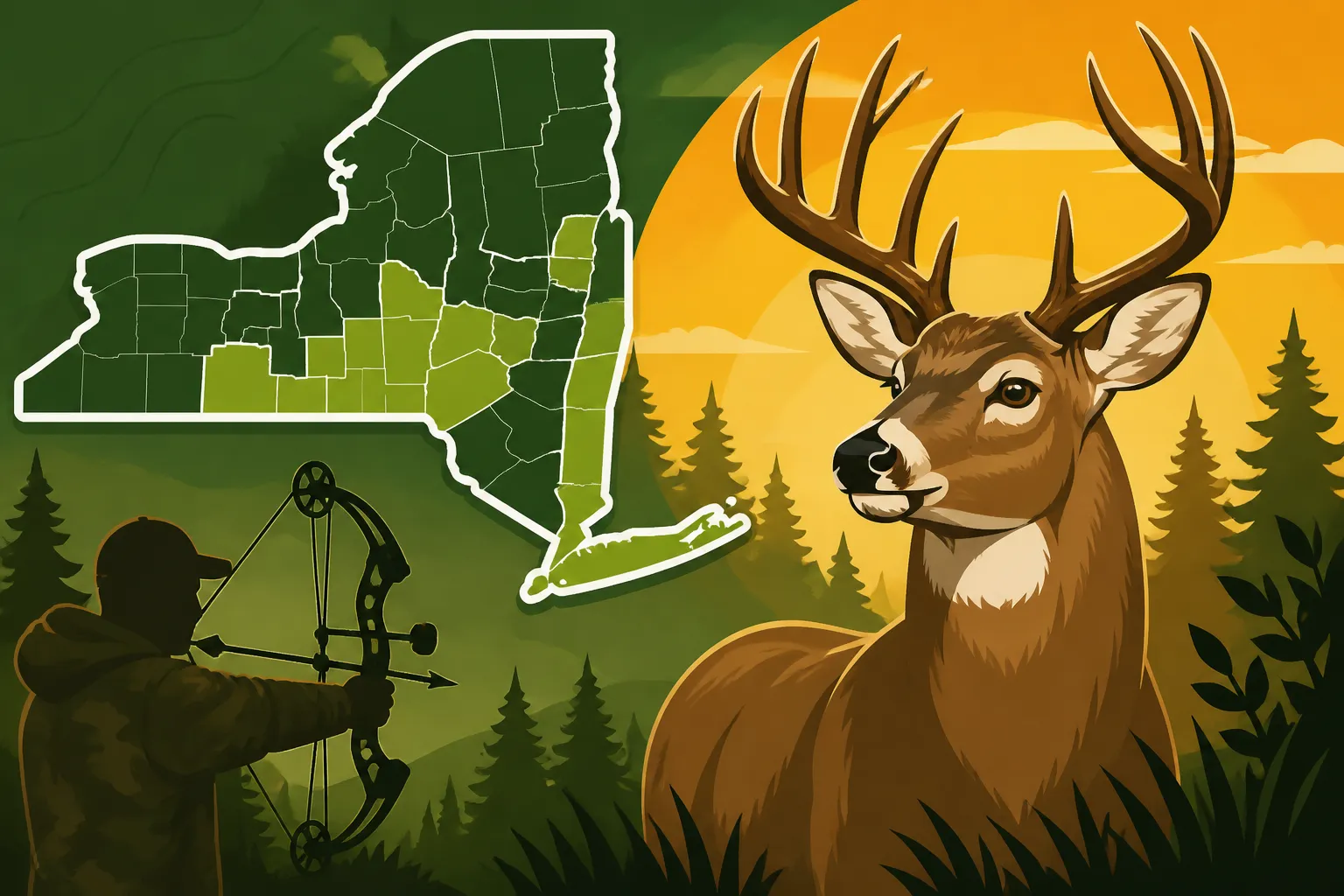
New York is a big state, and while every county can produce a good buck, some regions consistently stand out due to their combination of excellent habitat, favorable age structures, and a balance of hunting pressure. When you're looking for those prime locations, you need to think broadly about zones and then narrow down to counties that fit the bill.
The Southern Tier and its Rolling Hills
The Southern Tier, stretching across the southern part of the state from the Catskills westward towards Lake Erie, is often hailed as one of New York's top deer hunting destinations. This region is characterized by a mix of rolling hills, hardwood forests, and significant agricultural lands. The diverse landscape offers everything a deer needs: food, water, and plenty of cover. Counties like Steuben, Allegany, Cattaraugus, and Chautauqua often feature prominently in harvest reports for both quantity and quality.
The blend of mature timber providing hard mast (acorns, beechnuts) and productive farm fields growing corn, soybeans, and alfalfa creates an incredibly rich nutritional environment. This is vital for bucks developing impressive racks. Additionally, the varied terrain, with its steep ridges and hollows, can make it challenging for hunters, inadvertently creating sanctuaries where older bucks can elude detection. When you're Hunting Southern Tier Farmland Deer, understanding how bucks utilize both the crop fields for feeding and the adjacent woodlots for bedding and escape is crucial. The sheer expanse of state forests and private timberland also offers countless opportunities for bucks to reach maturity.
Western New York's Agricultural Edge
Further west, areas bordering Lake Erie and extending into the central-western part of the state also hold significant big buck potential. Counties here, such as Genesee, Wyoming, Livingston, and parts of Erie and Orleans, are dominated by intense agricultural production. The fertile farmlands provide an almost endless supply of high-energy foods, which are crucial for antler growth. These areas often have higher Deer Density by New York Wildlife Unit due to the abundant food sources.
While agricultural areas can sometimes lead to concentrated hunting pressure around field edges, the sheer volume of deer and the nutrient-rich diet mean that bucks grow fast and large. The challenge here is often finding overlooked pockets of cover, thickets, and swampy areas where mature bucks can hide during daylight hours. Leveraging detailed aerial maps, perhaps on a platform like GoHunt, can help you identify these hidden sanctuaries within the farmlands. These areas are excellent for hunters willing to put in the time to scout thoroughly and understand the subtle movements of deer between bedding and feeding areas.
The Finger Lakes Region's Unique Landscape
The Finger Lakes region, known for its deep glacial lakes and picturesque vineyards, also boasts excellent deer hunting, particularly for those seeking a mature buck. Counties like Schuyler, Yates, Ontario, and Seneca often produce quality deer. This region offers a unique blend of steep, forested gorges, rolling farmlands, and brushy hillsides that transition seamlessly between food and cover. The diverse terrain provides ample opportunity for deer to find refuge and grow old.
The vineyards themselves, while not direct deer food, often create varied edges and thickets that deer exploit, and the fertile soils of the valleys are perfect for agricultural crops like corn and soybeans. The broken topography, with its numerous woodlots, ravines, and swampy creek bottoms, can make deer hunting challenging but rewarding. This often means less overall hunting pressure in the more difficult-to-access areas, allowing bucks to reach older age classes. For hunters keen on understanding the terrain, scouting tools like GoHunt can be particularly useful for analyzing contours and identifying potential travel corridors along these steep gorges and varied edges. This region provides a distinct hunting experience, often yielding impressive results for those who learn to read its unique landscape.
Scouting Smarter for New York Trophy Deer
Finding the right county is just the first step. To consistently harvest big bucks, you need a meticulous approach to scouting, combining modern technology with traditional boots-on-the-ground efforts. It's about putting the puzzle pieces together before the season even begins.
Leveraging Technology for E-Scouting
In today's hunting world, digital scouting tools are indispensable for big buck hunters. Applications and online mapping services allow you to analyze vast tracts of land from your couch, identifying key features that might hold a mature whitetail. You can zoom in on satellite imagery to find hidden food plots, dense bedding areas, pinch points, and natural funnels that might not be obvious on a standard topographical map. Using a platform like GoHunt allows you to overlay different map layers—like public land boundaries, topo lines, and recent satellite imagery—to build a comprehensive picture of an area.
Start by looking for areas where diverse habitats meet: the edge of a standing cornfield next to a thick swamp, a clear-cut adjoining mature timber, or a ridge line that naturally funnels deer past a certain point. Identifying these transition zones and travel corridors is critical. Pay attention to how far these potential hotspots are from roads or major trails; often, the harder to reach areas hold less pressured deer. Remember to check out resources like Scouting With the New York HuntFishNY App to make sure you're using all the official tools available. Even identifying potential bedding areas or natural scrapes can give you a significant advantage before you ever set foot in the woods.
| Region/County Type | Key Characteristics | Typical Habitat | Big Buck Potential | Scouting Focus |
|---|---|---|---|---|
| Southern Tier (e.g., Steuben, Allegany) | Rolling hills, mixed hardwoods, agriculture | Forests, farm fields, creek bottoms | High – Good nutrition, diverse cover | Ridge lines, food plots, unpressured timber |
| Western NY (e.g., Genesee, Wyoming) | Intensive agriculture, flat to gently rolling | Vast farm fields, small woodlots, thickets | High – Abundant food, fast growth | Hidden cover in fields, marsh edges, fencerows |
| Finger Lakes (e.g., Schuyler, Yates) | Steep gorges, vineyards, mixed forests | Gorges, vineyards, mixed forests, ag | Moderate to High – Unique terrain, varied diet | Ravines, bench cuts, overlooked woodlots |
| Adirondacks (e.g., Hamilton, Essex) | Vast wilderness, heavy timber | Conifer and hardwood forests, bogs | Moderate – Lower deer density, older age class | Logging roads, transition zones, remote basins |
Boots-on-the-Ground Reconnaissance
As valuable as e-scouting is, there's absolutely no substitute for walking the ground. Once you've identified potential hot spots on your maps, it's time to hit the woods. This is where you confirm your theories and find the subtle details that satellites can't show you. Look for fresh deer sign: rubs, scrapes, tracks, and droppings. Pay attention to the size of rubs, indicating older bucks, and the location of scrape lines, which often follow natural terrain features. Learning Reading Aerial Photos for Southern Tier Deer before your boots hit the ground can greatly refine your search.
Walk potential travel corridors and funnel points. How do deer navigate the terrain? Are there natural barriers that force them into specific paths? Observe potential bedding areas – how thick is the cover? What's the wind direction like there? Where are the escape routes? During late winter or early spring, shed hunting can also be an invaluable scouting tool, giving you direct evidence of mature bucks in the area. Take mental notes or drop pins on your GPS for every piece of promising sign. This tangible evidence builds confidence and helps you refine your hunting strategy long before opening day.
Understanding Local Deer Movement
Every patch of woods, every farm field, and every ridge system has its own unique set of factors influencing deer movement. Weather patterns, food availability, and hunting pressure all play a role. A mature buck's movement during the early archery season will likely be different from his patterns during the peak of the rut, and again different from late-season movements during the New York Holiday Deer Season. Observing these changes and adapting your strategy is paramount. For instance, in agricultural areas, deer patterns might shift dramatically once crops are harvested.
You'll need to consider how local food sources dictate movement. Is it an acorn year, pushing deer into oak stands? Or a poor mast year, sending them into agricultural fields? Think about the Late-Season Food Sources for New York Whitetails when the snow flies. Also, factor in human impact: where are other hunters likely to be? How does that push deer? Mature bucks are masters of evasion, and understanding their likely reactions to pressure can help you predict their movements. This level of local knowledge comes from years of experience in an area, but diligent scouting and paying close attention to every detail can accelerate that learning curve.
Disclaimer
This article is for general informational purposes only and does not constitute professional advice. Laws, prices and regulations vary by location and change over time. Consult a qualified professional for guidance on your specific situation.