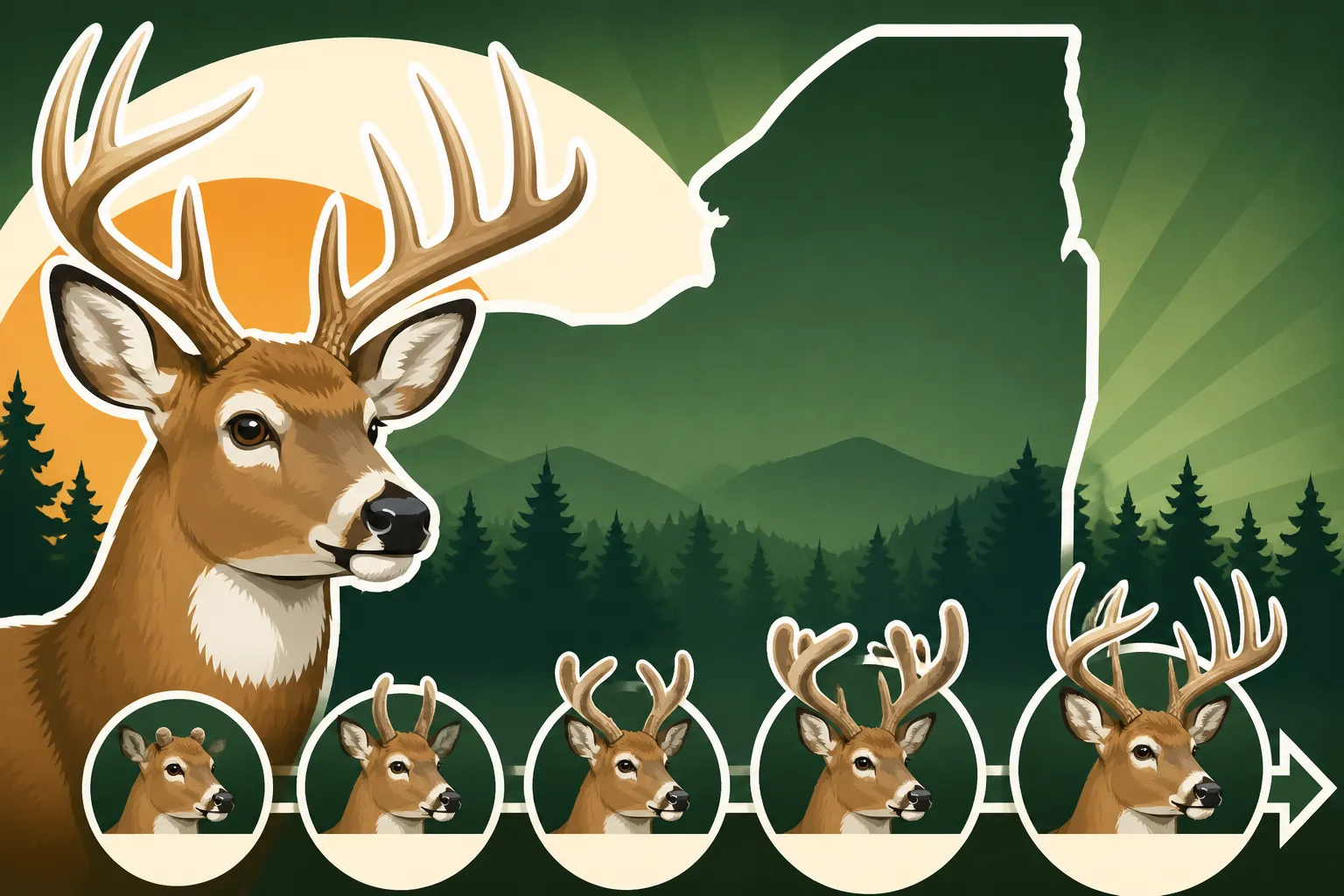
New York Deer Antler Growth Timeline
For any deer hunter in New York, there’s an almost magical anticipation that starts each spring: watching the whitetail bucks begin to regrow their antlers. It's a yearly cycle that fascinates us, full of mystery and incredible natural precision. But understanding when these changes happen, why they happen, and what impacts a buck's headgear can feel like trying to decipher an ancient code. This guide aims to pull back the curtain on the New York deer antler growth timeline, helping you understand the yearly journey of a buck's rack from nubs to hard bone, and how that knowledge can make you a more informed hunter.
The Annual Cycle Begins: Shedding and Early Regrowth
The antler growth cycle for New York whitetail bucks is a truly remarkable biological process, dictated by photoperiod (daylight length) and hormones. It’s not just a random event; it’s a finely tuned annual rhythm that impacts every aspect of a buck's life, from his physical condition to his behavior.
Winter: Dropping the Old Bone
After the breeding season winds down, usually from late December through early April in New York, bucks begin to shed their antlers. This timing can vary quite a bit, even within a specific area. Some bucks might drop theirs early if they're stressed from a tough rut or poor nutrition, while others might hold onto them well into spring. This period marks the end of one cycle and the precursor to the next, often happening when a buck's testosterone levels finally plummet.
Think about it: a buck has just come through the rigors of the rut, chasing does, fighting rivals, and barely eating. His body is depleted, and the physiological signal for antler retention disappears. It’s a literal letting go, a discarding of last season’s battle trophies, making way for the new. Many of us hunters spend countless hours in late winter and early spring walking the woods, hoping to find these shed antlers. It’s like finding a treasure map to next season’s possibilities, giving us clues about which bucks survived the winter and where they might be hanging out. When New York Bucks Shed Antlers is a prime time for scouting, even without a bow or rifle in hand.
Spring: The Soft Velvet Stage
Almost immediately after shedding, often within a week or two, new antler growth begins from pedicles on the buck's skull. At this stage, the antlers are soft, cartilaginous structures covered in a highly vascularized skin known as velvet. This velvet is crucial; it’s packed with blood vessels and nerves, feeding the rapid bone growth underneath. It feels soft and fuzzy to the touch, almost like a dog’s ear.
During late spring, usually May and June in New York, this growth accelerates dramatically. Bucks are focused on consuming nutrient-rich forage to fuel this incredible process. A healthy diet, rich in protein, minerals like calcium and phosphorus, and energy, is absolutely vital. This is why you often see bucks hitting new green growth in fields or browsing on succulent forest plants during this time. The length of daylight continues to stimulate hormone production, specifically growth hormone, which drives this rapid development. If you're out Scouting New York Public Land Before Season in the spring, keep an eye out for these early velvet nubs — they're a promising sign of things to come.
The Mid-Summer Surge: Rapid Development and Mineralization
As we move deeper into summer, the antler growth really picks up steam. This is the period of most significant development, where the rack truly takes shape, influenced heavily by the buck's age, genetics, and the quality of his nutrition.
June and July: Shaping the Rack
Throughout June and July, the antlers grow at an astonishing rate. It's truly one of nature's fastest growing tissues. The basic shape, main beams, and primary tines begin to extend rapidly. During this phase, the antlers are still incredibly delicate and susceptible to injury. A buck bumping his velvet-covered antlers against a tree or fence could damage them, resulting in abnormal growth or a broken point. These "non-typical" points are often the result of an injury during this vulnerable velvet stage, not necessarily a genetic trait.
Bucks are generally much more secluded during this time, often forming bachelor groups where they can feed and grow their antlers away from the pressures of the coming rut. They're trying to conserve energy and avoid anything that might hinder their development. For hunters, observing this stage is challenging because bucks are not yet out cruising for does, but trail cameras can reveal their impressive progress. Using a mapping app like GoHunt during your summer scouting trips can help you mark areas with lush browse where bucks might be concentrating to get the nutrients they need for optimal antler development.
August: Hardening and Mineralization
By late July and into August, the growth phase of the antlers begins to slow down. The velvet-covered bone has reached its full size for the year. This is when the crucial process of mineralization truly takes hold. Calcium and phosphorus are deposited into the cartilaginous structure, making the antlers increasingly dense and hard. The blood flow to the velvet also starts to diminish as hormone levels shift.
The velvet begins to dry out, shrivel, and eventually peel off. This can be a messy process! Bucks will rub their antlers vigorously on saplings, shrubs, and even the ground to help strip off the itchy, dying velvet. This rubbing not only cleans the antlers but also conditions the buck for the upcoming rut, strengthening neck muscles and marking territory. It's a visual signal that the velvet season is over and the hard-antlered phase is about to begin. The fresh rubs left behind are an undeniable sign that the season is approaching, and big bucks are feeling their oats.
The Prime Time: Hard Antlers and the Rut
With the velvet shed, bucks are now in their full glory, sporting hard antlers ready for the challenges of the breeding season. This is the period we hunters live for in New York.
September and October: Hard Antlers and Pre-Rut
As September rolls in, most New York bucks have shed their velvet and are sporting hardened, polished antlers. Their bodies are starting to recover from the summer's demands, and their neck muscles are hardening. While their primary focus isn't yet on breeding, testosterone levels are rising, making them more aggressive and prone to sparring with other bucks. This pre-rut period is when bucks begin to establish dominance hierarchies, scent-marking territory with rubs and scrapes.
These early rubs and scrapes are critical signs for hunters, indicating buck travel corridors and preferred areas. Scrape Lines Along a Logging Road or rub lines on dominant trees are like signposts telling you where a buck is active. Scouting during this time, even with your GoHunt app in hand, can give you a significant advantage, helping you pinpoint where a buck is spending his time before the intense rut kicks in. They're still somewhat predictable, sticking to core areas, making them vulnerable to careful stand placement.
November and December: The Peak of the Rut and Post-Rut
November is the month every deer hunter in New York dreams about. This is when the rut typically peaks, driven by plummeting temperatures and the does coming into estrus. Bucks become singularly focused on breeding, often throwing caution to the wind as they search for receptive does. They will travel widely, following doe scent trails, checking bedding areas, and often moving throughout the day. Their antlers are now weapons, used for sparring with other bucks to gain breeding rights.
During the full-blown rut, you'll see intense activity: chasing, grunting, rattling, and even fighting. Bucks might lose body weight rapidly during this period due to their relentless activity and lack of feeding. Hunting the New York Rut in November is an exhilarating experience, but also one where bucks are at their most vulnerable. As December arrives, the peak of the rut begins to subside. Bucks are exhausted, having expended massive amounts of energy. Their focus shifts back towards replenishing their fat reserves in preparation for the harsh New York winter. Antlers are still firmly attached, but the intense activity slows, and bucks become more cautious, often seeking out late-season food sources.
Factors Influencing Antler Quality
While the timeline of antler growth is largely genetic and photoperiod-driven, the actual quality and size of a buck's antlers are heavily influenced by several key factors.
Age of the Buck
Perhaps the most significant factor in antler size is a buck's age. Young bucks (yearlings, 1.5 years old) typically grow their first small racks, often spikes or small forks. As a buck matures, usually peaking between 4.5 and 6.5 years old, his antlers will grow larger and more complex, reflecting his full genetic potential. This is because older bucks have more robust skeletal systems, more developed hormone production, and have typically survived long enough to benefit from years of good nutrition.
A 2.5-year-old buck, for instance, might show promising main beam length, but a 4.5-year-old buck will likely have significantly more mass, tine length, and overall width. Understanding New York Buck Age Structure helps us appreciate that allowing bucks to mature leads to larger racks and a healthier deer population overall. It's about letting them reach their prime.
Nutrition and Habitat Quality
Just like any growing animal, a buck needs optimal nutrition to grow impressive antlers. A diet rich in protein, energy (carbohydrates and fats), and essential minerals like calcium, phosphorus, and zinc is crucial. This means that habitat quality plays a huge role. Areas with diverse forage – browse, forbs, acorns, and agricultural crops – will consistently produce larger-antlered bucks than areas with poor, nutrient-deficient habitat.
Consider the difference between a buck in the rich farmlands of the Southern Tier versus one in the more nutrient-poor, big timber of the Adirondacks. The Southern Tier buck, with access to varied crops and lush natural browse, generally has a better chance of growing a larger rack. Hunting After a Poor Acorn Year can also impact antler growth, as acorns are a critical late-season food source that helps bucks recover energy and store fat for the next growing cycle. Using tools like GoHunt can help you identify areas with superior forage or agricultural lands that might attract bigger bucks.
Genetics
While age and nutrition are huge, genetics also play a role in antler development. Some bucks simply have the genetic blueprint to grow larger, more impressive racks than others, even with identical nutrition and age. This isn't something a hunter can directly control in the wild, but it's part of the fascinating variability we see in the deer herd.
It's a combination of all three: a buck needs to live long enough (age), have access to excellent food (nutrition), and possess the inherent ability (genetics) to grow a truly magnificent rack. Hunters often report their deer harvests to the state, and compiling this data helps wildlife biologists understand regional trends in antler development and overall herd health. Reading a New York Harvest Report can sometimes offer insights into the genetic potential of a local herd, especially if you see a consistent pattern of impressive antlers from year to year.
Antler Growth Timeline Summary for New York Bucks
To help visualize this remarkable annual cycle, here’s a quick summary of the key phases and what’s happening with a buck’s antlers:
| Time of Year | Antler Stage | Key Biological Process | Hunter Observation/Implication |
|---|---|---|---|
| Late Dec – Apr | Shedding Old Antlers | Testosterone levels drop, bone connection weakens. | Shed hunting, finding clues for next season. |
| April – May | Early Velvet Growth | Rapid cartilage growth, covered in soft velvet. | Nubs appearing, bucks consuming spring green-up. |
| June – July | Peak Velvet Growth | Antlers rapidly extend, tines form, highly vascular. | Rack takes shape, bucks often in bachelor groups. |
| Late July – Aug | Mineralization & Velvet Shedding | Antlers harden, blood flow stops, velvet dries. | Rubs appear, bucks become aggressive, hard antlers. |
| Sept – Oct | Hard Antlers (Pre-Rut) | Antlers fully hardened, polished. | Rubs and scrapes, establishing dominance. |
| Nov – Dec | Hard Antlers (Rut & Post-Rut) | Used for sparring and defense during breeding. | Intense activity, widespread travel, post-rut recovery. |
Understanding this timeline can truly enhance your hunting experience. It helps you appreciate the incredible resilience and power of the whitetail deer, and gives you a deeper connection to the natural cycles happening all around us in the New York woods.
Disclaimer
This article is for general informational purposes only and does not constitute professional advice. Laws, prices and regulations vary by location and change over time. Consult a qualified professional for guidance on your specific situation.