Where New York Black Bears Live
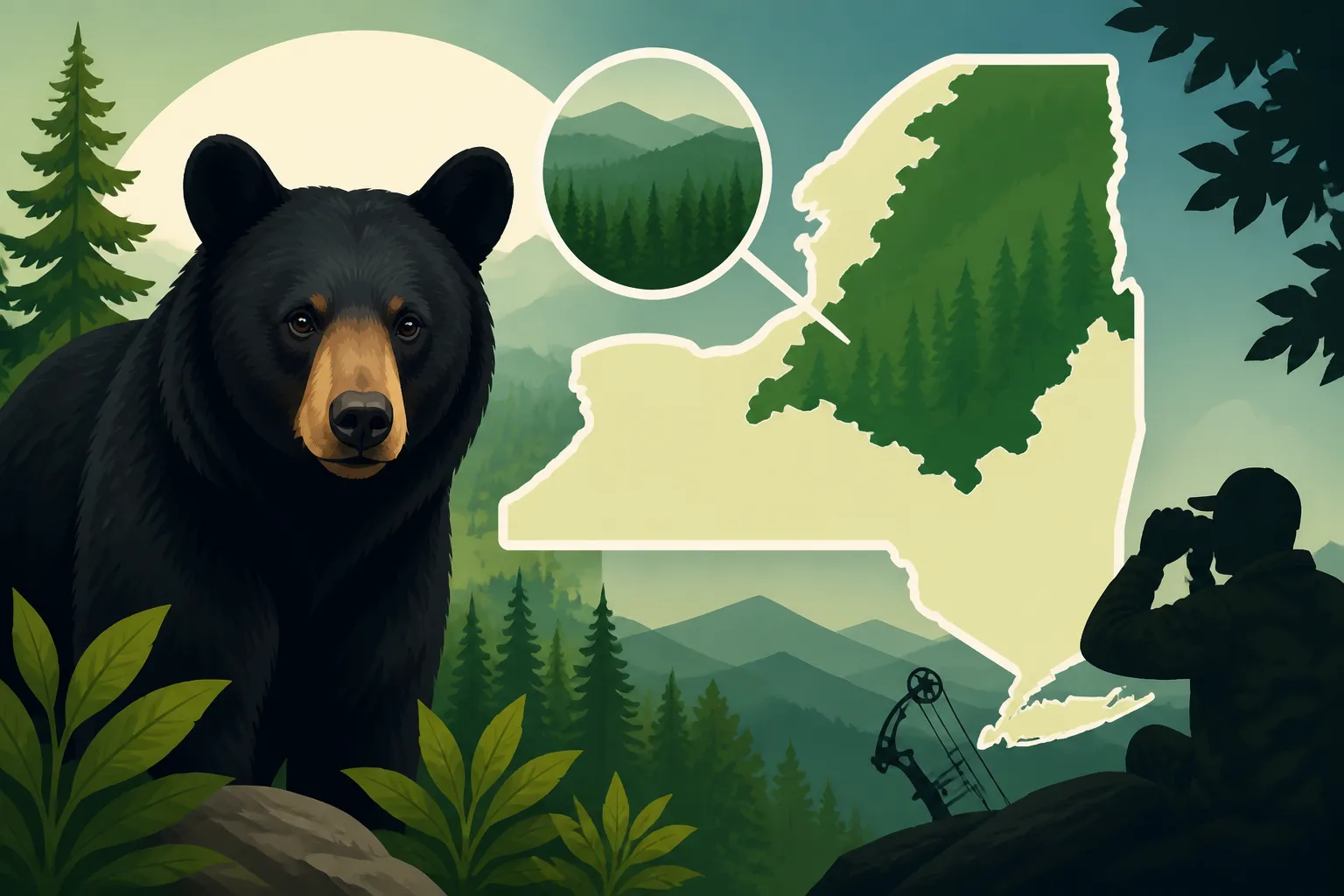
It's a common misconception among folks new to New York hunting that black bears are strictly creatures of the deep, untouched wilderness, hiding away in the most remote corners of the Adirondacks. While those wild places certainly hold a thriving bear population, the truth is, New York's black bears are far more widespread and adaptable than many realize. This guide will take a detailed look at where these magnificent animals call home across the Empire State, from their traditional mountain strongholds to the unexpected corners where their numbers are growing, helping you understand their patterns and presence.
The Traditional Strongholds: Adirondacks and Catskills
When most people picture a New York black bear, their minds immediately jump to the vast, wild expanses of the Adirondack or Catskill Mountains. And for good reason – these regions are, without a doubt, the historical and present-day heart of bear country in our state. They offer the perfect blend of dense forests, varied terrain, and abundant natural food sources that black bears need to thrive.
Adirondack Interior: The Heart of Bear Country
The Adirondack Park, with its six million acres of mostly forested land, is undeniably the core habitat for New York's black bears. This vast, "Forever Wild" wilderness provides everything a bear could ask for: immense tracts of undisturbed forest, a mosaic of hardwood ridges and conifer swamps, and a relatively low human population density compared to other parts of the state. It's a place where bears can truly be bears, following their instincts without constant human interference.
Here, you'll find bears across all elevations, from the valley bottoms to the slopes of the High Peaks. They use the deep woods for bedding, especially in areas with thick stands of spruce, fir, or cedar for cover. The rich mast crops of beech nuts, acorns, and wild berries found throughout the hardwood forests provide crucial sustenance, particularly in late summer and fall as they prepare for denning. Hunters scouting for deer in these parts often come across significant bear sign, from torn-up logs where they've dug for grubs to claw marks on beech trees. Understanding "How Many Black Bears New York Has" often starts with looking at the strong populations in these northern reaches, as they are a significant indicator of the overall health of the state's bear numbers. While you might be focusing on Where Adirondack Bucks Bed, don't be surprised to find some bear scat nearby; they share many of the same prime bedding areas and food sources.
Catskill Mountains: A Resurgent Population
South of the Capital Region, the Catskill Mountains represent another vital and vibrant bear stronghold. Historically, bears were always present in the Catskills, but their numbers faced challenges in past centuries due to habitat loss and unregulated hunting. Thankfully, conservation efforts and habitat recovery have led to a remarkable resurgence. Today, the Catskills boast a healthy, growing bear population that actively utilizes the region's diverse landscape.
The Catskills offer a rugged, steep terrain characterized by mixed hardwood forests, deep ravines, and fertile valley bottoms. Bears here are adept at navigating the steep slopes, often using thick laurel and rhododendron thickets for cover. Like their Adirondack cousins, they depend heavily on the availability of mast crops, particularly acorns from the abundant oak forests, which are critical for fattening up before winter. Areas around the Ashokan Reservoir and the Delaware County foothills are well-known hotspots. It's truly fascinating to compare the bear density between these two regions; while the Adirondacks might have sheer numbers, the Catskills show a fantastic recovery and adaptability, as detailed in discussions around Catskill Bear Density Compared to the Adirondacks. Don't be surprised to encounter a bear while Hunting Bears Without Bait in the Catskills, as they are definitely at home there.
Expanding Horizons: The Central and Western Ranges
While the Adirondacks and Catskills remain the bastions of black bear populations, one of the most significant trends in New York wildlife management has been the undeniable expansion of bear range. These adaptable animals are not content to stay only in the deepest wilderness; they are pushing into areas where they haven't been seen in decades, or even centuries, creating new opportunities and challenges for residents and hunters alike.
Moving into the Southern Tier and Hudson Valley
The Southern Tier and the Hudson Valley have witnessed a remarkable increase in bear activity over recent years. This expansion isn't a sudden burst but a steady, gradual process where younger bears, particularly males, disperse from established populations in the Catskills or even Pennsylvania, seeking new territories. They often follow river corridors, like the Susquehanna or Delaware, or utilize contiguous forested lands that might be smaller and more fragmented than the traditional mountain habitats.
In the Southern Tier, bears are increasingly observed in counties like Broome, Tioga, and Steuben, using the rolling hills, woodlots, and even agricultural edges. While they still prefer forested areas, they're showing an incredible ability to adapt to landscapes interspersed with farms and human development. Similarly, the Hudson Valley has seen a notable increase in sightings and established populations. Bears are definitely Bears Moving Into the Hudson Valley, utilizing the forests along the Taconic Ridge and even venturing into more suburban fringes as they follow natural food sources and establish new territories. This expansion requires vigilance from both hunters and homeowners, as bear encounters, while exciting, demand respect and awareness of safe practices.
Western New York's Emerging Bear Presence
Perhaps the most surprising aspect of New York's black bear expansion is their growing presence in Western New York. For a long time, areas west of the Finger Lakes were considered outside of primary bear range, with only occasional transient sightings. However, that perception is rapidly changing. Bears are now establishing themselves in counties like Allegany, Cattaraugus, and even into parts of Chautauqua.
This westward migration is likely fueled by several factors: a healthy population radiating out from Pennsylvania, excellent habitat quality in certain state forests and Allegany State Park, and increasing forest cover in what were once more open, agricultural landscapes. These bears are learning to navigate a different kind of terrain, one that often includes smaller woodlots, brushy creek bottoms, and the edges of vast agricultural fields. Hunters who traditionally only expected to see deer and turkeys in these regions are now increasingly encountering bear sign, or even the bears themselves. It’s a testament to the resilience of the species and the changing dynamics of our state's wild places. Local reports and reliable mapping tools, like those offered by GoHunt, can be invaluable for pinpointing recent activity and understanding these shifting populations.
What Draws Bears to an Area: Habitat and Food Sources
Understanding where bears live is often intrinsically linked to understanding why they choose those places. Black bears are incredibly intelligent and opportunistic animals, and their movements and preferred habitats are largely dictated by the availability of food and sufficient cover. When you're out in the woods, knowing what attracts them can help you not only locate them but also appreciate the intricate dance between wildlife and their environment.
The Irresistible Lure of Mast Crops
If there's one single factor that truly dictates bear distribution and movement throughout the year, it's the availability of mast crops. Acorns, beechnuts, hickory nuts, and wild cherries are absolute gold for bears. These high-calorie, energy-rich foods are critical for bears to put on enough fat reserves to survive the winter denning period. A poor mast year can lead to more widespread bear movements as they search for alternative food sources, sometimes bringing them into closer contact with human communities.
In good mast years, bears will concentrate in areas with abundant oak or beech groves. You'll find them spending weeks or even months in these areas, methodically foraging. Hunters should pay close attention to the abundance of these natural foods. For instance, if you're out Hunting Bears Over Natural Food Sources, you'll be looking for areas where the ground is littered with fresh acorns or where beech trees show signs of bear activity – claw marks on the bark, broken branches from climbing, or scat full of nut casings. These areas aren't just important for feeding; they also often provide the dense cover bears need to feel secure while they forage.
Understanding Bear Foraging Patterns and Human Interactions
Beyond mast crops, bears are incredibly diverse eaters, and their foraging patterns shift throughout the seasons. In spring, they emerge from dens hungry, seeking out tender new shoots, grasses, and winter-killed deer carcasses. As summer progresses, berries (blueberries, raspberries, blackberries) become a major draw, pulling them into brushy clearings and forest edges. In late summer and fall, it's all about those hard mast crops.
This seasonal movement means that while bears have a general home range, their specific location within that range can vary dramatically based on what's "on the menu." In areas where their range is expanding, particularly near human habitation, this opportunism can lead to increased human-bear interactions. Bears learn quickly that human food sources (garbage, bird feeders, pet food) are easy calories, and once habituated, they can become a nuisance. This is why understanding their natural foraging patterns is so important for coexistence and for hunters looking to find them. The more we learn about New York Bear Denning Behavior and seasonal food shifts, the better we can anticipate their presence.
Using Resources to Pinpoint Bear Activity
For those serious about understanding New York's black bear population – whether for hunting, observation, or simply general awareness – there are valuable resources available that can help you pinpoint where bears live and thrive. It's not just about knowing general regions; it's about understanding local trends and specific habitat usage.
DEC Data and Wildlife Management Units
The New York State Department of Environmental Conservation (DEC) compiles a wealth of data on black bear populations, harvest numbers, and range expansion. This information is crucial for wildlife management and also incredibly useful for hunters and curious naturalists. The DEC uses Wildlife Management Units (WMUs) to help delineate different regions of the state, and often provides details on bear sightings, harvest statistics, and population estimates within these units.
By reviewing the DEC's annual big game harvest reports, you can get a snapshot of New York Bear Harvest Numbers by county or WMU, which can be a strong indicator of bear presence and density. Areas with consistently high harvest numbers obviously indicate a robust bear population. While specific real-time data might not be published publicly, these historical trends are invaluable. Many digital mapping platforms, including GoHunt, integrate WMU boundaries and can layer this information with satellite imagery, public land boundaries, and topographic maps. This allows you to visually identify areas within high-density WMUs that possess the kind of habitat (dense cover, mast-producing trees, water sources) that bears favor.
Scouting and Local Knowledge
While maps and data are excellent starting points, nothing beats good old-fashioned scouting and tapping into local knowledge. Bears leave plenty of signs of their presence, and learning to read these clues is paramount to locating them. Look for fresh tracks in soft ground or mud, especially near water sources or along logging roads. Scat is another obvious indicator, often filled with berries, seeds, or nut casings, depending on the season. Rubs on trees (where bears scratch themselves) and claw marks on trees (from climbing or scent marking) are also common.
Talking to locals – farmers, loggers, other hunters, or even people who live in rural areas – can provide invaluable real-time intelligence. They often see bears regularly or have heard about recent sightings. When you're out Scouting New York Public Land Before Season, keep an eye out not just for deer sign, but for bear activity as well. Focus on areas where food sources like berries or acorns are abundant, and where there's plenty of dense cover for them to feel secure. These firsthand observations, combined with official data and mapping tools from providers like GoHunt, create the most comprehensive picture of where New York's black bears live and roam. It allows you to refine your search from general areas to specific ridges, swamps, or even individual tree groves.
Disclaimer
This article is for general informational purposes only and does not constitute professional advice. Laws, prices and regulations vary by location and change over time. Consult a qualified professional for guidance on your specific situation.