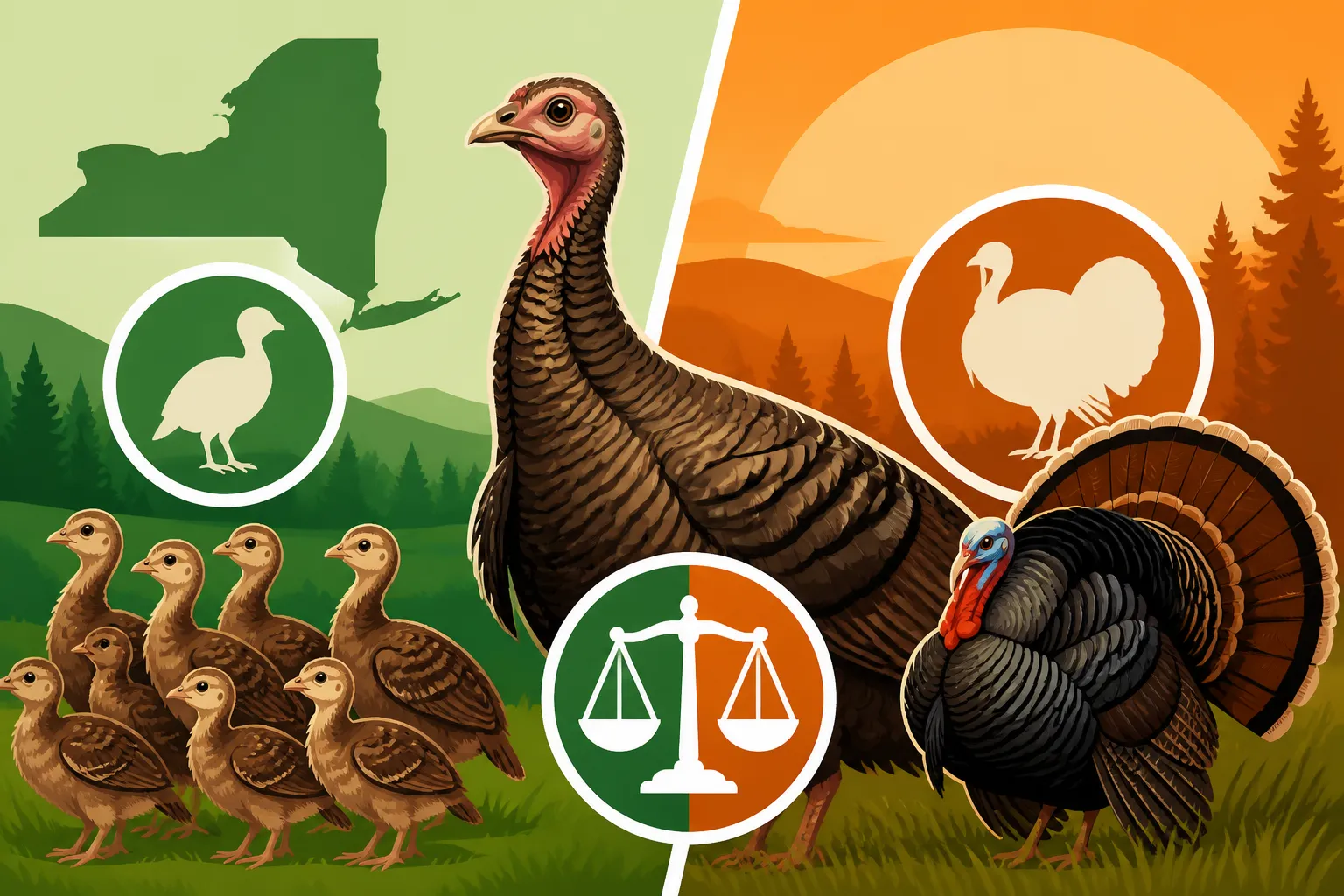
Poult-to-Hen Ratios and What They Mean
It can be incredibly frustrating to head into a new spring turkey season, full of anticipation, only to find the woods eerily quiet or the gobblers just not responding like they used to. You might wonder, "Where did all the birds go?" Or maybe you had a banner year and want to understand why. One of the most telling pieces of information conservation agencies use to gauge the health and potential of a wild turkey population is the poult-to-hen ratio. Understanding what these numbers mean can provide invaluable insight, helping you set realistic expectations and even adapt your hunting strategies for the upcoming seasons in New York.
This guide will demystify poult-to-hen ratios, explaining exactly what they are, how they're measured here in New York, and how various environmental factors play a huge role. More importantly, we'll dive into how you as a hunter can interpret and use this information to better plan your spring and fall turkey hunts, ultimately increasing your chances of success.
Understanding the Basics: What Exactly is a Poult-to-Hen Ratio?
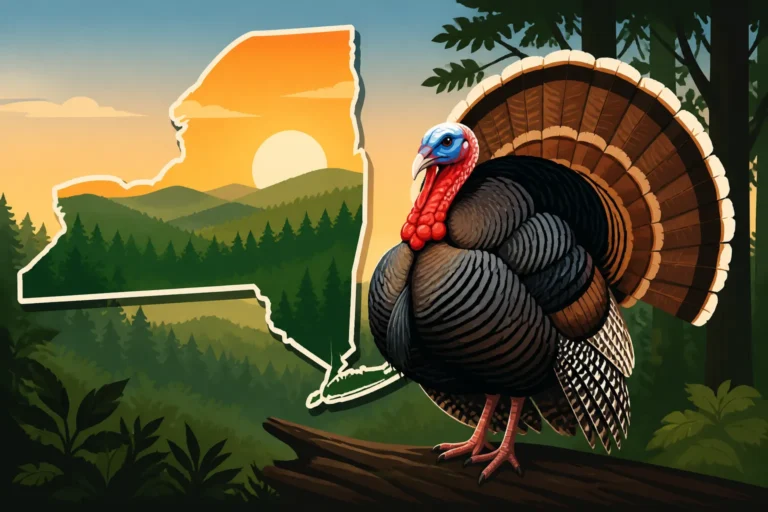
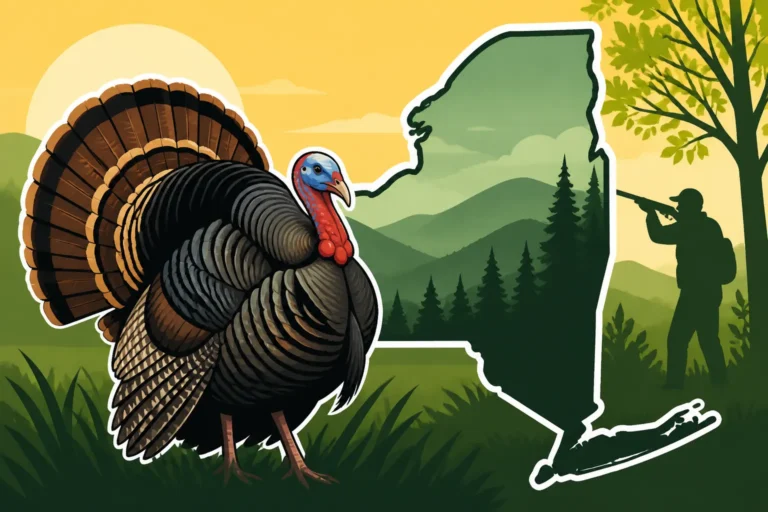
At its core, a poult-to-hen ratio is simply a measurement of reproductive success within a wild turkey population. Think of it as a snapshot of how many young turkeys, or "poults," are being successfully raised by each adult female turkey, or "hen," over a given period, typically through the summer months. It's not just a fancy statistic; it’s a critical health indicator for a turkey population, offering a glimpse into the future hunting prospects.
A poult is a young turkey, usually distinguishable by its smaller size and often its less developed plumage. They stay with the hen for several months after hatching. The "hen" in this ratio refers to an adult female, the one responsible for laying the eggs and raising the brood. When biologists and volunteers observe a group of turkeys, they count the number of hens they see with young, and then tally how many poults are with them. This data is then aggregated to give an average number of poults per hen across a specific region or Wildlife Management Unit (WMU). If you're seeing a lot of little ones running around with a hen, that's generally a good sign!
Why does this ratio matter so much? Well, it's a direct reflection of how many birds are making it past those vulnerable early stages of life. Successful reproduction one year directly impacts the number of jakes (one-year-old male turkeys) and two-year-old gobblers you'll encounter in the spring seasons of the following years. A strong poult crop this summer means more birds for you to chase next spring, and a higher chance of encountering those vocal, strutting gobblers we all dream about. Conversely, a poor poult-to-hen ratio signals a tougher season ahead, with fewer young birds to fill out the ranks, making you work harder for those New York Spring Turkey Harvest Numbers.
How New York Gathers and Interprets These Vital Numbers
Here in New York, the gathering of poult-to-hen ratio data is primarily done through summer brood surveys, often relying on a combination of professional biologists and dedicated citizen scientists. This collaborative effort helps to cover vast tracts of the state and provides a robust dataset for analysis. It's an annual tradition, usually running from July through August, when poults are still easily identifiable and haven't fully dispersed from their mothers.
During these surveys, observers record every turkey sighting. For each sighting, they note whether it was an adult hen with poults, a hen without poults, or an adult tom (gobbler). If poults are present, they count the number of young birds accompanying the hen. This information is meticulously logged and then compiled by the New York Department of Environmental Conservation (DEC). The sheer volume of data collected is crucial for understanding regional variations and overall trends in New York Turkey Population Trends. For instance, a particular WMU might report a great ratio, while a neighboring one might show a decline, indicating localized issues or successes.
So, what constitutes a "good" ratio? While it can vary depending on habitat and historic averages, a general benchmark often cited by turkey biologists is a ratio of 2.0 to 3.0 poults per hen for decent production. Anything consistently below that, say 1.0 or less, often signals a struggling population with low recruitment of new birds. Ratios of 3.5 or higher are considered excellent, pointing to a robust hatch and strong survival rates. These numbers are vital for the DEC in determining things like New York Fall Turkey Zone Windows and overall population management strategies. They help biologists understand not just the current population, but what to expect a year or two down the line, giving them a predictive tool to ensure sustainable hunting opportunities. Tools like those found on platforms such as GoHunt can sometimes aggregate and present this kind of regional data, giving hunters a quick visual of what to expect in their preferred hunting grounds.
The Driving Forces Behind Poult-to-Hen Ratios and Their Hunting Implications
Several interconnected factors influence whether a poult-to-hen ratio will be robust or disappointing in any given year. Understanding these variables can give you a deeper appreciation for the resilience—and vulnerability—of Wild Turkeys in New York.
The Impact of Spring Weather
Hands down, spring weather is one of the most significant determinants of turkey poult survival. Wild turkey poults are incredibly delicate during their first few weeks of life. They are highly susceptible to hypothermia, especially when they are wet. A prolonged period of cold, driving rain during the critical hatching period and the first few weeks post-hatch can be absolutely devastating to a brood. Picture a late May or early June storm system that just won't quit, bringing unseasonably low temperatures and constant drizzle. Hens might do their best to shelter their young, but tiny poults, not yet fully feathered, can quickly succumb. Conversely, a warm, relatively dry spring allows poults to thrive, dry off quickly, and forage more effectively, leading to higher survival rates and, consequently, better poult-to-hen ratios. This is why a mild spring often correlates with an increase in the New York Turkey Population Estimate for the following year.
Predation Pressures on Nests and Poults
Even if the weather is perfect, a turkey's life is fraught with peril from predators. Raccoons, opossums, skunks, foxes, and even snakes are notorious nest predators, eagerly seeking out turkey eggs. Once hatched, poults face threats from a wider array of predators, including coyotes, raptors like great horned owls and red-tailed hawks, and even house cats in more suburban areas. The density of these predator populations in a specific area can significantly impact poult-to-hen ratios. A surge in coyote numbers, for example, could lead to a noticeable dip in turkey recruitment. Understanding Nest Predation and New York Turkey Hatches is key to appreciating why these ratios fluctuate. Management efforts by agencies to control certain predator populations in specific areas, or general shifts in predator-prey dynamics, will invariably show up in these turkey numbers.
Habitat Quality and Food Availability
A hen needs good habitat to successfully nest and raise her brood. Dense, protective cover, such as thick briar patches, tall grasses, or areas of recent timber regeneration, offers crucial concealment from predators during nesting. Once the poults hatch, the hens will lead them to brood-rearing habitat, which typically consists of areas with abundant insects (a primary food source for young poults) and overhead cover to protect from aerial predators. Think open woodlands with a good understory, clear-cuts, or field edges.
If these critical habitat components are lacking due to over-browsing by deer, agricultural practices, or simply mature, open timber, poult survival can suffer. Areas with a diverse mix of forest types, edge habitat, and food sources tend to support higher poult-to-hen ratios. Factors like mast crop failures in the previous fall can also affect hen health going into nesting season, potentially impacting clutch sizes and their ability to successfully raise a brood. Scouting for these prime habitat types is often just as important as looking for turkey sign itself.
Using Poult-to-Hen Ratios to Plan Your New York Turkey Hunts
So, you've heard about these ratios, but how can you actually put this knowledge to work for your hunting strategy? The poult-to-hen ratio isn't just an academic number; it's a powerful forecasting tool.
Accessing and Interpreting the Data
First things first: you need to find the data. The New York DEC typically compiles and releases summaries of their summer brood surveys, often breaking them down by region or even by WMU. These reports are usually available on their website or through various conservation organizations. You might also find historical data and regional breakdowns on dedicated hunting resources like GoHunt, which can help you track trends over several years.
When you look at the numbers, focus on the trends. Is the ratio trending up or down over the last few years in your preferred hunting area?
A ratio of 3.0 or higher is fantastic. It means a great hatch, and you can generally expect a robust population of jakes and two-year-old gobblers in the subsequent spring season. This often translates to more vocal birds, more competition, and potentially multiple encounters in areas like the Southern Tier, where diverse habitat supports higher densities.
A ratio of 2.0 to 2.9 is decent. It suggests a fair hatch and a stable population. You'll still find birds, but perhaps not the overwhelming numbers of a bumper crop year. You might need to be a bit more patient and scout diligently for Where New York Turkeys Are Densest.
Below 2.0 suggests a tougher year for recruitment. This is when hunters might start complaining about a "down year." Expect fewer jakes and two-year-old gobblers. The birds you do find might be older, wiser, and potentially less responsive to calls, making Hunting the Statewide Spring Turkey Opener a real challenge.
Here's a simplified look at how to interpret those numbers:
| Poult-to-Hen Ratio | Interpretation for Future Seasons | Hunting Strategy Implications |
|---|---|---|
| 3.0 or Higher | Excellent recruitment, strong population growth. Expect good numbers of jakes and 2-year-old gobblers. | More birds, potentially more competition. Aggressive calling might work well. Focus on areas with good food and strutting zones. |
| 2.0 – 2.9 | Stable to good recruitment. Population maintaining, but not rapidly increasing. Moderate numbers of jakes/young gobblers. | Steady hunting, but might require more scouting. Mix of aggressive and subtle calling. Focus on prime habitat. |
| 1.0 – 1.9 | Below average recruitment. Population likely declining or struggling. Fewer young birds entering the population. | Tougher hunting. Focus on locating older, established gobblers. Patient, subtle calling might be more effective. Consider different areas if possible. |
| Below 1.0 | Poor recruitment. Significant population concerns. Very few young birds. | Very challenging season. Birds will be scarce and likely pressured. Focus on extensive scouting for sign, Roost Hunting New York Gobblers, and adapting to individual bird behavior. |
Adjusting Your Hunting Strategies
Knowing the poult-to-hen ratio for your area can help you refine your approach. If the ratio was high in the previous summer, you might encounter a lot of jakes, which can sometimes interfere with working a mature gobbler but also provide more opportunities for success. It also means more two-year-old birds are likely in the woods, which are often very vocal and aggressive. In these years, more aggressive calling, hitting multiple spots, and really covering ground can pay off. You might find a gobbler just about anywhere with good cover and food.
Conversely, if the ratio was low, expect fewer young, naive birds. The gobblers that are present will likely be older, more experienced, and possibly less prone to charging in blindly. This is when patience becomes paramount. You might need to scale back on aggressive calling, opting for softer, more subtle clucks and purrs. Focus on extensive scouting before the season to pinpoint known travel corridors, dusting bowls, and traditional strutting grounds. Techniques like still-hunting through prime areas or setting up on traditional Turkey Tactics for Southern Tier Field Edges where older birds frequent can be more effective. It also emphasizes the importance of understanding habitat and finding those hidden pockets where older birds may reside, rather than simply relying on sheer numbers of birds.
Ultimately, the poult-to-hen ratio isn't the only factor, but it's a significant piece of the puzzle. Combining this knowledge with your scouting efforts and understanding of local conditions will make you a more informed and adaptable New York turkey hunter.
Disclaimer
This article is for general informational purposes only and does not constitute professional advice. Laws, prices and regulations vary by location and change over time. Consult a qualified professional for guidance on your specific situation.