Where Wild Pheasants Remain in New York
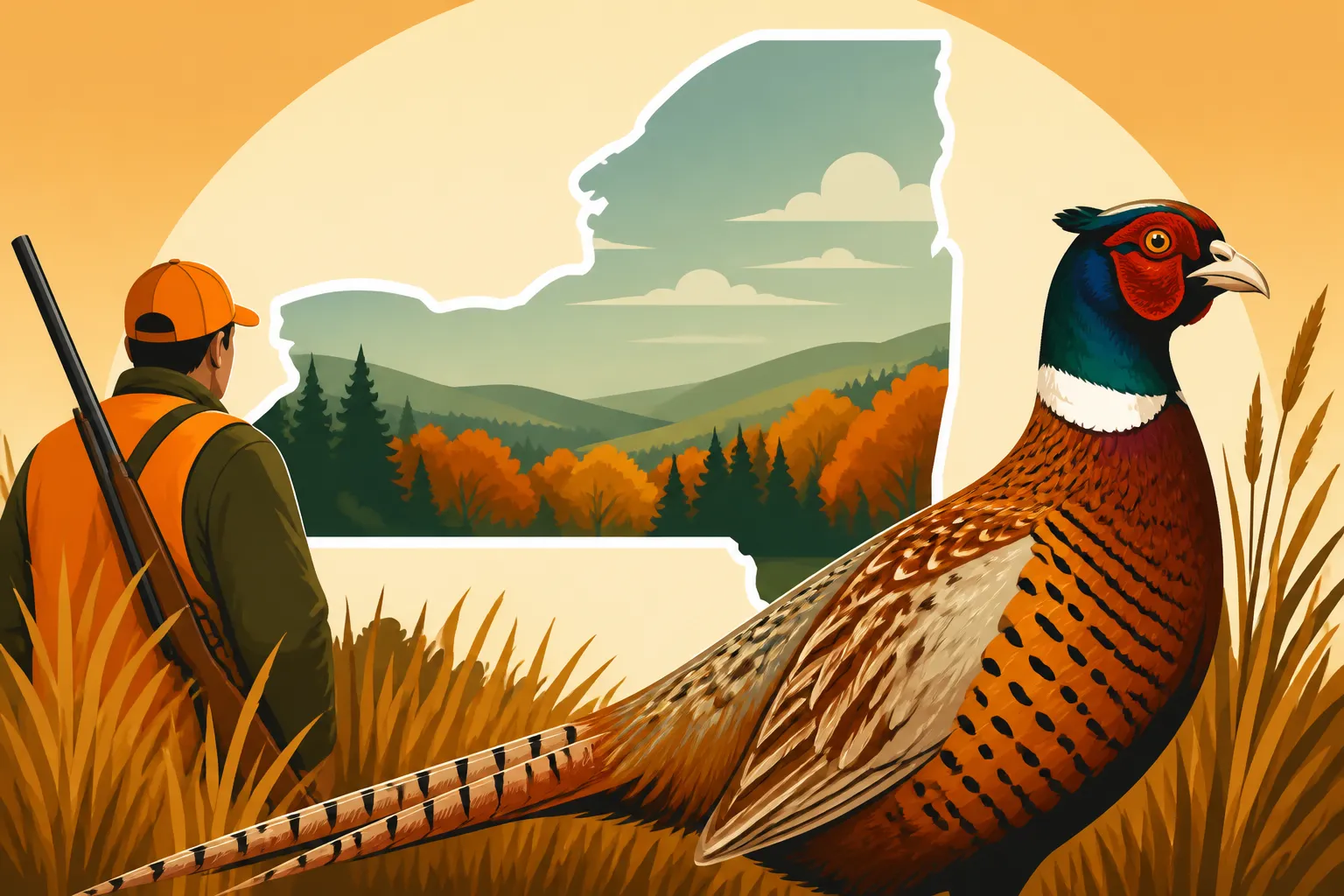
For many New York hunters, the thought of pursuing wild pheasants feels like chasing a ghost, a nostalgic dream of days gone by. It’s a frustrating reality to hear stories of abundant wild birds from older generations while staring at empty fields today. This guide aims to pull back the curtain on that elusive pursuit, revealing the rare but real pockets where New York’s wild pheasant populations still manage to cling on, and how you might just be able to find them.
The Shrinking Realm: Why Wild Pheasants Have Become So Scarce
It’s no secret that the glory days of wild pheasants in New York are largely in the rearview mirror. What was once a common sight across much of the state, especially in our agricultural regions, has dwindled to scattered, often fragile populations. This isn't due to one single factor, but a complex web of changes that have reshaped our landscape and ecosystem. Understanding these pressures is the first step in appreciating just how special and rare a truly wild New York pheasant has become.
Habitat Loss and Fragmentation: The Biggest Culprit
The most significant factor in the decline of wild pheasants has undoubtedly been the dramatic transformation of agricultural landscapes. Pheasants thrive in a diverse mosaic of cover—nesting fields, winter thermal cover, and reliable food sources, all in close proximity. Think back to old family farms with smaller fields, unkempt hedgerows, fallow plots, and brushy creek bottoms. That's pheasant paradise.
Today, modern agriculture, while efficient, often leans towards monoculture: vast fields of corn or soybeans, tilled right to the edge, with few fencerows or brushy ditches left standing. Suburban sprawl further eats away at these crucial edge habitats, replacing diverse farmland with housing developments and manicured lawns. When you lose those vital pieces of the puzzle—the tall grass for nesting, the thick briar patches for winter refuge, the standing grain for food—the birds simply can't survive. It’s like trying to live in a house where the kitchen, bedroom, and bathroom are all miles apart; it just doesn’t work.
Increased Predation and Competition
While habitat loss is the primary driver, other pressures certainly play a role. New York's predator populations, including coyotes, foxes, and various raptors, are often robust. In areas with diminished cover, ground-nesting birds like pheasants become far more vulnerable to these predators, especially during nesting season. Nests are more easily found, and young chicks have fewer places to hide.
Additionally, pheasants can face competition from other game species that have adapted better to the changing landscape. For instance, high deer densities in some agricultural areas can impact the quality and quantity of nesting and winter cover, as deer browse heavily on the very brush pheasants need for survival. When every piece of good cover is already being utilized or impacted, it leaves little room for a bird that needs very specific conditions.
Climate and Breeding Success: A Delicate Balance
Pheasants are not naturally indigenous to New York; they were introduced and thrived for a time because our climate, for a period, was conducive to their survival. However, they are sensitive to weather extremes, particularly during nesting and brood-rearing. Harsh, prolonged winters with deep snow can make finding food and cover extremely difficult, leading to starvation or increased vulnerability to predators.
Wet, cold springs can be even more detrimental. Pheasant chicks are very susceptible to hypothermia, and prolonged periods of rain can decimate a hatch. If multiple breeding seasons are impacted by unfavorable weather, it becomes incredibly difficult for local populations to rebound, especially when starting from an already low base. It’s a constant battle against the elements, made even harder by their shrinking habitat.
The Last Strongholds: Identifying Key Habitat Types
Given the challenges, finding wild pheasants isn't about covering vast stretches of typical New York woods or even uniform farm fields. It's about meticulously seeking out specific, often overlooked habitat niches that still offer the diverse resources these birds need to survive year-round. These are the precious few places where the old ways of the land still persist, even if in fragmented form.
A Patchwork of Agriculture and Dense Cover
Forget the idea of a massive, perfectly manicured farm. Wild pheasants today are found in areas that resemble a quilt, not a single sheet. We're talking about a varied landscape where small grain fields, hayfields, pastures, and corn stubble are interspersed with small woodlots, dense brushy fencerows, fallow ground, and areas of thick, woody cover like multiflora rose or honeysuckle. The key is diversity and proximity.
These birds need places to feed in the morning and evening, dense cover to roost in at night, and secure spots to raise their broods, all within a relatively small home range. A large field might offer food, but if it lacks adjacent thermal cover for harsh winter nights or thick nesting grass nearby, it's not enough. You’re looking for those places where the farmer still leaves a few corners untidy, where the hedgerows are allowed to grow into mini-forests, or where a forgotten field has gone back to briars and saplings. Tools like GoHunt can be invaluable here, allowing you to pour over satellite imagery and topographic maps to spot these crucial habitat transitions before you even lace up your boots.
Unmowed Grasslands and CRP-like Areas
Crucial for nesting, these undisturbed grassy areas are the backbone of a surviving pheasant population. Think of fields that are left fallow for several years, old pastures that are no longer actively grazed, or, if you're lucky, small patches of what might resemble Conservation Reserve Program (CRP) land, even if it's not formally designated as such. These are areas of tall, dense grasses, sometimes mixed with legumes, that provide overhead cover from aerial predators and protection from ground predators for hens incubating eggs and for young chicks.
The absence of mowing during the critical nesting months (typically May through July) is paramount. A hayfield cut too early in the season can decimate a year's hatch. Finding these patches, especially on private land where a landowner might deliberately manage for wildlife or simply let a field go, is like finding gold for a wild pheasant hunter. Look for fields with switchgrass, big bluestem, or other robust native grasses that can withstand heavy snow and still offer cover.
Wetland Edges and Creek Bottoms: Winter Sanctuaries
As winter sets in and snow blankets much of New York, wetland edges and brushy creek bottoms become critically important. These areas often feature stands of cattails, dogwood, willow, and other woody vegetation that provides dense, thermal cover against harsh winds and deep snow. They also tend to hold small pockets of standing water, or at least saturated ground, which can keep some food sources available or offer grit for digestion.
Pheasants will often gravitate to these "edge" habitats during severe weather, hunkering down in the thickest cover they can find. These are also excellent escape routes; a bird pushed from an open field will often head straight for the nearest creek bottom or marsh edge to evade a predator (or a hunter and dog). When you're Hunting After a Poor Acorn Year or in tough winter conditions, these spots can be literal lifesavers for pheasants, concentrating birds in smaller, more defined areas. Knowing how to read these transitions and target these specific strips of cover is key to success.
Where to Focus Your Search: Geographic Hotspots
When talking about "where wild pheasants remain in New York," it's less about drawing definitive county lines and more about recognizing landscape characteristics that still favor these birds. There aren't vast tracts of wild pheasant country left, but rather isolated pockets.
Western New York's Remaining Farmland Pockets
Historically, Western New York, particularly counties like Genesee, Orleans, Livingston, and Wyoming, were considered prime pheasant country. While much has changed, these areas still retain some of the state’s most productive agricultural land, and crucially, some areas still feature the more diverse farming practices that pheasants require. Here, you might find a mosaic of corn, wheat, soybeans, hay, and pastureland, interspersed with woodlots, fencerows, and drainage ditches that haven't been completely cleared out.
The intensity of farming varies, and it's in those areas where smaller farms or those utilizing conservation practices still operate that you'll have the best chance. You're not looking for industrial-scale operations but rather landscapes that still show evidence of varied crops and a respect for unkempt edges. Pheasant Hunting Western New York Farmland is a more in-depth look at these regions, but the takeaway here is to target the more "traditional" agricultural landscapes, not the most modern or intensely farmed ones.
Pockets of the Finger Lakes and Central New York
Moving eastward into parts of the Finger Lakes region and Central New York, you can also find scattered wild pheasant populations. Counties such as Cayuga, Seneca, Ontario, and even parts of Onondaga or Madison, especially away from the immediate vicinity of larger towns, can hold surprises. Similar to Western New York, the key here is to seek out areas that haven't been entirely swallowed by development or converted to purely monoculture agriculture.
Look for areas with rolling hills, creek drainages, and a mix of crop types. These regions often have a blend of dairy farms, vineyards, and field crops, which can inadvertently create the diverse habitat edges pheasants need. Waterways winding through farmland, often lined with brush and thickets, can serve as natural corridors and winter cover for pheasants. Always keep an eye out for those areas where small-scale farming seems to be working in concert with natural cover.
Beyond Stocking Zones: The Unpressured Niches
It's tempting to focus your search for pheasants on areas known for stocking, like some Wildlife Management Areas (New York's Pheasant Stocking Program). While these certainly offer opportunities to harvest pheasants, the birds released there are often farm-raised and behave differently than truly wild pheasants. If your goal is a wild bird, you might actually have better luck looking outside the heavily pressured stocking zones.
Wild pheasants, being naturally much warier, tend to avoid areas with heavy hunting pressure. This means that private land, particularly parcels where hunting access is limited or carefully managed, can be prime territory. Sometimes, these birds persist on smaller tracts of land that hunters overlook, or on farms where the owners are less inclined to allow public access, creating unintended sanctuaries. This highlights the importance of Asking a New York Farmer for Permission and building relationships with landowners. Using a tool like GoHunt can help you identify these private parcels adjacent to public land or even completely surrounded by private ground, allowing you to strategize your approach for seeking permission.
Here’s a simplified breakdown of ideal pheasant habitat components:
| Habitat Type | Purpose for Wild Pheasants | Key Characteristics |
|---|---|---|
| Nesting Cover | Safe place for hens to lay and incubate eggs, raise chicks | Dense, tall grasses (switchgrass, fescue), undisturbed from spring mowing, 10-20 acres ideal. |
| Winter Cover | Protection from deep snow, cold winds, and predators | Brushy thickets (multiflora rose, honeysuckle), cattail marshes, dense conifer stands, standing corn. |
| Food Sources | Sustenance, especially in winter | Waste grain (corn, soybeans, wheat), seeds from weeds, berries, insects. Accessible when snow is present. |
| Travel Corridors | Safe movement between different habitat types | Brushy fencerows, unkempt ditch lines, wooded creek bottoms. |
| Dusting/Grit Areas | Maintains feather health, aids digestion | Bare soil patches, gravel roadsides, sandy spots. |
Hunting Strategies for Elusive Wild Birds
Hunting wild pheasants in New York is a different game than pursuing stocked birds. These pheasants are survivors, honed by natural selection, and possess an uncanny ability to evade hunters. Success often comes down to patience, persistence, smart scouting, and, ideally, the partnership with a good dog.
Covering Ground Effectively: Slow and Methodical
When you're searching for wild pheasants, you can't just stroll through a field. You need to be methodical, almost meticulous, in how you cover ground. Wild birds will hold incredibly tight, often letting a hunter walk right past them before erupting. This means slowing down your pace significantly, pausing frequently, and scrutinizing every clump of cover.
Focus on edges and transition zones: where a cornfield meets a fencerow, where a hayfield borders a brushy ditch, or where a stand of tall grass abuts a creek bottom. These are the highways and hideouts of pheasants. Work in a grid pattern if possible, ensuring you cover every square foot of likely habitat. If hunting with a group, spacing out and pushing cover towards an "end man" can be effective, much like a scaled-down deer drive. However, unlike Deer Drives With Three or Four Hunters for deer, pheasant drives need to be much slower and quieter to prevent birds from running out early.
The Indispensable Role of a Good Bird Dog
Let’s be honest: hunting wild pheasants without a dog is an uphill battle, often a frustrating one. These birds are experts at hiding, and their scenting ability is unmatched. A well-trained pointing dog (like a German Shorthaired Pointer, English Setter, or Brittany) can pinpoint a bird that you would undoubtedly walk past, holding it for you to approach for a shot. A good flushing dog (like a Springer Spaniel or Labrador Retriever) can systematically work dense cover, forcing birds into the air where you have a chance.
More than just finding birds, a dog is crucial for retrieval. A downed pheasant, even if shot cleanly, can disappear into thick cover in seconds, and without a dog, many birds would be lost. The dog's nose is your best asset in this pursuit. If you're serious about hunting wild pheasants, investing in a good bird dog and proper training, perhaps through resources like GoHunt that sometimes offer insights into dog training or local hunting communities, will dramatically increase your odds and enjoyment. Running Pointing Dogs on New York Pheasants delves deeper into this essential partnership.
Timing and Weather Considerations
The time of day and prevailing weather conditions can significantly impact your success. Wild pheasants often move from roosting cover to feeding areas in the mornings and evenings. Mid-day hunts, especially on sunny or mild days, might find birds loafing in dense cover, making them harder to flush. However, in colder weather, birds might be out feeding longer to maintain body temperature, making midday hunts more productive.
A light dusting of fresh snow can be a pheasant hunter’s secret weapon. Tracks in the snow can tell you if birds are present, where they’re moving, and how recently they’ve been in an area. This is a game-changer for Tracking a Deer in Fresh New York Snow, and it’s equally valuable for pheasants. Late in the season, after several hard frosts or a light snow, deciduous cover thins out, which can make birds more visible but also more prone to running. This means you need to get ahead of them quickly. Always consider how the weather is affecting the birds' behavior and adjust your tactics accordingly.
Scouting and Permission: Your Pre-Season Homework
Finding wild pheasants is 90% scouting and 10% hunting. You absolutely cannot expect to just drive up to a piece of public land and stumble into them. Pre-season scouting is non-negotiable. Spend time walking potential areas, looking for sign: tracks in soft mud, droppings, dusting bowls, and even shed feathers. Look for the right kind of habitat—the mixed cover, the unkempt edges, the dense winter cover. Use digital mapping tools like GoHunt to analyze aerial imagery, identify potential habitat mosaics, and pinpoint transition zones that look promising. Scouting New York Public Land Before Season is a great primer for this.
Because many wild pheasants reside on private land, securing permission is often essential. This means knocking on doors, introducing yourself, and respectfully asking for hunting access. Be polite, offer to share game, and always leave the property better than you found it. Many landowners appreciate a hunter who is serious about proper land stewardship. Combining your digital scouting efforts with old-fashioned legwork for permission is the most effective approach to unlocking the few remaining strongholds of wild pheasants in New York.
Disclaimer
This article is for general informational purposes only and does not constitute professional advice. Laws, prices and regulations vary by location and change over time. Consult a qualified professional for guidance on your specific situation.