New York Grouse Drumming Surveys
If you're a grouse hunter in New York, you know the feeling of anticipating the season, only to find the covers quieter than you remember. It's frustrating to invest time and effort without knowing if you're even in the right neighborhood for birds. That's where New York's ruffed grouse drumming surveys come in, offering a vital, if often overlooked, peek into the health and distribution of our beloved feathered rockets. This guide will walk you through what these surveys are, why they're so important, how they're conducted right here in New York, and what the results can tell you about where to find grouse and how best to support their future.
Understanding Ruffed Grouse Drumming Surveys: Why They Matter
For anyone who’s spent time chasing grouse through thick alders or open aspen cuts, you know these birds are masters of concealment. Unlike deer, which leave visible tracks and browse, or turkeys that gobble from the roost, grouse often give little indication of their presence until they explode from underfoot. This stealthy nature makes direct population counts incredibly difficult, if not impossible, on a large scale. That's where drumming surveys step in, offering a unique and reliable way for biologists and volunteers to gauge population trends.
The Elusive Drummer: What is Grouse Drumming?
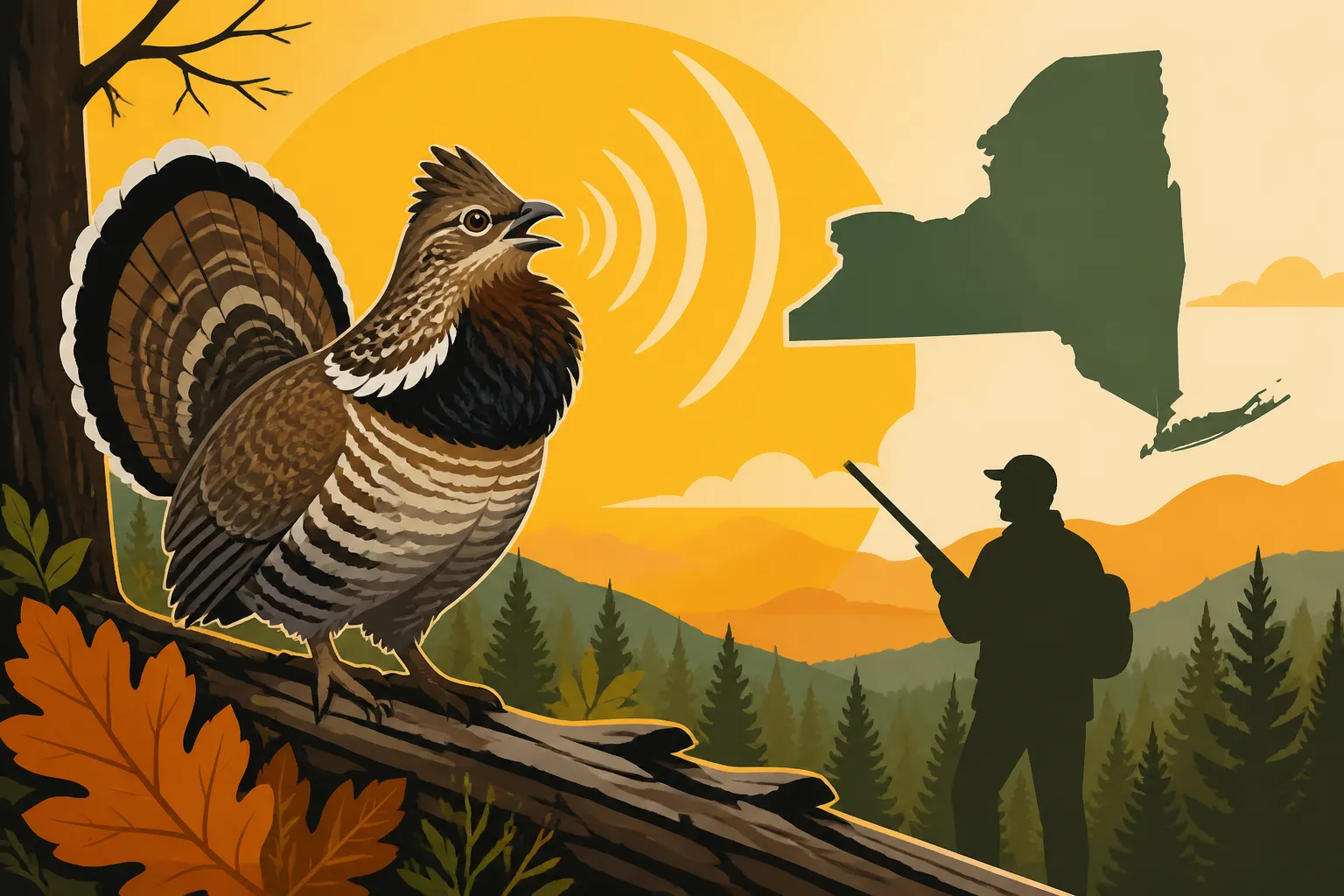
Imagine standing in a still, crisp spring woods, the air just starting to warm with the morning sun. Suddenly, a low thumping sound begins, starting slow and building rapidly to a whirring crescendo that echoes through the trees. That's the sound of a male ruffed grouse "drumming." It’s not a vocalization, but rather a mechanical sound created by the bird rapidly beating his wings against the air while perched on a log, rock, or stump. This display is his primary method of announcing his presence to potential mates and territorial rivals. It's a primal declaration, a challenge, and a courtship ritual all rolled into one. Each male typically has a specific drumming log or area he frequents, making it a predictable, if fleeting, sound event for those listening intently.
The drumming display is more than just an interesting natural phenomenon; it's a critical component of the grouse's life cycle. For hunters and conservationists, it’s a direct indicator of breeding activity and male presence in a given area. Without this distinctive sound, trying to ascertain grouse numbers would be akin to trying to count individual snowflakes in a blizzard – a truly impossible task given their habitat preferences and their uncanny ability to vanish into the landscape.
Why We Can't Just Count Birds: The Challenges of Grouse Population Monitoring
Trying to count actual ruffed grouse birds is largely an exercise in futility. They live in dense, brushy habitats that offer incredible cover, making visual observation next to impossible, especially across large tracts of land. A single grouse can sit tight under a tangle of briars or a fallen tree and never be seen, even if you walk right past it. Their camouflage is superb, blending seamlessly with the forest floor, and their flight, while explosive, is often short and into more cover. Even with trained bird dogs, estimating population density through flush counts is highly variable and prone to significant error. Factors like dog skill, handler experience, weather, and habitat density all skew the results.
Furthermore, grouse are not evenly distributed. They can be incredibly dense in one small pocket of ideal habitat, while being completely absent from an adjacent area that looks superficially similar. This patchiness means that simply walking transects and hoping to flush birds wouldn't provide a representative sample of the broader population. The sheer amount of land in New York State where grouse could live, from the Southern Tier to the Adirondacks, makes a comprehensive direct count economically and logistically unfeasible. This is precisely why a standardized, auditory survey method like drumming counts becomes indispensable for wildlife managers.
More Than Just Numbers: What Drumming Surveys Reveal
Drumming surveys offer much more than just a simple count of drumming males. Over time, these surveys reveal crucial trends that inform grouse management and conservation efforts across the state. By consistently conducting surveys along the same routes, year after year, biologists can track whether populations are increasing, decreasing, or remaining stable. This long-term data is invaluable, helping us understand the health of the species in various regions.
For instance, a sharp decline in drumming activity over several consecutive years might signal a problem with habitat degradation, increased predation, or even disease outbreaks in a particular area. Conversely, stable or increasing numbers, while rare in some areas, can indicate successful habitat management efforts or favorable environmental conditions. The data also allows for comparisons between different Wildlife Management Units (WMUs) or ecological zones, highlighting areas that might be acting as strongholds versus those facing significant challenges. These insights are not just academic; they directly influence decisions about season lengths, bag limits, and most importantly, where and how to focus habitat restoration efforts to ensure a future for Ruffed Grouse and Woodcock in New York.
The Science Behind the Listen: How New York Conducts Drumming Surveys
The effectiveness of ruffed grouse drumming surveys hinges on a very specific methodology. It’s not just about walking into the woods and listening; it’s a carefully orchestrated scientific process designed to minimize variables and maximize data accuracy. In New York, these surveys rely on a network of dedicated observers following established protocols, ensuring that the data collected is comparable year after year.
Timing is Everything: When and Where Surveys Happen
The timing of drumming surveys is absolutely critical. They must be conducted during the peak of male drumming activity, which generally occurs in the spring, typically from mid-April through early May in most parts of New York. This is when the male grouse are most intensely focused on attracting hens and defending their territories. Outside this window, drumming activity diminishes significantly, making surveys unreliable. Weather also plays a huge role; surveys are best conducted on calm, clear mornings with little to no wind and no precipitation. Wind, rain, or even heavy fog can obscure the sound of drumming, leading to undercounts.
The surveys are conducted along predetermined roadside routes, usually 10 to 12 miles long, with 10 listening stops spaced at regular intervals (typically 1 mile apart). These routes are strategically chosen to pass through suitable grouse habitat, often encompassing a variety of forest types and successional stages. The exact same routes are used every year, at roughly the same time, by observers dedicated to consistency. This standardization is key to tracking population trends accurately. These routes are distributed across the state, giving a regional snapshot of activity, from the Catskills to the Tug Hill Plateau.
The Methodology: How Data is Collected
At each of the 10 listening stops along a route, the observer stops, gets out of their vehicle, and listens quietly for a set period, usually 4 minutes. During this time, they record every distinct drumming event they hear. It's not just about hearing a drum; it's about discerning individual drumming performances. Sometimes, multiple grouse might be drumming simultaneously or in quick succession, and a skilled observer learns to differentiate them. The direction from which the sound originates is also sometimes noted, though the primary data point is simply the number of individual drums heard.
Beyond the raw count, observers also record environmental factors like temperature, wind speed, precipitation, and general sky conditions. If a survey must be conducted under less-than-ideal conditions (e.g., light wind), these notes are crucial for interpreting the data later. The consistency of these methods, adhered to by volunteers and biologists alike, is what makes the long-term data reliable. Imagine the dedication of someone waking before dawn, driving to a remote location, and standing silently in the cold spring air, all for the love of the grouse.
Here's a simplified look at the key components of a New York grouse drumming survey:
| Survey Component | Description | Importance |
|---|---|---|
| Timing | Mid-April to early May, peak drumming season. | Ensures maximum male activity and comparable data year-to-year. |
| Weather | Calm, clear mornings, no wind or precipitation. | Minimizes sound obstruction and maximizes hearing range. |
| Routes | Predetermined 10-12 mile routes with 10 stops, 1 mile apart. | Standardizes sampling locations for consistent long-term trend analysis. |
| Listening Stops | 10 stops per route, 4 minutes of listening per stop. | Provides a standardized sampling period to count distinct drumming events. |
| Data Recorded | Number of drums heard per stop, environmental conditions. | Core data for population index, contextual info for data interpretation. |
| Observers | Trained volunteers and wildlife professionals. | Ensures consistent methodology and accurate data collection. |
The Data Journey: From Field to Analysis
Once the field data sheets are filled out, they embark on a journey from individual routes to statewide analysis. Observers submit their findings to the New York Department of Environmental Conservation (DEC), where the raw counts are compiled. The most common metric derived is the "mean drums per stop," which provides a standardized index of drumming activity. This number can then be compared to previous years for the same route and compiled with data from other routes across the state.
The DEC then uses sophisticated statistical analysis to look for significant trends. Are certain regions showing steeper declines than others? Are there any localized increases? This analysis helps piece together a larger picture of the New York Ruffed Grouse Decline or stability, informing habitat management decisions, potential regulation changes for New York Small Game and Upland Bird Seasons, and research priorities. Without this systematic collection and analysis, our understanding of ruffed grouse populations would be largely anecdotal and far less effective in guiding conservation efforts.
Interpreting the Beat: What New York's Survey Results Tell Hunters
For hunters, the annual drumming survey reports from the DEC are more than just academic figures; they're a crucial tool for understanding the broader landscape of grouse hunting in New York. While they won't tell you the exact tree a grouse is drumming from, they offer insights into the health of populations in various regions and can help you make more informed decisions about where and when to hunt.
Trends Over Time: Deciphering the Ups and Downs of Grouse Populations
One of the most significant things drumming surveys reveal is the long-term trend in grouse populations. Unfortunately, much of the data across the Northeast, including New York, has shown a general decline in grouse numbers over several decades. This isn't unique to our state; it's a regional issue, often attributed to the maturation of forests. Ruffed grouse thrive in young, regenerating forests – the kind of habitat that arises after clear-cutting, timber harvests, or significant natural disturbances like wildfires or ice storms. As our forests mature and fewer large-scale disturbances occur, that critical young, brushy habitat shrinks, taking grouse populations with it.
However, drumming surveys also highlight shorter-term fluctuations. Grouse populations are known to be cyclical, experiencing natural boom-and-bust periods that can last about 8-10 years. These cycles are thought to be influenced by a complex interplay of factors, including food availability, weather patterns, and predator populations. So, while the long-term trend might be down, a particular year might show a slight uptick in drumming counts, offering a glimmer of hope or indicating a localized improvement in conditions. Understanding these trends helps temper expectations and provides context for the success (or lack thereof) you might experience in a given season.
Regional Differences and Local Hotspots: Applying General Data to Your Hunting Grounds
New York is a vast state with incredibly diverse landscapes, and grouse populations reflect that diversity. Drumming survey data often reveals significant regional differences. For instance, some areas in the Southern Tier or parts of the Tug Hill Plateau might consistently show higher drumming rates than, say, deeply mature Adirondack forests with limited young growth. This isn't to say there are no grouse in the Adirondacks, but their distribution and density will differ based on available habitat.
For the savvy hunter, this means that while statewide trends offer a general picture, it’s crucial to look at regional or even WMU-specific data if it’s available. A general decline statewide might mask a local area where active Aspen Management and New York Grouse initiatives or recent logging has created excellent pockets of habitat. Tools like a sophisticated mapping platform, perhaps from a brand like GoHunt, can become incredibly valuable here. You can use these platforms to overlay public land boundaries with satellite imagery, looking for those younger forest stands, clear-cuts, or areas with thick undergrowth that drumming surveys suggest might hold birds. Knowing the overall health of a region's grouse population helps you prioritize where to focus your scouting efforts, whether that’s in Best New York Counties for Grouse or less-known areas.
Beyond the Numbers: Habitat, Predators, and Disease
The drumming survey numbers are just one piece of a much larger puzzle. To truly understand why populations are doing what they're doing, we need to consider other factors. Habitat is paramount, as discussed earlier. A landscape dominated by mature, unbroken canopy won't support many grouse, regardless of how good other conditions are. Conversely, areas with a mosaic of forest ages, including plenty of young, brushy cover, are critical.
Predators also play a role. While healthy grouse populations can withstand some predation, intense pressure from predators like coyotes, foxes, and raptors can impact survival rates, especially during nesting season. Disease, such as West Nile Virus in New York Grouse, has also been implicated in localized declines in some areas, though its full impact is still being studied. These factors, while not directly measured by drumming surveys, influence the numbers reported and are crucial considerations for wildlife managers when interpreting the data and formulating conservation strategies.
Using Survey Data to Become a Smarter Grouse Hunter
As hunters, our goal isn't just to harvest birds; it's to understand the landscape, appreciate the game, and contribute to conservation. Drumming survey data, combined with other resources and your own scouting, can make you a much more effective and informed grouse hunter in New York.
Planning Your Season: How to Leverage Survey Insights
Think of the drumming survey reports as a kind of pre-season scout report from the biologists. If the data for a particular region shows a noticeable dip in drumming activity compared to previous years, it might indicate that hunting there could be tougher, or that you might need to adjust your expectations. Conversely, if a region shows stable numbers, or even a slight increase, it might be worth focusing more of your effort there. This doesn't mean you should abandon your favorite covers, but it might prompt you to expand your search or explore new public lands in areas with more promising trends.
For example, if you typically hunt the Catskills and see a consistently low drumming index, but notice that parts of the Southern Tier or specific WMUs show a higher average, it could be a cue to explore those areas. Using an advanced hunting app or a digital mapping tool from a company like GoHunt can help immensely. You can use these tools to identify areas within those promising WMUs that have ideal grouse habitat – specifically, young forest stands, old logging cuts, or areas with a dense understory. This proactive approach based on data can save you valuable time during the season.
Ground-Truthing and Scouting: Combining Data with Boots on the Ground
While drumming surveys offer a fantastic macro-level view, they are no substitute for good old-fashioned scouting. The surveys tell you about general population trends, but they won't point you to the specific coverts where birds are holding. Once you've used the survey data to narrow down your target regions, it's time to hit the woods.
Look for areas with dense, regenerating timber, particularly aspen stands between 5 and 20 years old. These young forests provide the ideal mix of cover, food (like catkins and buds), and drumming logs. If you're wondering How Old a Cut Should Be for Grouse, this is often a sweet spot. Pay attention to transition zones, where young growth meets mature timber, or where dense thickets border more open woods. These are natural travel corridors and escape routes for grouse. During your scouting, you might even hear residual drumming or flush birds, which will confirm the survey data for that micro-habitat. This combination of big-picture data and on-the-ground observation is the most effective strategy for finding grouse.
Supporting Grouse Conservation: Beyond the Hunt
Understanding grouse drumming surveys isn't just about bagging more birds; it's about becoming a more responsible and effective conservationist. The data underscores the importance of habitat management. When you see declining trends, it highlights the need for active forest management that creates and maintains young forest habitat. This might involve supporting local timber harvests, advocating for state land management plans that incorporate early successional habitat, or even contributing to organizations dedicated to grouse habitat restoration.
As hunters, we have a vested interest in healthy game populations. By paying attention to these survey results, we can advocate for policies that benefit grouse, such as promoting responsible logging practices or educating others about the needs of this incredible game bird. Participating in volunteer opportunities, such as assisting with surveys or habitat projects, is another way to contribute. Protecting the future of grouse hunting in New York means understanding the science, connecting it to the land, and taking action beyond simply carrying a Shotguns for New York Grouse Cover into the woods.
Disclaimer
This article is for general informational purposes only and does not constitute professional advice. Laws, prices and regulations vary by location and change over time. Consult a qualified professional for guidance on your specific situation.