New York Wild Turkey Subspecies
It’s easy to get lost in the jargon of wildlife biology, especially when you start hearing about different subspecies of animals you love to hunt. For New York turkey hunters, there’s often a question about which type of wild turkey we’re actually pursuing in the Empire State. This guide is here to clear up any confusion, focusing on the specific subspecies that calls New York home, how to recognize them, and why understanding their unique traits can make you a more successful hunter.
The Dominant Bird: Eastern Wild Turkey in New York
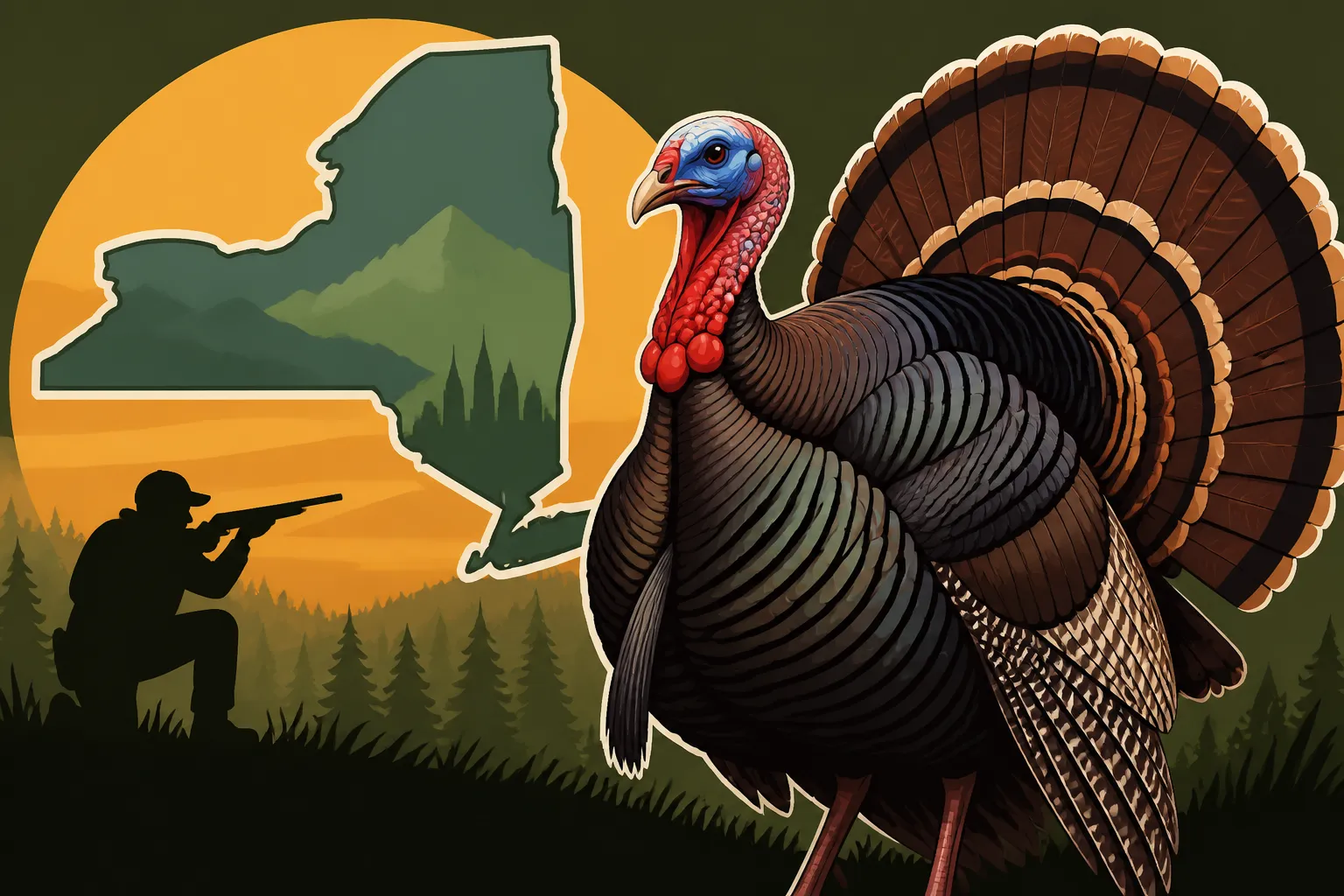
When you’re out chasing gobblers in New York, whether it's in the vast hardwoods of the Southern Zone or the rolling hills of the Finger Lakes, you are overwhelmingly pursuing the Eastern Wild Turkey (Meleagris gallopavo silvestris). This isn't just one of several options; for all practical hunting purposes, the Eastern is the wild turkey in New York. There are five recognized subspecies of wild turkey across North America, but the Eastern reigns supreme here, having been the subject of incredible restoration efforts that brought turkeys back from near extirpation in the state. Their adaptability and ability to thrive in a mix of mature timber and agricultural landscapes have allowed them to flourish across nearly all of New York.
Historically, wild turkeys were wiped out from New York by the mid-1800s due to unregulated hunting and extensive deforestation. It’s truly a testament to conservation that we have such a vibrant population today. Starting in the mid-20th century, the state initiated live-trapping and relocation programs, primarily using Eastern Wild Turkeys from Pennsylvania. These efforts were incredibly successful, and the birds adapted wonderfully to New York’s diverse habitats, from the rugged Catskills to the fertile farmlands of western New York. Today, you can find huntable populations throughout most of the state, excluding only a few highly urbanized areas and some parts of Long Island where their presence is minimal or localized. If you're wondering Where New York Turkeys Are Densest, you'll find them thriving in areas with good mast crops and diverse forest types.
Identifying the Eastern Wild Turkey
Recognizing an Eastern Wild Turkey isn't just about knowing it's the only game in town; it's about appreciating its distinct features. These birds are generally large, with adult gobblers often weighing 18-25 pounds, though some can tip the scales closer to 30 pounds. Hens are typically smaller, usually ranging from 8-12 pounds. Their plumage is a beautiful, iridescent mix of copper, bronze, green, and red, shimmering in the sunlight. The body feathers are a rich, dark brown, often appearing black in dim light, with metallic highlights.
One of the most defining characteristics of the Eastern is its tail feathers. These are typically tipped with a chestnut or dark buff band, followed by a wide, dark brown or black band, and then a narrower black band at the base. The primary wing feathers have distinct white and black barring, which is a key identifier when a bird flies or is observed at rest. The head and neck of gobblers can change colors dramatically, cycling through reds, whites, and blues, especially during the breeding season when they are displaying. Their legs are typically pinkish-red, and they sport thick, black bristles on their chest known as a "beard," which can grow quite long in mature gobblers. Hens might have smaller beards, or sometimes none at all, though "bearded hens" are a known, albeit less common, phenomenon.
Eastern Turkey Habitat and Distribution
Eastern Wild Turkeys are masters of adaptation, which is why they have thrived so well across New York. Their preferred habitat is a mosaic of mature hardwood forests and open areas like agricultural fields, clearings, and overgrown pastures. They rely on the woods for roosting, nesting, and foraging for acorns, beechnuts, and other mast crops, particularly in the fall. The more open areas provide crucial food sources like insects, grasses, and waste grain, especially in the spring and summer. This blend of cover and food is what makes so much of New York prime turkey country.
You'll find these birds throughout the state, from the rugged terrain of the Catskill Forest Preserve to the mixed forests and farmlands of the Southern Tier. Even in parts of the Adirondacks, particularly the peripheral areas with mixed deciduous and coniferous growth, you can find turkeys. They are notably absent or scarce in the deep, higher-elevation wilderness of the Adirondack interior, where severe winters and a lack of mast-producing hardwoods limit their survival. When you're scouting, using a robust mapping tool like GoHunt can really help you identify these transition areas where timber meets fields, or where prime roosting ridges overlook feeding zones. Checking out Hunting the Southern Tier Farmland Deer might give you an idea of similar terrain where turkeys also thrive near agricultural lands.
Behavior and Hunting Considerations for Eastern Turkeys
Understanding the behavior of Eastern Wild Turkeys is paramount for successful hunting. They are creatures of habit, yet incredibly wary. Their daily patterns often revolve around roosting in tall trees at night, descending at dawn to feed, moving through the woods in small flocks, and eventually heading back to a roost site before dusk. During the spring breeding season, gobblers become highly vocal and visible, driven by the urge to attract hens. This is when their iconic gobbling, strutting, and fighting come into play, making them a thrilling challenge for hunters.
Spring Season Tactics and Calling
Spring turkey hunting in New York is all about exploiting the gobbler's desire to breed. You're trying to sound like a lonely hen, or a rival gobbler, to draw him into range. This is where your calling skills truly shine. A common strategy involves locating a bird on the roost before dawn, often by using an owl hoot or crow call, and then setting up stealthily within earshot. As light breaks, soft tree yelps can entice him to fly down in your direction. Once on the ground, a variety of calls—yelps, clucks, purrs, and even the aggressive cutting of a boss hen—can draw him closer.
It’s not always easy, though. Gobblers can be "henned up," meaning they’re already with a flock of hens and less inclined to come to your calls. This is where patience and persistence come in. Sometimes, a "run-and-gun" approach, moving through the woods and calling frequently, can help you find a bird that’s more responsive. You might want to brush up on Calling a New York Gobbler Off the Roost for some specific techniques. Remember, Eastern gobblers are notorious for "hanging up" – getting to a certain distance and refusing to come closer, especially if they can’t see the "hen" they hear. Decoys can be incredibly effective in overcoming this, giving the gobbler a visual target and reassuring him that a hen is indeed there.
Fall Season Strategies and Flock Dynamics
While spring is all about the gobbler’s breeding behavior, fall turkey hunting targets the flock dynamics of these birds. In the fall, turkeys are typically in larger, more cohesive flocks, constantly foraging for food to build up fat reserves for winter. These flocks can consist of hens with their poults (young birds), or groups of adult gobblers. The key strategy for fall hunting, particularly in New York, often involves scattering a flock and then calling the birds back together.
Imagine you've located a large flock scratching for acorns on a wooded ridge. The goal is to break them up, sending them flying or running in different directions. Once scattered, you wait about 15-30 minutes, then begin making subtle "kee-kee runs" or assembly yelps – soft, pleading calls designed to sound like a lost young bird trying to regroup with its family. This preys on the strong social instincts of turkeys. The first bird to respond will often be a poult or a hen. Be patient, as it can take time for them to feel secure enough to return. For specific regional advice, consider looking into Hunting New York's Fall Turkey Season. Using a mapping application like GoHunt can help you predict escape routes and where scattered birds might regroup, especially when navigating dense timber or identifying potential ambush points.
| Feature | Eastern Wild Turkey | Other Subspecies (Not in NY) |
|---|---|---|
| Plumage Color | Dark, iridescent bronze/copper, green sheen | Varies: lighter buff (Rio Grande), iridescent green/purple (Florida), white-tipped tail (Merriam's) |
| Tail Feather Tips | Chestnut brown/dark buff band | Merriam's: White or light buff; Rio Grande: Light buff/tan |
| Leg Color | Pinkish-red | Varies: Pinkish to dark grey |
| Primary Habitat | Hardwood forests, mixed forests, agricultural edges | Merriam's: Mountainous ponderosa pine; Rio Grande: Riparian areas, scrubland; Florida: Palmetto/pine flatwoods |
| Distribution in NY | Widespread throughout most of the state | Not naturally occurring in New York |
| Size (Gobbler) | Large (18-25+ lbs) | Similar, some variation |
The Unlikely Presence of Other Subspecies
While the focus for New York hunters should be squarely on the Eastern Wild Turkey, some hunters might hear whispers or read articles about other subspecies like the Merriam's or Rio Grande. It's important to clarify that these other subspecies are not native or established in New York's wild populations. Efforts to introduce Merriam's turkeys in some parts of the Northeast decades ago were largely unsuccessful, as the birds struggled to adapt to the different habitat and weather conditions compared to their native western ranges.
Any reports of other subspecies in New York are typically isolated incidents of escaped captive birds or misidentification. The wild turkey population thriving in New York today is a testament to the resilience and adaptability of the Eastern subspecies. Focusing on understanding and respecting the Eastern Wild Turkey is the best way to become a truly knowledgeable and successful New York turkey hunter. This is the bird that has made an incredible comeback, and learning its nuances, from New York Turkey Population Trends to New York Turkey Roost Tree Preferences, will enhance your experience every time you step into the woods.
Disclaimer
This article is for general informational purposes only and does not constitute professional advice. Laws, prices and regulations vary by location and change over time. Consult a qualified professional for guidance on your specific situation.