New York Wildlife Rehabilitation for Injured Game
It’s a heart-wrenching moment that almost every New Yorker who spends time in the woods or even just driving the back roads has experienced: you come across a wild animal, a deer, a turkey, maybe even a black bear, clearly injured and suffering. Your first instinct is often to help, to intervene, to ease its pain, but the reality is, knowing how to help responsibly and legally in New York State can be incredibly confusing and fraught with good intentions that sometimes lead to unintended harm. This guide is here to untangle that knot, offering clear, empathetic advice on what to do (and what definitely not to do) when you encounter injured game species in New York, and how to connect with the dedicated professionals who truly can make a difference.
The Heartbreak of Finding Injured Wildlife in New York
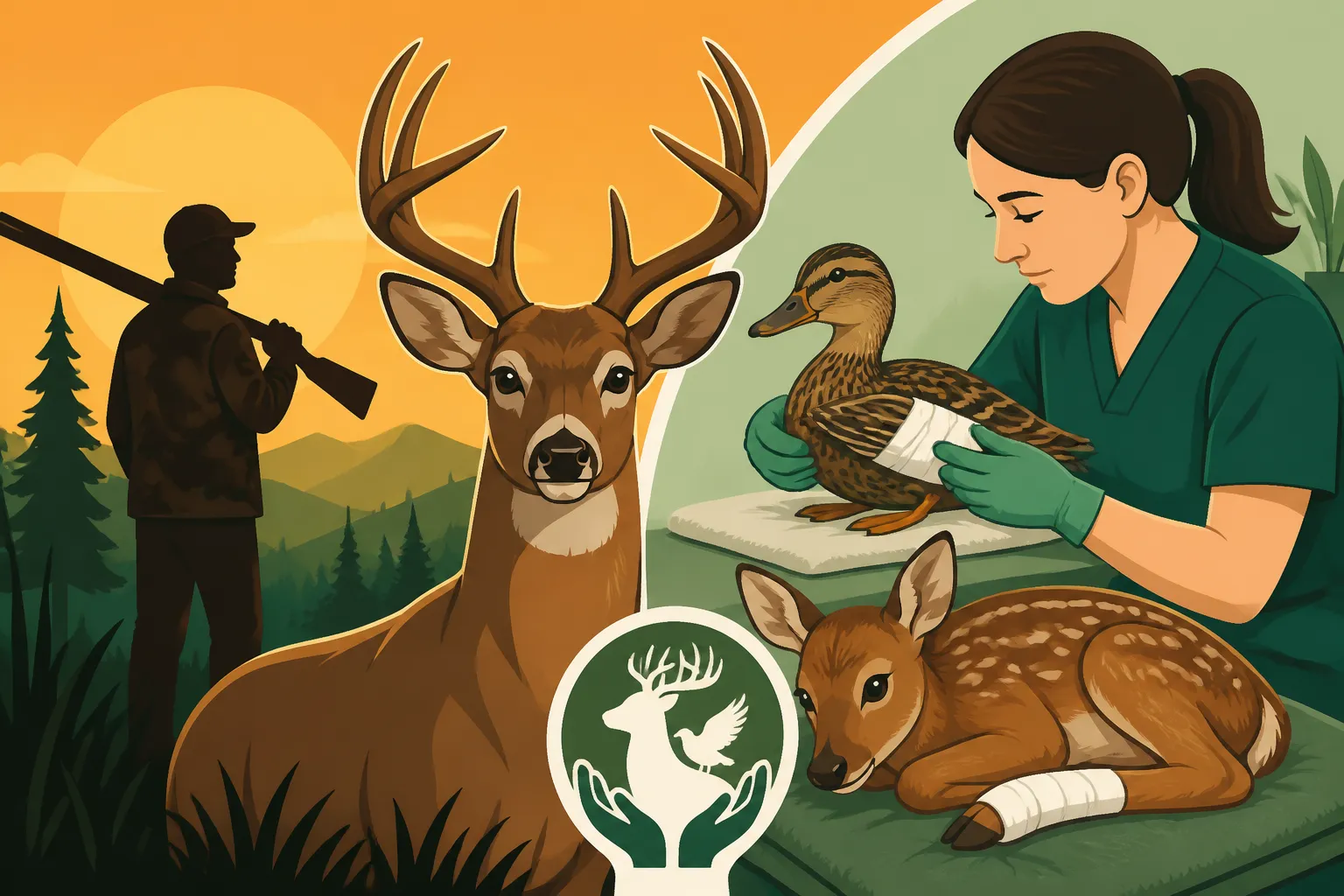
There's a unique ache that hits you when you see a magnificent creature like a white-tailed deer struggling, perhaps with a broken leg from a vehicle collision or a deep wound from another animal. As hunters and outdoor enthusiasts, we have a deep respect for these animals, and witnessing their distress can be profoundly upsetting. It’s natural to feel compelled to step in, to touch, to move, to offer comfort. But in the wild world of New York, our human impulse to nurture can sometimes create more problems than it solves, both for the animal and for us.
Why "Helping" Can Actually Hurt
When you see an injured fawn by the side of the road, or a turkey with a droopy wing, it's incredibly tough to just walk away or only call for help. Our immediate thought is often, "I need to get it to a vet!" or "I can nurse it back to health." The problem is, wild animals, especially game species, are not pets. They view humans as predators, and even an injured animal will experience immense stress from human contact. This stress can be so profound that it exacerbates their injuries, causes them to go into shock, or even leads to death.
Beyond the stress, there's the very real danger of zoonotic diseases. Animals, even seemingly healthy ones, can carry diseases that are transmissible to humans. Handling them without proper protection puts you at risk. Furthermore, an injured animal, feeling cornered and afraid, can lash out with surprising strength, causing serious injury to you. Imagine a 150-pound deer with a broken leg, terrified and in pain, suddenly kicking out – that could be a trip to the emergency room for you. Your desire to help is noble, but the best help you can offer is often to step back and let the trained professionals handle the physical intervention.
The Legalities: Who Can Rehabilitate Game in New York?
This is a critical point that many well-meaning citizens miss. In New York State, it is illegal for an unlicensed individual to possess or rehabilitate wild animals, including game species. The New York State Department of Environmental Conservation (DEC) has strict regulations in place for a very good reason: ensuring the welfare of the animals and preventing the spread of disease. Only individuals licensed by the DEC as wildlife rehabilitators are permitted to take in, care for, and release injured or orphaned wildlife. These rehabilitators undergo extensive training, adhere to strict protocols, and have facilities designed to minimize stress and prevent habituation, which is crucial for an animal's eventual return to the wild.
This means if you pick up an injured deer and take it home, you are technically breaking the law, even if your intentions are pure. The DEC needs to know where these animals are, what their condition is, and that they are receiving appropriate care that will allow them to be truly wild again. The goal of rehabilitation isn't just to save an animal; it's to save an animal that can thrive in the wild.
What Constitutes an "Injured" Game Animal?
Sometimes, what looks like an injured animal is simply a wild creature behaving naturally, or one that's just temporarily stunned. For example, a young fawn might be left alone by its mother for hours; this is normal deer behavior, not abandonment. The mother is likely nearby, foraging, and will return. Picking up such a fawn is actually kidnapping it from its mother and severely reducing its chances of survival in the wild.
When assessing if an animal is truly injured, look for clear signs:
- Obvious physical trauma: A visible broken limb, a deep open wound, severe bleeding, or an animal tangled in fencing.
- Disorientation or unresponsiveness: An animal that is easy to approach, doesn't react to your presence, or is stumbling aimlessly.
- Severe neurological signs: Circling, head tilting, paralysis. These can indicate serious injury or disease.
- Persistent crying or distress calls: While some animals vocalize, prolonged, unusual distress calls can be a sign.
What's not always an injury:
- A fawn alone: As mentioned, mothers leave fawns. Unless it's crying incessantly, looks emaciated, or has flies buzzing around an obvious wound, leave it be.
- An animal looking stunned after a minor collision: If it's able to get up and move, give it space. It might recover and move off.
- General weakness in cold weather: Animals conserve energy. Unless it's clearly unable to stand or shivering violently, it might just be resting.
The key is observation from a distance. If you're a hunter, you learn to read animal behavior. Apply that same careful observation here before making any assumptions. You can find more specific guidance on species behavior when studying topics like White-Tailed Deer Across New York or Wild Turkeys in New York.
Your First Steps: Assessing the Situation and Making the Call
Okay, you've identified an animal that truly appears injured and needs intervention. Now what? Your next actions are crucial for both your safety and the animal's best chance at recovery. Remember, direct handling is almost always a job for the licensed rehabilitator.
Prioritizing Your Safety and the Animal's Well-being
First and foremost, think about your own safety. An injured animal is a wild animal. Do not approach it closely. Do not try to pick it up. Do not try to offer it food or water. Maintain a safe distance, at least 50 feet if possible, and use binoculars if you have them to observe more closely. If the animal is on a busy road, ensure your own vehicle is safely parked and you are not putting yourself in harm's way from traffic.
Your goal at this stage is to gather information without escalating the situation or putting yourself at risk. Note the exact location, the species of animal, the apparent injury, and its behavior. Is it trying to move? Is it conscious? Is it breathing heavily? Are there other animals nearby? This information will be vital when you make contact with a rehabilitator.
Identifying New York's Licensed Wildlife Rehabilitators
Once you've safely assessed the situation, it's time to find a licensed professional. The New York State DEC maintains a list of licensed wildlife rehabilitators, organized by county, on their official website. This is your absolute best resource. A quick search for "New York DEC wildlife rehabilitator" should get you to the right page. You can also often find local rehabilitators through a general internet search, but always confirm they are licensed by the DEC.
These individuals and organizations are often small operations, sometimes running out of their homes, and are usually volunteers or non-profits. They work tirelessly, often on shoestring budgets, because they care deeply about New York's wildlife. Be prepared that they might not answer immediately if they are busy with an animal or out on a rescue. Leave a clear, concise message with your name, phone number, the type of animal, and the exact location and nature of the injury. When looking for remote locations, tools like Scouting With the New York HuntFishNY App or even detailed mapping systems like GoHunt can help you describe the specific geography to the rehabilitator, which is crucial for their planning. Knowing access points, logging roads, or even nearby landmarks can save precious time.
| What to Do | What NOT to Do |
|---|---|
| Observe from a safe distance. | Approach or touch the animal. |
| Note exact location, species, and injury. | Attempt to move or transport the animal yourself. |
| Call a licensed wildlife rehabilitator. | Give food or water. |
| Follow rehabilitator's instructions. | Assume the animal is abandoned (especially fawns). |
| Keep pets and children away from the animal. | Post on social media for advice before calling. |
| Report dead deer for removal if on a road. | Try to self-diagnose or treat the animal. |
What Information to Provide When You Call
When you do get a rehabilitator on the phone, or leave a message, be ready with the following details. Clarity and accuracy are paramount to help them determine the best course of action and whether they are equipped to handle the specific animal.
- Your Contact Information: Name and a reliable phone number.
- Exact Location: This is critical. Be as precise as possible. A street address, crossroads, mile marker, GPS coordinates, or clear landmarks (e.g., "about 0.5 miles past the old red barn on Route 17 heading west"). This is where using a robust mapping app like GoHunt to pinpoint your location can be incredibly helpful, allowing you to provide coordinates or specific topographic details.
- Species of Animal: Is it a white-tailed deer, a wild turkey, a grouse, a black bear cub? Knowing the species helps them determine if they are licensed for it and what resources they need.
- Nature of Injury/Problem: Describe what you see. "Broken leg," "appears to be hit by a car," "caught in a fence," "disoriented," "emaciated."
- Animal's Behavior: Is it conscious? Trying to run? Lying still? Aggressive?
- Time of Discovery: How long have you observed it?
- Your Distance: Confirm you are keeping a safe distance.
Be patient. These individuals are often stretched thin, and they may need to coordinate with other volunteers or even law enforcement, especially for larger animals like deer or bears. If it's a deer that has been hit by a car, you may also need to contact local law enforcement or the DEC directly for guidance on reporting dead or injured animals, as per New York Deer Reporting Requirements.
Understanding the Rehabilitation Process for Game Species
The journey for an injured wild animal from rescue to release is a complex and often challenging one. It's a testament to the dedication of New York's licensed wildlife rehabilitators that so many animals get a second chance at a wild life.
From Rescue to Release: The Journey of a Wild Animal
Once a rehabilitator receives the call and confirms they can take the animal, the real work begins. If the animal is small enough, they might instruct you on safe containment until they arrive or suggest a safe drop-off location. For larger game like deer or bears, it often requires a coordinated effort, sometimes involving several people, specialized equipment, and even tranquilization by a veterinarian.
Upon arrival at the rehabilitation facility, the animal receives an initial assessment. This includes stabilizing its condition, providing warmth and fluids, and a thorough examination by a rehabilitator, sometimes in consultation with a veterinarian. Injuries are treated, which might involve surgery, bandaging, or medication. The rehabilitator's priority is not just to heal the physical wound but to ensure the animal remains wild. This means minimal human contact, specific diets, and enclosures that mimic their natural habitat as closely as possible.
The duration of rehabilitation varies wildly depending on the injury and species. A bird with a simple fracture might be ready in a few weeks, while a deer with a complex injury could take months. Throughout this time, the goal is always to prepare the animal for release. This means regaining full mobility, learning to forage independently, and retaining its natural fear of humans. The success of a rehabilitation hinges on the animal's ability to survive and reproduce once back in the wild.
Common Challenges and Difficult Decisions
Despite the best efforts, not every animal can be successfully rehabilitated and released. This is the heartbreaking reality that rehabilitators face daily. Some injuries are simply too severe to allow for a full recovery that would enable survival in the wild. An animal that cannot run, fly, or forage effectively will not survive long after release and may suffer a prolonged, agonizing death.
In these cases, the rehabilitator, in consultation with a veterinarian and following DEC guidelines, may make the difficult decision to humanely euthanize the animal. This is not a failure but a compassionate act to prevent further suffering. An animal that becomes too habituated to humans, losing its natural fear, also cannot be released. Such an animal would seek out human food, become a nuisance, or be vulnerable to predators, including humans. These animals also often face euthanasia as a last resort, as keeping them in captivity indefinitely is not ethical or practical, and transferring them to zoos or educational facilities is rare and highly regulated.
It's also important to remember that wildlife rehabilitation isn't cheap. The costs for medication, specialized food, veterinary care, and facility maintenance can be substantial. Many rehabilitators operate as non-profits or rely heavily on donations and volunteer labor. Consider supporting these vital services; it directly impacts the well-being of New York's wildlife.
How You Can Support New York's Wildlife Rehabilitators
If you're passionate about wildlife, there are many ways you can help support the unsung heroes of New York's rehabilitation efforts:
- Financial Donations: As mentioned, most rehabilitators are non-profits and rely on donations. Every dollar helps purchase supplies, pay for vet visits, and maintain facilities. Check their websites for direct donation links.
- Volunteer Your Time: If you have the time and dedication, many rehabilitators need volunteers for everything from cleaning enclosures, preparing food, helping with transport, to administrative tasks. This is a rigorous and often physically demanding job, but incredibly rewarding.
- Educate Others: Share the information you've learned here. Help others understand the importance of calling a licensed professional rather than intervening directly. Knowledge is power when it comes to wildlife protection.
- Prevent Conflicts: Drive carefully, especially during dawn and dusk, to reduce deer-vehicle collisions. Keep pets contained and supervised to prevent them from injuring wildlife. Secure your garbage to avoid attracting animals. Preventing an injury is always better than needing to rehabilitate one.
- Report Sick or Injured Animals: Beyond just reporting, understand the broader context of wildlife health. The DEC closely monitors New York Wildlife Disease Monitoring, and your reports of sick or injured animals contribute to this vital public health and conservation effort, especially concerning issues like New York's Chronic Wasting Disease Containment Area.
Preventative Measures and Responsible Hunting Practices
As hunters and conservationists, we play a significant role in minimizing human-wildlife conflicts and ensuring the health and safety of New York's game populations. Our actions in the field and even in our daily lives can have a profound impact.
Reducing Human-Wildlife Conflicts
One of the most common reasons game animals, especially deer, end up injured is due to interactions with humans. Vehicle collisions are a prime example. While some are unavoidable, driving defensively, especially in areas known for high deer activity (often marked by roadside signs), can make a big difference. Pay extra attention during the rut in November and during dawn/dusk hours.
Another area is habitat encroachment. As human development expands, wildlife habitat shrinks and becomes more fragmented, forcing animals into closer proximity with people. This can lead to animals getting caught in fences, struck by vehicles, or injured by domestic animals. Supporting land conservation efforts and responsible development planning can help maintain vital habitat corridors. Understanding deer movement patterns through tools like GoHunt's satellite imagery can help predict where conflicts might arise, informing both drivers and landowners.
Responsible pet ownership is also key. Unsupervised dogs can injure or kill deer, turkeys, and other small game. Keeping your dogs leashed or contained, especially in areas with known wildlife populations, is crucial.
Ethical Hunting and Responsible Shot Placement
As hunters, our commitment to ethical practices directly impacts the number of injured game animals in the field. Responsible shot placement is paramount. A clean, ethical kill minimizes suffering and drastically reduces the chances of a wounded animal escaping and succumbing to its injuries over days or weeks. This is why thorough scouting, practice at the range, and knowing your effective range are so important.
If you make a shot that isn't immediately fatal, taking diligent efforts to track and recover the animal is your ethical duty. This includes knowing how to Blood Trailing After Dark in New York and understanding the challenges of tracking in various conditions. Sometimes, despite our best efforts, an animal might be lost. In such cases, if you believe it is still alive and suffering, contacting a rehabilitator or the DEC might be appropriate, though their ability to intervene on a wounded, unrecovered game animal can be limited and is subject to different rules than a vehicle-struck animal.
Furthermore, hunters contribute significantly to conservation efforts through license fees and excise taxes on equipment. These funds support habitat management, wildlife research, and enforcement, which indirectly benefits all wildlife, including those that might need rehabilitation. Understanding concepts like New York Deer Management Permits Explained and how they influence population health and hunter responsibility is part of this broader picture.
The Role of the DEC and Conservation
The New York State Department of Environmental Conservation is the primary agency responsible for managing and protecting the state's fish and wildlife resources. This includes overseeing wildlife rehabilitation efforts, issuing licenses, and developing regulations based on scientific data. Their work is multifaceted, from managing game populations to protecting endangered species, and responding to wildlife emergencies.
Conservation efforts, often funded by hunters and anglers, are critical in maintaining healthy ecosystems that reduce the likelihood of wildlife injuries. Habitat improvement projects, disease monitoring, and public education initiatives all contribute to a healthier, more resilient wildlife population. When you purchase your hunting license or a New York Habitat and Access Stamp Cost, you're directly contributing to these vital efforts, helping to ensure that New York's diverse wildlife thrives for generations to come.
Understanding the bigger picture, from population dynamics to disease prevalence (which can lead to injured or sick animals), is part of being a responsible outdoor enthusiast in New York. Insights from a Reading a New York Harvest Report can even shed light on population health trends that might influence the frequency of injured animals.
Disclaimer
This article is for general informational purposes only and does not constitute professional advice. Laws, prices and regulations vary by location and change over time. Consult a qualified professional for guidance on your specific situation.