Trail Cameras on New York Public Land
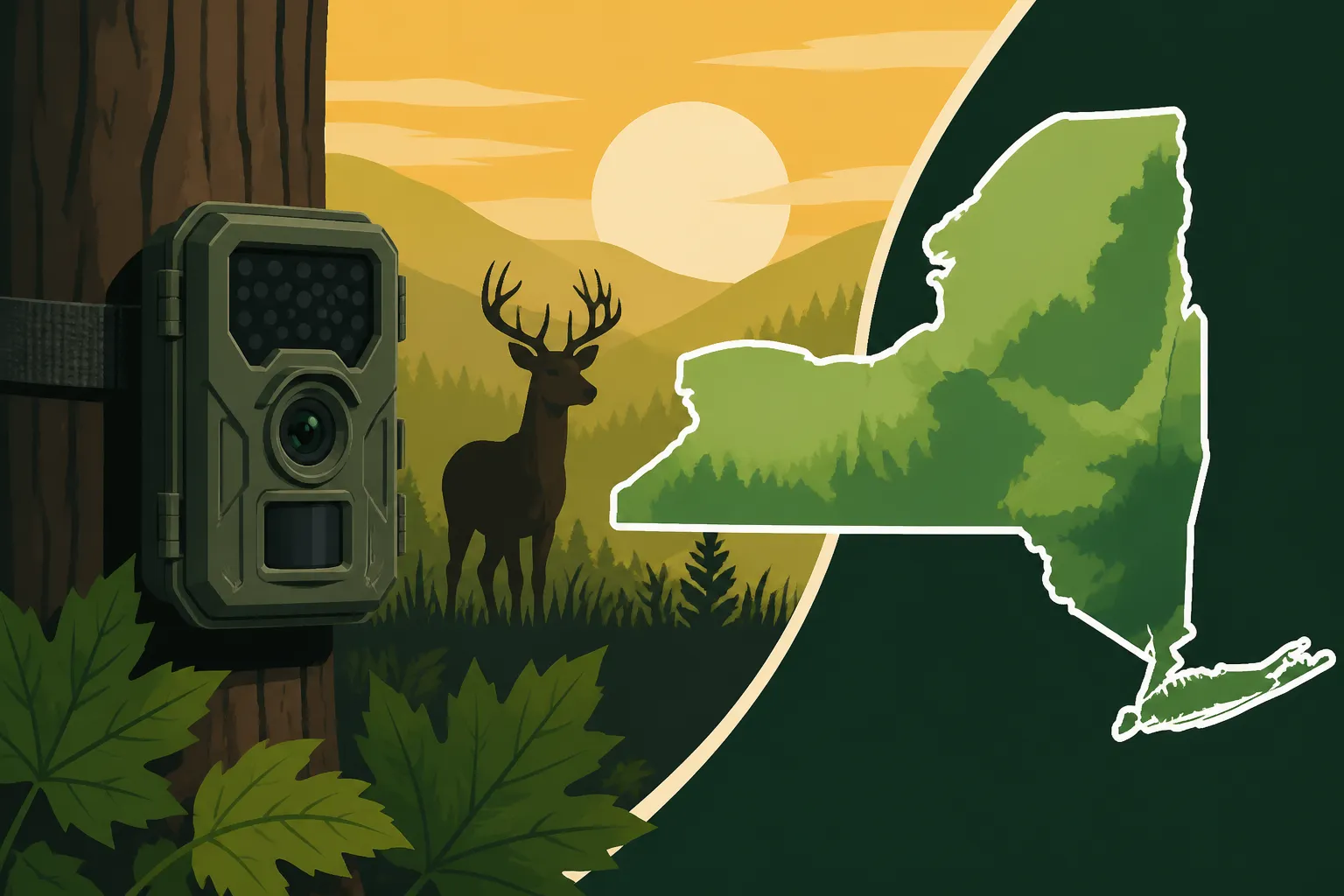
The lure of a trail camera on public land is undeniable. You want to know what's moving through that pinch point, what kind of bucks are hitting that late-season oak flat, or if a bear is frequenting that remote berry patch. But then the questions start bubbling up: Is it even legal? What about theft? Am I invading someone else's hunt? It's a real head-scratcher, especially with different regulations across New York's vast public hunting grounds. This guide aims to clear up the confusion, offering a realistic look at how to effectively and ethically use trail cameras on New York public land to give you a genuine edge without stepping on anyone's toes or breaking any rules.
The Legal Landscape: What New York Says About Public Land Cameras
Let's get right to it: Can you even put a trail camera on public land in New York? This is often the first and biggest hurdle in people's minds, and rightly so. Public land hunting comes with its own set of rules, and what's allowed on your back forty might be a no-go in a State Forest. Understanding the nuances is critical to avoiding a fine, or worse, losing your hunting privileges.
General Rules and Regulations for Devices
New York State, through the Department of Environmental Conservation (DEC), manages a huge amount of public land. Generally speaking, there isn't a blanket prohibition on using trail cameras on most state-owned public lands like State Forests or Wildlife Management Areas (WMAs). However, this doesn't mean it's a free-for-all. The key is that your camera is considered "personal property" and must be placed and maintained in a way that doesn't damage state property, interfere with other users, or become a hazard.
Think about it: you can hang a treestand (with specific rules, of course), so why not a camera? The principle is similar. Your device needs to be non-intrusive. This means no cutting branches to clear a view, no driving nails into trees, and ensuring it's not blocking a trail or placed precariously. While there isn't a specific "trail camera regulation" section in the hunting guide, general rules regarding defacing property, littering, and creating hazards definitely apply. This is where your good judgment comes into play. A camera strapped discreetly to a tree with a sturdy, non-damaging strap is usually fine, but permanent installations or anything that alters the landscape will likely land you in hot water.
Property Rights and Expectation of Privacy Concerns
One of the biggest concerns hunters have is the ethical and legal implications of capturing images of other people. On public land, there's a generally reduced expectation of privacy compared to private property. This means that if someone is walking through a public park or a public hunting area, they generally don't have a strong legal claim to privacy from being photographed, especially if they are out in the open. Trail cameras are designed to capture wildlife, but they are also going to capture other users – hikers, dog walkers, other hunters.
The main takeaway here is not to intentionally target other people. If your camera is set up for deer and a hunter walks past, that's generally acceptable. The problem arises if you set up a camera specifically to monitor other hunters' movements or to harass them. That crosses a line into unethical and potentially illegal territory. It's about intent. Your goal is scouting game, not surveilling people. Always ensure your camera is well within public land boundaries; accidental trespass with a camera, just like with your boots, is still trespass. Utilizing a mapping tool like GoHunt can be invaluable for precisely determining property lines and ensuring your camera stays exactly where it should be.
WMAs, State Forests, and Forest Preserves: Are There Differences?
New York's public land is not a monolith; different classifications can have different rules, even if they aren't explicitly about trail cameras.
- Wildlife Management Areas (WMAs): These areas are managed primarily for wildlife habitat and public hunting. Generally, trail cameras are permissible. The rules for things like Ground Blind Rules on New York WMAs often apply, meaning temporary structures and devices are usually fine as long as they don't permanently alter the habitat. You're typically allowed to put up temporary stands or blinds, and cameras fall into that same temporary, non-damaging category.
- State Forests: These are managed for multiple uses, including timber production, recreation, and hunting. Similar to WMAs, trail cameras are generally allowed. Again, the key is to ensure no damage to trees or permanent alterations. These are great places to scout, and many hunters rely on cameras here to locate White-Tailed Deer Across New York.
- Adirondack and Catskill Forest Preserves: These areas are unique, designated "Forever Wild" by the state constitution. This designation implies a higher level of protection against alteration. While hunting is allowed, the rules on things like Treestand Rules on New York Public Land can be more stringent, often requiring stands to be completely removed each day. This "remove daily" rule, if broadly interpreted, could extend to cameras in some specific, sensitive areas, especially if they are deemed to be "structures" or "improvements." However, for a simple, temporary camera strap-mounted to a tree, it's generally considered acceptable in most areas where hunting is allowed, as long as it causes no damage and is not left indefinitely. It's always a good idea to check with the local DEC office for any specific unit-by-unit rules if you're venturing deep into the Preserve. For the most part, though, standard trail cameras are understood as a scouting tool, not a permanent fixture.
| Public Land Type | Trail Camera Use (General) | Key Considerations |
|---|---|---|
| Wildlife Management Areas | Generally Permissible | No damage to property, temporary use. |
| State Forests | Generally Permissible | No tree damage (nails, screws), temporary. |
| Adirondack/Catskill Preserves | Permissible, check locally | "Forever Wild" status, potential stricter interpretation for "structures." Ensure no damage or permanent presence. |
Practical Considerations for Deploying Your Cameras
So, you've decided to put cameras out on public land. Great! Now comes the practical side of things. It's not just about legality, but also about common sense, protecting your investment, and being a good steward of the land and a respectful fellow hunter.
Choosing the Right Location and Camera Type
Picking the right spot for your camera is paramount. On public land, you're looking for areas that concentrate game but might not be immediately obvious to casual passersby. Think about natural funnels, saddlebacks, field edges (if applicable), or benches on hillsides. Consider thick cover that deer are using for bedding or travel corridors between food and water. For Scouting New York Public Land Before Season, cameras are a game-changer, revealing patterns you might miss with just boot leather.
When it comes to camera types, discretion is key on public land. Low-glow or no-glow infrared cameras are preferable. These flash units emit little to no visible light, making them much less noticeable at night. A camera that flashes brightly in the dark is practically an advertisement for theft. Wireless cameras, like those offered by some cellular providers, can be a huge advantage, allowing you to check cards without disturbing the area or making frequent trips that increase your exposure to other people or potential thieves. However, remember cell service can be spotty in remote parts of the Adirondacks or Catskills.
Consider weatherproofing, too. New York weather can be brutal, especially during deer season. A camera that can withstand driving rain, freezing temperatures, and even some snow is essential. Ensure the mounting system is robust and won't damage the tree, opting for sturdy straps over screws or nails.
Deterring Theft and Vandalism
This is, regrettably, a major concern for many hunters considering public land cameras. It's an unfortunate truth that not everyone respects other people's property. While you can't eliminate the risk entirely, you can certainly minimize it.
- Discretion is your best friend: Don't advertise your cameras. Place them in less obvious spots, off main trails. Angle them away from the most trafficked routes, focusing on game trails that are less likely to be used by hikers. Camouflage your camera as best you can – some hunters even spray paint their cameras to match tree bark (check manufacturer warranties first!).
- Security measures:
- Locking cables/boxes: Many companies make sturdy steel security boxes or python-style locking cables that can secure your camera to a tree. These won't stop a determined thief with bolt cutters, but they will deter opportunistic ones.
- High placement: Mounting your camera higher up a tree, pointed slightly downward, makes it less visible at eye level and harder to reach without a ladder or climbing stick. This also provides a better angle for capturing deer activity.
- Dummy cameras: Some hunters place inexpensive, non-functional dummy cameras in obvious spots to draw attention away from their actual, valuable cameras hidden nearby.
- Don't leave calling cards: Avoid leaving obvious tracks, ribbons, or markers leading directly to your camera. Make your approach and exit routes indirect.
- Accepting the risk: Ultimately, public land means shared access, and with that comes a small but real risk of theft or damage. Factor this into your budget and emotional investment. Don't put out a camera you can't afford to lose.
Ethical Considerations and Hunter Etiquette
Using trail cameras on public land goes beyond just legality; it's also about being a good sport and respecting your fellow hunters.
- Respect privacy: As mentioned, your camera will inevitably catch other people. Do not share images or videos of other hunters or individuals without their explicit permission. It’s not only a breach of trust but could lead to serious confrontations. Your goal is scouting game, not shaming or spying on other users.
- Minimal impact: Leave no trace. Pack out everything you pack in, including old batteries and memory cards. Ensure your camera straps aren't girdling trees. When the season is done, take your cameras home.
- Don't monopolize: While you can put out multiple cameras, avoid "blanketing" an area with so many devices that it feels like you're claiming territory. Public land is for everyone. If you're encountering Hunting Pressure on New York Public Land in a particular spot, maybe consider pulling a camera and finding a less-pressured area.
- Consider the "unseen" impact: Constantly checking your cameras creates scent and disturbance. Even with a wireless camera, the act of retrieving cards (if it's not cellular) or adjusting settings can blow a spot. Plan your visits strategically, perhaps aligning them with mid-day or adverse weather conditions when game movement is low and other hunters are less likely to be out.
Maximizing Your Scouting Efforts with Cameras
Now that we've covered the legalities and etiquette, let's talk about using these tools to their fullest potential. Trail cameras, when used smartly, can be one of the most effective scouting aids available to a New York hunter.
Strategic Placement for Deer and Bear
Where you put your camera dictates what information you gather. On public land, this means thinking like the animal and considering human interference.
- Deer:
- Travel Corridors: Look for natural funnels – saddles between ridges, narrow strips of timber between open fields, creek bottoms, or benches along steep hillsides. These are high-percentage spots. Reading a Ridge for Catskill Deer Movement or Hunting a Funnel Between Two Swamps are prime examples of where cameras shine.
- Food Sources: Early season, focus on mast crops like oak flats after a good acorn year (or lack thereof, if Hunting After a Poor Acorn Year has been an issue). Later in the season, target persistent food sources like standing cornfields (if near public land), browsed clearcuts, or thickets of briars.
- Rub/Scrape Lines: While scrapes can be inconsistent, a well-used rub line indicates buck activity. Place a camera on these for a snapshot of the bucks in the area. Scrape Lines Along a Logging Road can be particularly productive.
- Bedding Areas: Be careful not to disturb bedding areas directly, but setting a camera on a downwind trail leading into a thick bedding area can show you what's using it without pushing them out.
- Bear:
- Natural Food Sources: Bears are driven by food. In spring and early summer, look for areas with emerging greens or previous year's berry bushes. Later in summer and fall, focus on hard mast like acorns or soft mast like apples and berries. Hunting Bears Over Natural Food Sources is key, as baiting is illegal in New York.
- Travel Corridors: Bears will use defined travel routes, often along ridges, creek beds, or through thick timber. Look for tracks, scat, and rubbed trees. For more on New York's Black Bear Population, understanding their general movements helps.
- Water Sources: Especially in dry periods, bears need water, so trails leading to springs, streams, or ponds can be hot spots.
Remember to consider wind direction, sun glare, and human access when placing your camera. Avoid facing the sun directly, which can cause washed-out photos, and always think about how you'll access the camera without contaminating the area with your scent or spooking game.
Data Management and Analysis
A trail camera isn't just a fancy photo taker; it's a data collection tool. The real work begins after you've pulled the cards (or downloaded the images via cellular).
- Organize Your Photos: Develop a system. Create folders for each camera, labeled by location and date. This makes it easier to track trends.
- Pattern Analysis: Look for patterns in game movement:
- Time of day: Are deer mostly nocturnal, or do they move during legal shooting hours? This helps determine stand times.
- Direction of travel: Where are they coming from and going to? This identifies travel corridors.
- Frequency: How often are specific animals (like a target buck) using an area?
- Behavior: Are they feeding, rubbing, scraping, or just passing through?
- Weather and Moon Phase Correlation: Many modern cameras embed temperature and moon phase data. Pay attention to how these factors influence animal movement. You might notice bucks become more active during certain moon phases or after a cold front.
- Identify Individual Animals: Try to identify specific bucks by antler characteristics. This allows you to track their movement across different camera locations or through the season.
- Utilize Mapping Software: Transferring your camera data points (where your camera is, and where you're seeing specific animals) onto a digital mapping system like GoHunt or by hand on a topographical map helps visualize patterns. This can reveal connections between bedding, feeding, and travel routes that aren't obvious on individual camera photos. onX Layers for New York Land Status can provide additional context, showing you exactly what type of cover or topography your game is utilizing.
Combining Cameras with Other Scouting Methods
Trail cameras are powerful, but they are just one tool in your scouting arsenal. The most successful hunters integrate them with other methods to create a comprehensive picture.
- Boot Leather and Binoculars: Nothing replaces boots on the ground. Use your cameras to confirm what you've found physically or to expand your search. If you find a promising rub line or a bottleneck while still-hunting, a camera can then monitor it 24/7. Conversely, if a camera shows consistent activity in an area, you can then go in and scout that area more intensively, looking for specific stand trees or pinch points.
- Aerial and Topographical Maps: Before you even set foot in the woods, study maps. Identify potential funnels, benches, and thickets. Reading Aerial Photos for Southern Tier Deer is a critical skill. Use these maps to strategically place your cameras, and then let the cameras confirm or deny your hypotheses.
- Seasonal Adaptability: The information your cameras gather in September will be different from what they show in November. Early season, they might reveal summer patterns. As the Hunting the New York Rut in November approaches, they can show you when bucks are starting to cruise and chase. In late season, they'll highlight critical food sources. Don't rely on old data; continually scout with your cameras as the season progresses.
- Post-Season Analysis: Even after the season, your cameras can continue to work. Monitoring winter food sources can give you an idea of deer density and survival rates. Shed Hunting on New York Public Land can also be greatly enhanced by knowing where deer are congregating after antler drop. This off-season data is invaluable for planning next year's hunt.
Trail cameras, when used responsibly and intelligently, are an incredible asset for any New York hunter on public land. They offer a window into the secret lives of the deer and bears we pursue, helping us understand their habits and increasing our chances of a successful and fulfilling hunt.
Disclaimer
This article is for general informational purposes only and does not constitute professional advice. Laws, prices and regulations vary by location and change over time. Consult a qualified professional for guidance on your specific situation.