Deer Carts on Forest Roads
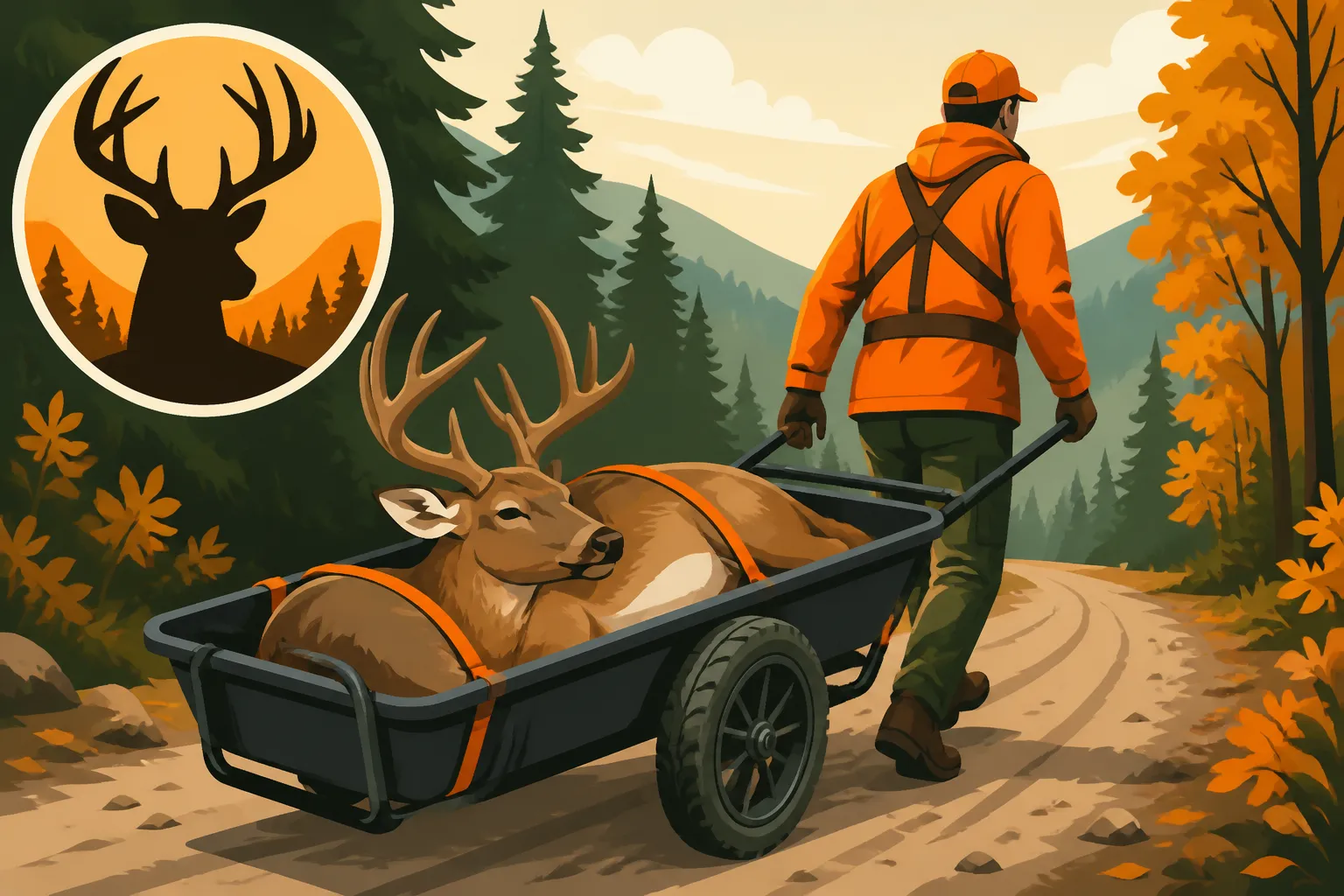
There's nothing quite like the rush of downing a New York whitetail, but the reality of getting that deer back to your vehicle can quickly turn triumph into tribulation, especially when you're a good mile or more deep on a forest road. Dragging a mature deer through varied terrain, even on a maintained path, is back-breaking work that can make you question your life choices. This guide is all about simplifying that arduous task by showing you how deer carts can be your best friend for efficient game retrieval on New York's public lands and beyond.
The Unsung Hero: Why a Deer Cart Makes All the Difference on Forest Roads
Let's be honest: after the adrenaline of the shot wears off, the true challenge often begins. A mature New York buck, especially one taken deep in a state forest or wilderness area, can weigh upwards of 150-200 pounds dressed. Dragging that kind of weight for any distance, even on a relatively flat forest road, is exhausting. It takes a toll on your back, shoulders, and knees, and can turn a joyous hunt into a painful slog. This is where the humble deer cart steps in, transforming a grueling solo effort into a manageable trek.
Imagine hitting a beautiful Southern Tier State Forest Blocks for a late-season hunt. You've scouted well, maybe even used mapping tools like GoHunt to identify old logging roads and fire lanes that wind deep into the timber. You punch your tag on a respectable 8-pointer about a mile and a half in. Without a cart, you're looking at a multi-hour ordeal, potentially tearing up the hide and certainly wearing yourself out. With a good cart, that same mile-and-a-half becomes a brisk walk, the weight distributed, and the effort significantly reduced.
Beyond the sheer physical relief, using a deer cart also protects your harvest. Dragging a deer over rough ground can damage the cape, bruise the meat, and even allow dirt and debris to contaminate the carcass. A cart keeps the deer elevated and relatively stable, minimizing these issues. It means your hard-earned venison arrives at camp in much better condition, ready for Butchering a Deer at Camp or transport home. For those long walks back to the truck, especially if you're hunting solo or with limited help, a cart isn't just a convenience; it's a necessity.
Navigating the Choices: Selecting the Best Deer Cart for New York's Backcountry
Not all deer carts are created equal, and choosing the right one for New York's diverse hunting terrain is crucial. You're not always going to be on perfectly groomed trails; often, those "forest roads" are more like ATV tracks, old logging paths, or even just rocky two-tracks that require some maneuverability. Considering the kind of ground you typically cover and the size of game you're after will guide your decision.
Wheel Configuration and Tire Type
The wheels are arguably the most critical component of any deer cart. You'll find carts with two wheels, four wheels, and even some specialized designs. Two-wheel carts are the most common, offering a good balance of maneuverability and load capacity. However, the size and type of tire matter immensely. Smaller, solid rubber wheels might be fine for paved paths but will quickly bog down in mud, soft dirt, or over roots and rocks. Large, pneumatic (air-filled) tires, often 16-20 inches in diameter, are a game-changer. They absorb shock, roll over obstacles much more easily, and provide better flotation in softer terrain. For the varied conditions of New York State Forest Hunting, from muddy ruts to rocky stretches, large pneumatic tires are almost always the superior choice.
Consider the width of the tires too. Wider tires distribute weight more effectively, preventing the cart from sinking into soft ground, which can be a real issue after a rain or in damp, wooded areas. While four-wheel carts offer more stability, they can be less nimble on tight turns or weaving through trees, which you might encounter on less-maintained forest roads. A good two-wheel cart with robust, large-diameter pneumatic tires often strikes the best balance for most New York hunters.
Frame Material and Construction
The frame of your deer cart needs to be sturdy enough to handle the weight of a heavy deer and the stresses of uneven terrain. Most carts are made from steel or aluminum. Steel frames are typically more robust and durable but also heavier. Aluminum frames are lighter, making the cart easier to load and push, but they might not withstand as much abuse over many seasons. The quality of welds and the overall design of the frame are equally important. Look for reinforced stress points and a design that allows the deer to be securely strapped down without shifting.
When assessing construction, think about how the cart folds down. Many carts are designed to collapse for easier transport in a vehicle or for storage. A cart that folds efficiently without becoming flimsy when deployed is ideal. You want something that feels solid and reliable when you're loading a big deer onto it, not something that wobbles or flexes under the weight. A well-built frame ensures the cart can withstand years of hauling deer out of the woods, whether you're navigating a gentle slope or having to muscle it up a steep incline on an old logging road.
Capacity and Features
Deer carts come in various sizes, with different weight capacities. Always err on the side of caution and get a cart with a higher capacity than you think you'll need. A cart rated for 200 pounds might struggle with a 180-pound deer plus your pack and rifle if the terrain is tough. Look for carts rated at 300-500 pounds for maximum versatility. Beyond weight, consider the platform size. Can it accommodate a large-bodied buck without the head or hindquarters dragging?
Useful features include a sturdy kickstand for easy loading, comfortable handles that offer good grip, and attachment points for securing the deer. Some carts offer brakes, which can be invaluable on hilly terrain to prevent runaway situations. Others might have accessory bags or pouches for small gear. While not essential, these can add to the convenience. When hunting deep in areas like the Adirondack Forest Preserve or even less-traveled parts of state forests, having a cart that can handle a substantial load and offer a stable platform is key to getting your trophy out efficiently.
| Feature | Two-Wheel Cart (Large Pneumatic Tires) | Four-Wheel Cart (Utility Wagon Style) | Economy Two-Wheel Cart (Small Solid Tires) |
|---|---|---|---|
| Maneuverability | Excellent on varied terrain | Good on wider, flatter trails | Poor on uneven or soft ground |
| Load Capacity | High (300-500 lbs typical) | Very High (300-800 lbs typical) | Moderate (150-250 lbs typical) |
| Terrain Suitability | Rough trails, forest roads, mud | Wide, relatively smooth paths | Paved roads, very light trails |
| Portability | Often folds compact | Can be bulky, some fold | Very compact, lightweight |
| Weight | Moderate | Heavy | Light |
| Typical Cost | Mid-range to High | Mid-range to High | Low |
Mastering the Maneuver: Techniques for Using Your Deer Cart Effectively
Having a great deer cart is one thing; using it effectively is another. It takes a little practice and some smart techniques to truly make it your partner in game retrieval. The goal is to minimize effort and stress while ensuring the safety of yourself and your harvest.
Loading and Securing Your Deer
Proper loading is the first step to successful carting. Position the cart parallel to the deer, ideally on the downhill side if on a slope, to make leveraging the animal easier. For heavy deer, the "log roll" method works well: roll the deer onto the cart by pulling from the far side. If you're alone with a very large deer, you might have to get creative, using the cart's wheels as a pivot point or even sliding the deer onto a tarp first and then pulling the tarp onto the cart. Once the deer is on, center its weight as much as possible over the axle. This balance point is crucial for ease of movement.
Next, secure the deer firmly. Don't skimp on the straps. Two or three heavy-duty cam-buckle straps are usually sufficient. Wrap them around the deer and the cart frame, cinching them down tightly so the deer cannot shift or slide, especially on uneven ground. A shifting load is not only harder to manage but can also lead to injury or damage to the deer. Many hunters like to position the deer head-first or tail-first depending on the slope they're primarily navigating. For instance, if you're pulling uphill, having the deer's head toward you can make it easier to lift the front end of the cart over obstacles.
Navigating Challenging Terrain
Even on forest roads, you'll encounter obstacles: rocks, roots, muddy sections, fallen logs, and maybe even small streams or drainage ditches. When approaching these, don't try to power through blindly. Take a moment to assess the best path. For large rocks or logs, a direct approach might cause the cart to tip. Instead, try to angle the cart to roll one wheel over the obstacle at a time, or lift and pivot the cart over it. This is where those large, pneumatic tires truly shine, as they can roll over substantial bumps without much fuss.
Muddy sections require a slow and steady approach. Keep the cart moving forward rather than getting bogged down. If the mud is particularly deep, you might need to pull the cart one step at a time, moving your feet first, then pulling the cart up to your position. Remember that Vehicle Rules on New York Public Land often prohibit motorized vehicles on many of these roads, meaning you're doing the pulling. It's a workout, but far less of one than dragging. If you're hunting with a buddy, taking turns pulling is a great way to conserve energy. Tools like the GoHunt app can sometimes show terrain contours, helping you anticipate potential challenges on your chosen retrieval route.
Uphill and Downhill Strategies
Hills can be the bane of deer carting, but with the right technique, they're manageable. Going uphill, lean into the cart and use your legs. Don't rely solely on your arms. Keeping the deer's weight centered or slightly biased towards the axle will make it easier to lift the handles if needed to clear an obstacle. If the hill is steep and long, take frequent breaks. Short, consistent pulls are better than exhausting yourself in one burst.
Going downhill presents a different challenge: controlling the speed. Here, you want to be behind the cart, acting as a brake. Use your body weight to lean back, letting the cart push against you gently. If the cart has a brake, now is the time to use it. Never let a heavy cart run away from you on a downhill slope; it can be dangerous. Again, positioning the deer with its head facing downhill can make it easier to control, as the bulk of the weight can be used to your advantage for braking. On particularly steep or treacherous slopes, sometimes it's safer to partially unload the deer, navigate the cart, and then re-load, or even use a rope to lower the cart under control. This is far better than a tumble that could damage your gear or, worse, injure you.
Beyond the Hunt: Caring for Your Deer Cart for Years of Reliable Service
Just like your rifle, bow, or best pair of hunting boots, your deer cart is a piece of essential gear that needs proper care to last. A well-maintained cart will serve you reliably season after season, ready to perform when that big buck hits the ground. Neglect it, and you might find yourself struggling with a flat tire or a rusted frame exactly when you need it most.
Post-Hunt Cleaning and Inspection
After every successful retrieval, especially if you've been through mud, blood, or wet conditions, give your deer cart a thorough cleaning. Rinse off all dirt, mud, and blood with a hose. A stiff brush can help remove stubborn grime from the frame and wheels. Pay special attention to the axle and any moving parts, as grit can cause premature wear. A little soap and water can clean off dried blood and odors, which you definitely don't want attracting critters to your storage area.
Once clean, take a few minutes to inspect the entire cart. Check the tires for any punctures, cuts, or excessive wear. If they're pneumatic, check the air pressure and top them off if needed. Examine the frame for any bends, cracks, or loose bolts. Tighten any fasteners that might have vibrated loose during transport. Look at the handles for any damage or excessive wear. Addressing minor issues immediately prevents them from becoming major problems down the road. If you found yourself dragging a deer after a poor Deer Drives on New York Public Land because your cart failed, you'd wish you'd taken five minutes to check it.
Lubrication and Rust Prevention
Metal-on-metal components, like axles and folding mechanisms, benefit from regular lubrication. A few drops of waterproof grease or a spray of silicone lubricant can keep things moving smoothly and prevent rust. This is especially important if your cart gets wet frequently or is stored in a damp environment, which is common in many New York garages or sheds. Rust is the enemy of any metal hunting gear, and a rusted frame can quickly compromise the structural integrity of your cart.
For steel-framed carts, a light coating of a rust-preventative oil on exposed metal surfaces, especially after cleaning, can add an extra layer of protection. Pay attention to areas where paint might have chipped off, exposing bare metal. Even aluminum frames can suffer from corrosion in certain conditions, so a quick wipe-down and inspection are always a good idea. Taking these small steps in New York Deer Camp Traditions can mean the difference between a cart that lasts a decade and one that's ready for the scrap heap after a couple of seasons.
Storage for Longevity
When the hunting season wraps up, proper storage is key. If your cart folds, collapse it into its most compact form. Store it in a dry, protected area, ideally off the ground. A corner of the garage, a shed, or even hanging it on a wall can work. Avoid leaving it exposed to the elements, as continuous rain, snow, and sun exposure will drastically shorten its lifespan. Freezing and thawing cycles are particularly hard on pneumatic tires and plastic components.
Some hunters even remove the wheels and store them separately, particularly if the tires are old and prone to flats. This ensures they don't sit on a flat spot for months, leading to permanent deformation. If you've been using your mapping software, like GoHunt, to plan out your future hunts, take a moment to consider where you'll be staging your gear. Knowing your cart is in good working order and stored properly means one less thing to worry about when Scouting New York Public Land Before Season rolls around again next year. A little effort now means your deer cart will be a reliable workhorse for many hunts to come.
Disclaimer
This article is for general informational purposes only and does not constitute professional advice. Laws, prices and regulations vary by location and change over time. Consult a qualified professional for guidance on your specific situation.