Limited Versus Unlimited DMP Wildlife Units
It can feel like navigating a labyrinth trying to figure out New York's deer management system, especially when you're just trying to understand how to get more antlerless tags. Many hunters find themselves scratching their heads when confronted with the terms "Limited" versus "Unlimited" Wildlife Management Units (WMUs) for Deer Management Permits (DMPs). It’s not just jargon; it’s the key to understanding where you can potentially fill your freezer or perhaps even pursue that specific management goal. This guide is going to peel back the layers of this system, explaining exactly what these classifications mean for you, the hunter, and how to best strategize your season in New York.
Unpacking Deer Management Permits in New York
Deer Management Permits, or DMPs, are at the heart of how New York manages its whitetail deer population. These antlerless permits allow hunters to harvest additional does beyond the single deer typically allowed on their regular Big Game tag. But it’s not just about giving hunters more opportunities; it’s a critical tool the Department of Environmental Conservation (DEC) uses to balance deer numbers with habitat health and human tolerance.
What DMPs Are and Why They Exist
At its core, a DMP is an extra tag for an antlerless deer. Imagine a scenario where deer populations are booming in a particular area, leading to overbrowsing of forest undergrowth, increased deer-vehicle collisions on local roads, or significant damage to agricultural crops. In such cases, the DEC needs a way to increase the harvest of female deer to stabilize or reduce the population. That's where DMPs come in. They are specifically designed to target the reproductive segment of the herd, helping to keep numbers in check and mitigate these various issues. Without DMPs, hunters would largely focus on antlered bucks, and the population would continue to grow unchecked in many areas. The permits are issued for specific Wildlife Management Units (WMUs) because deer densities and management needs vary drastically across the state. The DEC sets quotas for DMPs in each WMU based on scientific data, harvest reports from previous years, and public input, aiming for a healthy balance that sustains the deer herd while addressing local concerns. To truly grasp the system, it helps to read a comprehensive overview of New York Deer Management Permits Explained.
The DMP Lottery System
So, how do you actually get your hands on these valuable permits? New York operates on a lottery system for DMPs. When you purchase your base hunting license, you have the opportunity to apply for DMPs for specific WMUs. You'll rank your preferred WMUs in order, from your top choice down. The DEC then conducts a random drawing for each WMU, allocating permits until the quota for that unit is met. If you don't draw your first choice, your application moves to your second, and so on, until you either draw a permit or exhaust your choices. It's important to understand that the odds of drawing a DMP vary significantly from one WMU to another, reflecting the difference in deer populations and management goals. For some WMUs, almost everyone who applies will receive a permit, while for others, the odds can be quite slim. There are no "preference points" in the traditional Western hunting sense; each year is a fresh lottery, though applying for more choices increases your overall chance of getting a permit. Hunters keen on improving their chances should look into Finding Your DMP Selection Odds by WMU to make informed choices.
The Foundation of WMUs: How New York Divides Its Hunting Lands
To understand DMPs, you first need to grasp the concept of Wildlife Management Units, or WMUs. These are the geographical building blocks upon which all deer management in New York is based. They are not arbitrary lines on a map; they are carefully drawn areas that reflect distinct ecological and management realities.
How New York Divides Its Hunting Land
New York State is divided into numerous WMUs, each essentially a large, designated area for wildlife management purposes. These units are typically defined by natural boundaries like major rivers, mountain ranges, or large lakes, as well as sometimes man-made features such as interstates or county lines. The idea is to create units where deer populations and habitat conditions are relatively uniform, allowing the DEC to implement localized management strategies. For example, a WMU in the heavily forested Adirondacks will have different deer density goals and hunting pressure than one in the agricultural plains of the Southern Tier or the Finger Lakes region. These boundaries are crucial because your hunting license, and especially your DMPs, are valid only within the specific WMU (or WMUs) for which they were issued. This localized approach allows for precision in managing deer herds, ensuring that areas with too many deer can see increased harvest, while areas with struggling populations can be managed more conservatively. This system is part of the larger framework that defines New York Deer Seasons by Zone.
Factors Influencing WMU Designation
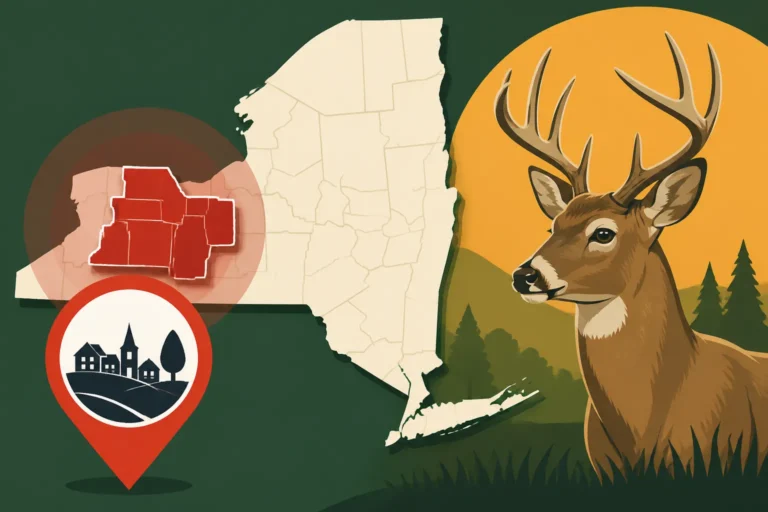
The designation of a WMU as "Limited" or "Unlimited" for DMPs isn't random. It’s the result of a complex analysis of various ecological, biological, and social factors. Key among these are deer population density, habitat quality and carrying capacity, past harvest data, and the prevalence of deer-related issues like crop damage or disease outbreaks. For instance, a WMU with vast tracts of mature forest, limited food sources, and historically lower deer numbers might be designated "Limited" to protect and allow for growth within that population. Conversely, a WMU bordered by sprawling agricultural fields or suburban developments, where deer thrive and often cause conflicts, is more likely to be "Unlimited" to encourage a higher antlerless harvest. The DEC continually monitors these factors through aerial surveys, hunter harvest reports, and landowner complaints. They then adjust DMP quotas and classifications annually to meet specific management objectives for each WMU, aiming for a healthy, sustainable deer herd that coexists reasonably with human activity. Knowing about Deer Density by New York Wildlife Unit can help you understand these designations better.
Navigating Limited DMP WMUs
When you see a WMU designated as "Limited" for DMPs, it signals a particular set of conditions and management goals. These units often present a different kind of challenge and reward for the dedicated hunter.
Characteristics of Limited WMUs
Limited DMP WMUs are typically found in areas where the DEC aims to maintain a stable or slowly growing deer population, or where deer densities are naturally lower due to habitat constraints. Think about some of the more rugged, heavily forested regions, perhaps parts of the Adirondacks or certain mountainous areas of the Catskills. In these WMUs, the habitat might not support a high deer density, or the management objective might be to allow for a more balanced age structure within the deer herd, potentially leading to older, larger bucks. Consequently, the number of DMPs issued for these units is restricted, often resulting in lower odds of drawing a permit for antlerless deer. This scarcity means that if you do draw a permit, you're hunting in an area where the deer population is carefully managed, and the hunting experience might lean more towards quality over sheer numbers. It also often implies that deer here are less pressured than in high-density areas, requiring different scouting and hunting tactics.
Strategies for Hunting Limited WMUs
Hunting in a Limited DMP WMU requires a strategic approach. First and foremost, you need to apply for your DMPs during the initial application period, paying close attention to The Limited-WMU DMP Application Deadline. Since the odds are lower, it's wise to list several preferred limited WMUs if you're determined to hunt antlerless deer in such areas. Beyond the application, your hunting strategy on the ground will shift. With fewer deer per square mile, you'll need to focus intensely on scouting for fresh sign, understanding deer movement patterns, and identifying prime habitat. Using resources like GoHunt, you can analyze historical harvest data and public land boundaries to pinpoint potential hotspots within your chosen WMU. Patience becomes a virtue, and the ability to cover ground silently or sit for extended periods in productive areas is key. Rather than focusing on filling multiple tags, the goal here is often to successfully harvest a deer, making each opportunity count. This might involve deep woods scouting, like using specific Treestand Setups in Adirondack Hardwoods or understanding Still-Hunting Catskill Ridges.
The Impact on Hunter Success Rates
Let's be realistic: hunting in Limited DMP WMUs can be tougher. The lower deer density generally means fewer encounters, and therefore, potentially lower success rates for antlerless deer compared to their "Unlimited" counterparts. Hunters who prioritize filling their freezer with multiple deer might find these units frustrating. However, for those who value the challenge, the experience of hunting less-pressured deer, and the opportunity to be in wilder, more remote landscapes, Limited WMUs can be incredibly rewarding. Success in these areas is often measured not just by a filled tag, but by the quality of the hunt, the learning experience, and the connection with nature. Moreover, while antlerless permits are limited, the buck hunting can be excellent, as less overall pressure on the herd often allows bucks to reach older age classes. It's a trade-off: fewer chances, but potentially more satisfying ones.
Exploring Unlimited DMP WMUs
On the other side of the spectrum are the Unlimited DMP WMUs, which offer a dramatically different hunting experience and management philosophy. These are the areas where the DEC actively encourages a higher antlerless harvest.
Defining Unlimited WMUs
Unlimited DMP WMUs are exactly what they sound like: areas where the DEC issues a virtually unlimited number of Deer Management Permits for antlerless deer. These units are typically characterized by high deer densities, often found in New York's agricultural belts, suburban fringes, or areas with abundant food sources and suitable cover. Think about the rich farmlands of the Southern Tier, the sprawling woodlots interspersed with fields in Western New York, or even some of the more populated sections of the Hudson Valley. In these WMUs, the deer population is robust, often exceeding the landscape's carrying capacity or causing significant issues for landowners. The DEC's management objective here is to reduce the population size to alleviate crop damage, reduce deer-vehicle collisions, and promote forest regeneration. For hunters, this means an increased opportunity to obtain multiple antlerless tags, which can be invaluable for filling the freezer.
Advantages and Disadvantages
The advantages of hunting Unlimited WMUs are clear: more opportunities to harvest deer, often easier access to DMPs (sometimes even instantly in-season), and generally higher deer sightings. This is fantastic for hunters who prioritize venison for the table or who want to introduce new hunters to the sport with a higher chance of success. These areas can also be great for honing tracking skills, practicing shooting, and understanding deer behavior in diverse landscapes. On the flip side, Unlimited WMUs often come with their own set of challenges. Higher deer densities can sometimes mean more hunting pressure, especially on public lands. Deer in these areas might also be more nocturnal or wary due to constant human presence. Furthermore, a significant portion of these high-density areas can be private land, requiring careful attention to Getting Private Land Permission in New York. It’s a trade-off: while you have more tags and more deer, you might also be dealing with more complex access issues and more educated deer.
Tactics for Unlimited WMUs
Hunting in an Unlimited DMP WMU opens up a range of tactics focused on maximizing your harvest. Since obtaining DMPs is often straightforward – you can sometimes even apply for bonus permits mid-season through options like Applying for a Bonus DMP Mid-Season – the strategy shifts to finding and harvesting deer. Concentrating on late-season food sources like standing cornfields, cut bean fields, or persistent mast crops is often highly effective. Understanding access points and bedding areas becomes critical, as deer in these zones often move between feeding areas and heavy cover, sometimes using small woodlots or hedgerows as corridors. Deer drives with a small group of hunters can also be very productive in these environments, pushing deer out of thickets into open fields. Using tools like the GoHunt app can help identify overlooked pockets of public land or areas with high deer activity near known food sources. And, of course, these are the prime WMUs for Filling Extra DMPs in Unlimited WMUs, ensuring your family has enough venison for the entire year.
Strategic Considerations for New York Hunters
Understanding the difference between Limited and Unlimited WMUs is just the first step. The real art lies in how you integrate this knowledge into your overall hunting strategy for the season.
Matching Your Hunting Goals to WMU Type
Your personal hunting goals should heavily influence your choice of WMUs. Are you a hunter whose primary objective is to put as much venison as possible in the freezer for your family? If so, focusing your efforts on Unlimited DMP WMUs, especially those known for high success rates, makes the most sense. These units provide the best chance for multiple antlerless deer. You might spend your archery season in an Unlimited WMU, then shift to firearm season in the same area to continue harvesting.
Conversely, if your goal is primarily to pursue an older, mature buck, and you're willing to accept fewer overall deer harvested, a Limited DMP WMU might be more appealing. While antlerless tags are harder to draw, the overall management philosophy often favors deer maturing. Many hunters will still pick up an antlerless DMP if they draw one in a limited unit, but their primary focus remains on the buck. It's about aligning your effort and expectation with the opportunities each WMU type presents. This balance is key to a successful season, whether you're hunting during New York's Southern Zone Firearm Season or the colder days of Muzzleloader Deer Hunting in New York.
Combining WMU Types for a Diversified Season
Perhaps the most effective strategy for many New York hunters is to combine both Limited and Unlimited WMUs within a single season. This allows for a diversified approach that caters to multiple objectives. For instance, you could apply for a Limited DMP in a preferred WMU known for its trophy potential, with the hope of drawing an antlerless tag while primarily pursuing an antlered buck on your regular Big Game tag. At the same time, you could also apply for, or obtain through instant lottery, DMPs in an Unlimited WMU that's relatively close to home or convenient for quick hunts.
This dual strategy means you have the opportunity to hunt for a specific quality animal in one area, while also having a high-probability option to fill the freezer in another. You might spend your prime hunting days in the Limited WMU, and then make shorter, more frequent trips to the Unlimited WMU later in the season for antlerless deer. This approach maximizes your chances of success across different fronts and ensures you're making the most of New York's varied deer hunting opportunities. Understanding How New York's Two Deer Zones Split the Calendar can further aid in planning this combined approach.
Using Data and Tools for Planning
In today's hunting world, data and mapping tools are invaluable for making informed decisions, especially when navigating the nuances of New York's WMU system. Before you even apply for your DMPs, spend time researching the specific WMUs you're considering. The DEC website provides a wealth of information, including harvest reports, population estimates, and DMP quotas and application odds. Tools like GoHunt can further enhance this research by layering historical harvest data, public land boundaries, and habitat maps, allowing you to visualize potential hot spots and understand deer distribution.
Beyond DMPs, these resources are crucial for general scouting. Satellite imagery, topographical maps, and public land overlays can help you identify bedding areas, travel corridors, and feeding locations, especially in less-familiar WMUs. Pay attention to factors like Late-Season Food Sources for New York Whitetails when planning your hunts. Don't underestimate the power of knowing exactly where you stand, what the land looks like, and what the deer are doing based on solid data. It transforms your hunting from guesswork into a calculated strategy, dramatically increasing your chances of success in any WMU. For deeper planning, consider reading Scouting New York Public Land Before Season.
Key Changes and Future Outlook for DMPs
Deer management is a dynamic process, constantly evolving with changes in deer populations, habitat conditions, and external factors. New York's DMP system is no exception, and staying informed about current and potential future changes is crucial for hunters.
Recent Rule Adjustments and Their Implications
The New York DEC regularly reviews and adjusts its DMP program to adapt to changing conditions. For example, there have been discussions and sometimes implementation of rules that affect the number of DMPs available, the areas where they can be used, or the application process itself. A notable example for 2026 is New York's 2026 Four-Permit DMP Change, which significantly expands the number of antlerless tags a hunter can potentially obtain in certain WMUs. This type of change reflects a broader strategy to increase antlerless harvest in specific areas where deer populations are high or continue to grow, aiming to further mitigate issues like agricultural damage and deer-vehicle collisions.
Such adjustments mean that what was true about DMPs a few years ago might not be accurate today. Hunters need to pay close attention to the annual DEC hunting regulations guide, official DEC announcements, and reputable hunting news sources to ensure they are operating with the most current information. These changes can directly impact your hunting strategy, making it either easier or more challenging to secure DMPs depending on the WMU and the season.
Anticipating Future Management Decisions
Looking ahead, several factors will continue to influence New York's deer management decisions and, by extension, the DMP system. Deer population trends, which fluctuate due to weather, habitat changes, and previous harvest rates, will always be a primary driver. For example, if a series of mild winters leads to increased fawn survival, the DEC might increase DMP quotas in subsequent seasons. Conversely, severe EHD (Epizootic Hemorrhagic Disease) outbreaks or harsh winters could lead to reduced quotas.
The ongoing concern about Chronic Wasting Disease (CWD) is another significant factor. Should CWD be detected in wild deer populations within New York, it could trigger drastic changes in how DMPs are issued, how deer are harvested, and even how carcasses are transported, especially within or out of a New York's Chronic Wasting Disease Containment Area. Public input and landowner concerns also play a vital role, with the DEC striving to balance the desires of hunters, farmers, and conservationists. Staying engaged with DEC proposals and public comment periods allows hunters to have a voice in these important decisions, shaping the future of deer hunting in the state.
Comparing Limited and Unlimited DMP WMUs
To summarize, here's a quick comparison of the key differences between Limited and Unlimited DMP Wildlife Management Units in New York:
| Feature | Limited DMP WMUs | Unlimited DMP WMUs |
|---|---|---|
| Deer Density | Generally lower or managed for stability | Generally higher, often exceeding ecological carrying capacity |
| DMP Availability | Restricted; lottery odds can be low | Abundant; easy to obtain, often instant in-season |
| Management Goal | Maintain stable population, promote older age structure | Reduce/control population, mitigate deer-human conflicts |
| Typical Habitat | Remote, heavily forested, less agricultural | Agricultural areas, suburban fringes, mixed woodlands |
| Hunter Competition | Variable, but overall less for antlerless permits | Can be high, especially on public land |
| Hunting Strategy | Focus on quality over quantity, intense scouting | Focus on quantity, maximizing opportunities, food sources |
| Primary Benefit | Challenging hunt, potential for older bucks | High venison yield, more opportunities to fill tags |
| Common Frustration | Difficulty drawing permits, fewer deer encounters | Potentially more pressured deer, access issues on private land |
Disclaimer
Please remember that hunting regulations, WMU designations, and DMP availability can change annually. It is always the hunter's responsibility to consult the most current New York State Department of Environmental Conservation (DEC) hunting regulations guide before heading afield. This guide is for informational purposes only and should not be considered a substitute for official DEC publications.