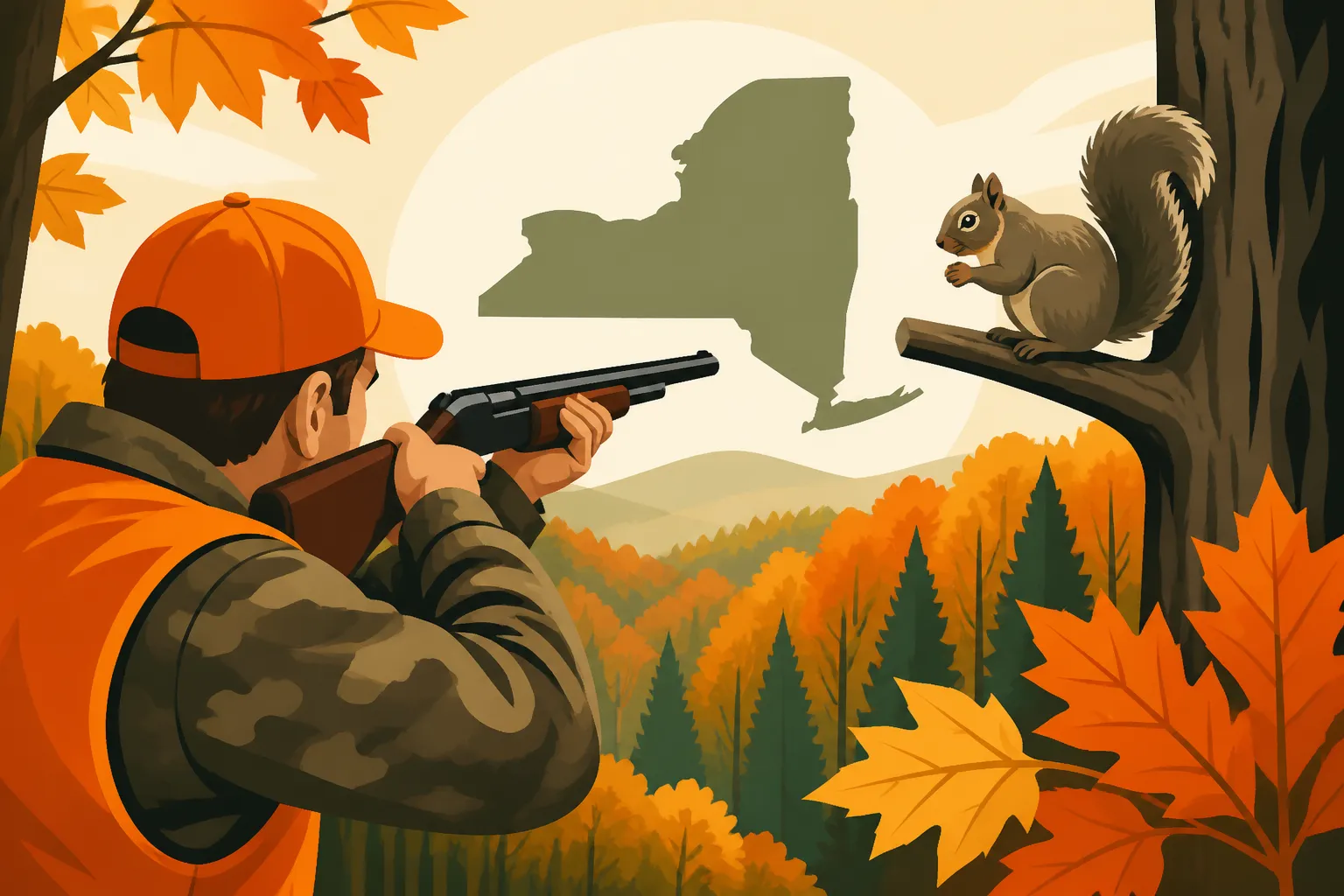
Hunting Squirrels in New York Hardwoods
It's easy to get caught up chasing big game like deer and bear in New York, and let's be honest, those hunts are thrilling. But if you're overlooking the humble squirrel, you're missing out on some of the most accessible, enjoyable, and downright delicious hunting our state has to offer. This guide will walk you through everything you need to know to successfully hunt squirrels in New York's abundant hardwood forests, turning an often-ignored pursuit into a rewarding outdoor experience.
Why Squirrel Hunting is a Rewarding Pursuit in New York
Many hunters, especially those new to the sport or looking to sharpen their skills, find themselves a little intimidated by the scale of deer or turkey hunting. Others simply want to extend their time in the woods beyond the primary big game seasons. Squirrel hunting offers a fantastic solution to both, providing ample opportunity and a much lower barrier to entry. It’s an accessible hunt for all ages and skill levels, perfect for breaking in a new hunting buddy or spending quiet time with family.
Accessibility and Extended Seasons
One of the biggest advantages of squirrel hunting in New York is the sheer accessibility. Squirrels are abundant across virtually every county, from the dense oak ridges of the Southern Tier to the sprawling hardwood forests of the Adirondack foothills. You don't need huge tracts of land or specialized permits; a general New York hunting license is usually all that's required. The season itself is remarkably long, often running from early September all the way through February in some areas, offering a fantastic opportunity to be afield before deer season, during the often-slower middle of deer season, and even after the whitetails have shed their antlers. This extended window means more time to enjoy the woods, practice your marksmanship, and put some tasty meat on the table. For details on statewide small game regulations, you can always check out the official information on New York Small Game and Upland Bird Seasons.
Skill Building for Big Game Hunters
Don't let anyone tell you squirrel hunting is "easy" or "just for kids." While it might not have the same adrenaline rush as a deer charge, it demands a sharp eye, stealthy movement, and precise shooting – all skills directly transferable to larger game. Spotting a camouflaged squirrel motionless on a tree trunk, patiently stalking through rustling leaves, and making an ethical shot on a small, moving target in dense cover hones your abilities in ways that simply sitting in a treestand might not. It teaches you how to read the woods, interpret subtle signs, and move silently, making you a more effective hunter for any species. Plus, it's a great way to get comfortable with your firearm, whether it's a trusty .22 rifle or a small-gauge shotgun.
Understanding New York Squirrel Behavior
To consistently find and harvest squirrels, you first need to understand their daily routines, preferred habitats, and what drives their movements. Think like a squirrel – what do they need to survive, and where would they go to find it? Their world revolves around food, shelter, and avoiding predators, and if you can identify where these elements converge, you'll be in the squirrel zone.
Preferred Habitats and Food Sources
New York’s vast hardwood forests are a squirrel paradise, particularly those dominated by oak, hickory, beech, and maple trees. These species provide the acorns, hickory nuts, beechnuts, and maple seeds that form the bulk of a squirrel's diet, especially in the crucial fall and early winter months. You'll often find squirrels concentrated in areas with a diverse mix of these trees, as it offers a more reliable food supply. Think about mature stands of timber with a healthy understory, but also don't overlook woodlots bordering agricultural fields, where squirrels might venture out for corn or other grains.
When you're out scouting or hunting, pay close attention to the ground. You're looking for "cuttings" – the telltale remnants of gnawed nuts. Under a productive oak or hickory, you'll see piles of shell fragments. This is a sure sign squirrels are actively feeding there. In fact, learning how to interpret these signs is covered in depth in topics like Reading Cuttings Under an Oak. Also keep an eye out for den trees, which are typically older trees with cavities or broken limbs that squirrels use for shelter and raising young. These can be prime locations, especially on colder days when squirrels might not range far from their homes.
Daily Movement Patterns and Activity Times
Squirrels are creatures of habit, and their activity peaks tend to be predictable. Generally, you'll find them most active in the early morning, just after sunrise, and again in the late afternoon, a few hours before sunset. During these times, they're busy foraging, burying nuts, and socializing. On sunny, mild days, they might remain active for longer periods, but on colder, windier, or rainy days, they'll often retreat to their dens.
Weather plays a huge role. A calm, crisp fall morning after a cold night is often when squirrels are practically frantic with activity, making the most of the milder temperatures to gather food. Conversely, a blustery, snowy day might find them hunkered down, only venturing out for short bursts. However, don't write off a hunt just because the weather isn't perfect; sometimes, a brief lull in bad weather can trigger a burst of squirrel activity as they try to catch up on their foraging. Knowing their general patterns helps you plan your hunt to coincide with their most active periods, maximizing your chances of success.
Essential Gear for New York Squirrel Hunting
One of the great things about squirrel hunting is that you don't need a huge investment in specialized gear. Many items you already own for other types of hunting or general outdoor activities will work perfectly. However, a few key pieces of equipment can significantly improve your comfort, success, and safety in the New York hardwoods.
Firearm Choices and Ammunition
When it comes to firearms for squirrels, the .22 caliber rimfire rifle is king. It's accurate, quiet, and economical to shoot, making it ideal for headshots that preserve meat. A .22 provides plenty of knockdown power for squirrels without being excessive. Semi-automatic models like a Ruger 10/22 are popular for quick follow-up shots, but a bolt-action can offer slightly better accuracy and often forces more disciplined shooting. Iron sights are fine, but a low-power scope (1-4x or 2-7x) can be a real asset for picking out squirrels high in trees or in dim light.
Shotguns are another excellent choice, particularly for faster-paced hunting or when squirrels are particularly skittish. A 20-gauge or even a .410 loaded with smaller shot (like #6 or #7.5) is perfect. The wider pattern allows for shots at moving targets or in dense brush where a rifle might be too precise. Shotguns are also a good option when hunting with a dog, as the dog might flush squirrels that offer only fleeting shot opportunities. Whichever you choose, ensure you're familiar with your firearm and practice shooting from various positions you might encounter in the woods. For more on general firearm discussions, you might find topics like Rifle and Shotgun Choices for New York Deer insightful, though for different calibers.
Optics and Navigation Aids
While you might not need high-powered spotting scopes for squirrels, a good pair of binoculars is incredibly useful. An 8×32 or 10×42 binocular can help you pick out squirrels camouflaged against tree bark or spot subtle movements high in the canopy that you might otherwise miss with the naked eye. They're also great for identifying potential den trees or checking out distant food sources without spooking game. Look for optics with good low-light performance, as prime squirrel time often falls into the dim hours of dawn and dusk. For discussions on specific features, consider Binocular Power for Timber Hunting.
Navigation is important, even on smaller woodlots. A GPS unit or a reliable mapping app on your smartphone (like GoHunt, onX Hunt, or the New York HuntFishNY app) is essential for knowing where you are, tracking your movements, and finding your way back to your vehicle. Many of these apps also allow you to mark hotspots, food trees, and den sites, creating a valuable record for future hunts. Remember to download offline maps if you'll be hunting in areas with poor cell service, which is common in many of New York's state forests.
Clothing and Comfort Considerations
Comfort in the woods is paramount, and squirrel hunting often involves a lot of walking, sitting, and waiting. Dress in layers, as New York weather can change rapidly, especially in the fall and winter. Non-restrictive clothing in muted earth tones or camouflage will help you blend in. While blaze orange isn't strictly required for small game hunting in all circumstances, wearing some visible orange or pink is always a smart safety choice, particularly during overlap with big game seasons when other hunters might be afield. For guidance on specific requirements, refer to New York Blaze Orange Requirements.
Good, comfortable boots are a must. You'll be covering varied terrain, from muddy creek bottoms to rocky ridges, so waterproof, supportive footwear is key. A small, lightweight daypack is also useful for carrying ammunition, a small first-aid kit, snacks, water, and perhaps a game pouch for your harvested squirrels. Don't forget bug spray for early season hunts, especially in dense timber or near water sources where mosquitoes and ticks can be prevalent.
Tactics for Hunting Hardwood Squirrels
Successfully hunting squirrels in New York's hardwoods involves a blend of patience, stealth, and sometimes a bit of strategic movement. There are several effective tactics you can employ, each suited to different conditions and hunter preferences. Mastering these will greatly increase your odds of filling your game bag.
Still-Hunting and Stalking
Still-hunting is perhaps the most classic and effective method for squirrels, and it's fantastic for sharpening your overall hunting skills. The idea is simple: move slowly, take a few steps, then stop and carefully observe your surroundings. Think of it like a chess game, where you're trying to make your move without the squirrel even knowing it's being played. This approach allows you to cover ground while remaining observant and ready for a shot.
When still-hunting, focus on prime habitat areas such as oak ridges or hickory bottoms. Take deliberate steps, placing your feet quietly to avoid rustling leaves or snapping twigs. Use your binoculars frequently to scan tree trunks, branches, and the ground ahead. Squirrels often freeze when they detect movement, blending perfectly with the bark. You'll need to develop a "squirrel eye" to pick out their tell-tale shape, flicker of a tail, or subtle shift in position. If you spot a squirrel that's wary, try to use trees or terrain features to break up your outline as you slowly close the distance for a shot. This method is also excellent for learning how to move quietly through the woods, a skill invaluable for Still-Hunting Catskill Ridges or any other big game pursuit.
Sitting and Ambush Techniques
Sometimes, the best strategy is to let the squirrels come to you. Sitting in a productive area, such as a ridge thick with nut-bearing trees or near a cluster of den trees, can be incredibly effective. Find a comfortable spot with a good backdrop (like a large tree trunk) to break up your silhouette. Stay as still and quiet as possible, letting the woods settle around you.
Squirrels, especially on a calm morning, will often resume their activity after an initial disturbance if they feel the threat has passed. This is where patience pays off. Listen for the tell-tale scratch of claws on bark, the rustle of leaves as they dig for buried nuts, or the sound of gnawing. Once you hear these sounds, slowly pinpoint the source. Sitting is especially effective on windy days when squirrels might be more hesitant to move far or when you want to minimize your own movement and noise. It’s also a great tactic for colder weather, allowing you to stay warmer than constantly moving. Consider setting up a simple ground blind or using natural cover to conceal yourself, similar to techniques used for Using a Ground Blind on New York Public Land.
Using Calls and Decoys
While not as common as for turkeys or deer, some hunters find success using squirrel calls. These typically mimic the "bark" or "chatter" of a squirrel, which can sometimes pique the curiosity of other squirrels and draw them into view. They can also be used to make a "hung up" squirrel reveal itself. If you've got a squirrel hiding on the backside of a tree, a call might just make it pop its head out to investigate.
Squirrel decoys are less frequently used but can be effective in certain situations, particularly if you're hunting in an area where squirrels are less pressured. A static squirrel decoy placed on a log or stump can sometimes draw the attention of a real squirrel, giving you a clear shot. However, the most effective "decoy" might simply be an active squirrel itself. If you shoot one, sometimes other squirrels, drawn by the commotion or their natural curiosity, will appear shortly after. Experiment with these methods to see what works best in your specific hunting grounds.
Scouting and Finding Squirrel Hotspots
Successful squirrel hunting starts long before you ever step into the woods with your rifle or shotgun. Effective scouting is key to consistently finding productive areas and maximizing your time afield. By understanding what to look for, you can narrow down your search and focus your efforts where squirrels are most likely to be found.
Identifying Key Habitat Features
When scouting for squirrels, you're primarily looking for areas with abundant food and suitable cover. As mentioned, mature hardwood forests containing a mix of oak, hickory, and beech are gold. Use topographical maps, aerial photos, or apps like GoHunt to identify large blocks of these forest types. Look for changes in terrain, such as ridges that often have older, larger trees, or creek bottoms that can provide moisture for dense undergrowth and diverse tree species.
Beyond the major nut-bearing trees, also consider areas with dense stands of pine or hemlock. While not primary food sources, these conifers offer excellent thermal cover during cold weather and can provide escape routes from predators. The edges of agricultural fields, especially those planted with corn or soybeans, can also be squirrel magnets, as they offer an easy buffet of high-energy food. Don't overlook smaller woodlots either; sometimes a neglected patch of timber on the edge of a suburban area can hold surprising numbers of squirrels. Think about areas that might be overlooked by deer hunters, offering a more tranquil environment for squirrels to thrive.
Reading the Sign and Interpreting Activity
Once you've identified promising habitat on a map, it's time to hit the ground and look for actual squirrel sign. The most important sign to look for is "cuttings" – the shredded remnants of nuts. These will be found directly under the trees where squirrels are feeding. Fresh cuttings indicate recent activity, so pay close attention to their appearance. The fresher the cutting, the sharper the edges and the less weathered it will appear.
Beyond cuttings, look for squirrel "nests" or "dreys" high in the trees. These are large, messy accumulations of leaves, twigs, and bark, often nestled in the crotch of a branch. While squirrels might have multiple dreys, a concentration of them usually indicates a healthy local population. You might also spot mud-splattered trees or den holes, which serve as secure hiding spots. During the early season, look for squirrels stripping bark from maple trees to access the sap, especially on smaller, younger trees. By piecing together these various signs, you can form a clear picture of squirrel activity in a given area.
Timing Your Scouting Trips
The best time to scout for squirrels often overlaps with the peak hunting season, but a pre-season scout can give you a significant advantage. Early fall, when nuts are dropping, is ideal. You'll be able to easily identify productive trees by the presence of fresh cuttings and see squirrels actively foraging. Even if you're planning a winter hunt, scouting in the fall can help you pinpoint those crucial food sources that will draw squirrels even when snow is on the ground.
Consider scouting after a rain or a heavy dew; the damp ground can make tracks more visible, and the quietness of the woods (due to damp leaves) can make it easier to hear squirrels moving. However, even mid-season scouting can be productive. If your usual spots are quiet, take a few hours to walk new areas, looking for fresh sign or new concentrations of food that might be attracting squirrels. The more you scout, the better you'll become at predicting squirrel movements and finding those elusive hotspots, which is a key part of any successful hunting strategy, even for Hunting Finger Lakes Region Deer.
Processing and Utilizing Your Squirrel Harvest
Bringing a squirrel to hand is only half the battle; knowing how to properly field dress, clean, and cook your harvest is essential for making the most of your hunting effort. Squirrel meat is lean, flavorful, and incredibly versatile, making it a valuable addition to any hunter's table.
Field Dressing and Skinning Techniques
Field dressing a squirrel means removing its internal organs as soon as possible after the shot. This helps the meat cool down quickly, preventing spoilage, especially on warmer days. Many hunters simply make a small incision in the abdomen and pull out the guts, but you can also make a cut around the anus and pull the entire intestinal tract out cleanly.
Skinning a squirrel can seem daunting at first, but with a little practice, it becomes quick and easy. One popular method involves making an incision across the squirrel's back, right above the hips. Then, you can step on the squirrel's head (or hold it firmly) and pull its hind legs up and back, peeling the skin off like a jacket. Another technique involves cutting the tail bone, then making circular cuts around the wrists and ankles, and peeling the hide off in two halves. There are plenty of online videos demonstrating these techniques, and a little visual guidance can go a long way. The goal is to get the skin off cleanly and quickly to avoid contaminating the meat with fur.
Preparing and Cooking Squirrel Meat
Once skinned and gutted, your squirrel is ready for the kitchen. Many hunters prefer to soak the meat in saltwater or a mild brine for a few hours (or overnight in the fridge) to help tenderize it and draw out any lingering gamey flavor, though many argue it's unnecessary for squirrels. After soaking, rinse the meat thoroughly and pat it dry.
Squirrel meat is delicious in a variety of dishes. It's often compared to rabbit or dark meat chicken. Here are a few popular ways to prepare it:
- Fried Squirrel: This is a classic. Dredge the pieces in seasoned flour and pan-fry them in hot oil until golden brown and cooked through. Serve with gravy and mashed potatoes.
- Squirrel Stew or Chili: Because squirrel meat can be a bit tough, especially from older animals, slow-cooking methods are fantastic. Simmer the meat in a rich stew with vegetables, or add it to your favorite chili recipe. This is a great way to ensure tender, flavorful results.
- BBQ Squirrel: Marinate squirrel pieces in your favorite BBQ sauce and then slow-cook them in the oven, smoker, or grill until falling off the bone.
- Squirrel Pot Pie: Use shredded squirrel meat as the base for a savory pot pie, complete with vegetables and a flaky crust.
Don't be afraid to experiment! Squirrel is versatile and can be substituted in many recipes that call for chicken or rabbit. The key is often a combination of proper cleaning and a cooking method that respects the lean nature of the meat.
Safety and Ethical Considerations
Every hunter has a responsibility to act safely and ethically in the field, and squirrel hunting is no exception. While it might seem less intense than big game hunting, the same principles apply. Prioritizing safety and ethical behavior ensures a positive experience for everyone and upholds the reputation of hunters in New York.
Firearm Safety in the Field
The foundational rules of firearm safety are non-negotiable, regardless of what you're hunting. Always treat every firearm as if it's loaded. Keep the muzzle pointed in a safe direction – never at anything you don't intend to shoot. Keep your finger off the trigger until your sights are on the target and you're ready to fire. And always be sure of your target and what's beyond it. Squirrels are often high in trees, so be mindful of your backdrop and potential ricochets.
When hunting with a .22 rifle, remember that a bullet can travel a significant distance. Shotguns with birdshot, while having a shorter effective range, can still pepper objects beyond your target. Always wear appropriate eye and ear protection, especially when practicing. If hunting with a partner, maintain safe shooting lanes and clearly communicate your movements. For general firearm handling tips that apply across all seasons, revisit guides like New York Legal Firearms for Deer Hunting.
Ethical Shot Placement and Game Recovery
Ethical hunting means striving for a quick, clean kill. For squirrels, this typically means a head or neck shot with a rifle to minimize meat damage and ensure an instant harvest. With a shotgun, aim for the body mass, but try to avoid the head if you plan on eating the brain (a delicacy for some!). Always wait for a clear, unobstructed shot. If a squirrel is partially obscured or moving too quickly, it's better to wait for a better opportunity or let it go.
Once you've taken a shot, make sure the squirrel is actually down and expired before approaching. A wounded squirrel can still run off and hide, leading to a lost animal. If it runs off, take a moment to mark the last place you saw it, then move slowly and methodically to recover it. Look for twitching leaves, blood, or disturbed ground. Having a hunting dog can be a huge asset for recovering downed game, but even without one, patience and careful searching are key to ethical recovery.
Respecting Land and Other Users
Whether you're hunting on public land like one of New York's many State Forests or a Wildlife Management Area, or you've secured permission on private property, always leave the area cleaner than you found it. Pack out all your trash, including spent shell casings. Respect property boundaries, and if hunting on private land, ensure you have explicit permission.
New York's public lands are shared resources, so be mindful of other users. Hikers, birdwatchers, and other hunters might be in the same area. A friendly wave or nod goes a long way. Wearing blaze orange or pink is a good idea to make yourself visible. If you're on a multi-use trail, keep your firearm unloaded and cased if required, and maintain a respectful distance from others. Being a courteous and responsible hunter reflects well on the entire hunting community, and that's something we should all strive for, especially when considering Hunting Pressure on New York Public Land.
Frequently Asked Questions About New York Squirrel Hunting
Even seasoned hunters often have questions when they venture into a new type of hunting or want to refine their approach. Here are some common queries about squirrel hunting in New York, offering practical advice to enhance your experience.
What are the main squirrel species found in New York?
In New York, you'll primarily encounter two species of tree squirrels that are legal to hunt: the gray squirrel and the fox squirrel. Gray squirrels are by far the most common and widespread, found in almost every wooded area across the state. They are typically gray with a white belly, though color variations can occur, including black squirrels (which are simply a melanistic phase of the gray squirrel). For more information on identifying these common species, a good resource to check out is Gray Versus Fox Squirrels in New York.
Fox squirrels, on the other hand, are larger and less common in New York, primarily found in the western and central parts of the state, often favoring more open woodlots and agricultural edges. They typically have a reddish-brown or rusty fur color, especially on their undersides and tail. Both species offer excellent hunting opportunities and delicious table fare, so be sure to identify your target correctly.
Is a hunting license required for squirrels?
Yes, absolutely. In New York State, you must possess a valid hunting license to hunt squirrels. This typically means a small game hunting license, or a general hunting license that includes small game privileges. There are no special permits required specifically for squirrels beyond the standard hunting license. Always carry your license with you while afield, whether it's the physical copy or proof on an approved digital app like HuntFishNY.
It's crucial to consult the most current New York State Department of Environmental Conservation (DEC) hunting regulations guide each year, as seasons, bag limits, and specific rules can occasionally change. Don't rely on information from previous years; make sure you're up to date on all regulations before heading out. Information on various licensing options can be found under resources like New York Resident Hunting License Options.
What is the daily bag limit for squirrels in New York?
The daily bag limit for squirrels in New York can vary, but generally, it's quite generous, reflecting the healthy populations across the state. Typically, the limit allows for several squirrels per hunter per day. For example, it's often set at six squirrels per day. However, these regulations are subject to change by the DEC.
It is absolutely essential to verify the exact bag limit for the current hunting season by checking the official New York State DEC hunting regulations guide. This guide will provide the most accurate and up-to-date information regarding bag limits, season dates, and any other pertinent rules for hunting squirrels in your specific region of New York. Always respect these limits to ensure sustainable hunting practices for generations to come.
Can I use a dog to hunt squirrels in New York?
Yes, using a properly trained dog to hunt squirrels is a popular and highly effective method in New York. Dogs, particularly certain breeds known for their treeing ability (such as curs, feists, and some terriers), can greatly enhance your success. They use their keen sense of smell and sight to locate squirrels, chase them up trees, and then "bark at tree" (or "tree") to alert the hunter to the squirrel's location.
Hunting with a dog adds an exciting dimension to squirrel hunting and can be particularly productive on days when squirrels are less active or harder to spot. However, if you plan to use a dog, ensure it is well-trained, under control, and adheres to all New York hunting regulations, especially concerning public land use. Always be mindful of other hunters and land users when hunting with a dog.
| Hunting Method | Best Conditions | Gear Suggestions | Pros | Cons |
|---|---|---|---|---|
| Still-Hunting | Calm, mild days; areas with fresh cuttings | .22 rifle with scope, binoculars, quiet clothing | Great for skill building, covers ground, exciting | Requires stealth and patience, slower pace |
| Sitting/Ambush | Windy, cold days; high-traffic food or den areas | Shotgun or .22 rifle, comfortable seat, ground blind (optional), binoculars | Less physical, good for cold weather, lets woods settle | Less ground covered, can get cold/bored if slow |
| Dog Hunting | Any weather, especially good for dense cover | Shotgun, dog (curs, feists), GPS for dog, bell/e-collar | Highly effective, adds excitement, good for recovery | Requires trained dog, potential for more noise |
Disclaimer
Please be aware that hunting regulations, season dates, and specific rules can change. This guide provides general information based on common practices and regulations in New York. It is your responsibility to consult the official New York State Department of Environmental Conservation (DEC) hunting regulations guide for the most current and accurate information before engaging in any hunting activities. Always prioritize safety, ethical hunting practices, and respect for wildlife and the land.