New York Legal Firearms for Deer Hunting
For hunters in New York, trying to figure out which firearms are legal for deer hunting can sometimes feel like solving a complex puzzle. With the state divided into distinct Northern and Southern Zones, each carrying its own specific rules regarding what you can carry afield, it's easy to get lost in the details and worry about accidentally running afoul of regulations. This guide aims to untangle that knot, offering a clear, comprehensive breakdown of the legal firearms for deer hunting in New York so you can hit the woods with confidence, knowing you're fully compliant.
Understanding New York's Zone-Specific Firearm Rules for Deer
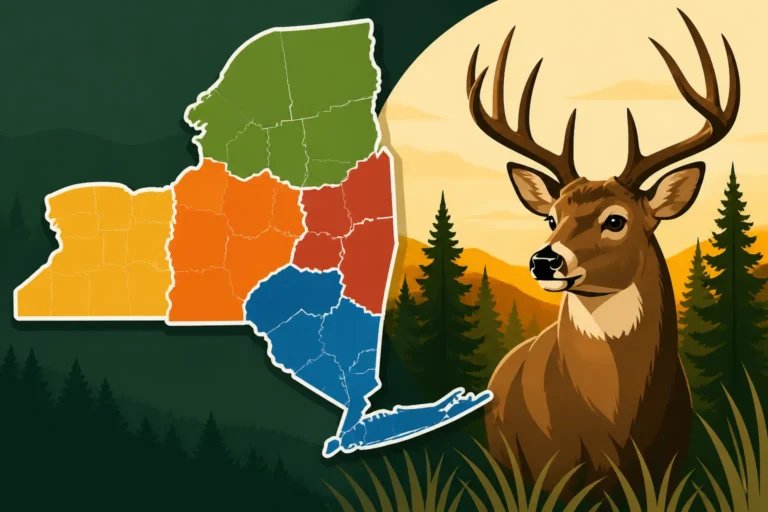
One of the biggest sources of confusion for deer hunters in New York stems from the fundamental difference in firearm regulations between the Northern and Southern Zones. It's not just a matter of different season dates; it's about entirely different philosophies on what types of firearms are deemed appropriate for the diverse landscapes and population densities across the state. Getting this distinction right is the first, most crucial step in planning your New York deer hunt.
The Southern Zone: Shotgun, Muzzleloader, and Handgun Country
The Southern Zone, which covers the vast majority of downstate and central New York, including areas like the Finger Lakes, Southern Tier, and Hudson Valley, has historically been designated as "shotgun/muzzleloader/handgun only" for deer hunting. This regulation isn't arbitrary; it's rooted in the higher population densities and more fragmented land parcels found throughout this region. The core idea is to limit the effective range of deer hunting firearms to enhance public safety by reducing the risk of projectiles traveling great distances into developed areas or across property lines.
Imagine hunting a small woodlot in Dutchess County, surrounded by suburban homes or agricultural fields. A high-powered rifle round can easily travel a mile or more, posing a significant risk if you don't have a clear, safe backstop. Shotgun slugs, while powerful and effective at deer ranges, have a much shorter maximum effective range, typically under 150 yards, making them a safer choice in these more populated environments. Similarly, muzzleloaders and handguns, with their generally shorter effective ranges, align with this safety-first approach. This zone also includes the entirety of Long Island, which has its own unique hunting challenges and even more stringent rules in some areas. If you're planning a hunt downstate, you'll want to review the specific dates for the Southern Zone's firearm season to ensure you're squared away.
The Northern Zone: Where Rifles Reign
Contrast that with the Northern Zone, encompassing the vast, sparsely populated expanses of the Adirondack Park and its surrounding counties. Here, you'll find expansive tracts of state land, deep forests, and relatively few permanent human settlements. In this environment, the risk assessment changes dramatically. The need for longer-range firearms becomes more apparent, especially when hunting in big timber where shots might present themselves at greater distances or when still-hunting across large tracts of wilderness.
For these reasons, high-powered rifles are fully legal for deer hunting in the Northern Zone. This opens up a wider array of firearm choices for hunters, allowing them to select calibers and platforms better suited for the rugged terrain and potential shot opportunities. Think of a long shot across a beaver meadow or navigating open hardwood ridges; a rifle provides the precision and energy retention needed for clean kills at those distances. While rifles are legal, many hunters still opt for shotguns or muzzleloaders, but the choice is yours in this expansive region. Before you plan your Northern Zone deer hunting trip, be sure to check the specific opening and closing dates for the Northern Zone firearm season.
Detailed Look at Legal Firearm Types for New York Deer Hunting
Understanding which zones allow which firearms is critical, but so is knowing the specifics about each type. New York has particular requirements and common practices that hunters should be aware of to ensure legality and effectiveness.
Rifles: Power and Precision for the Big Woods
For those heading into the Northern Zone, rifles offer unparalleled precision and range. While New York law doesn't specify minimum caliber for deer, common sense and ethical hunting practices dictate choosing a cartridge powerful enough for a clean, humane kill.
- Common Calibers: Many hunters favor cartridges like the .270 Winchester, .30-06 Springfield, .308 Winchester, and 6.5 Creedmoor. These are all excellent choices, known for their flat trajectories and sufficient energy to harvest deer reliably. The venerable .30-30 Winchester is also a classic, particularly for the shorter shots often encountered in thick Adirondack timber. When choosing a rifle caliber for New York deer, always consider shot placement and your comfort level with the recoil.
- Action Types: Bolt-action rifles are perhaps the most popular, known for their accuracy and reliability. Lever-action rifles also have a strong following, especially in dense cover, offering quick follow-up shots in a classic package. Semi-automatic rifles are legal provided they meet the state's broader firearm regulations regarding capacity and features, but traditional hunting rifles remain the dominant choice.
- Sighting In: Regardless of your choice, accurately zeroing your rifle is paramount. A 100-yard zero is a great starting point for most cartridges, allowing for reasonable point-blank range in typical hunting scenarios. Make sure you practice from various field positions, not just a bench.
Shotguns: Versatility for the Southern Zone
Shotguns are the workhorses of the Southern Zone, and modern slug guns are incredibly effective deer tools. Forget the old notion of scatterguns only being good for birdshot; specialized slug barrels and ammunition transform them into accurate, potent deer getters.
- Slug Guns: A dedicated slug gun typically features a rifled barrel, which imparts spin on the slug, greatly improving accuracy. These can be incredibly precise out to 150-175 yards with the right ammunition.
- Ammunition: For rifled barrels, sabot slugs are the way to go. These projectiles, often encased in a plastic sabot that peels away after leaving the barrel, are designed for maximum accuracy and energy transfer. For smoothbore barrels, traditional rifled (Foster-type) slugs are used, though their accuracy and range are more limited.
- Choke Considerations: If using a smoothbore barrel, remember that slugs perform best with open chokes (Cylinder or Improved Cylinder). Never use slugs through a full choke, especially with a rifled slug, as it can be dangerous and damage your barrel.
- Patterning: Just like a rifle, you must pattern your slug gun with the specific slugs you intend to hunt with. Different brands and types of slugs can shoot wildly differently from the same barrel. This is not a step to skip.
Muzzleloaders: A Dedicated Season and Unique Challenge
Muzzleloaders hold a special place in New York hunting, often offering extended season opportunities, particularly in the Southern Zone, both before and after the regular firearm season. This makes them an excellent option for those looking to maximize their time in the woods.
- Types: Both traditional sidelock (flintlock or percussion cap) and modern in-line muzzleloaders are legal. In-line muzzleloaders, with their modern ignition systems and sometimes rifled barrels, tend to offer greater accuracy and ease of use, making them very popular.
- Propellants: Black powder substitutes like Pyrodex or Triple Seven are commonly used, often in pelletized forms for convenience, though loose powder is also legal. Always follow manufacturer recommendations for charge weight.
- Projectiles: Saboted bullets are popular for in-line muzzleloaders, offering excellent ballistics and accuracy. Traditionalists might use patched round balls or conical bullets with black powder.
- Keeping it Dry: One of the biggest challenges with muzzleloaders, especially in New York's often damp late-season conditions, is keeping your powder dry. Waterproofing measures are essential. For those interested, there are specific muzzleloader tactics for December cold that can help you stay effective.
Handguns: The Close-Range Option
Handguns are a legal option for deer hunting in New York, particularly in the Southern Zone, but they come with specific requirements and considerations.
- Legal Minimums: New York specifies that handguns must be chambered for a centerfire cartridge and have a barrel length of at least 5.5 inches. They must also be possessed legally, meaning you need a valid pistol permit.
- Caliber: Again, while no specific minimum caliber is set, ethical hunting dictates using a cartridge powerful enough for deer. Popular choices include .357 Magnum, .44 Magnum, and .45 Colt, all of which are capable of delivering enough energy at close range.
- Range Limitations: Handguns are inherently shorter-range tools compared to rifles or even slug guns. Shots typically need to be within 50-75 yards for reliable, ethical kills. Practice extensively to master accuracy at these distances.
- Carrying: When transporting a handgun, it must be unloaded and in a secure container. During the hunt, it can be carried openly or concealed, assuming you have the proper permits.
Ammunition Considerations and General Restrictions
Beyond the specific firearm types, New York has regulations concerning ammunition that hunters need to be aware of, some of which are more general firearm laws that still apply during a hunt.
Expanding Bullets for Ethical Kills
For all legal firearms used for deer hunting, the ammunition must be designed to expand upon impact. This is a crucial ethical requirement, ensuring that the bullet creates a larger wound channel and delivers maximum energy to the animal, leading to a quick, humane harvest. Full metal jacket (FMJ) or non-expanding bullets are illegal for deer hunting in New York. This applies whether you're using a rifle, shotgun slug, muzzleloader projectile, or handgun round.
Magazine Capacity and General Firearm Laws
While not strictly a "deer hunting" regulation, New York State has broader firearm laws that affect magazine capacity. Generally, a magazine cannot hold more than 10 rounds. For hunting purposes, most traditional hunting firearms like bolt-action rifles, pump-action shotguns, or revolvers for handguns naturally fall within or below these limits. However, if you are using a semi-automatic rifle or shotgun, or a semi-automatic handgun, you must ensure your magazines comply with state law, even if you only load a few rounds for hunting. Always be aware of New York minimum rifle caliber rules, too.
The Rise of Lead-Free Options
While not mandated for big game hunting in New York, there's a growing conversation around lead-free ammunition. Some hunters are voluntarily switching to copper bullets or other non-lead alternatives, driven by environmental concerns or personal preference. These modern bullets offer excellent terminal performance, often retaining more weight and penetrating deeper than traditional lead-core bullets. It's an area worth watching, as regulations could shift in the future, as they have in other states.
Safety and Practical Considerations Beyond the Law
Beyond simply knowing what's legal, responsible hunters understand that safe and ethical practices are just as vital. Adhering to these principles ensures a positive experience for everyone and preserves the future of hunting.
Hunter Education: A Foundation of Safety
Anyone born on or after January 1, 1949, must complete a New York Hunter Education course before they can purchase a hunting license. This isn't just a hurdle to jump; it's a fundamental part of becoming a safe and ethical hunter. The course covers firearm safety, responsible hunting practices, wildlife identification, and an understanding of regulations. Even experienced hunters benefit from a refresher, and it's a great opportunity to connect with the hunting community.
Blaze Orange and Pink: Be Seen, Be Safe
New York law requires hunters to wear a minimum amount of blaze orange (or blaze pink) during the firearm seasons for deer and bear. This is a non-negotiable safety measure designed to make hunters more visible to each other in the woods, drastically reducing the risk of accidental shootings. Whether you choose a blaze orange vest or a full jacket, make sure you meet the legal requirements. It might not make you invisible to deer, but it significantly enhances your safety.
Legal Shooting Hours: Mind the Clock
Knowing the legal shooting hours for deer hunting in New York is crucial for safety and compliance. Generally, hunting is permitted from civil twilight (about 30 minutes before sunrise) until civil twilight (about 30 minutes after sunset). Hunting outside these hours is illegal and dangerous. Always carry a reliable watch or use a hunting app like GoHunt that can tell you the precise legal shooting light for your location on any given day. This ensures you're set up and ready to hunt when the light is legal and packed up before it's too dark to safely identify your target.
Ethical Shot Placement and Game Recovery
Legality is one thing, but ethical hunting demands that you strive for a quick, clean kill. This means taking shots only when you have a clear, unobstructed path to the vital organs and are confident in your ability to make the shot. Understanding deer anatomy and practicing your shooting skills are paramount. If you do make a shot, diligently tracking a deer in fresh New York snow or even blood trailing after dark in New York becomes your absolute priority to ensure a humane recovery.
Safe Firearm Handling and Storage
Beyond the hunt itself, the safe handling and storage of firearms are year-round responsibilities. Always treat every firearm as if it's loaded. Keep the muzzle pointed in a safe direction, keep your finger off the trigger until ready to shoot, and be sure of your target and what's beyond it. When not in use, firearms must be stored safely and securely, typically unloaded and in a locked container or with a trigger lock, especially if children are present. New York's laws are strict on safe storage, and for good reason.
Overview of Legal Firearms by Zone
To help keep things clear, here's a quick reference table summarizing the legal firearm types for deer hunting in New York's primary zones.
| Firearm Type | Southern Zone | Northern Zone | Ammunition Notes |
|---|---|---|---|
| Rifles | NO (Generally) | YES | Must use expanding bullets. No caliber restrictions, but ethical choices (e.g., .243, .30-06, .308) are recommended. Magazine capacity generally limited to 10 rounds. |
| Shotguns | YES (Slugs only) | YES (Slugs only) | Must use expanding slugs (sabot or rifled). Birdshot or buckshot is NOT legal for deer. Patterning with specific slugs is crucial for accuracy. |
| Muzzleloaders | YES | YES | Must use expanding projectiles. Black powder or approved substitutes. Often allows for extended seasons. Keep powder dry! |
| Handguns | YES | YES | Must be centerfire, barrel at least 5.5 inches. Must use expanding bullets. Ethical caliber choices (e.g., .357 Mag, .44 Mag) are recommended. Valid pistol permit required for possession. |
Note: Always verify specific local regulations and WMA rules, as some areas may have further restrictions or special permits required.
Navigating Regulations with Modern Tools
In today's digital age, staying informed about hunting regulations is easier than ever, thanks to technology. Tools like the New York HuntFishNY app or third-party mapping platforms can be invaluable. The official NYSDEC website and their annual hunting regulations guide are your primary sources for up-to-date information.
Using advanced mapping applications, such as those offered by GoHunt, can help you visualize land boundaries, understand specific Wildlife Management Area (WMA) rules, and even plan your scouting trips. These resources are particularly helpful when you're hunting near a zone boundary or in a WMA that might have unique requirements. Always make it a habit to check the latest regulations before each season, as rules can occasionally change. For instance, New York's Chronic Wasting Disease Containment Area in Herkimer County has specific rules regarding carcass transport, which can impact your hunting plans.
It's a lot to keep track of, but with a clear understanding of New York's zone system and the specific requirements for rifles, shotguns, muzzleloaders, and handguns, you'll be well-prepared for a safe and successful deer season. Focus on ethical choices, safety, and thorough preparation, and the complexities of the law will fall into place.
Disclaimer
The information provided in this guide is for general informational purposes only and does not constitute legal advice. Hunting regulations in New York are subject to change, and local rules or specific wildlife management area regulations may vary. Always consult the official New York State Department of Environmental Conservation (NYSDEC) hunting regulations guide, available on their website or at license vendors, for the most current and authoritative information before engaging in any hunting activities. Hunters are responsible for knowing and adhering to all applicable laws and regulations.