Long Island Pine Barrens Hunting Access
For many hunters on Long Island, finding quality public land access can feel like searching for a needle in a haystack, especially with sprawling development. But beneath the suburban veneer lies a surprisingly wild landscape: the Long Island Pine Barrens. This guide will meticulously detail how to navigate the unique opportunities and challenges of gaining hunting access, understanding specific regulations, and effectively pursuing game in this distinctive New York environment.
Understanding the Long Island Pine Barrens for Hunting
The Long Island Pine Barrens represent a truly unique ecosystem, a mosaic of pitch pine forests, oak scrub, and wetlands situated remarkably close to one of the world's most densely populated regions. For hunters, this area offers a surprising opportunity to pursue game without leaving the island, but it comes with its own set of rules and environmental considerations.
The Unique Ecosystem and Its Game Species
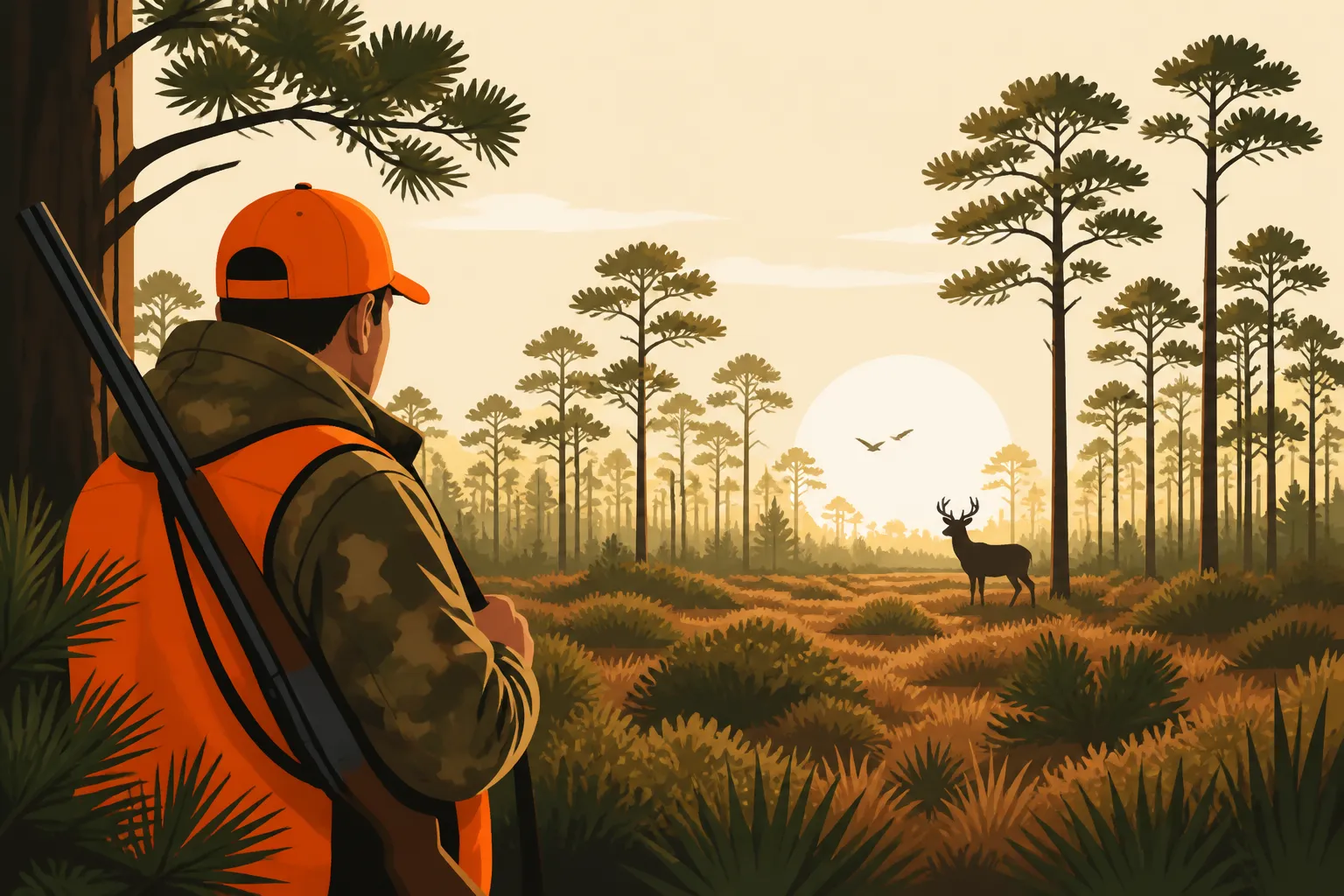
Imagine stepping out of your car and hearing the wind whisper through pitch pines, feeling sandy soil underfoot, and seeing vast stretches of stunted oak and heathland. This isn't the big timber of the Adirondacks or the rolling farmlands of the Southern Tier; this is the Pine Barrens. This fire-adapted ecosystem, with its nutrient-poor, sandy soils, supports a different kind of wildlife community. While you won't find elk or moose here, you'll encounter a healthy population of white-tailed deer, often smaller in body size than their upstate cousins, but savvy and well-adapted to the dense cover. Beyond deer, the Pine Barrens hold opportunities for various small game species. Cottontail rabbits thrive in the thick brush, gray squirrels are abundant in oak stands, and you might even stumble upon ruffed grouse or woodcock in specific pockets of suitable habitat, especially near wetter areas or younger forest regeneration. Understanding this unique environment is the first step to a successful hunt.
Designated Hunting Areas and Restrictions
It's critical to understand that the entire Long Island Pine Barrens is not open to hunting. The region is a patchwork of protected lands, private holdings, and various conservation designations, each with its own set of rules. Generally, hunting is permitted only within designated State Forests, specific Wildlife Management Areas (WMAs), and certain parcels managed for public access, particularly in Suffolk County. This fragmentation means a significant portion of your pre-hunt planning will involve identifying precisely where you can legally hunt. Areas like the Rocky Point Natural Resources Management Area or portions of the Otis Pike Preserve are known for offering hunting opportunities, but these are often regulated by specific permits or seasonal restrictions that differ from general statewide rules. Hunters accustomed to vast, contiguous tracts of public land upstate will need to adapt to smaller, often disconnected huntable parcels, making mapping tools indispensable. For a broader overview of hunting opportunities on the island, check out Long Island State Parkland Hunting Rules.
| Feature | Long Island Pine Barrens Hunting | General Upstate New York Hunting |
|---|---|---|
| Primary Habitat | Pitch pine, scrub oak, heathlands, sandy soils, wetlands | Mixed hardwoods, conifer forests, farmlands, mountains |
| Deer Size/Density | Generally smaller body size, good density in specific cover | Larger body size, varying density by region |
| Primary Game | White-tailed deer, cottontail rabbit, gray squirrel, some upland birds | Deer, bear, turkey, grouse, woodcock, various small game |
| Access Type | Often designated parcels, fragmented, permit-based access common | Large contiguous tracts of State Forest/WMA, open access |
| Pressure | Can be high in accessible areas, but pockets of solitude exist | Varies greatly by region and proximity to population |
| Vehicle Access | Highly restricted, often walk-in only | More common on maintained forest roads, but still limited |
| Special Rules | Specific local permits, firearm restrictions (shotgun/archery zones) | General statewide rules, some WMU-specific regulations |
Navigating Access and Regulations in the Pine Barrens
Successfully hunting the Long Island Pine Barrens requires diligent preparation, especially concerning permits, mapping, and understanding local nuances that can drastically differ from other parts of New York. Don't just show up expecting to walk in; you'll likely be disappointed, or worse, in violation of local rules.
Obtaining Permits and Understanding Special Rules
Unlike much of upstate New York where your basic hunting license grants you broad access to public lands, hunting in many Long Island Pine Barrens areas often requires additional, specific permits or reservations. These are typically managed by the New York State Department of Environmental Conservation (DEC) through regional offices or online systems. For instance, some designated areas might have a limited number of daily permits issued on a first-come, first-served basis, or through a lottery system for specific dates. It's not uncommon to need to apply weeks or even months in advance. These special rules are often in place to manage hunter density, minimize conflicts with other recreational users (like hikers or birdwatchers), and protect sensitive habitats. Always check the specific regulations for the precise parcel you intend to hunt, as rules can vary even between adjacent tracts. You'll need to be clear on New York Hunting Licenses and What They Cost first, but then dig deeper into these localized requirements. These localized permits often dictate not just when you can hunt, but how – sometimes limiting weapon types or even which species you can pursue.
Mapping and Locating Huntable Parcels
This is where your homework truly pays off. The Pine Barrens landscape is a complex mix of public and private ownership, often with no clear boundary markers on the ground beyond "No Trespassing" signs. Relying on outdated paper maps or general knowledge is a recipe for disaster. Modern mapping applications are absolutely essential here. Tools like onX Hunt are invaluable because they provide detailed property ownership overlays, showing you exactly where public land begins and ends, even down to specific management unit boundaries within the Pine Barrens. You can download maps for offline use, which is crucial in areas with spotty cell service. This allows you to scout digitally, identify potential access points, pinpoint hidden pockets of cover, and, most importantly, ensure you are always on legal hunting ground. Before you even set foot in the woods, spend hours with these apps to understand the lay of the land. Similarly, while a tool like GoHunt might be more geared towards larger state-wide or multi-state planning, it can offer a consolidated view of regulations and season dates for New York, allowing you to then cross-reference with specific Long Island permits. Being able to visualize the public land boundaries is key to avoiding trespass, a common issue in fragmented areas. For help with state tools, check out Using the New York HuntFishNY Map Tool.
Vehicle Access and Parking Considerations
Accessing the heart of the Long Island Pine Barrens hunting areas typically means leaving your vehicle behind. Most designated hunting zones within the Pine Barrens have very restricted, if any, vehicle access beyond designated parking lots. This is a crucial distinction from many upstate locations where dirt roads might lead directly to hunting blocks. Here, you'll often find yourself parking at a roadside lot and walking in, sometimes for considerable distances. These walk-in only regulations are designed to minimize environmental impact and enhance the wilderness experience. Hunters need to plan for long hikes to reach prime areas, carrying all their gear in and out on foot. Always adhere to posted parking rules; vehicles parked illegally can be ticketed or towed, and blocking gates or access roads will quickly lead to hunting privileges being revoked. Be prepared for a physical hunt, as the sandy terrain can be tiring, and long treks are often required to escape pressure and find undisturbed game.
Strategies for Hunting Deer and Small Game in the Pine Barrens
Hunting the Long Island Pine Barrens demands a nuanced approach, as the terrain, vegetation, and game behavior differ significantly from other New York regions. Forget about glassing vast fields or setting up on sweeping hardwood ridges; here, it's about close-quarters awareness and intimate knowledge of dense cover.
Deer Hunting Tactics in the Unique Pine Barrens Habitat
Deer in the Pine Barrens are masters of concealment. The dense pitch pine and scrub oak provide incredible bedding and escape cover, making traditional long-range glassing tactics almost useless. Your best bet for deer in the Pine Barrens is a combination of still-hunting and careful stand placement. Still-hunting, moving slowly and deliberately through the woods, pausing frequently to observe and listen, allows you to cover ground while remaining stealthy. Focus on finding subtle deer sign – rubs, scrapes, and tracks in the sandy soil – particularly along the edges of thicker cover and near any available water sources or mast-producing oaks. Deer movement will often be concentrated along natural funnels created by changes in vegetation density, old firebreaks, or subtle elevation changes. Scouting before the season is absolutely paramount here; use your onX Hunt app to pinpoint potential bedding areas (often the densest thickets) and travel corridors between them. When considering stand placement, look for isolated oaks or pine clusters that offer a slight visibility advantage, but be prepared for close-range shots. The rut can be a productive time, typically peaking in mid-November on Long Island, and understanding Hunting the New York Rut in November can give you an edge, even in this unique habitat. However, due to the dense vegetation, rattling and grunting calls need to be used judiciously, as deer will often appear quickly and close.
Pursuing Small Game Opportunities
The dense, brushy nature of the Pine Barrens makes it an excellent locale for certain small game species, particularly cottontail rabbits and gray squirrels. Rabbit hunting can be incredibly productive, especially after a fresh snow, allowing you to track their movements through the thick undergrowth. Focus on areas with a mix of dense brush piles, briars, and low-lying vegetation. Hunters with beagles or other rabbit dogs will find them invaluable here, as the dogs can push rabbits out of cover that would be impenetrable to a solo hunter. Without a dog, slow still-hunting and careful flushing of thickets can yield opportunities. For squirrels, target areas where oak trees are more prevalent, particularly during the fall when acorns are dropping. Look for fresh cuttings under oak trees, indicating active feeding. Squirrel hunting here often involves patience, waiting for the animals to become active after you've quietly entered an area, or slowly stalking through stands of mature trees. While ruffed grouse are less common than in upstate regions, specific areas with younger forest growth or alder thickets might hold them. Woodcock can also be found in damper areas, particularly during their migration. For more detailed small game tactics, check out Rabbit and Hare Hunting in New York or Hunting Squirrels in New York Hardwoods.
Essential Gear and Planning for a Pine Barrens Hunt
A successful hunt in the Long Island Pine Barrens hinges as much on proper gear and meticulous planning as it does on hunting skill. The unique environment and access restrictions demand thoughtful preparation.
Clothing, Navigation, and Safety Gear
Given Long Island's coastal climate, the Pine Barrens often experience milder temperatures than upstate New York, even in late fall. However, weather can be unpredictable, with sudden shifts from mild to damp and chilly. Layered clothing is crucial, allowing you to adapt to changing conditions and the exertion of walking through sandy, uneven terrain. Durable brush pants are highly recommended to protect against thorns and thick undergrowth. When it comes to navigation, your phone's GPS can be a lifesaver, but always carry a backup. A dedicated GPS unit or a fully charged power bank for your phone, combined with downloaded offline maps on an app like onX Hunt, is non-negotiable, especially since cell service can be spotty in some remote sections. A compass and paper map of your hunting area are also smart additions. Safety is paramount: always wear sufficient blaze orange as required by New York law, even during archery season if firearms hunters are present or if you're on public land where other users might be. A compact first-aid kit, a whistle, and a reliable headlamp (for those longer-than-expected walks out) are essential items. Understanding New York Blaze Orange Requirements is not just a rule, it's a critical safety measure, particularly in areas shared with other hunters.
Firearms and Ammunition Considerations
Due to Long Island's population density and local ordinances, firearm restrictions can be more stringent than in many rural upstate areas. While specific rules vary by management area and time of year, many Pine Barrens hunting zones are shotgun-only (slugs for deer) or archery-only for deer. Rifles are often prohibited for big game, so confirm the legal method of take for your specific hunting parcel. If using a shotgun for deer, ensure it's sighted in accurately with slugs, as ethical shots in dense cover can still be challenging. For small game, a lighter gauge shotgun (like a 20 gauge) with appropriate shot size is often ideal for fast-flushing birds or rabbits in thick brush. Archery equipment, including crossbows where permitted, is also an excellent choice for the close-quarters nature of Pine Barrens hunting. Always double-check the current regulations for the specific management unit you plan to hunt to ensure your chosen firearm or bow is legal. For general guidance on appropriate firearms, review Rifle and Shotgun Choices for New York Deer.
Meat Care and Retrieval in Accessible Areas
Because you'll often be walking considerable distances from parking areas, efficient meat care and retrieval are vital. If hunting during warmer early archery seasons, rapid field dressing is essential to cool the carcass quickly. Carrying game bags can protect the meat from dirt and insects during the haul out. A reliable knife and a bone saw (or knowledge of the gutless method) will lighten your load. Given the walk-in nature, dragging a whole deer can be an arduous task over sandy, uneven terrain. Consider bringing a sturdy game cart if the terrain is suitable, or be prepared to quarter your animal for easier transport. Having a plan for how you'll get your game back to your vehicle, especially if hunting alone, is part of responsible hunting. Large coolers with plenty of ice should be waiting in your vehicle to ensure the meat is properly chilled, even if the ambient temperatures aren't excessively warm. Thinking through your strategy for Coolers and Game Bags for Early Archery can save you a lot of headache and ensure your hard-earned venison makes it to the table in top condition.
Disclaimer
This article is for general informational purposes only and does not constitute professional advice. Laws, prices and regulations vary by location and change over time. Consult a qualified professional for guidance on your specific situation.