Blaze Pink Options Under New York Law
It's an age-old question for hunters, especially here in New York: how do we stay safe and visible in the woods without feeling like we're waving a giant flag to every deer in the county? For years, blaze orange was the undisputed king, and frankly, a lot of us just got used to it. But with evolving laws and options, understanding blaze pink options under New York law can feel like navigating a new trail in the dark. This guide is here to shine a light on everything you need to know about blaze pink, from its legality to its practical use, so you can hunt confidently and safely.
The Evolution of Hunter Safety Colors in New York
For generations, the fluorescent orange vest and hat were as iconic to a firearm hunter as their rifle. The logic was sound: stand out from the natural landscape, prevent accidental shootings, and come home safe. But like any good tradition, sometimes it needs a little refresh to keep up with the times and new understandings of visibility.
Understanding Traditional Blaze Orange Mandates
Before we dive into pink, it's crucial to remember why blaze orange became the standard in the first place. The human eye, particularly when trying to discern movement in varying light conditions and complex natural backgrounds like our New York hardwoods, can struggle to pick out shades of brown, green, and gray. Blaze orange, or hunter orange, was scientifically chosen because it stands out starkly against natural colors and isn't a color commonly found in nature. It's highly visible even in low light, fog, or dense cover, making it an incredibly effective safety measure.
Here in New York, the law typically mandates specific amounts of external blaze orange clothing during big game firearm seasons. This ensures that a hunter is visible from all angles. The idea isn't to make you invisible to game – that's a whole other discussion – but to make you highly visible to other hunters. For many of us, donning that orange vest on opening day is as much a part of the ritual as checking our zero or packing a thermos of coffee. It’s a collective agreement to look out for one another. You can find more detailed specifics on these requirements in our guide to New York Blaze Orange Requirements.
Introducing Blaze Pink as a Legal Alternative
The introduction of blaze pink as a legal hunter safety color in New York (and other states) actually stemmed from a desire to encourage more participation in hunting, particularly among women, by offering an alternative that some might find more appealing. Beyond aesthetics, however, there was real science behind its adoption. Studies, particularly out of Wisconsin, showed that blaze pink is just as effective, if not more so, than blaze orange in certain light conditions.
The key is that blaze pink also contrasts strongly with natural greens, browns, and grays. For deer and other game, whose vision differs from humans (they largely see in shades of blue and yellow, with reds and oranges appearing as muted grays), both blaze orange and blaze pink are perceived in a similar, non-alarming way. So, while it makes you pop for other human eyes, it doesn't give you away to a whitetail any more than traditional orange does. This validation of its effectiveness made it a viable and welcome option for hunters looking to express themselves while maintaining peak safety standards.
Specifics of Blaze Pink Under New York Law
Now that we understand the 'why,' let's get down to the 'what' and 'when' for New York hunters looking to embrace blaze pink. It's not just about picking up a pink vest; it's about understanding the nuances of the law to ensure you're fully compliant and, most importantly, safe.
Who Can Wear Blaze Pink and When
The great news is that New York's regulations are inclusive when it comes to blaze pink. It's not restricted by gender or age; all hunters are legally permitted to wear blaze pink wherever blaze orange is required. This primarily includes big game firearm seasons, which covers rifle, shotgun, and muzzleloader seasons. For instance, during the bustling Southern Zone firearm season or even the quieter Northern Zone muzzleloader hunt, you're good to go with pink.
It’s important to remember that safety colors, whether orange or pink, are generally mandated during big game seasons when firearms are in use. During archery-only seasons, such as the early bow season or the late Southern Zone reopener, blaze orange or pink is typically not required. However, many seasoned bowhunters still opt to wear some form of high-visibility clothing while walking to and from their stand, especially on public lands where other hunters might be present. Always check the current regulations, but our guide on Orange Requirements for Archery Hunters can provide further clarity on those specific scenarios.
Quantity and Placement Requirements
This is where the rubber meets the road. Just like with blaze orange, New York law specifies how much blaze pink you need to wear and where it needs to be visible. The good news is the requirements for blaze pink are identical to those for blaze orange. This simplifies things greatly: if you know the rules for orange, you know them for pink.
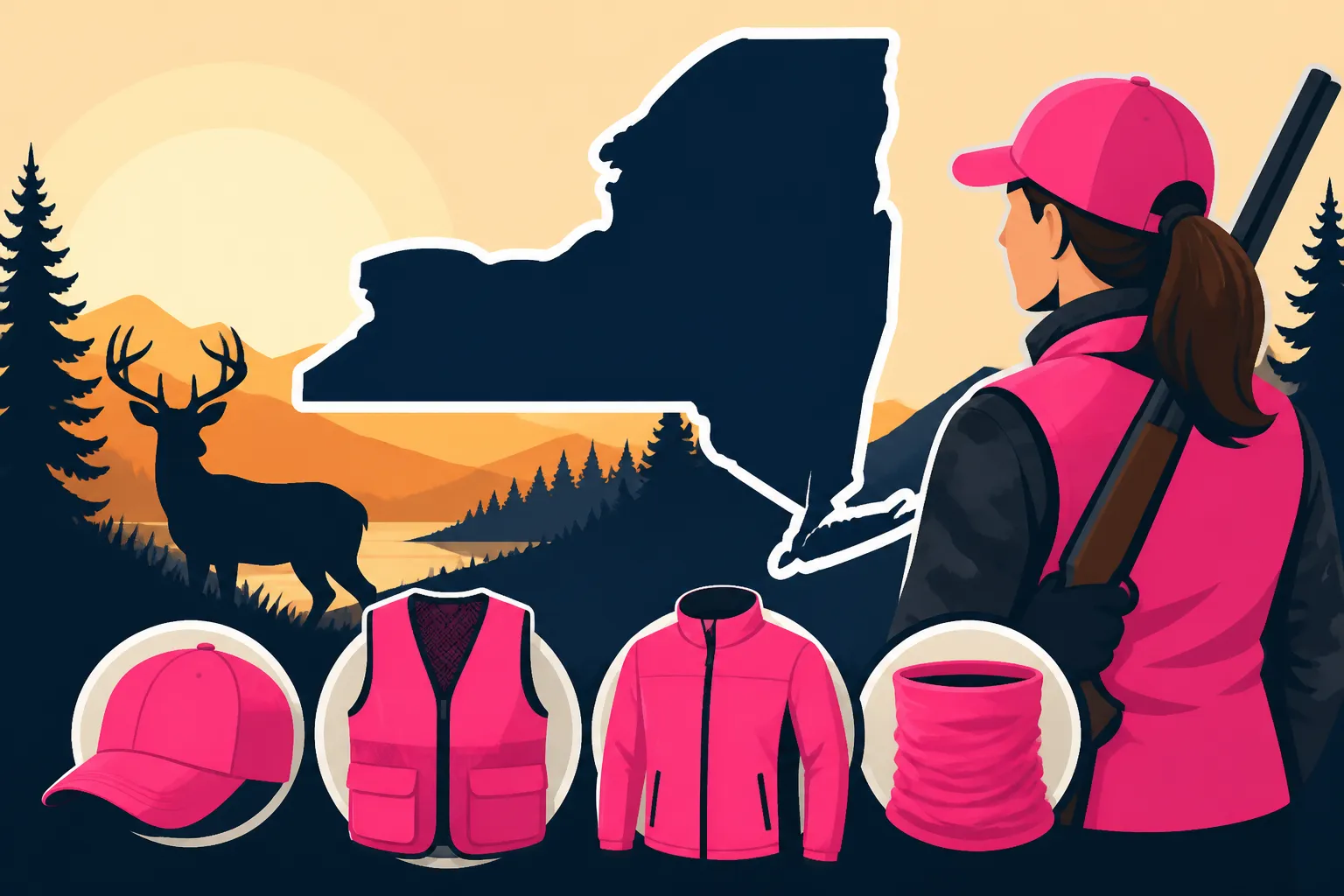
Generally, during seasons when it's required, you must wear a minimum of 250 square inches of solid or patterned blaze orange or blaze pink material, which must be visible from all sides. Additionally, you need to wear a blaze orange or blaze pink hat. This combination ensures that you're easily identifiable as a human hunter, not a deer or a bear, especially when moving through dense cover or when partially obscured by terrain. The visible-from-all-sides aspect is key; a small patch on your back won't cut it. Think vest, jacket, or a substantial amount of material on a coat. For more information on the specific dimensions and areas, you can consult our detailed piece on How Much Blaze Orange New York Requires.
To help you visualize this, here's a quick reference table:
| Requirement Category | Blaze Orange | Blaze Pink | Notes |
|---|---|---|---|
| Material Type | Solid or patterned fluorescent orange | Solid or patterned fluorescent pink | Patterned material must still be predominantly the safety color. |
| Minimum Coverage | 250 square inches (external) | 250 square inches (external) | Must be visible from all directions (front, back, sides). |
| Headwear | Blaze orange hat (external) | Blaze pink hat (external) | Mandatory in addition to body coverage. |
| Seasons Required | Firearm, Muzzleloader | Firearm, Muzzleloader | Check specific WMU regulations, as some areas may have unique rules. |
| Game Species | Big Game (Deer, Bear) | Big Game (Deer, Bear) | Not generally required for small game or turkey. |
This consistent application of the law means you don't have to learn a whole new set of rules just to choose a different color. It’s about personal preference within the established framework of safety.
Practical Considerations for Choosing Blaze Pink Gear
Deciding to wear blaze pink is one thing, but actually finding and integrating it into your hunting setup can be another. Just like any hunting gear, there are practical aspects to consider beyond just the color.
Advantages and Disadvantages of Blaze Pink
Blaze pink, while scientifically sound, does come with its own set of unique pros and cons.
On the advantage side, perhaps the most significant is its unique visibility. Because it's less common, a patch of blaze pink can sometimes grab attention even more quickly than orange, simply because it's unexpected. For hunters who want to stand out a bit from the traditional crowd, or those who simply prefer the aesthetic, it offers a refreshing alternative. It also helps break down some of the traditional barriers to entry for new hunters, especially women and youth, allowing for more personalized gear choices.
However, there are also some disadvantages. The biggest one, currently, is often limited availability. While more brands are catching on, the sheer variety and volume of blaze orange gear still far outstrip blaze pink. You might find yourself searching harder for specific items, sizes, or specialized gear in pink. This can be a frustration, especially when you're trying to find a high-quality, durable jacket or a specialized vest. Also, while the science supports its visibility to humans, some hunters might still face skepticism from others who are simply used to "orange equals safety." This is less of a legal issue and more of a social one, but it's something to be aware of in certain camps or on public lands. Quality blaze pink material, just like orange, should be durable, colorfast, and made from fabrics suitable for hunting in varying New York weather conditions.
Integrating Blaze Pink into Your Hunting Wardrobe
So, you've decided to go pink. How do you make it work with your existing gear? The good news is that blaze pink integrates just like blaze orange. Many hunters opt for a simple vest and hat combo over their existing camouflage or earth-toned hunting clothes. This is often the most cost-effective and versatile solution. You can wear a heavy wool jacket for warmth, then layer a blaze pink vest over it. Our guide on Clothing for a New York November offers excellent advice on layering for colder hunts, and your blaze pink layer should be the outermost one.
For more committed enthusiasts, finding a full blaze pink jacket or insulated vest is an option. Brands are slowly expanding their lines, offering everything from lightweight mesh vests for early season to heavy insulated parkas for those frigid late-season sits. Consider whether you need a dedicated outer layer or if a simple vest is sufficient for your hunting style. For instance, when comparing Blaze Orange Jackets Versus Vests, remember the same pros and cons generally apply to pink options; vests offer flexibility and lighter weight, while jackets provide full coverage and warmth. When scouting for gear or planning your hunts, resources like GoHunt can be invaluable. Their mapping and planning tools can help you identify hunting areas, and their gear reviews might even point you to emerging brands offering quality blaze pink options that meet New York's requirements.
Remember, the goal is external visibility. Whether you’re using a lightweight packable vest to throw over your outer layers or a fully integrated jacket, ensure that the 250 square inches of material are truly visible from all angles. This becomes especially important when you’re still-hunting or trying to set up a ground blind. If you're utilizing Using a Ground Blind on New York Public Land, ensure that your visible pink isn't just on your back when you're facing forward in the blind; you'll need material visible from the blind's exterior or when you're walking to and from it.
Safety Beyond Color: Comprehensive Visibility Practices
While New York's adoption of blaze pink offers a welcome choice, it's crucial to remember that safety color is just one component of overall hunter safety. A brightly colored vest or hat is a tool, not a magical shield. True safety in the woods comes from a combination of gear, education, and unwavering situational awareness.
Enhancing Visibility in Dense Cover
Even with the brightest blaze pink, dense cover can still obscure a hunter. Here in New York, whether you're pushing through thick briar patches in the Southern Tier or navigating dense spruce thickets in the Adirondacks, visibility can drop dramatically. To enhance your visibility further, consider gear with reflective strips. These are especially effective during low light conditions, like dawn and dusk, or if you find yourself walking out after legal shooting hours (always be aware of New York Legal Shooting Hours for your zone). Headlamps, which we often rely on for walking in and out, can make reflective strips shine like beacons.
When dressing, think 360 degrees. If you’re wearing a backpack, make sure your blaze pink is still visible on your back, not just on your chest. If you’re sitting against a tree, ensure that enough material is still exposed to the sides. This is particularly vital on public land, where you might encounter more hunters. In areas with higher Hunting Pressure on New York Public Land, maximizing your visual footprint is an ethical responsibility to yourself and others. Don't rely solely on a patch on your back; an easily visible hat and a vest that wraps around your torso offer the best protection.
The Role of Hunter Education and Situational Awareness
Ultimately, no amount of blaze pink or orange can replace sound hunter education and constant situational awareness. These are the cornerstones of responsible hunting. Every hunter, new or veteran, should internalize the four rules of firearm safety:
- Treat every firearm as if it were loaded.
- Always point the muzzle in a safe direction.
- Be sure of your target and what is beyond it.
- Keep your finger off the trigger until ready to shoot.
These rules, reinforced through courses like those detailed in New York Hunter Education Requirements, are paramount. Color helps us identify other humans, but we are responsible for positively identifying our target before taking a shot. This means using binoculars (important for identifying game without raising a weapon, as discussed in Rifle and Shotgun Choices for New York Deer), knowing what kind of animal you're looking for, and ensuring no other hunter, hiker, or dwelling is beyond it.
Beyond target identification, situational awareness means constantly scanning your surroundings, knowing where your hunting partners are, and listening for sounds that might indicate another person is approaching. It means calling out to other hunters if you see them, especially if they haven't seen you. While blaze pink gives you a fantastic visual advantage, your brain, your training, and your commitment to safety are your absolute best tools in the woods.
Disclaimer
The information provided in this guide is for general informational purposes only and does not constitute legal advice. Hunting regulations, laws, and season dates in New York State can change frequently. Always consult the most current New York State Department of Environmental Conservation (DEC) hunting regulations guide or visit the official DEC website before participating in any hunting activity to ensure full compliance with all applicable laws and regulations.