New York Minimum Rifle Caliber Rules
Navigating New York’s hunting regulations can feel like trying to untangle a particularly stubborn knot, especially when it comes to firearms. Many hunters, whether seasoned locals or those visiting our beautiful state, find themselves scratching their heads over what rifle calibers are actually legal for big game. It’s a common frustration, and one that often leads to anxiety about accidentally breaking a rule. This guide is here to cut through that confusion, giving you a clear, comprehensive understanding of New York's minimum rifle caliber requirements so you can hunt with confidence and comply with all state laws.
Understanding New York's Core Rifle Caliber Regulations
When you're preparing for a big game hunt in New York, knowing your firearm's capabilities and its legal standing is paramount. Our state has specific rules designed to promote ethical hunting practices and ensure public safety, which means not just any rifle caliber will do. These regulations are in place for good reason, aiming to ensure a humane harvest while preventing overpenetration or indiscriminate shooting in populated areas.
The Statewide Minimum for Big Game
For most big game hunting across New York where rifles are permitted, the regulations are fairly straightforward at a foundational level. The state requires that any rifle used for deer or bear must be a centerfire rifle. Beyond that, the key measurement you need to pay attention to is the minimum bullet diameter. Specifically, the caliber must be .22 caliber or larger. Now, that might sound simple enough, but there’s a crucial caveat: it must be a centerfire cartridge designed to expand upon impact, delivering sufficient energy for a clean kill. This means that rimfire cartridges, even if they're .22 caliber (like the ubiquitous .22LR), are absolutely not legal for big game. You wouldn't want to wound an animal with an underpowered cartridge, and the regulations reflect this commitment to ethical harvest. Common, legal calibers like the .243 Winchester, .30-30 Winchester, .270 Winchester, .30-06 Springfield, and .308 Winchester are all well within these parameters, offering more than enough power and bullet diameter for our deer and bear.
What About Shotguns and Muzzleloaders?
While our focus here is on rifle calibers, it’s important to briefly touch upon shotguns and muzzleloaders because they often have different, and sometimes more restrictive, regulations, especially depending on where you're hunting in New York. For instance, in many parts of the Southern Zone, which we'll delve into shortly, shotguns are the primary firearm allowed for deer, along with muzzleloaders and handguns. Shotguns typically require slugs (not birdshot or buckshot) for big game, and there are specifications for slug weight and gauge. Muzzleloaders, on the other hand, have their own dedicated seasons and often come with regulations regarding bullet type (e.g., sabots vs. conical bullets) and powder charges. Understanding these distinctions is crucial because a legal rifle for one zone or season might not be legal for another firearm type or area. For hunters looking into the specifics of these other methods, you might find more detailed information in our guides on New York's Southern Zone Firearm Season or Muzzleloader Deer Hunting in New York.
Zone-Specific Rifle Caliber Nuances and Restrictions
This is where the New York hunting regulations truly start to diverge and can cause the most confusion. Our state is split into different hunting zones, and what’s perfectly legal in one area might be strictly prohibited in another. It's not just about minimum caliber; it's about the very legality of using a rifle for big game in the first place. This distinction is paramount for safety, especially in more densely populated areas.
Southern Zone vs. Northern Zone Differences
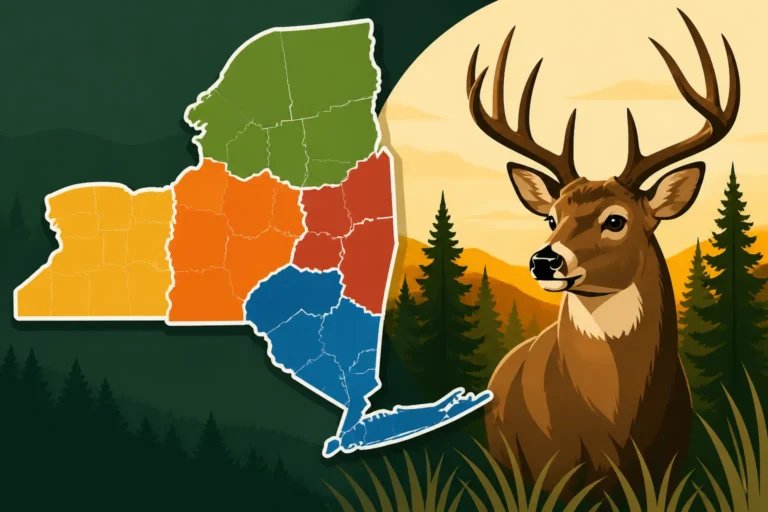
The most significant distinction for rifle hunters in New York lies in the divide between the Southern Zone and the Northern Zone. Generally speaking, if you’re hunting in the Southern Zone, which encompasses the vast majority of the state south of the Adirondack Park, centerfire rifles are prohibited for deer and bear hunting. This rule is in place primarily due to population density and safety concerns, as many parts of the Southern Zone have more homes and people living in closer proximity to hunting lands. Instead, hunters in the Southern Zone must typically use shotguns (with slugs), muzzleloaders, handguns, or archery equipment for big game. It's a critical difference that can trip up even experienced hunters who are used to hunting with rifles elsewhere. This is why it's always important to double-check the New York Deer Seasons by Zone to know exactly what's allowed.
Conversely, the Northern Zone, which covers the Adirondack Park and surrounding areas, is largely open to centerfire rifle hunting for deer and bear during the appropriate seasons. Here, the expansive wilderness and lower population density make rifle use safer and more practical. However, even within the Northern Zone, there can be localized restrictions, such as around state parks, developed areas, or specific Wildlife Management Areas (WMUs). Always consult the current DEC hunting guide or use a mapping tool like the New York HuntFishNY App to confirm the specific regulations for your hunting location. Understanding these zonal differences is non-negotiable for a legal and successful hunt.
Specialized Regulations for Bear Hunting
For black bear hunting in New York, the general minimum rifle caliber rules for big game apply. This means a centerfire rifle of .22 caliber or larger, designed to expand upon impact, is required. However, the specific zones where bear hunting is permitted with a rifle mirror the deer hunting regulations. So, while you can use your .30-06 for bear in the Northern Zone, you'd still be restricted to shotguns, muzzleloaders, or handguns in the Southern Zone during bear season.
Ethical considerations are particularly important for bear hunting. While a .22 caliber centerfire meets the minimum legal requirement, many experienced bear hunters advocate for larger, more powerful calibers to ensure a quick and humane kill on a tough animal like a black bear. Calibers such as a .30-06, .308 Winchester, .300 Winchester Magnum, or a .35 Whelen are often preferred for their ability to deliver significant energy and penetration. Regardless of caliber, bullet construction is key; a well-constructed bullet designed for deep penetration and controlled expansion is crucial for bear. Always prioritize an ethical harvest, and if you have any doubts about your chosen caliber's effectiveness, err on the side of caution.
Common Caliber Choices and Ethical Considerations
Choosing the right rifle caliber for hunting in New York isn't just about meeting the legal minimums; it's about making an informed, ethical decision that suits your hunting style, the terrain, and the game you're pursuing. There's a wide array of excellent calibers that comfortably fit within New York's regulations for big game, each with its own set of advantages.
Popular Calibers That Meet New York Standards
For deer and bear hunting where rifles are allowed (primarily the Northern Zone), several calibers stand out as perennial favorites among New York hunters. The .243 Winchester is a popular choice for deer, known for its flat trajectory and mild recoil, making it suitable for newer hunters or those sensitive to recoil. While it meets the .22 caliber minimum, some hunters prefer something with more kinetic energy for larger deer or bears. The .30-30 Winchester is a classic lever-action cartridge, incredibly effective in dense Catskill or Adirondack timber where shots are typically close. Its historical reliability and ease of handling make it a beloved option, even if its effective range is shorter than more modern cartridges.
Stepping up, the .270 Winchester, .308 Winchester, and .30-06 Springfield are often considered the "holy trinity" of North American big game calibers, and they are all excellent choices for New York's diverse hunting landscapes. The .270 offers a flat trajectory for those longer shots in more open areas, while the .308 provides ample power in a compact package, ideal for maneuverability in thick woods or from a treestand. The .30-06, with its legendary versatility, can handle anything from deer to bear with the right bullet choice. When researching different options, many hunters consult platforms like GoHunt for ballistic data comparisons and expert reviews to fine-tune their gear selection.
Here’s a quick overview of popular legal rifle calibers for big game in New York, considering common uses:
| Caliber | Minimum Bullet Diameter (inches) | Typical Bullet Weight Range (grains) | Common Uses in NY (where legal) | Key Characteristics |
|---|---|---|---|---|
| .243 Winchester | .243 | 80-100 | Deer, smaller bear | Flat trajectory, mild recoil |
| .30-30 Winchester | .308 | 150-170 | Deer, close-range bear | Classic timber gun, lever action favorite |
| .270 Winchester | .277 | 130-150 | Deer, bear, longer shots | Flat shooting, good for open areas |
| .308 Winchester | .308 | 150-180 | Deer, bear, versatile | Excellent accuracy, manageable recoil, compact |
| .30-06 Springfield | .308 | 150-220 | Deer, bear, all-around big game | Powerful, extremely versatile, widely available |
| .35 Remington | .358 | 180-200 | Deer, bear, thick cover | Heavy bullet, good for brush, shorter range |
| .45-70 Government | .458 | 300-500 | Deer, bear, large game, dense cover | Heavy hitter, high knockdown power at close range |
The Importance of Shot Placement and Ammunition Selection
While selecting a legal and appropriately powered rifle caliber is crucial, it’s only part of the equation for an ethical harvest. Superior marksmanship and intelligent ammunition selection are just as, if not more, important. A perfectly placed shot from a .243 is far more effective than a poorly placed shot from a .30-06. Practice regularly at the range, understanding your rifle’s capabilities and your own limitations. This is particularly important when considering things like Rifle Scopes for Low-Light Timber or how to adjust for varying distances in our varied terrain.
Beyond shot placement, the ammunition you choose matters immensely. Not all bullets are created equal. For big game, you need bullets designed for controlled expansion, meaning they expand significantly upon impact to create a large wound channel, but also retain enough weight and integrity to penetrate deeply into the animal’s vital organs. Avoid varmint-specific bullets, which are designed for rapid fragmentation and may not penetrate sufficiently for deer or bear. Brands like Federal, Winchester, Hornady, and Barnes all offer excellent big game ammunition. Many hunters scour resources like GoHunt not just for caliber information but also for in-depth reviews and ballistic data on specific bullet types, helping them make the best choice for their New York hunts. Remember, the goal is always a quick, humane harvest, and that comes from a combination of the right caliber, the right bullet, and the right shot.
Navigating Regulations and Staying Compliant
The labyrinthine nature of hunting regulations can be a source of constant stress for hunters. It's not just about what you can do, but also about the specifics of where and when. Staying informed and knowing how to access reliable information is your best defense against unintended violations.
Using the New York DEC Resources and Mapping Tools
The New York State Department of Environmental Conservation (DEC) is your primary and most authoritative source for all hunting regulations. Every year, they publish a comprehensive hunting and trapping guide that details all seasons, bag limits, and firearm restrictions. It's an absolute must-read for any hunter. You can typically find these guides at license vendors or download a digital copy directly from the DEC website. Don't rely solely on word-of-mouth or outdated information. Regulations can change from year to year, or even mid-season if circumstances warrant it (though major firearm rules are usually stable).
Beyond the printed guide, the DEC offers valuable digital tools. The Scouting With the New York HuntFishNY App is an invaluable resource, providing interactive maps that can show you WMU boundaries, public land access, and sometimes even specific local restrictions. Pairing this with a robust mapping application like those offered by GoHunt or onX Hunt can give you a powerful suite of tools to plan your hunt meticulously, ensuring you're always aware of where you are and what regulations apply to that specific parcel of land. These apps often update with regulation changes, helping you stay ahead of the curve.
When in Doubt, Double-Check
The golden rule of hunting is: when in doubt, always double-check. If you’re unsure about a specific rifle caliber’s legality in a particular area, or about any other regulation, it’s far better to verify beforehand than to risk a violation. Ignorance of the law is not an excuse, and game wardens are well within their rights to issue tickets or even seize equipment if rules are broken. Penalties for hunting violations can range from hefty fines to loss of hunting privileges, so it's simply not worth the gamble.
Consider reaching out directly to the DEC with specific questions if you can't find clear answers in the official guide. Their regional offices are typically happy to clarify any ambiguities. Moreover, always carry your hunting license and any necessary permits, like your New York big game license receipt, and be prepared to show them to a law enforcement officer upon request. Taking these proactive steps ensures not only your compliance but also promotes a responsible and ethical hunting community here in New York.
Disclaimer
The information provided in this guide is intended for general informational purposes only and does not constitute legal advice. Hunting regulations in New York are subject to change, and local restrictions may apply. Always consult the most current New York State Department of Environmental Conservation (DEC) hunting regulations guide and relevant state laws before engaging in any hunting activities.