.30-30 in Thick Catskill Cover
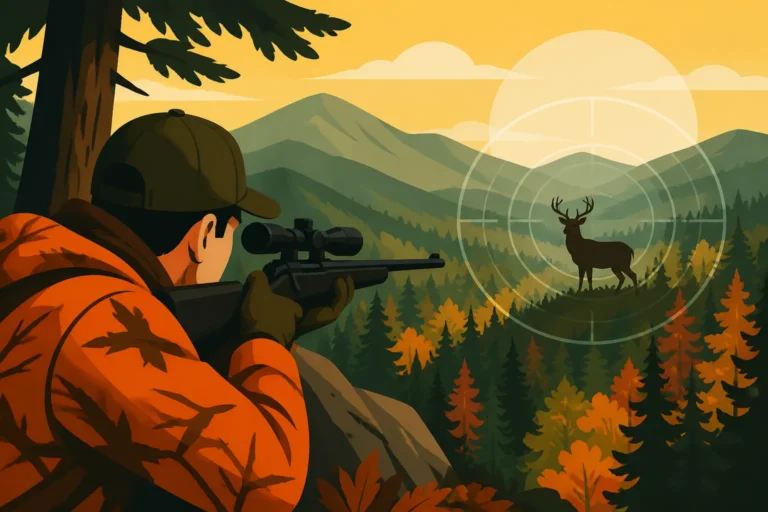
There's a special kind of challenge that comes with hunting deer in the Catskill Mountains. The terrain is often steep, the hardwoods can be incredibly thick, and visibility drops to mere dozens of yards in many spots. You're not looking for long-range precision here; you need a rifle that handles quickly, delivers authority up close, and can navigate dense brush without snagging. This guide will explore why the tried-and-true .30-30 Winchester lever-action remains a fantastic choice for these conditions and how to make it your most reliable companion in New York's thickest cover.
Why the .30-30 Endures in New York's Catskill Timber
When you mention a .30-30, many folks immediately think of an old-school deer rifle, perhaps one handed down through generations. And while it carries that rich history, its practical attributes are precisely why it’s still relevant, especially in the tight confines of the Catskills. It's not about being the fastest or flattest shooting; it's about being reliable, quick to the shoulder, and delivering a significant punch where it counts – often under 100 yards.
The Ballistics of Brush-Busting
Let's be real, no cartridge truly "busts" brush in the sense of plowing through branches without deflection. That's a myth many of us have wished were true! However, the .30-30, particularly when loaded with heavier, round-nose or flat-nose bullets, performs admirably in dense cover. These bullet designs are less prone to severe deflection than pointed, high-velocity spitzers when glancing off a twig, meaning your shot is more likely to stay on target for those vital short-range encounters. The energy it delivers at close to moderate ranges – say, up to 150 yards – is more than sufficient for a clean, ethical harvest of a New York whitetail. You’re not trying to reach across a wide-open cornfield; you’re looking to anchor a deer that might be just beyond that thick stand of hemlocks.
Consider a scenario where a buck suddenly appears at 70 yards, moving quickly through a tangle of briars and fallen timber. With a pointed, lightweight bullet, that shot could easily be thrown off by an unseen branch. But a stout, heavier .30-30 bullet, while it might still be influenced, tends to maintain a more predictable path. It’s less about brute force and more about the bullet's inherent stability and design, which resists extreme yawing or tumbling upon impact with light obstructions.
Handling Characteristics in Tight Spots
One of the .30-30's unsung heroes is its form factor. The classic lever-action rifle is typically shorter, lighter, and much more nimble than many modern bolt-action rifles, especially those with longer barrels. Imagine navigating a steep Catskill ravine, scrambling over downed logs, and pushing through dense undergrowth. A long rifle barrel can snag on every branch, throw off your balance, and make quick target acquisition a nightmare.
A compact lever-action feels like an extension of your body, allowing you to move silently and efficiently. When you finally spot that deer in a small opening, the rifle comes to the shoulder quickly, naturally, and without excessive movement that could spook your quarry. This rapid handling is crucial when hunting the thick cover of the Catskills, where shot opportunities often materialize and vanish in mere seconds. It's the kind of rifle you can carry comfortably all day, which is a major plus when you're Still-Hunting Catskill Ridges or trying to slip through the dense sections of the Catskill Forest Preserve Deer Ground.
Historical and Practical Provenance
The .30-30 Winchester has been taking deer in American woods for well over a century. There's a reason for its longevity: it works. Generations of hunters have relied on its capabilities, and that history wasn't built on open plains, but largely in the dense, wooded terrain similar to what we find in the Catskills. It's a testament to its effectiveness as a close-quarters deer getter. This isn't just nostalgia; it's a proven track record.
Many hunters value the simplicity and ruggedness of a lever-action. They are typically less prone to mechanical failures in harsh weather, and their open-sighted variants offer immediate aiming solutions if your optics fail or get fogged up. In a challenging environment where reliability is paramount, the .30-30 delivers a confidence that many newer, more complex firearms might not. It's a rifle that demands you understand its range limitations and work within them, which aligns perfectly with the reality of hunting in thick timber.
Setting Up Your .30-30 for Catskill Success
While the .30-30 is inherently well-suited for dense cover, a few smart choices in ammunition and optics can turn a good brush gun into a truly exceptional one for the Catskill Mountains. It’s about tailoring your setup to the specific conditions you’ll encounter, rather than a one-size-fits-all approach.
Ammunition Choices for Close Range
For years, the standard round-nose or flat-nose bullet was the only option for lever-action .30-30s due to the tubular magazine, which prevents pointed bullets from being used (as the tip of one bullet could detonate the primer of the one in front of it under recoil). These traditional bullets are excellent for close-range energy transfer and, as discussed, can be less prone to extreme deflection in light brush.
However, modern ammunition technology has given us new options. Companies now produce .30-30 loads with flexible polymer tips that are safe for tubular magazines, like Hornady's LEVERevolution line. These bullets offer a more aerodynamic profile, which significantly extends the effective range and improves the trajectory, making a 150-yard shot much more viable. While you might not be shooting that far often in the Catskills, having the flatter trajectory for those slightly longer lanes through the timber can be a distinct advantage.
| Bullet Type | Characteristics | Optimal Range (Approx.) | Brush Performance | Notes |
|---|---|---|---|---|
| Traditional Flat/Round Nose | Heavy, good energy transfer, less aerodynamic | 0-125 yards | Good deflection resistance | Classic choice, widely available |
| Polymer Tip (e.g., LEVERevolution) | Improved aerodynamics, flatter trajectory, modern expansion | 0-200 yards | Moderate deflection resistance | Extends effective range, safer in tube mags |
When you're considering Choosing a Rifle Caliber for New York Deer, remember that for the Catskills, it's not just about the caliber, but the specific bullet within that caliber. For a .30-30, a heavier bullet (160-170 grain) will generally carry more momentum and energy than a lighter one, which can be beneficial for deep penetration, especially if you encounter a larger-bodied buck. Always check the manufacturer's recommendations and, most importantly, pattern your chosen load at the range to see how it performs out of your rifle.
Optics Considerations for Thick Cover
Putting a high-magnification scope on a .30-30 intended for thick cover is usually counterproductive. In the Catskills, you're looking for fast target acquisition, a wide field of view, and excellent light transmission in dim conditions. A low-power variable scope, such as a 1-4x or 2-7x, is an ideal choice. You can keep it dialed down to its lowest setting (1x or 2x) for close, fast shots, giving you a nearly unobstructed view of the surrounding woods. Then, if a slightly longer shot opportunity arises in a clearing, you can dial it up a bit for a clearer picture.
Alternatively, a fixed low-power scope (like a 2.5x or 3x) can also be highly effective, offering simplicity and robust reliability. Some hunters even prefer ghost ring sights or a high-visibility fiber optic front sight for the absolute fastest target acquisition in the tightest cover, forgoing a scope entirely. This setup allows for quick, instinctive shooting at very close ranges, which is often the reality when Hunting the New York Rut in November and bucks are moving quickly.
Regardless of your choice, ensure your optics are durable and can handle the bumps and scrapes that come with hunting steep, rocky terrain. Rifle Scopes for Low-Light Timber should be prioritized, as early mornings and late evenings are prime hunting times, and the dense canopy further reduces ambient light. Zero your rifle at a practical range for the Catskills, perhaps 75 or 100 yards, which will cover the vast majority of your shot opportunities. For advice on Zeroing at 100 Yards for Woods Hunting, ensure your practice involves quick mount-and-shoot drills, not just bench rest accuracy.
Accessorizing for the Woods
A good sling is paramount for carrying your .30-30 through the rugged Catskill terrain. You'll need both hands free for climbing, balancing, or dragging a deer, so a comfortable, wide sling that keeps the rifle secure is essential. Consider one that’s easily adjustable for different carrying positions, whether across your back or over your shoulder.
Also, think about protection. A rifle cover or case that can quickly shed water and protect your optics from moisture and impacts is a smart investment. The Catskills can be unforgiving with sudden downpours, misty mornings, or unexpected slips on wet leaves. Keeping your rifle and scope protected will ensure it’s ready when you need it most. Lastly, while scouting maps are critical, services like GoHunt can be invaluable in pre-season scouting, helping you identify likely travel corridors, bedding areas, and potential stand locations in areas of dense cover where your .30-30 will shine. Using detailed satellite imagery and topographical maps can help you virtually navigate the terrain and pinpoint those crucial pinch points.
Hunting Strategies with a .30-30 in Dense Terrain
The .30-30 really comes alive when paired with strategies designed for the Catskill environment. It’s not a rifle you typically take to a wide-open field or for long-range glassing. It thrives on stealth, patience, and anticipating close-range encounters.
Mastering the Still-Hunt and Stand Hunting
The essence of hunting with a .30-30 in thick Catskill cover often revolves around two primary tactics: the still-hunt and strategically placed stands.
-
Still-Hunting: This is where the .30-30's nimble handling truly shines. The idea is to move extremely slowly and deliberately through the woods, taking one or two steps, then stopping for several minutes to observe, listen, and scan. You're hunting with your eyes and ears first. The goal isn't to cover ground, but to creep through it, mimicking the slow, cautious movement of a deer. Your compact .30-30 won't snag on branches, allowing for quieter movement. When you spot that deer, often at close range, the rifle comes up quickly and silently. Focus on areas where deer sign is concentrated – fresh rubs, scrapes, and dense bedding areas. Use the terrain to your advantage; move against the wind, stay on benches or subtle ridge lines, and pay attention to how Wind and Thermals on a Catskill Ridge affect deer movement. This method takes immense patience, but it often rewards hunters with genuine close-range opportunities.
-
Stand Hunting: When still-hunting isn’t yielding results, or you’ve identified a key travel corridor, setting up a stand is a proven tactic. For the Catskills, this means identifying funnels, pinch points, or bedding area edges where deer are forced to move through a predictable path. Given the thick cover, your effective range from a stand might still only be 50-70 yards. A lightweight, easily portable treestand or saddle system works well for navigating steep terrain and allows you to get above the thickest undergrowth for better visibility and a safer shot angle. Sites that offer a confluence of food, water, and bedding, even if small, are prime. Using a service like GoHunt can help identify these micro-features in dense aerial views, allowing you to scout smarter from home before ever setting foot in the woods. When Hanging a Stand on an Adirondack Funnel (a similar dense habitat), the same principles apply to the Catskills: look for natural constrictions that channel deer movement.
Shot Placement and Tracking in the Catskills
With a .30-30, you’re aiming for precision in close quarters. The vital zone on a deer is relatively small, and while the .30-30 hits hard, good shot placement is always critical for a quick, ethical kill. Practice shooting from various positions – standing, kneeling, and sitting – as you rarely get a perfect bench-rest shot in the woods. Focus on the traditional broadside or slightly quartering-away shots, aiming for the lung/heart region.
Given the density of the Catskills, tracking a deer after the shot can be incredibly challenging. Even a well-hit deer can travel a surprising distance through thick brush. That’s why a clean pass-through shot, creating two holes for a blood trail, is so important. After the shot, give the deer time – at least 30 minutes for a good lung shot, longer for a gut shot – before you begin tracking. When you do track, move slowly, marking the last blood or sign, and be prepared for arduous work. Tools that help with navigation, like a reliable GPS or a mapping app like the one on GoHunt, can be invaluable when trying to Dragging a Deer Off a Catskill Ridge or recovering your animal from a remote area.
Leveraging Local Knowledge and Tools like GoHunt
No amount of gear can replace good scouting and understanding the local deer habits. Spend time in the woods before the season. Look for deer sign, identify primary food sources, and understand the terrain. New York hunting regulations also allow for the use of mapping applications, and tools like GoHunt provide topographical maps, satellite imagery, and public land boundaries that can be critical for planning your hunt. These features allow you to pinpoint subtle ridge lines, saddles, and dense cover that deer will use for travel and bedding. You can mark waypoints for potential stand locations or still-hunting routes. This kind of advanced planning, combined with the reliability of your .30-30, sets you up for success in the demanding Catskill environment.
Maintaining Your .30-30 for New York's Conditions
A reliable rifle is a well-maintained rifle. The rugged conditions of the Catskills demand attention to your firearm, ensuring it performs flawlessly when the moment of truth arrives.
Weatherproofing and Cleaning Your Lever-Action
New York weather, especially during the fall and early winter deer seasons, can be unpredictable. You might start a morning hunt in crisp, dry air only to have rain or even snow move in by midday. Moisture is the enemy of any firearm. After every hunt, especially if it's been wet or damp, wipe down your .30-30 thoroughly. Pay special attention to areas where moisture can collect, like around the action, barrel, and under the forend.
Regular cleaning is also crucial. While lever-actions are known for their robust design, fouling can build up in the bore and action, impacting accuracy and reliability. A good bore snake and a quality cleaning solvent can keep your barrel spotless, while a light oil on the action parts will ensure smooth operation. For the stock, if it's wood, consider a weatherproof finish; if synthetic, a simple wipe-down is often enough. The key is consistency: make cleaning a routine part of your post-hunt ritual to avoid issues when it matters most.
Transport and Storage Considerations
Getting your .30-30 to and from your Catskill hunting spot requires mindful transport. A good, padded case will protect your rifle from bumps and scratches, especially when traveling on rough logging roads or trails. When you're actively hunting, ensure your rifle is carried safely and securely – a good sling, as mentioned, is invaluable.
For longer-term storage, ensure your rifle is clean, dry, and lightly oiled. Store it in a dry environment to prevent rust. If you're using a gun safe, consider adding a dehumidifier to combat moisture. Proper storage not only preserves the value of your rifle but also ensures it's in prime working order for next season's adventures in the Catskills. Remember to always follow New York Legal Firearms for Deer Hunting guidelines, which often include specific rules for transport of loaded or unloaded firearms in vehicles.
Legality and Safety in the Field
While the .30-30 is a common and legal deer rifle in most of New York State, it's always critical to be aware of local regulations. Some areas, particularly those closer to suburban centers or specific Wildlife Management Units, may have restrictions on rifle use, potentially requiring shotguns or muzzleloaders only. Always check the current hunting regulations for the specific Wildlife Management Unit you plan to hunt.
Safety is paramount. Treat every firearm as if it's loaded, keep the muzzle pointed in a safe direction, and keep your finger off the trigger until you are ready to shoot. In the dense Catskill woods, identifying your target and what lies beyond it is even more crucial. Be absolutely certain of your target and backstop before taking any shot. The dense cover can play tricks on your eyes and ears, making positive identification challenging. Always wear blaze orange (or blaze pink) as required by New York law, even if you feel you are alone in the woods. Staying safe ensures you can continue to enjoy the rugged beauty and challenging hunting opportunities that the Catskill Mountains offer.
Disclaimer
This article is for general informational purposes only and does not constitute professional advice. Laws, prices and regulations vary by location and change over time. Consult a qualified professional for guidance on your specific situation.