Submitting a Bear Tooth for New York’s Study
Harvesting a black bear in New York is an incredible achievement, a testament to your skill and patience in the woods. But once the excitement settles, you might find yourself staring at a small envelope from the DEC, wondering what exactly they want with a bear's tooth, and perhaps more importantly, how in the world you're supposed to get it out without damaging it or yourself. Don't worry, you're not alone in that confusion. This guide is here to walk you through the often-overlooked yet crucial process of submitting a bear tooth for New York's study, making it as clear and straightforward as possible.
Why Your Bear's Tooth Is So Important to New York's Wildlife Management
It might seem like a small detail after the thrill of a successful hunt, but that tiny premolar from your harvested bear holds a treasure trove of biological information. The New York State Department of Environmental Conservation (DEC) relies heavily on these submissions to maintain healthy bear populations across the state. Without hunter cooperation, their ability to make informed management decisions would be severely hampered, directly impacting future hunting opportunities and the health of the species.
Unlocking the Secrets of Bear Age and Population Dynamics
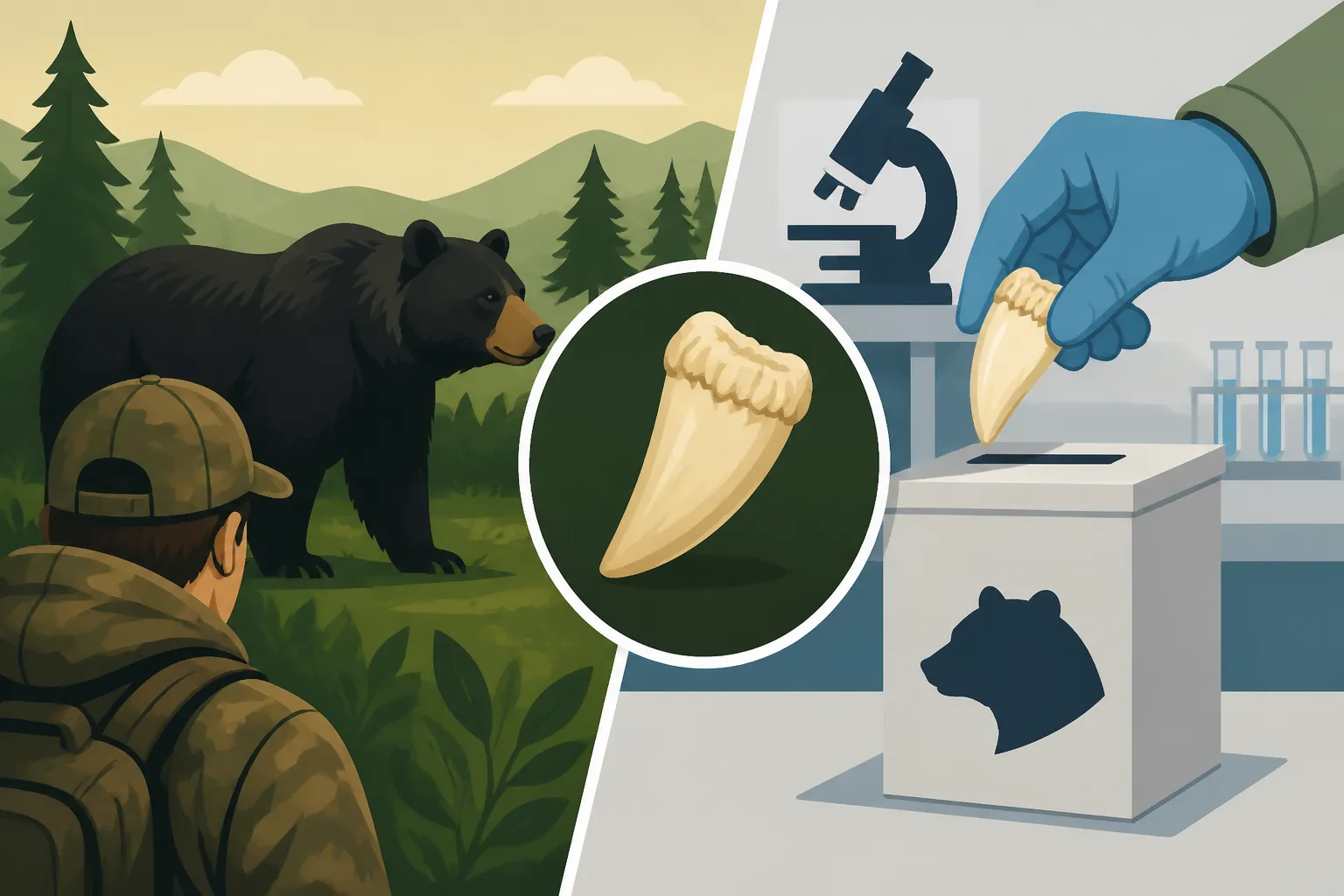
Think of a bear's tooth like the rings on a tree. Scientists can cross-section a specific tooth and count annual cementum rings under a microscope, revealing the animal's exact age at the time of harvest. This isn't just a neat trick; it's fundamental to understanding the overall demographics of New York's Black Bear Population. For instance, if the average age of harvested bears starts skewing much younger, it could signal higher mortality rates or increased hunting pressure in certain areas, prompting the DEC to review season lengths or bag limits.
This age data, when combined with harvest locations and other reporting information, helps the DEC track population trends. They can determine if a particular Wildlife Management Unit (WMU) has a healthy age structure, with a good mix of young, middle-aged, and older bears. This allows them to monitor the success of their management strategies and make adjustments to ensure sustainability. For instance, understanding the age distribution can help predict future population growth or decline, which is vital for setting appropriate quotas for New York Bear Season by Zone. Without hunter submissions, this crucial data would be impossible to collect on a broad scale, leaving wildlife managers largely in the dark.
Gauging Overall Bear Health and Reproductive Success
Beyond just age, the condition of the teeth can also offer clues about the bear's general health and diet throughout its life. While not a primary indicator, worn or damaged teeth might suggest nutritional stress or an older animal struggling to forage efficiently. More significantly, when the age data is combined with other reported details, like the bear's sex and whether a sow had cubs present, it paints a clearer picture of reproductive success.
For example, knowing the age at which sows begin reproducing and how consistently they do so in different regions allows the DEC to assess the health and vitality of the breeding population. If mature sows in a certain area are consistently showing signs of poor reproductive output or are being harvested at an age where they're still prime breeders, it could indicate issues with habitat quality or food availability. This detailed insight helps managers understand not just how many bears there are, but how well they are thriving, ensuring that New York's Black Bear Population remains robust for generations of hunters and wildlife enthusiasts.
The Step-by-Step Guide to Bear Tooth Extraction and Submission
Okay, so you understand why it's important. Now for the how. This part can feel a little daunting, but with the right tools and a clear understanding of the process, it's really quite simple. The key is to be methodical and ensure you extract the correct tooth without damaging it.
Identifying the Correct Premolar for Analysis
This is perhaps the most critical step: making sure you get the right tooth. The DEC specifically requests one of the first upper premolars. Why these? Because they are typically less worn than molars and incisors, making the cementum rings clearer and easier for the lab technicians to read accurately. You're looking for a smaller tooth located behind the canine (fang) and in front of the larger chewing molars. There's one on each side of the upper jaw, so you have two options.
Don't confuse it with the canine, which is large and pointed, or the large molars towards the back. The first premolar is often quite small and can sometimes be partially covered by gum tissue, especially in younger bears. Take your time, locate it carefully, and double-check before you start any extraction. It helps to feel along the gum line, just behind the big canine tooth. Many hunters find that consulting the detailed diagrams provided in the DEC's bear harvest packet, or even referencing a guide from a reliable source like GoHunt before your hunt, can clear up any confusion about tooth identification.
Practical Methods for Safe and Clean Tooth Removal
Once you've identified the correct tooth, it's time for extraction. You don't need fancy dental tools; common household items or basic hunting gear will suffice. The goal is to remove the tooth, root intact, without breaking it.
-
Method 1: The Twisting Pliers Approach (Most Common)
- Preparation: Using a sharp knife, carefully cut around the base of the tooth, separating the gum tissue from the tooth and bone. This is crucial for a clean extraction. Be gentle but firm.
- Grip: Take a pair of needle-nose pliers, channel locks, or even a sturdy multitool. Grip the crown of the tooth firmly, as close to the gum line as possible.
- Twist and Pull: Apply steady, upward pressure while gently rocking and twisting the tooth. Imagine trying to unscrew something; don't just pull straight out. The tooth will eventually loosen and come free. Sometimes it takes a little persistence, especially with older bears.
- Inspection: Once out, inspect the tooth to ensure the entire root is present and undamaged.
-
Method 2: The Screwdriver/Chisel Approach (For Stubborn Teeth)
- Preparation: Similar to Method 1, cut around the gum tissue thoroughly.
- Leverage: Carefully place the tip of a flat-head screwdriver or a small, sturdy chisel (be mindful of sharp edges) at the base of the tooth, against the bone.
- Gentle Prying: Apply slow, steady leverage to pry the tooth upward. Be extremely cautious not to damage adjacent teeth or the jawbone, and absolutely avoid slipping with the tool. This method is more aggressive and should be used with care.
Regardless of the method, cleanliness is key. Rinse the tooth thoroughly to remove any tissue or debris, and make sure it's completely dry before packaging to prevent mold or decomposition. This little bit of care makes the lab's job much easier and ensures your contribution is valuable.
Here’s a quick overview of essential tools:
| Tool | Purpose | Notes |
|---|---|---|
| Small, Sharp Knife | Severing gum tissue around the tooth | A sturdy pocket knife or utility blade works well. |
| Needle-Nose Pliers | Gripping and twisting the tooth | Or channel locks, vice grips, or a durable multitool. |
| Tweezers (Optional) | Removing small tissue fragments | Useful for a cleaner tooth post-extraction. |
| Small Plastic Bag | Storing the clean, dry tooth | Prevents loss and contamination during mailing. |
| DEC Submission Card | Providing vital harvest information | Essential for linking the tooth to specific data. |
Completing Your Bear Tooth Submission Card Accurately
With your tooth extracted and cleaned, the next step is filling out the accompanying information card. This card is just as important as the tooth itself, as it provides the context for the biological data. You'll typically find this card included in your big game packet or accessible through the New York DEC website.
You'll need to accurately record details such as your name, contact information, the date and location of the harvest (WMU is critical here), the bear's sex, and whether it was lactating or accompanied by cubs. Be precise with the WMU; if you're unsure, consult a reliable map or your hunting app like GoHunt to confirm. This information allows the DEC to correlate the biological age data from the tooth with specific harvest events, helping them understand localized population dynamics and reproductive rates. Skipping this step, or providing inaccurate information, renders your tooth submission nearly useless for their scientific study, so take an extra moment to verify everything.
Packaging and Mailing Your Contribution to Conservation
Once the tooth is clean and dry, and the card is filled out, it's time to package everything up. Place the single tooth into a small, sealable plastic baggie. Make sure it's securely sealed to prevent it from falling out during transit. Then, enclose the bagged tooth and the completed information card inside the provided envelope from the DEC, or a standard mailing envelope if you didn't receive one.
Address the envelope to the New York State DEC's bear management program, usually to their Wildlife Resources Center in Delmar or a similar regional office. The exact address should be printed on the submission card or envelope. Ensure you use proper postage. While this might seem like a small act, it's a direct and tangible contribution to wildlife conservation, directly supporting the DEC's ability to manage New York's Black Bear Population responsibly. Don't let your hard work go to waste by forgetting this final, simple step.
What Happens After You Send It In: The Science Behind the Study
You’ve done your part. The tooth and card are in the mail. Now what? The journey of that little tooth is far from over. It embarks on a scientific adventure that culminates in crucial data points shaping the future of bear management in New York.
The Lab Process: From Tooth to Data Point
Once your submission arrives at the DEC lab, it joins hundreds, sometimes thousands, of other bear teeth from successful hunters across the state. Lab technicians meticulously process each tooth. First, they clean it further and then embed it in a clear epoxy resin block. This makes it stable enough to be cut into extremely thin cross-sections using a specialized saw, much like cutting a fine piece of wood to reveal its grain.
These wafer-thin slices are then mounted on microscope slides, stained to enhance visibility, and examined under a high-powered microscope. The technicians carefully count the annual growth rings, or cementum annuli, which appear as alternating light and dark bands. Each pair of bands represents one year of the bear's life. This process is precise and requires trained eyes, ensuring that the age determined from your bear's tooth is as accurate as possible. It's a fascinating example of how detailed biological analysis directly stems from a hunter's ethical responsibility.
How Your Submission Shapes New York's Bear Management Strategy
The individual age data derived from your submitted tooth is then aggregated with all other submissions. This massive dataset provides the DEC with a comprehensive understanding of New York Bear Harvest Trends and the overall health of the population. They can use this information to:
- Assess Population Age Structure: Is the bear population healthy, with a good mix of young, adult, and older bears? Or is it heavily skewed towards younger animals, indicating high turnover?
- Determine Harvest Rates: By knowing the age of harvested bears, the DEC can estimate how many bears are being taken from different age classes and compare this to what is sustainable.
- Inform Future Regulations: If data suggests certain areas are experiencing too much pressure on younger animals, the DEC might consider adjusting season lengths or implementing more conservative harvest limits in those specific WMUs. Conversely, if a population is booming and older bears are prevalent, they might allow for more liberal harvest opportunities, like those that enable hunters to apply for a fourth DMP in 2026.
- Monitor Health and Reproduction: When combined with other reported data, the age helps understand reproductive success rates at different ages and identify any potential health issues impacting specific age groups. This data directly contributes to decisions about where special management attention might be needed, ensuring the long-term vitality of the species, from understanding New York Bear Denning Behavior to tracking New York Bear Cub Survival Rates.
Your simple act of submitting a tooth truly makes a difference. It provides the boots-on-the-ground data necessary for the DEC to make science-based decisions, ensuring that opportunities for Hunting Bears Over Natural Food Sources or using Spot-and-Stalk Tactics for Catskill Bears continue for future generations.
Avoiding Common Mistakes and Maximizing Your Contribution
Even with the best intentions, it's easy to make a small error that can undermine the value of your tooth submission. Being aware of these common pitfalls and having some pro tips in your back pocket can make the entire process smoother and more effective.
Overcoming Extraction Challenges with the Right Tools
One of the most frequent frustrations hunters face is difficulty extracting the tooth. It can be surprisingly stubborn, especially on older, larger bears with robust jawbones. The biggest mistake is trying to yank it straight out, which often breaks the tooth, leaving the root behind and rendering it useless for aging.
- Pro Tip 1: Gum Line Clearance is Key. Don't skimp on cutting around the gum line. Use a sharp knife and really free up the tissue around the tooth before you even think about pliers. The more detached it is from the soft tissue, the easier it will be to twist out.
- Pro Tip 2: Leverage and Twist. Remember the twisting motion. Imagine unscrewing a bolt. Apply firm, consistent pressure and gently rock and twist. Patience is your friend here. For particularly tough extractions, some hunters even carry a dedicated dental pick or a small, sturdy screwdriver in their gear, using it to carefully wiggle the tooth free from the bone socket once the gum tissue is cut. A good quality multi-tool, often found in any hunter's pack alongside a reliable GPS Units for Adirondack Backcountry Hunts or other essential gear, can be indispensable here.
- Pro Tip 3: Don't Damage the Root. The root is where the growth rings are. If the tooth breaks off at the gum line, it's of no use. Focus your grip on the crown but ensure the force is directed in a way that encourages the whole tooth, root included, to come out. If you're really struggling and the tooth feels like it's going to snap, take a break, re-evaluate, and perhaps try from a different angle or with a slightly different tool.
Double-Checking Details for a Successful Submission
Even if you successfully extract the tooth, administrative errors can prevent your valuable data from being used. It's a shame to go through the effort of a bear hunt and tooth extraction only to have it sidelined by a missed detail on the form.
- Common Mistake 1: Incorrect WMU. Hunters sometimes guess the WMU or transpose numbers. Before you fill out that card, consult a current map (digital or physical) or the GoHunt app to confirm the exact Wildlife Management Unit where you harvested the bear. This geo-specific data is crucial for regional population analysis.
- Common Mistake 2: Missing Information. Did you fill in every single blank on the submission card? Hunter name, license number, date of kill, sex of the bear, and the WMU are all mandatory. If any critical pieces are missing, the DEC may not be able to process your submission.
- Common Mistake 3: Improper Packaging. A wet tooth can mold or decay, and a loose tooth can fall out of an unsealed bag or envelope. Ensure the tooth is dry, in a sealed baggie, and that both the tooth and card are securely enclosed in a properly addressed and stamped envelope.
- Pro Tip: Photograph Your Submission. Before sealing the envelope, take a quick picture of the filled-out card and the bagged tooth. This provides you with a record and can be helpful if there's ever a question about your submission. Also, remember to report your deer or bear harvest online through the NY DEC's HuntFishNY system as required; this is separate from the tooth submission but equally vital for data collection. Finally, be sure to take care of the meat properly by following guidelines on Handling Bear Meat Safely to ensure none of your hard-earned harvest goes to waste.
By being meticulous and following these steps, you're not just complying with a regulation; you're actively participating in the responsible management of New York's amazing black bear resource, helping to ensure healthy populations for future generations of hunters.
Disclaimer
This guide is intended for informational purposes only and is not a substitute for the official regulations published by the New York State Department of Environmental Conservation (DEC). Hunters are responsible for knowing and adhering to all current hunting laws, regulations, and reporting requirements. Always consult the official DEC hunting guide or website for the most up-to-date and authoritative information.