Crossbow Rules When Hunting With a Dog
Hunting in New York offers incredible opportunities, but navigating the myriad of regulations, especially when you're combining specific methods like crossbow hunting with the assistance of a canine companion, can feel like deciphering ancient scrolls. It’s frustrating when you just want a clear answer on what’s legal and ethical in the field. This guide aims to demystify the rules surrounding crossbow use when you’re hunting with a dog in New York, giving you the confidence to enjoy your outdoor pursuits within the bounds of the law.
Understanding New York's Crossbow Regulations for Deer and Bear
Let's start by clarifying the baseline rules for using a crossbow in New York, as these form the foundation for any other considerations. For a long time, crossbows were a hotly debated topic among hunters, but they've firmly found their place in the Empire State's hunting landscape, bringing new opportunities for many.
General Crossbow Eligibility and Seasonality
In New York, crossbows are generally permitted for hunting deer and bear during both the regular archery season and the regular firearm season. This offers a much wider window of opportunity than traditional vertical bows for many hunters, or provides a great alternative for those who find drawing a compound or recurve bow challenging due to age, injury, or preference. However, it's not a free-for-all. Hunters must possess a valid hunting license with bowhunting privileges to use a crossbow during any archery season. This means completing a specific bowhunter education course, which is separate from the general New York Hunter Education Requirements. It’s not enough to just have your big game tag; you need that extra endorsement.
The crossbow itself also needs to meet certain specifications. The New York Department of Environmental Conservation (DEC) sets out minimum draw weights and limb widths. Typically, you're looking at a minimum draw weight of 100 pounds and a maximum of 200 pounds, with a minimum limb width of 17 inches. These aren't arbitrary numbers; they're designed to ensure sufficient kinetic energy for a humane kill while also preventing the use of excessively powerful or unsafe equipment. Always double-check the current regulations annually, as they can sometimes be tweaked. For a deeper dive into the specifics, you can always consult the official New York Crossbow and Bow Regulations.
Crossbow Restrictions and Safety Considerations
While crossbows offer flexibility, they aren't without their restrictions. For instance, you generally cannot use a crossbow during the early archery season in the Northern Zone, though they are allowed during the later portions of the archery season in both the Northern and Southern Zones. Understanding When New York's Archery Season Opens and its nuances is crucial. Also, it’s important to remember that crossbows, like all hunting implements, must be handled with the utmost care. Unlike a traditional bow that typically requires you to be at full draw before aiming, a crossbow can be cocked and loaded for an extended period, which increases the risk if not handled responsibly.
Another important safety note involves broadheads. Mechanical or fixed-blade broadheads are typically permitted, but they must meet minimum cutting diameter requirements. While the crossbow itself might be ready to fire, the broadhead is what does the work, and ensuring it's sharp and legal is paramount. Additionally, always be aware of legal shooting hours. Even if you're out during an open season, taking a shot outside of these windows is illegal and dangerous. Most hunters use tools like the GoHunt app or the DEC's official HuntFishNY app to quickly verify these details in the field.
Using Dogs in New York Hunting: What's Permitted and What's Not
Now, let's turn our attention to man's best friend and their role in New York hunting. The rules around using dogs are far more restrictive for big game than for small game, and this is where most confusion arises for deer and bear hunters.
Dogs for Small Game and Upland Birds
For many hunters, a good bird dog or rabbit dog is an indispensable partner. In New York, dogs are generally permitted for hunting small game like rabbits and squirrels, as well as upland birds such as grouse, pheasants, and woodcock. Imagine the thrill of watching a Setter lock up on point in a patch of New York aspen cover, or listening to beagles baying on the track of a cottontail through a thick briar patch. These are classic hunting scenarios, and dogs are integral to them. When pursuing New York Small Game and Upland Bird Seasons, a dog can greatly enhance your success and overall experience.
There are still some common-sense rules, of course. Your dog should be under control, and you need to ensure they're not harassing non-target wildlife or trespassing. For many upland birds, hunters often use pointing breeds, flushers, or retrievers, each playing a distinct role in locating, flushing, and recovering game. Make sure your dog is properly trained and doesn't chase deer or other big game, as this could lead to violations.
Dogs and Big Game: A Clear Distinction
Here's the critical point for our discussion: it is generally illegal to use a dog to hunt big game (deer or bear) in New York State. This means you cannot use a dog to actively track, pursue, or drive deer or bear in the conventional hunting sense. This regulation is in place to maintain fair chase principles and prevent the undue harassment of big game animals. So, if your idea is to bring your hound to help you find a deer while you're stalking with a crossbow, that's a definite no-go.
This prohibition applies universally across all seasons – archery, firearm, and muzzleloader. The idea is that deer and bear hunting should be primarily a test of the hunter's skill in scouting, tracking, and marksmanship, without the added advantage of a dog actively locating or cornering the animal. This is a common misconception, especially for hunters new to New York or those coming from states with different regulations. It's vital to internalize this rule to avoid serious penalties.
The table below summarizes the general rules for using dogs in New York hunting:
| Game Species | Permitted for Active Hunting | Permitted for Tracking Wounded Game | Leashed Requirement for Tracking | Special Notes |
|---|---|---|---|---|
| White-tailed Deer | No | Yes (with specific conditions) | Yes | Dog must be on a leash (maximum 50 ft) and under immediate control. Handler cannot carry a loaded firearm/bow/crossbow unless they have an unfulfilled tag and the dog is being used to recover their own lawfully wounded animal. The dog's role is recovery, not pursuit. This is often where hunters get confused, so using apps like GoHunt for specific regulations is key. |
| Black Bear | No | Yes (with specific conditions) | Yes | Same rules as for white-tailed deer. |
| Wild Turkey | No | No (generally) | N/A | Turkey hunting typically prohibits the use of dogs, even for tracking. There might be rare, specific exceptions for certain nuisance permits, but for general hunting, it's not allowed. |
| Rabbits/Hares | Yes | N/A | No (typically) | Dogs (e.g., beagles) are commonly used to actively hunt these species. |
| Squirrels | Yes | N/A | No (typically) | Dogs are often used to tree squirrels. |
| Ruffed Grouse/Woodcock | Yes | N/A | No (typically) | Pointing or flushing dogs are common for these upland birds. |
| Pheasants | Yes | N/A | No (typically) | Dogs are widely used for pheasant hunting, often on stocked birds. |
| Fox/Coyote | Yes (for hunting/pursuit) | N/A | No (for active hunting) | Dogs can be used to hunt fox and coyote, including pursuit. However, check local ordinances and specific seasons. |
The Intersection: Crossbows and Hunting with Dogs in New York
So, what happens when you combine these two elements? Given the strict rules against using dogs for active big game pursuit, the intersection primarily lies in the realm of wounded game recovery. This is a critical distinction that every New York hunter needs to understand.
The Legality of Crossbow Hunting While Accompanied by a Dog
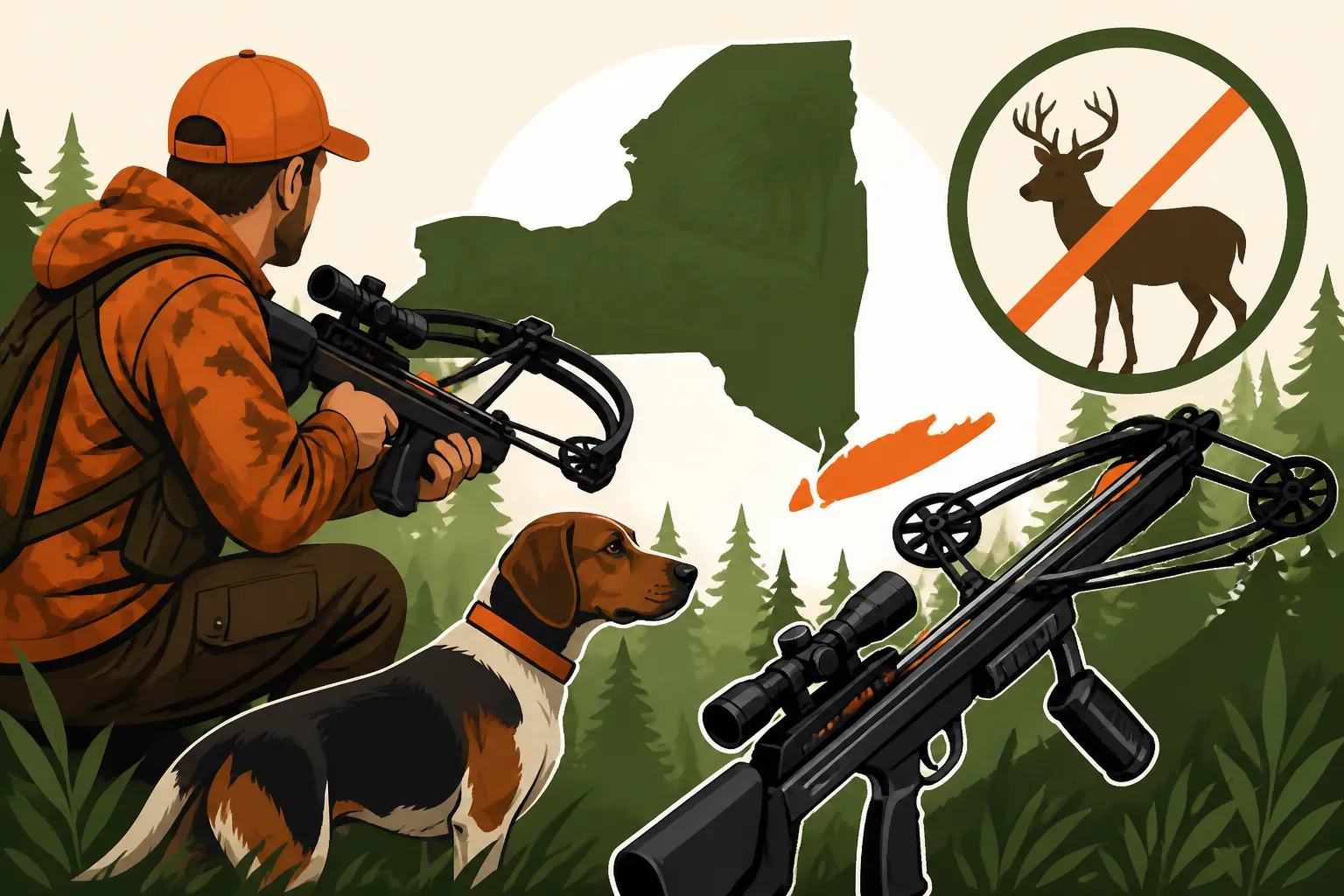
To be absolutely clear: if you are actively hunting deer or bear with a crossbow, you cannot be accompanied by a dog that is participating in the hunt in any way, shape, or form. This means no dog off-leash, no dog actively tracking a fresh scent trail with you, and certainly no dog driving deer towards you. The moment a dog becomes an active participant in the pursuit of big game, you are breaking the law. Even if the dog is just walking alongside you, if its presence is deemed to be aiding in the location or pursuit of game, it's illegal.
This is where the concept of "fair chase" comes into play. The DEC's regulations are designed to ensure that big game hunting remains a challenging and ethical endeavor. The skills of the hunter should be paramount. Therefore, while you might be lawfully carrying your crossbow and have a valid New York big game license, the presence of a dog acting as a hunting aid for deer or bear is strictly prohibited. It doesn't matter if it's during the New York's Southern Zone Firearm Season or the extended archery period; the rule against dogs for big game pursuit remains firm.
When a Dog Can Be Present: Tracking Wounded Game
This is the singular, crucial exception where a dog can legally be present when you're crossbow hunting for deer or bear. If you make a shot with your crossbow and wound an animal, New York State law does allow for the use of a leashed dog for tracking and recovering that wounded game. This is a game-changer for ethical recovery, as a trained tracking dog can significantly increase your chances of finding a deer that might otherwise be lost.
However, this isn't a loophole to hunt with a dog. There are very specific, non-negotiable conditions:
- Leashed: The dog must be on a leash. The leash cannot exceed 50 feet in length. The dog must remain under your immediate control.
- Recovery, Not Pursuit: The dog's sole purpose must be to track the wounded animal for recovery, not to actively pursue or corner a healthy animal.
- Your Animal: You can only use a dog to track an animal you have lawfully wounded. You cannot use your dog to track a deer wounded by another hunter unless you are explicitly assisting them under their legal tag.
- Unfulfilled Tag: The person tracking with the dog and carrying a loaded firearm/bow/crossbow must possess a valid, unfulfilled big game tag for the species they are tracking. If your tag is already filled, or if you don't have a tag for that specific animal, you generally cannot be carrying a loaded weapon while tracking. This is critical for safety and legality, especially when considering New York Legal Shooting Hours.
For instance, if you've shot a buck with your crossbow and you believe it's mortally wounded but you've lost the blood trail, bringing in a trained tracking dog (or having a friend with one) is entirely legal and encouraged for responsible recovery. The dog will be sniffing out the specific blood trail and scent of the wounded animal, guiding you to its location. This is different from a dog blindly pushing deer through the woods.
Navigating Legalities for Tracking Wounded Game with Dogs
Understanding the nuances of tracking wounded game with a dog, especially when a crossbow is involved, requires careful attention to detail. It's about responsible hunting and doing everything possible to recover an animal.
Rules for the Hunter Carrying the Crossbow During Tracking
When you are tracking your wounded deer or bear with a leashed dog after a crossbow shot, the rules regarding the crossbow itself are clear. If you intend to dispatch the animal if it's found alive, your crossbow must still be legally configured and loaded, and you must have an unfulfilled tag for that animal. This means you haven't filled your New York Deer Management Permits Explained for that species or sex yet. If you have already filled your tag, or are simply assisting another hunter, you generally should not be carrying a loaded crossbow yourself during the tracking process, as you would not be legally able to dispatch the animal.
It’s crucial to understand that even when tracking, you are still bound by all other hunting laws. This includes respecting property lines. If the wounded animal crosses onto posted private land, you cannot simply follow it. You must obtain permission from the landowner before entering their property, even if you’re only tracking. Many hunters use mapping applications like GoHunt to quickly identify property boundaries and landowner information on the fly, which can be invaluable in these situations.
When to Engage a Professional Tracking Dog Service
Sometimes, despite your best efforts, a blood trail vanishes, or the terrain becomes too difficult. This is when engaging a professional tracking dog service can be invaluable. New York has a number of dedicated, trained tracking dog handlers who specialize in recovering wounded game. These individuals and their dogs are often highly experienced and can follow trails that human eyes simply cannot discern.
When using a professional tracking service, the rules remain much the same. The dog must be leashed, and its purpose is recovery. The professional handler will often guide the dog, and if the animal is found alive, the hunter (who must possess an unfulfilled tag) is the one who will dispatch it. These services often operate under specific permits or understandings with the DEC, ensuring compliance with all regulations. Don't hesitate to use such a service; it's a testament to ethical hunting to ensure an animal is not wasted. Resources for finding such services are often available through local hunting clubs or online forums. If you've tried Tracking a Deer in Fresh New York Snow or Blood Trailing After Dark in New York to no avail, a professional tracker is your next best step.
In summary, while you can't actively hunt big game with a dog in New York, the ability to use a leashed dog for recovering wounded animals with your crossbow is a critical provision that promotes ethical hunting. Always be sure to report your harvest promptly once you've recovered your animal; New York Deer Reporting Requirements are a non-negotiable part of the process.
Disclaimer
The information provided in this guide is for general informational purposes only and does not constitute legal advice. Hunting regulations in New York State can change, and interpretations may vary. It is the responsibility of every hunter to consult the most current New York State Department of Environmental Conservation (DEC) hunting regulations guide, available on their official website, or by contacting the DEC directly before engaging in any hunting activities. Always prioritize safety, ethical hunting practices, and compliance with all applicable laws.