How Many Deer Were Sampled After the Herkimer Case
The emergence of Chronic Wasting Disease (CWD) is one of the most serious threats facing deer and elk populations across North America, and for hunters in New York, the discovery of CWD in a captive herd in Herkimer County sent a ripple of concern through the entire hunting community. This guide will walk you through the comprehensive sampling efforts undertaken by New York wildlife officials in the aftermath of that crucial case, detailing how many deer were tested and what those numbers mean for the future of hunting in our state.
Understanding the Herkimer CWD Case and Its Immediate Aftermath
When CWD was detected in a captive white-tailed deer facility in Herkimer County, it was a moment that every hunter in New York had dreaded. This wasn't just another news story; it was a potential game-changer for our cherished deer herds and hunting traditions. The question on everyone's mind was immediate and urgent: had this fatal neurological disease, known for its ability to devastate deer populations, spread from the captive facility into our wild deer? The state's rapid response was critical, focusing on intensive surveillance to answer that very question and protect the wild deer resource we all value so deeply.
The Initial Discovery and Public Concern
The discovery itself was unsettling. CWD, a transmissible spongiform encephalopathy, is always fatal for deer, elk, and moose. Finding it within the state's borders, even in a fenced facility, was a stark reminder of its proximity and the constant threat it poses. Hunters, myself included, felt a knot in their stomach. We've heard the stories from states out west, or even Pennsylvania, where CWD has taken hold, requiring strict regulations and altering hunting landscapes. The Herkimer case highlighted the vulnerability of our own wild deer, sparking widespread concern among those who spend their seasons in the woods and fields.
The immediate reaction from the New York State Department of Environmental Conservation (DEC) was swift, establishing a "Chronic Wasting Disease Containment Area" around the affected farm. This area, which included towns within Herkimer County, was designed to mitigate any potential spread and focus surveillance efforts. Hunters in this zone suddenly faced new regulations and an increased urgency to report their harvests and participate in testing. The entire community braced itself for what might be found. You can learn more about this specific incident in our post on How CWD Reached a Captive New York Herd.
Why Extensive Sampling Was Critical
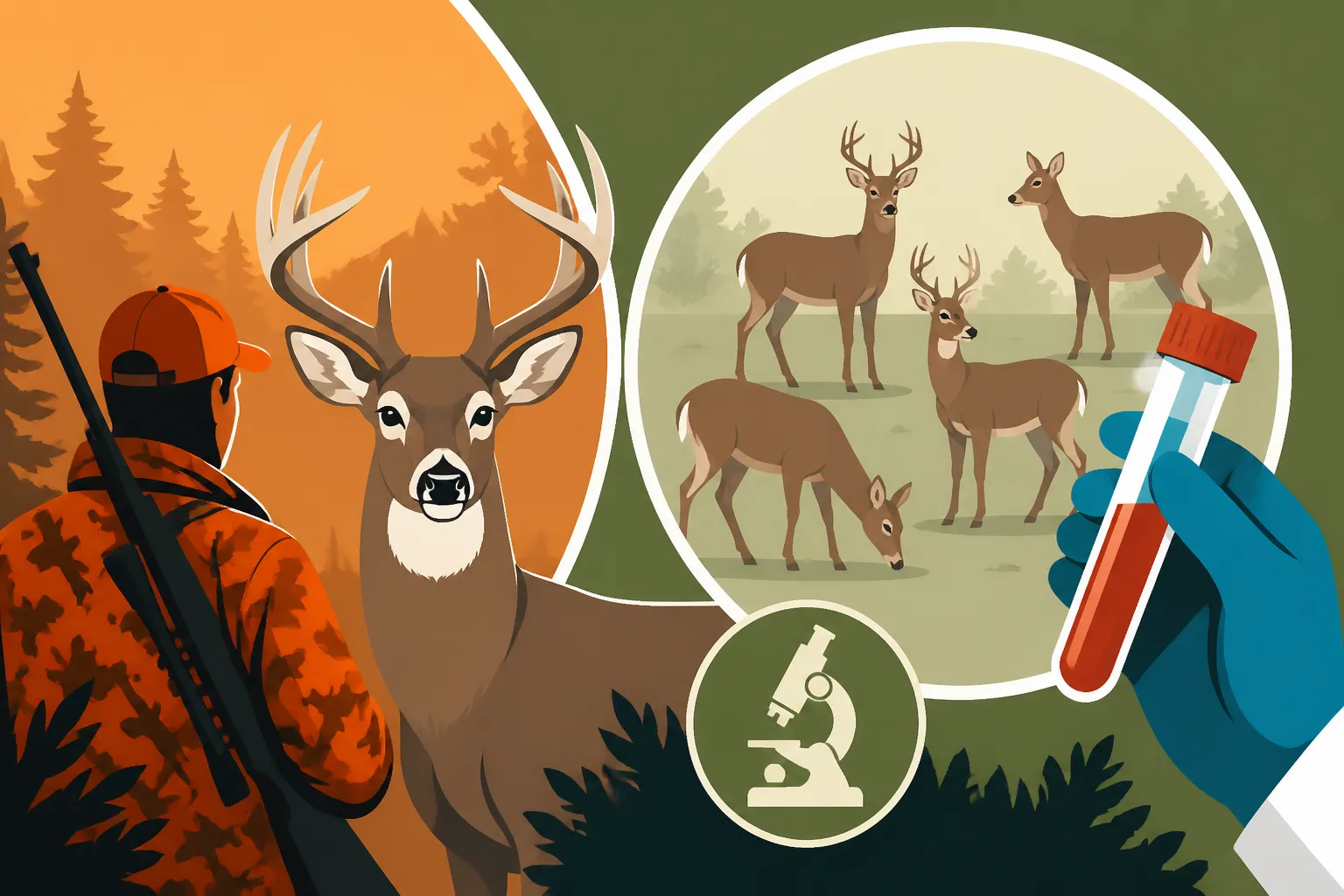
In situations like the Herkimer CWD detection, extensive sampling isn't just a good idea; it's absolutely paramount. Think of it like a public health crisis – you need to test widely and quickly to understand the scope of the problem. For CWD, this means analyzing brainstem and lymph node tissue from deer to detect the presence of the abnormal prion proteins that cause the disease. Without a robust sampling program, it would be impossible to determine if the disease had escaped into the wild population, potentially compromising the health of our deer for generations to come.
The primary goal of this rapid and broad sampling effort was twofold: first, to act as an early detection system, quickly identifying any instances of CWD in wild deer that might have come into contact with the captive facility. Second, it was about establishing a critical baseline. Even if no CWD was found immediately, understanding the health of the deer herd in the containment area would be essential for long-term monitoring and to assess the effectiveness of any mitigation strategies. Every sample collected was a piece of the puzzle, helping to paint a clearer picture of the disease's presence, or thankfully, its absence, in our wild deer.
The Scope of New York's Post-Herkimer Sampling Efforts
The response to the Herkimer CWD case wasn't a half-measure; it was a full-scale, coordinated effort involving wildlife biologists, conservation officers, and most importantly, hunters. The DEC recognized that without the cooperation of the hunting community, getting enough samples would be an uphill battle. This meant establishing accessible sampling stations, communicating clearly with hunters, and, where necessary, implementing additional measures to ensure sufficient samples were collected from the critical zone.
Targeted Geographic Focus
The sampling efforts were highly concentrated within the established CWD Containment Area, primarily focusing on the towns directly surrounding the captive facility in Herkimer County. This isn't to say other parts of the state weren't monitored, but the immediate threat assessment centered on a radius around the initial detection. Wildlife Management Units (WMUs) like 5A, 5G, and 6K, along with adjacent areas, became zones of intense scrutiny. The strategy was to cast a wide net in the most vulnerable areas, increasing the probability of detecting the disease if it had indeed spread.
Beyond the initial containment zone, surveillance was also stepped up in neighboring WMUs, understanding that deer movements don't stop at arbitrary lines on a map. This layered approach aimed to create a buffer of surveillance, ensuring that if CWD had moved beyond the immediate area, it would still be caught. Hunters who participated in the sampling from these regions played a crucial role, their harvested deer providing vital data points. For more detailed information, check out our piece on Which Towns Sit Inside the CWD Containment Area.
Different Sampling Methods Employed
To achieve the necessary sample numbers, the DEC employed a multi-pronged approach to collect deer tissue. It wasn't just about waiting for hunters to bring in their deer, although that was a massive component of the effort. A variety of methods ensured comprehensive coverage and helped gather samples even outside of typical hunting seasons. This combination of strategies was essential for a rapid and thorough assessment.
Here's a breakdown of the primary sampling methods:
- Hunter-Harvested Deer: This was the cornerstone of the sampling program. Hunters who took deer within the containment area were strongly encouraged, and sometimes required, to submit their deer for CWD testing. Check stations were set up, and hunters could also learn how to properly collect a sample themselves or drop off heads. This method leveraged the inherent success of the hunting season to gather a large volume of samples.
- Roadkills and Clinical Deer: Deer found as roadkills or exhibiting neurological symptoms consistent with CWD were immediately prioritized for testing. These animals provide opportunistic samples and are often key indicators if a disease is present in a population, as sick animals may be more prone to vehicle collisions.
- Targeted Deer Removals: In some cases, to ensure sufficient samples from specific high-risk locations or to meet sampling quotas, the DEC conducted targeted removals of deer. These efforts were strategically planned and executed by trained personnel to fill any gaps in the surveillance data.
- Deer Management Permits (DMPs): The DEC also utilized the DMP system, particularly in areas where antlerless harvests were important for population control, to encourage additional deer removal and subsequent testing. In certain containment areas, additional DMPs might have been issued to increase opportunities for sampling. Learn more about Extra DMPs Issued Inside the Containment Area.
This comprehensive strategy ensured that a wide array of samples was collected, providing a robust dataset for analysis.
| Sampling Method | Description | Primary Target | Hunter Involvement |
|---|---|---|---|
| Hunter-Harvested | Tissue collected from deer taken by licensed hunters during season | Broad representation of the wild herd | High |
| Roadkills & Clinical | Tissue from deer found deceased (vehicle collisions) or appearing ill | Opportunistic, potential early indicator of disease | Low (reporting) |
| Targeted Removals | Deer culled by wildlife professionals in specific areas for testing purposes | Filling sampling gaps, high-risk areas | None |
The Hard Numbers: How Many Deer Were Sampled
The question that echoes after any CWD detection is always, "How many deer did you actually test?" The sheer volume of samples processed after the Herkimer case speaks to the dedication of New York's wildlife agencies and the invaluable cooperation of hunters. These numbers aren't just statistics; they represent a massive undertaking, a collective sigh of relief, and an ongoing commitment to the health of our deer.
Initial Emergency Response Sampling
In the immediate aftermath of the captive deer CWD detection in Herkimer County, the DEC launched an aggressive surveillance campaign. Over a several-month period following the initial discovery, a staggering number of deer samples were collected and tested specifically from the core CWD Containment Area and surrounding regions. This included deer taken by hunters, roadkills, and targeted removals. The initial sampling phase saw over 3,000 deer sampled from within and directly adjacent to the Herkimer County containment zone. This massive effort focused on quickly assessing whether CWD had jumped into the wild population, which was the primary concern for both wildlife managers and the hunting public. The results, thankfully, came back negative for CWD in all wild deer samples from this initial emergency response, a testament to the swift action and comprehensive sampling.
Ongoing Surveillance and Long-Term Monitoring
While the initial emergency response provided critical immediate relief, the fight against CWD isn't a sprint; it's a marathon. New York understood that ongoing surveillance was essential to ensure the long-term health of the wild deer population. Even after the initial high-volume sampling, the DEC continued, and still continues, to monitor for CWD through regular sampling programs across the state, with a particular focus on the areas historically close to the Herkimer case and other high-risk zones.
Each year, hundreds, if not thousands, of deer continue to be sampled statewide as part of this vigilance. This includes hunter-harvested deer submitted through various programs, as well as testing of animals exhibiting suspicious symptoms. This long-term commitment ensures that even if CWD were to somehow emerge again, or slowly spread undetected, there's a system in place to catch it early. This proactive approach is a critical component of New York's strategy to keep our wild deer healthy. You can always check the latest regulations and CWD information on the official DEC website, or platforms like GoHunt can help you research specific WMU information if you're planning a hunt in an area with special considerations.
Impact of Hunter Participation on Sampling Success
It cannot be overstated how vital hunter participation was, and continues to be, for the success of New York's CWD surveillance efforts. Hunters are truly the frontline conservationists, often the first to notice unusual animal behavior or to provide the samples necessary for monitoring programs. Without the cooperation of thousands of individuals who took the time to bring their deer to check stations or properly submit samples, the extensive testing numbers would simply not have been achievable.
This collaboration is a shining example of how hunters directly contribute to wildlife management and conservation. Their willingness to comply with regulations, report their harvests, and submit samples directly translated into the robust dataset that allowed the DEC to confidently state that CWD was not found in New York's wild deer herd following the Herkimer incident. This partnership between the DEC and the hunting community is a powerful tool in protecting our natural resources and ensuring the future of deer hunting in New York. Hunters interested in contributing can review the requirements for New York Deer Reporting Requirements to ensure their harvest is properly accounted for.
What the Sampling Results Meant for New York Hunters
For every hunter in New York, the results of the post-Herkimer CWD sampling brought a collective sigh of relief. The threat of CWD spreading into our wild deer population is a serious one, and the successful containment and the negative test results were incredibly reassuring. However, it's crucial to understand that while the immediate crisis was averted, vigilance remains the cornerstone of New York's strategy to keep CWD at bay. This ongoing commitment directly impacts how and where we hunt, emphasizing responsible practices to protect our herd for generations to come.
Reassuring Absence of Wild CWD
The most significant takeaway from the extensive post-Herkimer sampling was the consistent absence of CWD in New York's wild deer herd. After thousands of samples were processed from deer harvested, found as roadkills, or targeted for removal within the containment area and beyond, not a single wild deer tested positive for Chronic Wasting Disease. This was monumental news, confirming that the disease had not spread from the captive facility into the free-ranging deer population. It was a huge relief for hunters, landowners, and wildlife managers alike, allowing us to continue enjoying the fantastic deer hunting opportunities across our state, from the Hunting Southern Tier Farmland Deer to the challenges of Treestand Setups in Adirondack Hardwoods.
This success story is a direct result of aggressive action, effective containment measures, and strong hunter cooperation. It demonstrates that with quick intervention and dedicated surveillance, it is possible to prevent the establishment of CWD in wild populations, even when it surfaces in captive facilities. This positive outcome has strengthened New York's resolve to maintain its robust CWD monitoring program and continue educating hunters on how they can help.
Continued Vigilance and CWD Containment Measures
While the news was overwhelmingly positive, the threat of CWD is persistent, and New York is not letting its guard down. The Herkimer case served as a critical reminder that CWD is a constant risk, and ongoing vigilance is absolutely non-negotiable. This translates into several continued measures that hunters need to be aware of, particularly if they hunt in or near areas that have had CWD concerns in the past.
These measures include:
- Carcass Transport Restrictions: To prevent accidental spread, strict rules govern the transportation of deer carcasses, especially from areas where CWD has been detected or is being monitored. These rules are designed to ensure that potentially infected materials (like brain and spinal cord tissue) are not moved into CWD-free zones. Understanding New York Carcass Transport Restrictions is crucial for every hunter.
- Ongoing Testing for Hunters: While not as intensive as the post-Herkimer emergency, the DEC maintains a CWD surveillance program that includes testing hunter-harvested deer, especially in specific high-risk WMUs. Hunters may still be asked to submit samples or bring their deer to check stations, and participation is always encouraged. For those hunting within or near containment zones, compliance with any mandatory testing is vital. More information can be found in our guide to New York CWD Testing for Hunters.
- Educational Outreach: The DEC continues its efforts to educate hunters and the public about CWD, its risks, and how to identify potential signs of the disease. Knowledge is our best defense, and understanding the role each of us plays in preventing CWD is paramount. This vigilance ensures that New York can continue its proud tradition of hunting healthy game for years to come.
Disclaimer
This article is for general informational purposes only and does not constitute professional advice. Laws, prices and regulations vary by location and change over time. Consult a qualified professional for guidance on your specific situation.