Prescribed Burns and New York Hunting Closures
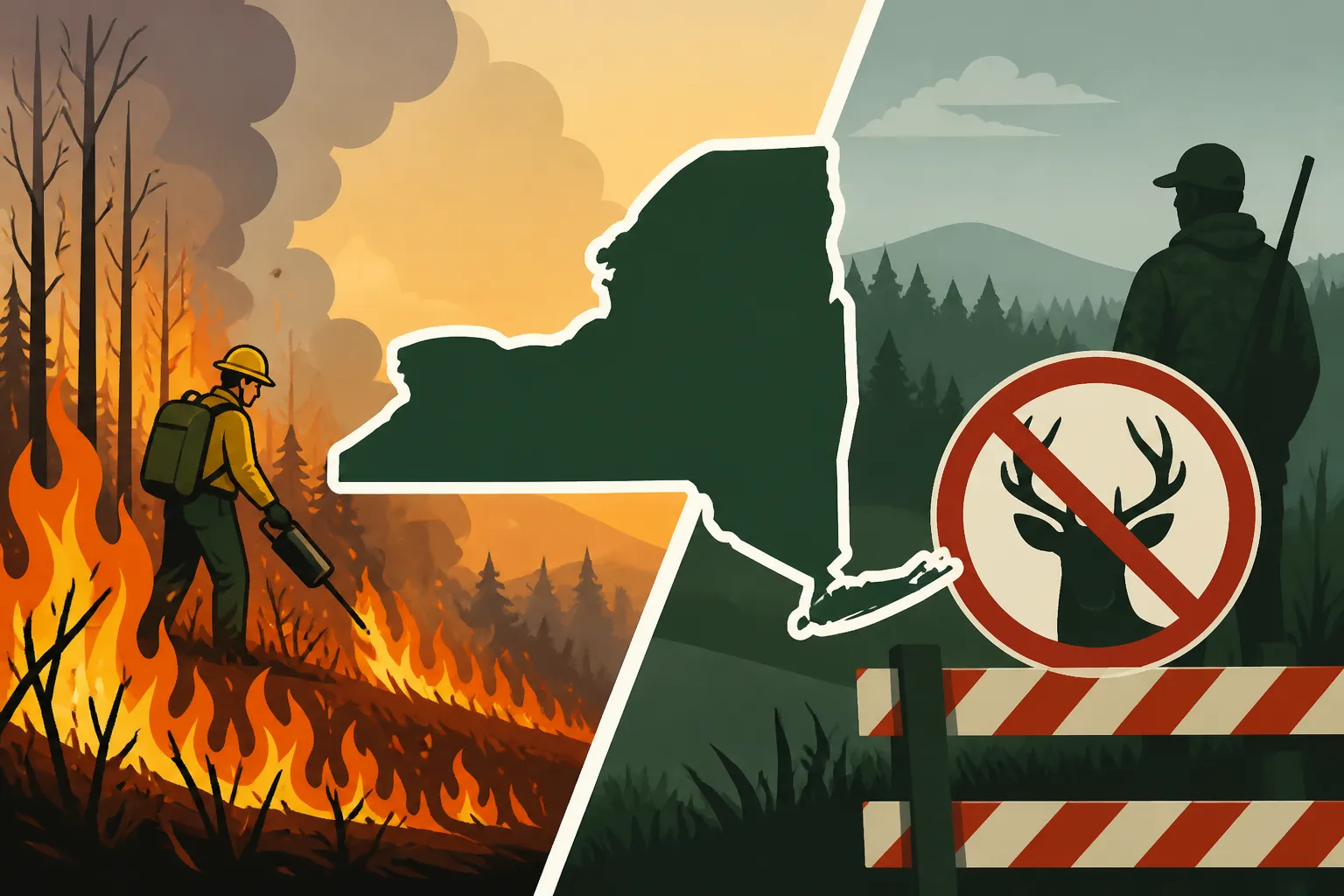
There's nothing quite as frustrating as planning an entire hunting trip, rising before dawn, driving for an hour or two, only to arrive at your favorite public land block and find it gated off with a "CLOSED DUE TO PRESCRIBED BURN" sign. It throws a wrench in your carefully laid plans, wastes precious hunting time, and leaves you wondering why these closures happen and how you could have known beforehand. This guide will walk you through the world of prescribed burns in New York, explaining why they're essential, how they lead to closures, and most importantly, how you can stay informed to avoid unwelcome surprises and even leverage these ecological events for better hunting down the line.
Understanding Prescribed Burns in New York's Ecosystem
Prescribed burns, also known as controlled burns, are a vital land management tool in New York, employed by agencies like the DEC (Department of Environmental Conservation) and sometimes by private landowners. These aren't accidental wildfires; they are carefully planned and executed fires set under specific weather conditions to achieve particular ecological goals. The purpose isn't to destroy, but to renew and improve the landscape, often mimicking natural fire cycles that historically shaped our woodlands and grasslands.
Why Controlled Burns Are Necessary
For decades, the conventional wisdom was to suppress all wildfires. While this protected property, it also disrupted natural processes that many ecosystems rely on. Without fire, certain habitats become overgrown, leading to a build-up of fuel that can result in much larger, more destructive uncontrolled wildfires when they inevitably do occur. Think of it as a proactive, controlled intervention to prevent a much worse scenario. These burns also help control invasive species, promote the growth of native plants, and even improve soil health. They're a delicate balance, and immense planning goes into every single one to ensure safety and effectiveness.
Benefits for Wildlife and Habitat
From a hunter's perspective, prescribed burns, while temporarily disruptive, often lead to significant long-term benefits for game animals. Many species, particularly deer, turkey, and grouse, thrive in the mosaic habitats created by fire. A burn opens up the canopy, allowing sunlight to reach the forest floor, which in turn stimulates the growth of new, tender vegetation – a buffet for deer. It can also create better nesting cover for turkeys and improve drumming habitat for grouse by promoting young, shrubby growth. These areas, once burned, can become prime hunting spots in subsequent seasons as wildlife takes advantage of the rejuvenated food sources and cover. Agencies use these burns strategically, often targeting specific areas to improve habitat for species identified as needing a boost. It’s a powerful tool in the larger effort to manage White-Tailed Deer Across New York and other game.
How Prescribed Burns Lead to Hunting Closures
The immediate aftermath and during a prescribed burn, safety is the absolute top priority. While the long-term benefits are clear, the process itself necessitates temporary closures of hunting areas. Understanding the reasons behind these closures can help temper the frustration when you encounter one.
Ensuring Public and Fire Crew Safety
Imagine hunters being present in an area where fire crews are actively working with torches, hoses, and heavy equipment, not to mention the fire itself, smoke, and falling trees. It's a recipe for disaster. Public safety is the paramount concern. Closures are put in place to ensure that hunters, hikers, and other recreational users are well out of harm's way. This isn't just about avoiding direct contact with flames; smoke can obscure vision, and falling snags (dead trees that may have been weakened by fire) pose a significant hazard even days or weeks after the burn is complete. Fire crews need to operate without the added concern of civilians accidentally wandering into the burn zone. They need clear access and freedom to manage the fire's spread, often working long hours in challenging conditions.
Timing and Scope of Closures
Prescribed burns are highly dependent on specific weather conditions – humidity, wind speed and direction, and recent rainfall all play a crucial role. This means they can be scheduled and then postponed multiple times, making it difficult for the public to predict when and where a burn will occur. When a burn is finally approved, the closure might be very localized, affecting only a small section of a State Forest or Wildlife Management Area (WMA), or it could encompass a larger block of land depending on the size and complexity of the burn unit.
The duration of a closure also varies. During the active burn, the area will be completely off-limits. Afterwards, it might remain closed for a period to allow for mop-up operations, to ensure all embers are out, and to assess any immediate hazards like unstable trees. Sometimes, a closure extends longer to give the ecosystem a chance to recover without human disturbance during its initial regrowth phase. This is especially true if a burn is conducted right before or during a specific hunting season, which can feel particularly impactful to hunters trying to get out into Public Hunting Land in New York.
Finding Information on Active and Planned Burns
One of the biggest headaches for hunters is the lack of real-time, easily accessible information about prescribed burns. While agencies do their best to inform the public, the dynamic nature of these operations means schedules can change on a dime. However, there are proactive steps you can take to stay as informed as possible and minimize the chance of a wasted trip.
DEC Websites and Public Notices
The New York State Department of Environmental Conservation (DEC) is the primary source for information on planned and active prescribed burns on state lands. They will often post notices on their regional office webpages or general news releases. This isn't always pushed out far in advance due to the weather dependency, so it requires regular checking. Look for specific sections related to forest management, wildlife habitat improvement, or public land notices.
It's a good habit to check the DEC website for the specific region or WMA you plan to hunt in a few days before you head out. Don't just look for deer season dates; dig a little deeper into the land management news. Subscribing to any email newsletters or RSS feeds offered by the DEC for your target areas can also give you a heads-up. Sometimes, local DEC offices might even post signs at popular trailheads well in advance, but if you're traveling a distance, those roadside signs are often too late to be helpful. This diligence is key for successful trips, much like staying updated on New York Deer Seasons by Zone.
Utilizing Mapping Tools and Local Resources
While official DEC channels are crucial, modern mapping applications can be incredibly helpful for understanding property lines and potential burn areas, especially if you get a general location from a public notice. Tools like onX Hunt often integrate public land boundaries, and while they won't show real-time burn closures, they can help you understand the scale of public land affected and identify alternative hunting spots nearby if an area is closed. Many advanced hunters use these apps not just for navigation but for pre-scouting, and knowing where different land types exist can be valuable when a primary area becomes temporarily unavailable. While GoHunt might be more focused on western big game, it's a good general reminder that hunter-focused platforms can sometimes share news from various states, though always cross-reference with official DEC sources for New York.
Beyond digital tools, don't underestimate the power of local knowledge. Calling the regional DEC office directly can sometimes yield more specific, up-to-the-minute information, particularly if a burn is imminent. Local sporting goods stores, guide services, or even local hunting clubs often have a pulse on what's happening on nearby public lands, as their members are also impacted by these closures. Engaging with these communities can offer insights that aren't always available online.
Here's a quick guide to common places to check for burn information:
| Resource Type | How to Check | Frequency Recommended | Info Type Provided |
|---|---|---|---|
| NY DEC Website | Search for "Prescribed Burns New York" or your specific WMA/Forest. Look for news releases. | Weekly, then daily leading up to a trip | Official notices, general areas, planned dates (may change) |
| Regional DEC Office | Call the specific regional office responsible for your hunting area. | A few days before your trip | Most current status, specific closure details |
| onX Hunt / Other Mapping Apps | Use layers to identify public land boundaries and plan alternatives. | During scouting and trip planning | Geographic context, alternative area identification |
| Local Hunter Forums/Groups | Participate in online communities for real-time local updates and shared intel. | Regularly throughout hunting season | Peer-reported closures, local insights |
| Trailhead Signage | Look for physical signs at popular access points (often last-minute). | Upon arrival at hunting area | Immediate closure warnings |
Hunting After a Burn: What to Expect
While closures are a temporary inconvenience, hunting an area after a prescribed burn can be incredibly rewarding. The landscape changes dramatically, and with those changes come shifts in wildlife behavior and habitat use. Knowing what to expect can help you adapt your hunting strategy for success.
Immediate Post-Burn Landscape and Deer Movement
When you first walk into a recently burned area, it can look stark, almost desolate. The ground might be blackened, and undergrowth charred. Don't be fooled by this initial appearance. Deer, especially, are keen opportunists. Within a surprisingly short time, often mere weeks, new green shoots will begin to emerge from the blackened soil. These fresh sprouts are packed with nutrients and are incredibly attractive to deer.
Deer might initially avoid the burn area during the most active phase, but they will quickly return to browse on the new growth. Expect deer movement to concentrate along the edges of the burn, where new food sources meet established cover. These "edge effects" can create excellent opportunities. Your scouting efforts, particularly identifying travel corridors and bedding areas adjacent to the burned section, will be critical. Deer will still seek dense cover for bedding and security, using the new, succulent forage as a reason to venture out. Remember to adjust your Treestand Setups in Adirondack Hardwoods to account for these changes in food and cover dynamics.
Long-Term Habitat Improvement and Hunting Strategies
As the seasons progress after a burn, the habitat truly begins to transform. What was once dense, shaded understory might become a mosaic of open patches and new, thick regeneration. This diverse habitat is ideal for a variety of game. For deer, it means a continuous supply of browse and varied cover. For turkeys, it provides excellent bugging areas and places for poults to forage. Grouse will find prime brooding cover and fresh buds to eat.
For hunters, this means adapting your strategy beyond just the initial browse boom. In the years following a burn, the thick, young growth can create fantastic bedding areas and travel corridors that were not present before. You might find deer moving through areas they previously ignored. Learning to read these new landscape features and scouting them effectively will give you a significant advantage. It might mean focusing more on still-hunting or carefully planned drives through the regenerating cover. Understanding how these areas evolve can guide your hunts for years to come, offering unique challenges and rewards that differ from hunting in mature timber. Scouting New York Public Land Before Season will be even more critical to identify these evolving patterns.
Disclaimer
This article is for general informational purposes only and does not constitute professional advice. Laws, prices and regulations vary by location and change over time. Consult a qualified professional for guidance on your specific situation.