Muzzleloaders Under New York Rules
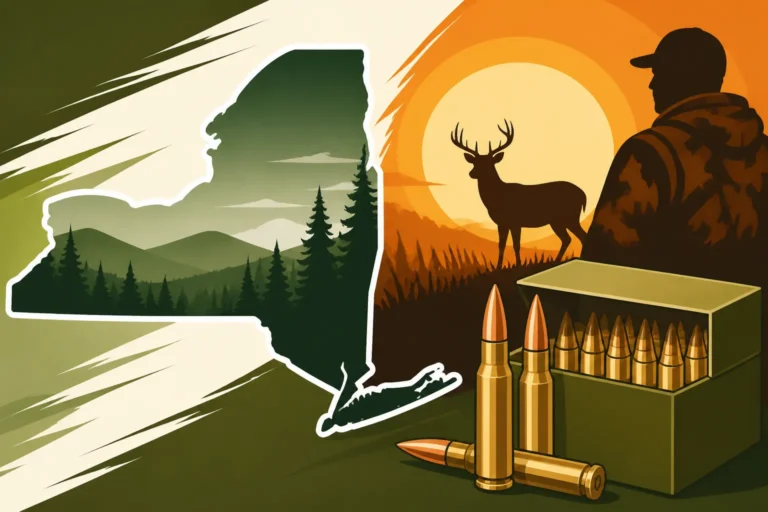
Dealing with New York's specific hunting regulations can sometimes feel like trying to hit a moving target, especially when it comes to specialized equipment like muzzleloaders. It's not always clear what's allowed, when, and where. This comprehensive guide is here to untangle the nuances of muzzleloader use in the Empire State, ensuring you're fully prepared and compliant for your next hunt.
Deciphering New York's Muzzleloader Regulations
New York State has a well-defined set of rules for muzzleloader hunting, and understanding them is crucial for staying on the right side of the law. These aren't just suggestions; they're legal requirements that can impact your season if overlooked. Many hunters get confused by the different definitions and limitations, particularly when coming from states with more lenient rules, but we'll break it down so it makes sense.
What Defines a Legal Muzzleloader in New York?
First and foremost, a muzzleloader is, as the name suggests, a firearm loaded from the muzzle end. In New York, this typically means a single-shot firearm, or one that, once fired, requires the hunter to manually load powder, a projectile, and a primer or ignition source down the barrel for each subsequent shot. This definition immediately sets it apart from repeating firearms. The spirit of muzzleloader season, after all, is to provide a more traditional, challenging hunt, and the regulations reflect that commitment to a single-shot experience.
You won't find semi-automatic muzzleloaders, if such a thing even existed, or tube-fed repeating designs allowed. It's all about that deliberate, single-shot action. Whether you prefer a classic flintlock that sparks history or a more modern in-line design, as long as it's loaded from the front and fires one shot at a time, you're generally in the clear on that basic premise. It’s important to remember that these rules are in place to preserve the unique challenge and character of muzzleloader hunting, a season many of us cherish for its distinct approach to the woods.
Specific Requirements for Loads and Propellants
When it comes to what you can actually stuff down the barrel, New York has clear guidelines. You're generally limited to black powder or approved synthetic substitutes like Pyrodex or Triple Seven. Smokeless powder, while common in modern cartridge firearms, is a strict no-go in New York muzzleloaders. This is a critical safety point, as smokeless powder generates much higher pressures than black powder and can catastrophically damage a muzzleloader not designed for it. Always double-check your powder type to ensure it's specifically marked for muzzleloader use.
Projectiles must also be of a certain type. You're typically looking at non-jacketed lead bullets, sabots with lead bullets, or all-copper projectiles. Fully jacketed rifle bullets are usually prohibited. The intent here is often tied to bullet expansion and terminal performance characteristics, as well as the historical context of muzzleloading. For primers, percussion caps (either #10, #11, or 209 shotshell primers, depending on your rifle's design) are the standard. Electronic ignition systems are generally not allowed, again emphasizing the traditional ignition methods. Make sure to choose components that are not only legal but also appropriate for your specific firearm and the game you're pursuing. It’s always a good idea to consult your rifle's manual and the most current New York regulations to ensure full compliance.
Restrictions on Sights and Magnification
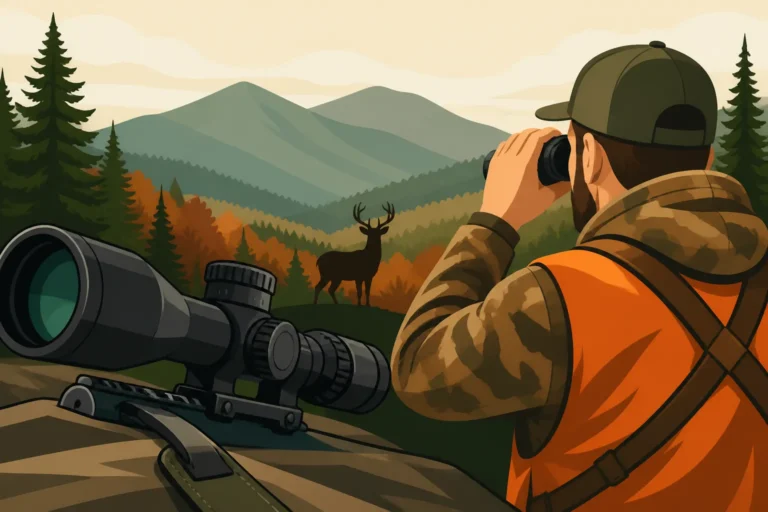
This is where some hunters, especially those new to muzzleloading or transitioning from rifle hunting, can get tripped up. New York law specifies what kind of sights are permissible on muzzleloaders during certain seasons. Generally, open sights, peep sights, and non-magnifying scopes (often referred to as 1x scopes or red dot sights) are permitted. However, magnified scopes, while perfectly legal during the regular New York's Southern Zone Firearm Season or New York's Northern Zone Firearm Season, might have limitations or be entirely prohibited during the special muzzleloader-only seasons.
The idea behind limiting magnification during the dedicated muzzleloader season is to maintain that "primitive" hunting experience, encouraging closer shots and more deliberate stalking. Always check the current regulations for the specific season you're hunting in. A good red dot sight or a fixed 1x scope can offer a clear sight picture without giving you a magnified advantage, helping you stay within the spirit and letter of the law. You'll often find that even with these restrictions, a well-practiced shooter can be incredibly accurate at typical muzzleloader ranges. Hunters looking to confirm specific rules for their gear can often find excellent resources and updates on the official state DEC website, or through a platform like GoHunt that aggregates hunting information.
Navigating New York's Muzzleloader Seasons
New York offers some fantastic opportunities for muzzleloader enthusiasts, but these opportunities are specifically carved out within the broader hunting calendar. Knowing when and where you can use your muzzleloader is just as important as knowing the rules for the firearm itself. These seasons are designed to provide additional hunting windows, often when deer are beginning to pattern for winter or before heavy hunting pressure sets in.
The Dedicated Muzzleloader-Only Windows
The dedicated muzzleloader seasons are truly where these firearms shine. These periods typically occur before the regular firearm season or sometimes extend slightly after it, offering a unique opportunity to be in the woods with less pressure. For many, this is the main draw of muzzleloader hunting in New York. You get a chance to pursue deer when they might be less wary, before the woods become saturated with scent and sound from hundreds of other hunters.
These muzzleloader-only windows are often shorter than the regular firearm seasons, making efficient scouting and preparation even more critical. During these times, only muzzleloaders and archery equipment are typically allowed for big game, creating a quieter, more traditional hunting environment. It's a fantastic chance to experience the woods differently and test your skills with a single-shot firearm. For detailed calendar breakdowns, checking resources like New York Deer Seasons by Zone can clarify these special windows. You can also explore specific tactics for these colder hunts in Muzzleloader Tactics in December Cold.
Muzzleloader Use During the Regular Firearm Seasons
One common misconception is that muzzleloaders are only legal during the dedicated muzzleloader seasons. This isn't always the case! In many parts of New York, a legal muzzleloader can absolutely be used during the regular big game firearm season. This offers flexibility if you prefer the challenge of a muzzleloader but can only hunt during the later, general season dates.
However, the specific rules regarding sights (especially magnified optics) might differ between the dedicated muzzleloader season and the regular firearm season. When hunting during the regular firearm season, your muzzleloader generally falls under the broader Legal Firearms for Deer Hunting rules for that season, meaning magnified scopes are typically permitted. It’s crucial to verify these details in the current hunting regulations. This flexibility means your muzzleloader isn't just a niche tool; it can be a primary hunting firearm for extended periods, especially if you enjoy the added challenge or the specific characteristics of shooting one.
Zone-Specific Muzzleloader Opportunities
New York's hunting landscape is divided into Southern and Northern Zones, each with its own calendar and unique considerations, and this distinction extends to muzzleloader hunting. The Northern Zone, with its vast tracts of wilderness and often more challenging conditions, typically has earlier opening dates for many seasons, including muzzleloader. This aligns with the generally earlier rut and harsher winters in the North. New York's Northern Zone Firearm Season will give you a sense of the overall calendar up there.
In contrast, the Southern Zone, which covers the majority of the state including agricultural lands and rolling hills, usually has later opening dates for its muzzleloader season. This allows hunters to take advantage of later deer patterns and often milder weather conditions. Understanding these zonal differences is key to planning your hunts. For example, a muzzleloader hunt in the Adirondacks might involve deep snow and tracking, while a Southern Zone hunt could be more about sitting a food plot or finding late-season browse. Detailed information on these windows can be found by looking up Hunting New York's Muzzleloader-Only Weeks. A good mapping tool, like the one GoHunt provides, can also help visualize these zones and plan travel accordingly.
Equipping Your Muzzleloader for New York Success
Beyond the legalities of the muzzleloader itself, choosing the right accessories and ammunition is paramount for a successful hunt in New York. The conditions can range from crisp autumn days to bitter winter winds and wet snow, so your setup needs to be robust and reliable. Thinking through your gear choices will make all the difference when that moment of truth arrives.
Choosing the Right Ammunition and Components
The effectiveness of your muzzleloader hinges on the ammunition you choose. For New York deer, you want a projectile that offers good expansion and energy transfer at typical muzzleloader ranges, usually within 150 yards. Common choices include saboted bullets, which encase a smaller-diameter projectile (often a .45 or .40 caliber bullet) in a plastic sleeve that peels away after leaving the barrel. These can offer improved accuracy and flatter trajectories compared to traditional full-bore lead projectiles.
Alternatively, some hunters prefer full-bore conicals, like PowerBelt bullets, especially in rifles with slower twist rates. These tend to be heavier and retain more energy for larger game. When selecting your powder, remember the black powder or approved substitute rule. Modern granulated powders like Triple Seven or Pyrodex are popular for their consistency and easier cleanup compared to traditional black powder. Always practice with your chosen load to confirm accuracy and develop confidence. Different rifles prefer different bullet weights and powder charges, so don't be afraid to experiment to find what shoots best out of your specific barrel.
Optics and Sighting Systems Allowed and Recommended
As discussed earlier, understanding the sight restrictions for muzzleloaders in New York is critical. During the dedicated muzzleloader seasons, magnified optics are generally out. This means open sights, peep sights, or non-magnifying (1x) scopes, including red dot sights, are your go-to. Many traditionalists swear by open sights, honing their skills with simple iron. Peep sights offer a slightly clearer picture and faster target acquisition for some, especially in low light.
For those who want a bit more precision without magnification, a red dot sight is an excellent choice. They are fast, bright, and incredibly effective at typical muzzleloader distances. They allow for rapid target acquisition, which can be invaluable in the thick New York woods. During the regular firearm season, however, when muzzleloaders are often permitted alongside centerfire rifles, magnified scopes become a legal option. If you plan to hunt both seasons with your muzzleloader, consider a quick-detach scope mount so you can swap between a red dot and a magnified scope as regulations allow and conditions dictate. No matter your choice, ensure your sights are sighted in perfectly for your hunting distance.
Essential Gear for Cold-Weather Muzzleloader Hunting
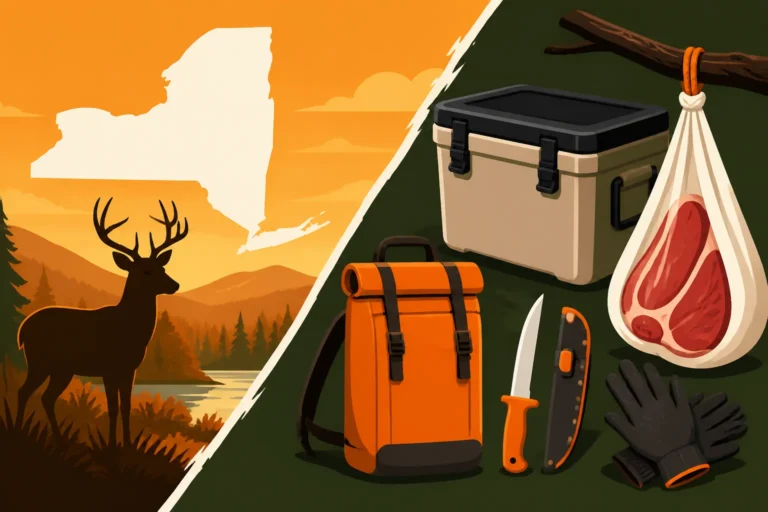
New York's muzzleloader seasons can extend into late fall and early winter, meaning cold, wet, and snowy conditions are a real possibility. Preparing your gear for this weather is crucial, especially for a muzzleloader. Keeping your powder and primer dry is perhaps the single most important aspect of cold-weather muzzleloader hunting. Water or excessive moisture can render your firearm useless. Carry your percussion caps or 209 primers in a waterproof container, and consider covering your muzzle with electrical tape, a finger cot, or a dedicated muzzle cover to prevent moisture ingress.
Your clothing system needs to be robust. Layering is key, starting with moisture-wicking base layers, insulating mid-layers, and a waterproof/windproof outer shell. Keeping a Muzzleloader Dry in Lake-Effect Snow is a skill you'll want to master. Don't forget insulated, waterproof boots and gloves that allow for dexterity. A quality pack to carry extra gear, water, and emergency supplies is also a must, especially if you venture into public land where walking considerable distances is common. Blaze orange is almost always a requirement for visibility and safety during these seasons, so make sure you have enough, as detailed in New York Blaze Orange Requirements.
| Muzzleloader Component | New York Regulation/Consideration | Typical Material | Notes |
|---|---|---|---|
| Powder | Black powder or approved synthetic substitutes ONLY. Smokeless prohibited. | Cellulose-based, charcoal, sulfur, potassium nitrate | Crucial for safety and legality. |
| Projectiles | Non-jacketed lead, saboted lead, all-copper. Fully jacketed rifle bullets generally prohibited. | Lead, Copper | Select based on bore, twist rate, and desired terminal performance. |
| Primers | Percussion caps (#10, #11), 209 shotshell primers. Electronic ignition generally prohibited. | Brass, Copper | Match to your rifle's ignition system. Keep dry! |
| Sights (Dedicated ML Season) | Open sights, peep sights, 1x non-magnifying scopes, red dot sights. Magnified scopes PROHIBITED. | Steel, Aluminum, Glass | Maintain "primitive" hunting experience. |
| Sights (Regular Firearm Season) | Generally, same rules as centerfire rifles (magnified scopes allowed). | Steel, Aluminum, Glass | Check specific regulations for the season you're hunting. |
| Muzzleloader Type | Muzzle-loading, single-shot firearms. | Various | No semi-automatics or repeating tube feeds. |
Mastering Muzzleloader Tactics in New York's Diverse Terrain
New York offers a truly diverse hunting landscape, from the sprawling farmlands of the Southern Tier to the dense, rugged wilderness of the Adirondacks. Each environment presents its own set of challenges and opportunities for the muzzleloader hunter. Successful hunting often comes down to adapting your tactics to the specific terrain and understanding deer behavior in that particular habitat. This is where your skills, honed through practice and experience, really come into play.
Adapting to Southern Zone Farmlands and Woodlots
Hunting the Southern Zone with a muzzleloader often means navigating a mix of agricultural fields, smaller woodlots, and broken terrain. Deer in these areas tend to relate strongly to food sources, particularly in the late season. Look for standing cornfields, soybean fields, or even cut hayfields that still offer residual browse. Edges where these fields meet dense cover are prime locations for ambushing deer moving between feeding and bedding areas. A muzzleloader's effective range means you'll want to focus on pinch points, funnels, and natural travel corridors that force deer into closer proximity.
Early morning and late afternoon are typically the most productive times. You might consider using a ground blind brushed into a field edge, offering concealment while allowing you to cover approach routes. Hunting Southern Tier Farmland Deer provides excellent insights into deer movement in these areas. Since muzzleloader seasons often fall later in the year, deer will be focused on putting on calories for winter, making food sources irresistible. Pay attention to wind direction, as deer in farm country can be incredibly wary and will quickly pick up on human scent.
Strategies for Northern Zone Big Woods and Deep Snow
The Northern Zone, especially areas within the Adirondack Park, offers a completely different muzzleloader experience. Here, you're often dealing with vast expanses of timber, rugged mountains, and the real possibility of deep snow. Deer densities tend to be lower than in the Southern Zone, and the deer themselves are often more wild and elusive. Muzzleloader hunting here is a test of endurance, tracking skills, and patience. You can often glean additional details from Muzzleloader Deer Hunting in New York.
Look for areas with dense thermal cover, such as stands of hemlock or spruce, especially on south-facing slopes, where deer will bed to escape the cold. Ridges and saddles connecting different drainages often serve as travel routes. If there's snow on the ground, fresh tracks become your most valuable scouting tool. Tracking a deer in fresh snow with a single-shot muzzleloader is a quintessential Northern Zone challenge. You'll need to be quiet, slow, and constantly aware of the wind. Where Adirondack Bucks Bed can offer clues about bedding areas. A good mapping app, such as one from GoHunt, can be invaluable for navigating these vast wild areas and identifying potential bottlenecks or escape routes.
The Importance of Practice and Patience
No matter where you hunt in New York, proficiency with your muzzleloader is non-negotiable. Unlike a modern rifle with a magazine, you typically get one shot. That means every shot counts, and you need to be confident in your ability to make it. Consistent practice at the range, in varying conditions, will build that confidence. Understand your rifle's capabilities and its limitations. What is your ethical maximum range? How does it perform in cold, wet weather? Cleaning a Rifle After a Wet Sit is essential for maintaining accuracy and reliability.
Patience is equally vital. Muzzleloader seasons, especially the dedicated windows, can be challenging. Deer might not be moving constantly, or the weather might not cooperate. Don't get discouraged. Dedicate ample time to scouting, learn the land, and most importantly, learn deer behavior in your specific hunting area. Hunting Pressure on New York Public Land will often dictate that you need to go deeper or find overlooked pockets. A patient hunter, who knows their equipment and understands the woods, will often find success when others have given up. Embrace the challenge and enjoy the unique satisfaction that comes with harvesting game with a muzzleloader.
Disclaimer
This article is for general informational purposes only and does not constitute professional advice. Laws, prices and regulations vary by location and change over time. Consult a qualified professional for guidance on your specific situation.