Bone Saws Versus the Gutless Method
Dragging a heavy deer out of a steep Catskill ravine or miles deep into the Adirondack wilderness can feel like an impossible task after the shot, especially when you're alone or the weather is turning. Hunters often grapple with the best way to process game in the field to make the pack-out easier and preserve the meat. This comprehensive guide will break down two primary field processing methods – using a traditional bone saw versus employing the increasingly popular gutless method – helping you decide which approach is best for your specific New York hunting scenario.
Understanding Traditional Bone Saws for Field Processing
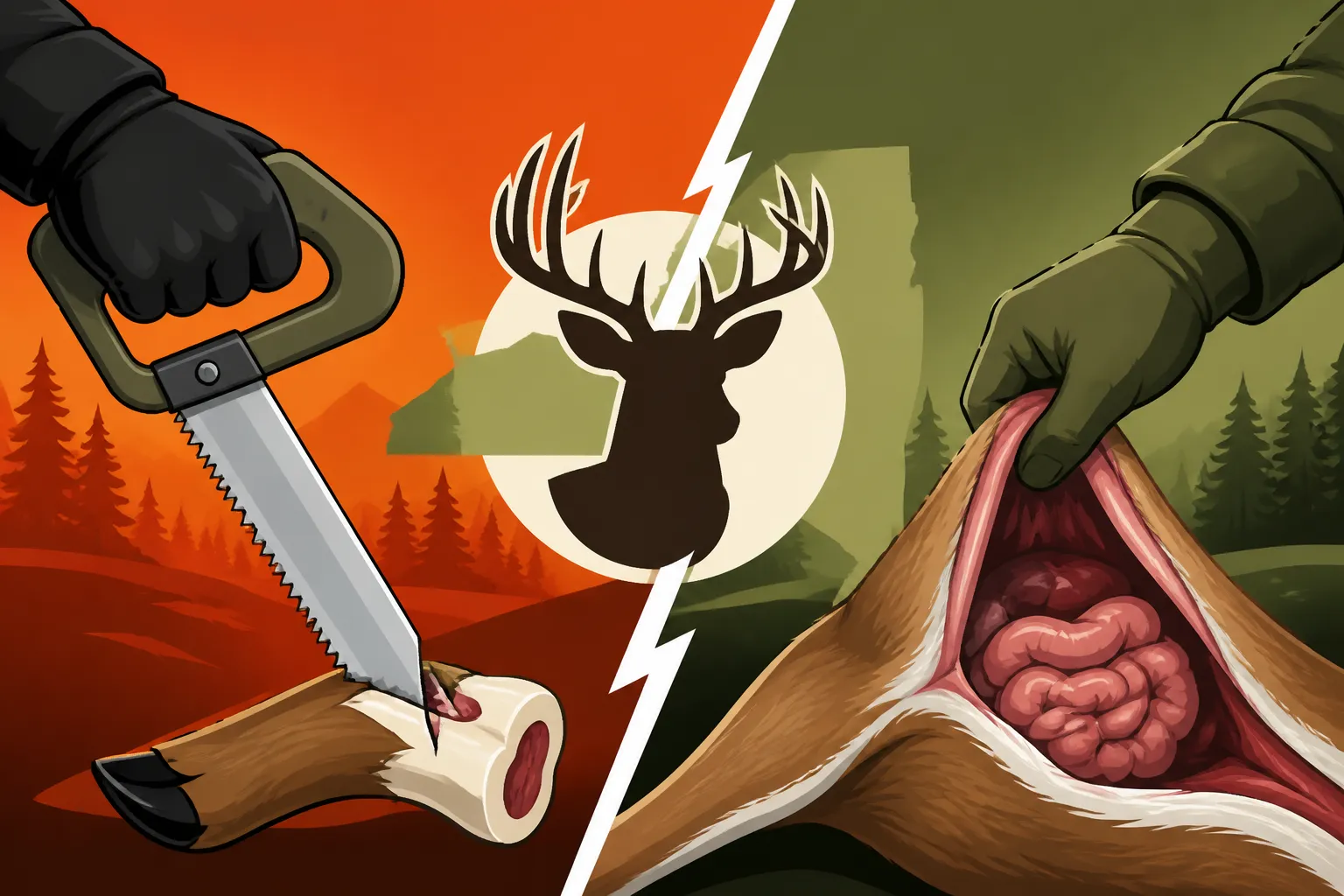
For generations, hunters have relied on bone saws to help them manage game in the field. These tools, essentially compact versions of carpentry saws, are designed to cut through bone cleanly and efficiently, making them indispensable for certain field dressing and processing tasks. While they might seem old-fashioned to some, their utility in specific situations is undeniable.
When a Bone Saw Shines: Breaking Down Large Game
Imagine you’ve just taken down a large-bodied Southern Zone buck in a thick piece of cover, a mile from the nearest road. You know Dragging a Deer Off a Catskill Ridge is going to be a monumental task, or perhaps you're simply too far from camp for a traditional drag. This is where a bone saw truly shines. It allows you to quickly and effectively quarter the animal, reducing the overall weight and bulk into manageable sections that can be packed out on your back. Cutting through the pelvis or sternum to open up the chest cavity for a traditional gut, or segmenting the spine for easier transport, are tasks a good bone saw handles with ease and precision that a knife simply can't match. For those planning to cape out a deer for a shoulder mount, a bone saw is crucial for making a clean cut through the skull cap, ensuring the integrity of the cape is maintained.
Another scenario where a bone saw proves invaluable is when you’re hunting with a large group and performing a communal field dress at a temporary camp. Here, the efficiency of a saw can speed up the process of breaking down multiple animals, especially if you plan to Butchering a Deer at Camp right away. It allows for quick division of labor, with some hunters working on skinning while others use the saw to separate quarters or prepare the carcass for further breakdown. This organized approach can be a lifesaver when you're dealing with multiple successful harvests and need to cool the meat down quickly.
Types of Bone Saws and What to Look For
Just like there are different types of hunting knives, bone saws come in various designs, each with its own advantages. The most common types you’ll encounter are folding saws, fixed-blade frame saws, and handheld reciprocating blade saws. Folding saws, often resembling a large pocket knife, are popular for their portability. They fold down into a compact size, protecting the blade and making them easy to slip into a pack. However, their smaller size and typically thinner blades might limit their power on very large bones.
Fixed-blade frame saws, on the other hand, offer greater rigidity and leverage. They usually have a larger, more robust blade held taut within a metal frame, similar to a small hacksaw. These are fantastic for larger cuts and more demanding tasks, but they are less compact and can be awkward to carry. When selecting a bone saw, pay close attention to the blade material and tooth configuration. You want a sharp, durable blade designed specifically for cutting bone, which often means coarser teeth than a typical wood saw. Ergonomics are also key; a comfortable, non-slip grip will make a significant difference, especially if your hands are cold or wet, which is a common experience during New York’s late fall and winter seasons.
The Downsides of Carrying and Using a Bone Saw
While a bone saw offers distinct advantages, it's not without its drawbacks. One of the most common complaints is the added weight and bulk in your pack, especially if you’re trying to keep your load light for a long hike. A sturdy frame saw can be cumbersome, and even a folding saw takes up valuable space. Then there's the issue of cleanliness. Cutting through bone generates bone dust and can splatter blood, increasing the risk of contaminating the meat if you’re not meticulous. It requires extra effort to keep everything sterile, and the saw itself needs thorough cleaning after each use to prevent bacterial growth and corrosion.
Furthermore, using a bone saw can be physically demanding. It requires steady hands, good leverage, and considerable effort, particularly when cutting through thick bone like a pelvis or the spine of a mature animal. This can be especially challenging if you're already fatigued from the hunt or working in an awkward position on uneven ground. The noise generated by sawing can also be a minor consideration, though typically by the time you're sawing, other game has likely moved out of the immediate area. Ultimately, the decision to carry a bone saw often comes down to weighing these practical concerns against the specific needs of your hunt.
The Gutless Method: A Modern Approach to Field Dressing
The gutless method represents a significant shift in field processing for many hunters, especially those operating in remote areas or under time constraints. It's a technique that prioritizes efficiency and cleanliness, focusing on removing the valuable meat without opening the body cavity. This modern approach is gaining traction for its practicality and its ability to drastically lighten the load for the pack-out.
What is the Gutless Method and Why It's Gaining Popularity
At its core, the gutless method involves skinning the animal, then carefully removing the major muscle groups – the four quarters, backstraps, tenderloins, and neck meat – without ever opening the abdominal cavity. This means the internal organs remain inside the animal, largely undisturbed. The process typically starts by laying the animal on its side, skinning one side, and then removing the leg, shoulder, backstrap, and tenderloin from that side. The animal is then rolled over, and the process is repeated on the other side. You'll often find yourself using a sharp knife to work around the bones, rather than cutting through them.
The popularity of the gutless method stems from several key benefits. First and foremost, it significantly reduces the risk of meat contamination from gut contents. Since the stomach and intestines are never breached, the chances of digestive fluids or fecal matter coming into contact with the meat are dramatically minimized. Second, it often results in a lighter, cleaner pack-out. By only taking the muscle groups, you leave behind the heavy bone structure, hide (if not caping), and all the internal organs. This can shave dozens of pounds off your load, making it ideal for situations where you have miles to go and perhaps a steep ascent, similar to the challenges faced when hunting the Adirondack interior. Finally, it can be a faster method in some cases, especially for solo hunters, as it bypasses the laborious and messy process of evisceration.
Essential Gear for a Successful Gutless Field Dress
While the gutless method reduces the need for heavy tools like a bone saw, it absolutely relies on the right cutting instruments and proper meat protection. A set of sharp knives is paramount. You'll want at least two, preferably three: a sturdy fixed-blade knife for initial skinning and breaking down quarters, a smaller, flexible boning knife for precision work around joints and to remove tenderloins, and perhaps a replaceable blade utility knife for initial hide cuts to keep your main blade razor-sharp. Having a knife sharpener or extra blades on hand is also a wise choice, as working through hide and muscle dulls an edge quickly.
Beyond knives, high-quality game bags are non-negotiable. These breathable cloth bags protect the meat from flies, dirt, and debris while allowing it to cool. Investing in good game bags ensures your hard-earned venison stays clean and spoils less quickly, particularly important during early archery season when temperatures can still be warm. A lightweight tarp or ground sheet is also invaluable for keeping your meat clean as you work, preventing it from touching the forest floor. And don't forget disposable gloves! They maintain hygiene, protect your hands, and make cleanup much easier. When you're planning your route and pack weight using tools like GoHunt, remember to factor in these essential items – they're worth their weight in gold.
Situations Where the Gutless Method Excels (and Where It Doesn't)
The gutless method is a game-changer for specific hunting scenarios. It truly excels when you're hunting in remote wilderness areas, far from any vehicle access, like deep within the Catskill Forest Preserve. If you're a solo hunter, this method makes packing out a large animal manageable by breaking it down into backpack-sized loads, alleviating the need for a strenuous Deer Drives With Three or Four Hunters or a long, solo drag. Steep, uneven terrain, common in many parts of New York, also favors the gutless method, as dragging a whole deer downhill can be dangerous and damage the meat. During warm weather hunts, like the early days of Bowhunting New York's Long Archery Season, the gutless method allows for quicker cooling of the quarters, which helps prevent spoilage.
However, the gutless method isn't a one-size-fits-all solution. If salvaging the heart, liver, or other organs is important to you, a traditional gut will be necessary, as these are left behind with the gutless approach. Similarly, if you plan to get a full shoulder mount, you'll still need to carefully cape the animal, which can be done in conjunction with the gutless method, but might require a bit more finesse around the neck and chest. For smaller game like coyotes or smaller deer in easily accessible areas, a traditional field dress might actually be faster and simpler. Ultimately, understanding your priorities for the hunt and the conditions you expect will guide your choice.
Choosing Your Method: Practical Considerations for New York Hunters
Deciding between a bone saw, the gutless method, or even a combination of both largely depends on the specific circumstances of your hunt. There's no single "best" way to process game; instead, it's about choosing the most efficient, ethical, and practical approach for your situation.
Terrain, Distance, and Your Physical Condition
The physical landscape of New York offers a vast array of hunting challenges. From the relatively flat farmlands of the Southern Tier to the rugged, steep terrain of the Adirondacks and Catskills, how far and how difficult your pack-out will be is a primary consideration. If you're fortunate enough to drop a deer just a short, flat distance from your vehicle or camp, a traditional gut and drag might be the most straightforward option. However, if you're a mile or more into dense cover, or on extremely steep ground where Entry Routes on Steep Catskill Ground are already a challenge, the thought of dragging a whole deer should immediately bring the gutless method to mind.
Your own physical condition and whether you're hunting solo or with a group also play a huge role. A younger, stronger hunter might confidently drag a deer solo across moderate terrain, while an older hunter or someone with physical limitations would greatly benefit from breaking the animal down into lighter, more manageable loads using the gutless method. When you're planning your hunt, consider the "worst-case scenario" for recovery distance and terrain. Tools like GoHunt can be incredibly helpful for mapping out potential recovery routes and assessing elevation changes before you even head out, giving you a realistic picture of what you might face. Packing Packs Built for a Multi-Day Backcountry Hunt designed for heavy loads will make the gutless method much more viable.
Weather Conditions and Meat Care
New York's hunting seasons span a wide range of temperatures, from warm September archery days to frigid December muzzleloader hunts. Weather is a critical factor in deciding your field processing strategy, primarily due to its impact on meat spoilage. During warmer temperatures, the primary goal is to cool the meat as quickly as possible. The gutless method, by immediately separating the quarters and allowing them to hang in breathable game bags, facilitates rapid cooling much more effectively than leaving the entire carcass intact, where heat can linger deep within the muscle. This is particularly crucial during early season deer hunts or Spring Turkey Hunting in New York if you manage to bag a gobbler on an unseasonably warm day.
Conversely, during colder late-season hunts, such as Muzzleloader Deer Hunting in New York, spoilage is less of an immediate concern. The cold acts as a natural refrigerator, giving you more time to process the animal. In these conditions, you might have the luxury of performing a traditional gut and drag, or even getting the whole animal back to a heated shed or garage for processing. However, even in cold weather, minimizing dirt and debris is important, and protecting the meat from freezing solid before you can process it further. Field Dressing a Deer in Cold Weather has its own unique challenges, and a clean, efficient method is always beneficial.
Salvaging Organs, Skulls, and Capes
Your intentions for the animal post-harvest are a significant determinant in your field processing choice. If you enjoy cooking with wild game organs, such as the heart or liver, you'll need to open the body cavity, making a traditional gutting method necessary. While you could technically perform a gutless method and then later go back into the cavity for the organs, it adds extra steps and potential for contamination. For many hunters, these highly nutritious parts are a cherished bonus of the harvest.
For those planning to get a taxidermy mount, especially a shoulder mount, the process of caping requires careful attention. While a full cape can be removed even if you opt for the gutless method for the meat, having a bone saw can be extremely helpful for removing the skull cap cleanly and efficiently. A precise cut with a saw around the skull ensures the cape remains intact and minimizes damage that would need repair by the taxidermist. If you’re just aiming for a European mount, a saw is often used to remove the skull from the spine. A full European mount, with the entire skull intact, usually means leaving the head attached to the spine for transport, whereas a skull cap for a shoulder mount is much easier to pack out.
Bone Saw vs. Gutless Method: A Quick Comparison
To help clarify the differences and advantages of each method, here’s a quick overview:
| Feature/Consideration | Bone Saw Method (Traditional Quartering) | Gutless Method |
|---|---|---|
| Primary Goal | Sectioning bone, opening cavities, skull cap removal | Removing muscle groups without opening cavity |
| Contamination Risk | Moderate (bone dust, gut contents if traditional gut) | Low (gut contents remain sealed) |
| Pack Weight/Bulk | Reduced, but bone still present; saw adds weight | Significantly reduced (no bones, no organs) |
| Speed (Experienced) | Can be fast for specific cuts; slower for full breakdown | Often faster for complete meat removal |
| Gear Required | Knife(s), bone saw, game bags | Knife(s), game bags, gloves, tarp/ground cover |
| Organ Salvage | Easy (if traditional gut performed) | Not feasible (organs remain in carcass) |
| Skull/Cape Salvage | Excellent for clean skull cap; full cape easily removed | Can be done with care; skull cap may require additional tools |
| Ideal Terrain | Any, but saw helps with heavy bone in rugged areas | Remote, steep, challenging terrain |
| Warm Weather Suitability | Less ideal if entire carcass kept intact; good for quartering | Excellent (meat cools faster) |
| Cleanup | Saw and hands require thorough cleaning | Knives and hands still require cleaning, less mess overall |
Mastering Both Techniques for Any New York Scenario
The reality of hunting is that you never know exactly what situation you'll find yourself in. That’s why being proficient in both bone sawing and the gutless method—and knowing when to apply each—is the mark of a truly prepared New York hunter.
Practice Makes Perfect: Field Prep Before the Hunt
You wouldn't head into New York's Southern Zone Firearm Season without patterning your shotgun or sighting in your rifle, would you? The same principle applies to field processing. Before you're standing over a downed animal in the woods, take the time to familiarize yourself with the anatomy of a deer. Watch instructional videos, read detailed guides, and if possible, practice the cuts on a butchered carcass (or at least simulate the motions). Knowing where the joints are, how to separate muscle groups cleanly, and the proper technique for using your knife will save you immense time and frustration in the field.
Having your tools ready is equally important. Ensure your knives are razor-sharp before you leave home, and bring a small sharpener or extra blades. Pack your game bags, gloves, and a lightweight tarp. Think through different scenarios: what if you get one down deep in a swamp? What if it's a huge buck with thick bones? What if it's unexpectedly warm? The more you prepare mentally and physically, the smoother your field processing will go, leading to better meat care and a more successful overall hunt.
Combining the Best of Both Worlds
Sometimes, the ideal solution isn't one method or the other, but a smart combination of both. For example, if you've harvested a trophy buck and want a shoulder mount, you might opt for the gutless method to quickly remove the four quarters and backstraps, drastically reducing the pack weight. Then, you can use your bone saw to make a clean, precise cut to remove the skull cap for taxidermy purposes, leaving the rest of the carcass, including the entrails, behind. This hybrid approach allows you to achieve both your meat recovery and trophy goals efficiently.
Another practical example might be a hunter in the Southern Tier who needs to get an antlerless deer out quickly from a field edge before dark during Hunting the Southern Zone Holiday Hunt. They might gut the deer traditionally for speed, but then use a small folding bone saw to remove the front legs at the knee joint and the hind legs at the hock, making the drag lighter and preventing the lower leg bones from catching on brush. Planning your hunt, perhaps using the detailed maps provided by services like GoHunt to understand the egress points and terrain, can help you strategize which combination of techniques will be most effective. Being adaptable and having the skills for both approaches means you'll be prepared for whatever the New York woods throw your way.
Disclaimer
This article is for general informational purposes only and does not constitute professional advice. Laws, prices and regulations vary by location and change over time. Consult a qualified professional for guidance on your specific situation.