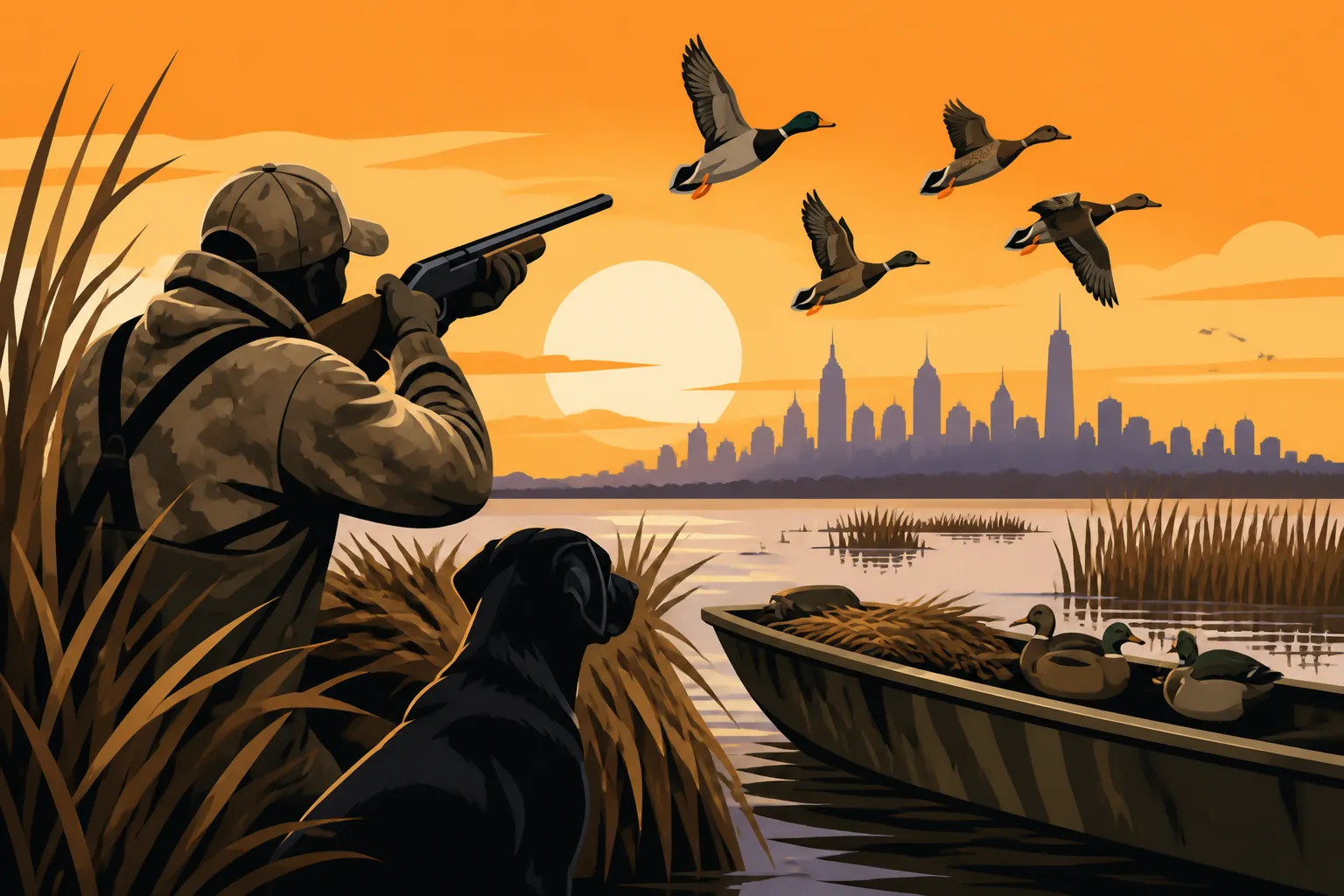
Layout Blinds and Marsh Boats
For New York waterfowl hunters, the struggle is real: you spend hours scouting perfect feeding fields or secluded marshes, only to realize the birds can spot you from a mile away the moment you step out of your truck or boat. Those wary ducks and geese have seen it all, and a flimsy blind or an exposed hunter can quickly turn a promising morning into a frustrating watch party. This guide is all about equipping you with the knowledge to effectively disappear into New York's diverse waterfowl landscapes, exploring the nuances of layout blinds and marsh boats to give you that crucial edge against even the wariest birds.
Understanding Layout Blinds for Waterfowl Hunting
Layout blinds have revolutionized field and shallow water hunting for ducks and geese. They're designed to make you essentially vanish into the natural contours of the landscape, allowing you to position yourself directly in the birds' flight path without them ever knowing you're there until it's too late. It's a game-changer, especially when you're targeting those hard-hunted flocks in places like the Finger Lakes Region or the vast agricultural fields of Western New York.
Types of Layout Blinds and Their Applications
Not all layout blinds are created equal, and understanding the differences is key to picking the right tool for your specific hunting scenario. Generally, you'll find low-profile "coffin" style blinds and slightly taller framed blinds.
Low-profile blinds, often called "coffin blinds," are exactly what they sound like – designed to keep you as flat to the ground as possible. These are fantastic for open fields, cut corn, or even very shallow mud flats where any vertical profile would immediately stick out. They typically have a sturdy, often aluminum or steel, frame that supports a canvas or synthetic fabric shell. You lie on your back inside, concealed by stubble straps or a grassing cover, peeking out through a small mesh screen. When the birds are committed, you pop up to take your shot. They excel in scenarios where there's minimal cover and maximum visibility. Think about setting up in a freshly cut alfalfa field for geese, or a picked cornfield for mallards. Their biggest advantage is superior concealment in wide-open spaces, making them invaluable for Layout Blind Hunting a Cut Cornfield.
Framed blinds offer a bit more comfort and often a slightly higher profile, though still much lower than a traditional pit blind or upright ground blind. These might feature more interior room, allowing you to sit up a bit more comfortably between flights, or even have a small dog compartment. They're excellent when you have a bit more natural vegetation to help break up your outline, like the edge of a standing soybean field, a low-growing hedgerow, or slightly taller stubble. Some even incorporate wheels for easier transport across fields. While they might not be as "invisible" as a true coffin blind in the most barren landscapes, they offer a good balance of concealment and functionality, especially on days when you'll be spending long hours waiting for birds.
Advantages and Disadvantages of Layout Blinds
There’s a lot to love about layout blinds, but like any piece of specialized gear, they come with their own set of trade-offs. Knowing these can help you decide when a layout blind is your best friend and when another approach might be better.
The primary advantage, hands down, is concealment. A well-brushed-in layout blind simply disappears, especially from the perspective of a bird circling high above. This allows you to hunt spots that would be impossible with other blind types, giving you direct access to hot feeding zones. They also offer a decent level of comfort, keeping you out of the mud, wind, and often providing some insulation from the cold ground. Most modern blinds are designed for quick setup and takedown, meaning you can be mobile and chase the birds as their patterns change throughout the season. They're relatively portable, too, with many models folding down to a manageable size that can be carried in or strapped to an ATV.
However, layout blinds aren't a silver bullet. Their biggest disadvantage can be restricted movement. You're lying down, so getting up quickly for a shot takes practice and can feel awkward. This can be particularly challenging when you have birds coming from unexpected angles. Weather can also be a factor; while they offer some protection, heavy, driving rain or sleet can quickly make for a miserable hunt, as water can pool inside or soak through less robust materials. Depending on the terrain, they can also be cumbersome to drag long distances if you're hunting without vehicle access. If you're hunting in thick cover or deep water, they're simply not the right tool for the job.
Setup, Brushing, and Concealment Techniques
Mastering the art of concealment with a layout blind goes far beyond just unfolding it and lying down. It's about becoming part of the landscape, a skill that takes practice and observation.
First, always set up your blind so your head is facing the direction you expect the birds to approach from. This minimizes movement when you sit up to shoot and allows you to watch the decoy spread effectively. Pay close attention to the sun's position – you want the sun at your back so that the birds are looking into it as they approach, making it harder for them to spot you. Once positioned, brushing in is critical. Don't just throw a few handfuls of local vegetation on top. Take the time to weave natural materials into the stubble straps and loops on the blind. Use cornstalks, grass, weeds, even mud, to match the exact texture and color of your surroundings. The goal isn't just to cover the blind, but to break up its outline entirely, making it blend seamlessly with the ground cover. Remember, birds have incredible eyesight, and even a slight unnatural shadow or perfectly straight line can give you away. For instance, if you're hunting a cut cornfield, don't just use cornstalks; use some of the smaller weeds and dirt clods that are also present on the field floor. Consider having a buddy stand back 50-100 yards and critique your setup from a bird's-eye perspective – they'll often spot things you miss.
Marsh Boats: The Ultimate Waterfowl Transporter and Blind
When your waterfowl pursuits take you beyond the dry fields and into the vastness of New York's marshes, rivers, and shallow lakes, a marsh boat becomes an indispensable piece of gear. These aren't just transportation; they're often designed to be your blind, seamlessly integrating you into the aquatic environment.
Types of Marsh Boats and Their Primary Uses
Marsh boats come in a variety of designs, each tailored for specific aquatic conditions and hunting styles. From stealthy sneak boats to powerful mud motors, and even adaptable canoes or kayaks, choosing the right one depends heavily on where and how you plan to hunt.
Sneak boats are typically low-profile, often fiberglass or rotomolded plastic craft, built for ultimate stealth in shallow water. Their sleek designs allow them to be paddled, poled, or sculled quietly through reeds and cattails, enabling you to get into those hard-to-reach pockets where ducks and geese feel safe. Many are designed with built-in blind covers or ample room to add brush, effectively turning the boat itself into a mobile, floating blind. They are excellent for jump-shooting or for setting up a small decoy spread in a secluded marsh. Think of silently pushing into a cattail-lined cove on the St. Lawrence River, or navigating the backwaters of a Finger Lakes marsh for a morning flight. Their low freeboard makes them incredibly stable for shooting, and many can be easily hidden among shore cover.
Mud motors, on the other hand, are specialized outboard engines designed to power boats through extremely shallow water, thick vegetation, and even over mud flats. These motors, often paired with flat-bottomed boats, have props that are designed to chew through muck without fouling. If you've ever tried to run a traditional outboard in knee-deep water choked with lily pads, you know the frustration. Mud motors open up vast new hunting grounds that are otherwise inaccessible. While the boats themselves may not be inherently "blinds," their ability to get you into remote areas means you can quickly hide the boat in dense cover and set up a layout blind nearby, or use a pop-up blind directly in the boat. They are invaluable for hunters targeting remote portions of the Lake Champlain marshes or the extensive shallow embayments of eastern Lake Ontario, allowing you to reach prime spots where other hunters simply can't go.
Kayaks and canoes offer a more minimalist, highly maneuverable approach to marsh hunting. While not purpose-built marsh boats, many hunters adapt them with camouflage paint, grassing covers, or even custom blind frames. Their lightweight nature means they can be easily portaged over obstacles or dragged through very shallow sections. They are excellent for solo hunters or small groups who prioritize quiet access and flexibility. A canoe can double as a floating blind if properly brushed in, allowing you to sit low and blend into shoreline vegetation. For smaller creeks, beaver ponds, or flooded timber pockets in places like the Hudson Valley, a sturdy canoe or kayak can be the perfect stealth vehicle. They require more physical effort but offer an intimate connection with the environment, and can navigate waters impossible for larger craft.
Advantages and Disadvantages of Hunting From a Marsh Boat
Hunting from a marsh boat offers a unique set of benefits, particularly for those who love the challenge and immersion of waterfowl hunting in aquatic environments. However, it also comes with its own set of considerations.
The primary advantage is unparalleled access to water-based hunting grounds. Marsh boats allow you to reach areas that are otherwise inaccessible on foot or with larger, conventional boats, getting you into prime feeding and resting areas for ducks and geese. Many marsh boats are designed to be easily concealed, becoming part of the natural cover themselves, offering a stable and dry platform from which to shoot and store gear. This eliminates the need to drag separate blinds or constantly move from dry land. They also provide a significant safety advantage in cold water environments, keeping you out of the frigid water compared to wading or sitting in a layout blind right on a mud flat. Furthermore, they are excellent for transporting decoys, dogs, and other bulky gear across significant distances, simplifying the logistics of a big spread.
However, marsh boats do have drawbacks. They require more initial investment than a layout blind, and ongoing maintenance (especially for motorized versions) can add up. They can be slow to move, particularly if paddling or poling, limiting how quickly you can react to changing bird patterns across a large marsh. Their profile, even when low, can still be more visible than a perfectly brushed-in layout blind on dry land, requiring meticulous concealment. If not properly hidden, a boat can flare birds just as effectively as an exposed hunter. Transportation to and from the launch can also be a challenge, requiring a trailer and suitable launch points, which aren't always available in prime hunting areas.
Marsh Boats as Integrated Blinds
One of the coolest aspects of many marsh boat designs is their ability to function as an integrated blind, often called a "boat blind." Instead of simply transporting you to a spot where you then set up a separate blind, the boat itself becomes the hunting platform.
Many specialized marsh boats, particularly sneak boats, come equipped with built-in blind systems. These might be flip-over covers that rise when it's time to shoot, or simply wide coaming around the cockpit that allows for easy attachment of natural brush. Some even have dog platforms integrated into the bow or stern. The goal is to make the boat disappear into the reeds, cattails, or shoreline vegetation. This provides an incredibly stable and comfortable hunting position, protecting you from the elements while keeping you completely hidden. You can position the boat in thick cover, deploy your decoys, and then simply wait, knowing you're completely camouflaged. This is especially effective in areas with abundant natural cover, like the extensive marshes around Lake Champlain or the coastal wetlands of Long Island, where Hunting the Lake Champlain Marshes or Hunting the Long Island Salt Marshes often means becoming one with the water. These boat blinds are designed to be low-profile, matching the waterline of the surrounding vegetation, and typically feature stubble straps or loops for attaching local grasses, ensuring that any boat profile is effectively broken up.
Choosing the Right Gear for New York's Diverse Waterfowl Habitat
New York State boasts an incredible variety of waterfowl habitats, from the vast open waters of the Great Lakes to the winding rivers and flooded timber of the interior, and the brackish marshes of Long Island. What works in one area might be utterly ineffective in another. Matching your layout blind or marsh boat to the specific terrain you'll be hunting is paramount for success.
Matching Gear to Specific New York Habitats
Consider the unique demands of New York's primary waterfowl regions when selecting your equipment. This isn't a one-size-fits-all game.
For instance, if you're hunting the open waters of Eastern Lake Ontario for diver ducks, a low-profile layout blind on a small, stable boat might work if you're on a shallow bar, but a dedicated layout blind for open water (designed to float) or a large marsh boat with an integrated blind that can handle choppy water might be more appropriate. Hunters targeting Diver Hunting on Eastern Lake Ontario often employ boat blinds that can withstand waves and cold conditions. Conversely, for a small, shallow cattail marsh in the Southern Tier, a kayak or a compact sneak boat that can be easily pushed or paddled is ideal. These smaller craft allow you to navigate tight channels and beaver runs, reaching secluded pockets.
If your quarry is geese in a harvested cornfield near the Finger Lakes, a traditional field layout blind is your bread and butter. The flatter, the better, for maximum concealment in wide-open expanses. Layout Blind Hunting Finger Lakes Fields is often about disappearing into the stubble. For hunting flooded timber in, say, the Montezuma Wetlands Complex, neither a layout blind nor a large marsh boat might be the best option; a canoe or kayak with a portable pop-up blind would allow for quiet navigation and setup among the trees. The key is to analyze the specific depth of water (if any), the type and height of available natural cover, the typical weather conditions, and the species of birds you're targeting.
Blending with Natural Cover and Environment
Regardless of whether you choose a layout blind or a marsh boat, the ability to blend seamlessly into your surroundings is non-negotiable. This means more than just having camouflage fabric; it means understanding the local flora and adapting your setup.
Always collect natural vegetation from your immediate hunting area to brush in your blind or boat. If you're in a cornfield, use cornstalks. In a marsh with cattails, use cattails. If there's standing dry grass, use that. The goal is to avoid an "island" of foreign material in a natural setting. Pay attention to colors, too. A bright green artificial grass mat will stick out like a sore thumb in a brown, late-season field. Some hunters even go as far as to paint their marsh boats to match specific local vegetation patterns. Furthermore, consider the shadows. Set up your blind or boat to utilize any natural shadows cast by trees, brush lines, or even decoy bags to further break up your outline. The more realistic and organic your setup looks, the less likely those sharp-eyed birds are to notice you.
Portability Versus Comfort
There's a constant tension in waterfowl hunting gear: do you prioritize light weight and portability, or do you opt for maximum comfort and features? The answer often lies in your hunting style and physical capabilities.
If you're a run-and-gun hunter, constantly moving to intercept new flights or chasing birds across different fields, portability is king. A lightweight, easily collapsible layout blind that you can shoulder and carry a significant distance is probably what you need. Similarly, a smaller, lighter sneak boat or kayak that can be launched quickly and paddled efficiently will serve you better. You sacrifice some comfort, perhaps, but gain incredible mobility. Brands like GoHunt can help you scout and pinpoint multiple potential hunting locations quickly, making portable gear even more valuable for dynamic hunting.
On the other hand, if you're primarily setting up in one well-established spot for long periods, perhaps through brutal cold or windy conditions, comfort becomes a higher priority. A larger, more robust layout blind with ample padding, a comfortable backrest, and plenty of room for gear might be worth the extra weight. For marsh hunters, a larger marsh boat with an integrated blind, a sturdy motor, and enough space for a dog, heater, and substantial decoy spread offers a much more enjoyable experience for those long, cold days. The trade-off is often less flexibility and more effort in transport and setup. It's about finding that personal sweet spot between being able to get to the birds and being able to comfortably wait for them.
| Feature | Layout Blind (Field) | Marsh Boat (Integrated Blind) |
|---|---|---|
| Primary Use | Open fields, shallow mud flats | Marshes, rivers, shallow lakes, flooded timber |
| Concealment | Excellent (when properly brushed) | Very good (when properly brushed and placed) |
| Comfort | Moderate (lying down, out of elements) | Good (sitting upright, more protected) |
| Portability | Generally high (collapsible, carried) | Moderate (requires trailer/towing, larger) |
| Access | Fields, very shallow water | Waterways, remote marsh interior |
| Cost | Lower initial investment | Higher initial investment |
| Setup Time | Quick to deploy, brushing takes time | Launching boat, positioning, brushing |
| Exposure to Elements | Moderate (prone position, some wind/rain) | Low (sheltered, usually enclosed) |
| Best For | Wary geese in cornfields, field ducks | Marsh ducks, divers, getting to remote areas |
Practical Considerations and Safety for Using Blinds and Boats
Hunting waterfowl, especially in New York's varied terrain and weather, demands more than just good gear and a keen eye. Practical planning and unwavering attention to safety are absolutely critical when you're using layout blinds and marsh boats. Overlooking these aspects can quickly turn a memorable hunt into a dangerous ordeal.
Scouting, Concealment, and Ethical Considerations
Effective waterfowl hunting starts long before you even touch your blind or boat. It begins with meticulous scouting, which is where tools like GoHunt become invaluable. Use satellite imagery and topographic maps to identify likely feeding areas, water sources, and travel corridors. Look for fresh droppings, tracks, and feeding sign in fields for geese, or concentrations of birds on water for ducks. This detailed information will guide your blind placement.
Once you've found your spot, remember that ethical hunting means minimizing stress on the birds and ensuring clean kills. Your concealment directly contributes to this. A poorly concealed blind that flares birds results in wasted opportunities and can condition ducks and geese to avoid that area. When setting up, always consider your shooting lanes. Can you safely take a shot without endangering other hunters, property, or domestic animals? Are you picking up all your spent shells and trash? Practicing ethical behavior ensures a positive image for hunting and preserves access for future generations. Remember, the goal isn't just to shoot a bird, but to do so respectfully and responsibly.
Cold Weather Safety and Navigation in Aquatic Environments
New York's waterfowl seasons often stretch into the brutal cold of late fall and early winter. This is when the real dangers emerge, especially for those hunting from boats. Hypothermia is a silent killer, and it's always lurking when you're around cold water.
Always dress in layers, prioritizing wool or synthetics that wick moisture and insulate even when wet. Avoid cotton. Ensure you have waterproof outer layers. A personal flotation device (PFD) isn't just a good idea; it's often a legal requirement and an absolute lifeline in cold water. Even if you're a strong swimmer, the shock of cold water can quickly incapacitate you. Ensure your marsh boat is equipped with all required safety gear: distress signals, a whistle, a spare paddle, and a first-aid kit.
Navigation in a featureless marsh or a fog-shrouded lake can be disorienting. Always carry a reliable GPS unit or a charged smartphone with a mapping app (like GoHunt or HuntFishNY) and a backup battery. Mark your launch point and any potential hazards before you depart. Pay attention to landmarks, even subtle ones. When hunting in a marsh, channels can look identical, especially in the dark or fog, making it easy to get lost. If you're using a mud motor or other engine, ensure it's in top working order and you have enough fuel, plus a little extra, for your planned trip. Waders for New York Marsh Hunting are essential, but remember that falling in deep water with waders full of water can be incredibly dangerous – hence the PFD. Boots for New York Swamps and Snow are critical, but so is understanding your limits regarding water depth and current.
Legal Requirements and Regulations
Before heading out, a thorough review of New York's hunting regulations is non-negotiable. Rules regarding blinds and boats can vary, and ignorance is no excuse.
For instance, some public lands may have restrictions on leaving blinds overnight or on specific types of motorized craft. You'll need to know your New York Waterfowl Zones and Seasons and understand the specific dates and bag limits. Always ensure you have the correct licenses, stamps, and certifications, including your New York hunting license, migratory bird stamp, and HIP certification. New York Migratory Bird Certification is required for all migratory bird hunters. Some areas may have specific rules about minimum distances from dwellings for shooting, or prohibitions on certain types of decoys. Understanding New York Legal Shooting Hours is also critical, as waterfowl hunting has specific legal times for shooting which might differ from big game. Always check with the local land manager or the New York State Department of Environmental Conservation (DEC) for any site-specific rules that might apply to your chosen hunting area.
Maintenance and Storage for Longevity
Your investment in a quality layout blind or marsh boat deserves diligent care. Proper maintenance and storage aren't just about keeping your gear looking good; they're about ensuring its reliable performance season after season and protecting your hard-earned money. Neglecting these steps can lead to premature wear, mildew, rust, and unexpected failures in the field.
Cleaning and Repair Post-Hunt
After every single hunt, no matter how tired you are, take the time to properly clean your equipment. This is especially crucial for gear used in wet, muddy, or salty conditions.
For layout blinds: Shake out all loose dirt, mud, and debris. If it's muddy, use a hose to spray it down thoroughly. Pay close attention to zippers, buckles, and any moving parts, as grit can cause them to seize up or wear prematurely. If your blind has seen a particularly wet hunt, unfold it and let it air dry completely before packing it away. Mildew is the enemy of fabric blinds; it smells terrible, degrades the material, and makes you easier for birds to detect. Inspect the fabric for any small tears or abrasions that might have occurred from sharp cornstalks or rocks. Small holes can be patched with waterproof repair tape or a needle and thread to prevent them from growing larger. Check the frame for any bends or cracks, and tighten any loose bolts or fittings.
For marsh boats: Thoroughly rinse the exterior and interior of your boat, especially if you've been in brackish or saltwater. Saltwater is highly corrosive. Remove any mud, vegetation, or debris from the bilge and deck. If you have a mud motor, follow the manufacturer's recommendations for flushing the engine and prop area. Inspect the hull for any dings, scrapes, or cracks that might compromise its integrity. Fiberglass repair kits or plastic welding solutions are available for common hull damage. Check all ropes, cleats, and anchors for wear. Ensure all drain plugs are clear and functional. For motor-equipped boats, regularly check fluid levels, spark plugs, and fuel lines. Marsh Boats and Push Poles will need inspection too; ensure your push pole isn't splintering and its tip is secure.
Winterization and Off-Season Storage
When the season finally winds down, proper winterization and off-season storage are key to extending the life of your equipment. Don't just toss it in the corner of the garage until next year.
Layout blinds: Once thoroughly cleaned and repaired, make sure your blind is completely dry. Store it in a clean, dry place, ideally unrolled or loosely folded to allow for air circulation. Avoid storing it in a tightly compressed state for extended periods, as this can lead to permanent creases in the fabric or even stress cracks in the frame components. If you have a shed that can get damp, consider storing it indoors or in a large, breathable storage bag with some desiccant packets to absorb moisture. Protecting it from rodents is also important, as they love to chew on fabric for nesting material.
Marsh boats: If your marsh boat has a motor, follow the full winterization procedure outlined by the engine manufacturer. This typically includes stabilizing fuel, changing oil, fogging cylinders, and inspecting the lower unit. For the boat itself, elevate it off the ground to prevent tire flat spots on the trailer and allow for air circulation underneath. Remove any electronics or batteries for indoor storage. Cover the boat with a breathable tarp or boat cover that prevents snow and rain accumulation while allowing air to circulate, preventing mildew. Critters love to nest in boats, so take steps to deter them, such as placing mothballs or dryer sheets in compartments. Store your boat in a secure location, ideally indoors or under a sturdy carport, to protect it from the elements and theft. Taking these steps will ensure your boat and blind are ready to go When New York's Archery Season Opens or waterfowl seasons roll around again next year, minimizing surprises on opening day.
Disclaimer
This article is for general informational purposes only and does not constitute professional advice. Laws, prices and regulations vary by location and change over time. Consult a qualified professional for guidance on your specific situation.