Where New York Still Restricts Rifles for Deer
One of the most common frustrations I hear from fellow hunters, especially those new to New York or traveling between regions, is the confusion surrounding firearm regulations for deer. It feels like every county, and sometimes even specific towns, has its own unique set of rules, making it incredibly difficult to know for sure if your trusty rifle is legal where you plan to hunt. This comprehensive guide aims to cut through that confusion, clarifying exactly where New York still restricts rifles for deer hunting and why these rules are in place.
The "Shotgun-Only" Southern Zone
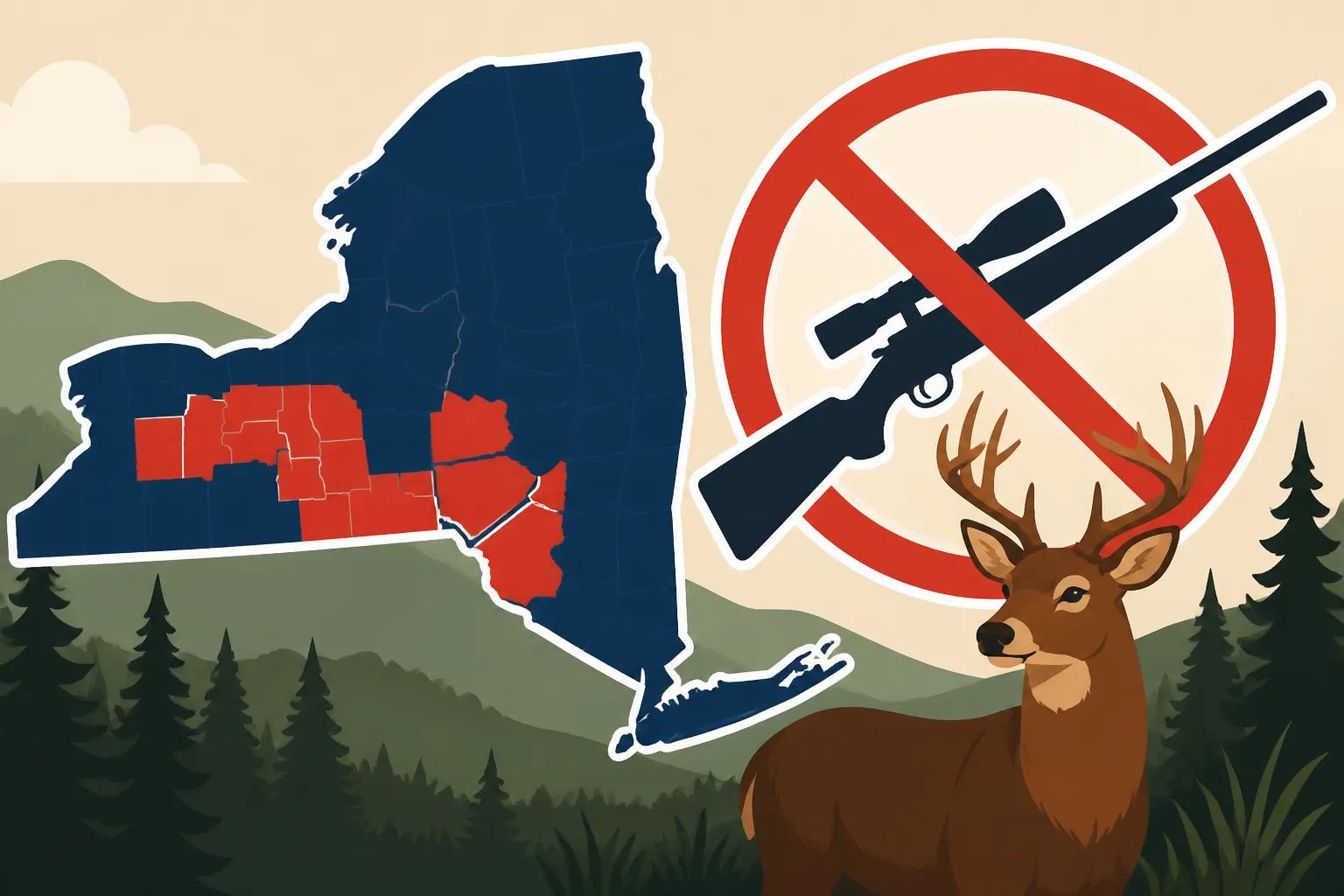
For many decades, a significant portion of New York's Southern Zone has maintained what are colloquially known as "shotgun-only" regulations for deer hunting during the regular firearm season. This means that while rifles might be the preferred tool for deer hunters in other states or even parts of New York's Northern Zone, they are simply not allowed in these designated areas. It can be a real head-scratcher, especially if you're accustomed to wide-open spaces and long-range shots.
The Southern Zone's Core Restrictions
The heart of these restrictions lies within many of the Wildlife Management Units (WMUs) that comprise the Southern Zone. Picture rolling hills, a mix of dense woodlots, and sprawling agricultural fields, often interspersed with more residential areas than you might find further north. This landscape, coupled with historical population considerations, has led to a regulatory framework where shotguns, muzzleloaders, and archery equipment are the primary legal methods for taking deer during their respective seasons. If you've been dreaming of bringing your favorite bolt-action .30-06 for the regular deer season, you might be in for a rude awakening if you're heading to, say, most of the Southern Tier or Finger Lakes regions.
Many hunters find themselves scrambling to borrow or buy a slug gun when they realize their go-to rifle is off-limits. It's a fundamental difference in hunting culture and safety considerations compared to areas where rifles are permitted. The thinking is that a shotgun slug, while still incredibly powerful and effective, has a shorter maximum effective range and is less prone to over-penetration, making it theoretically safer in more populated areas. For a detailed look at the firearm calendar, check out New York's Southern Zone Firearm Season.
Exceptions and Nuances within the Southern Zone
Now, here's where it gets a little more complex, and where paying close attention to specific WMU boundaries really pays off. While the general rule for many Southern Zone WMUs is "no rifles during the regular firearm season," there are some specific areas where centerfire rifles are permitted. These exceptions are typically found in WMUs that border the Northern Zone or in areas with lower human population density and more expansive, contiguous tracts of wild land.
It's crucial not to make assumptions based on general regional names. For instance, while much of the Southern Tier might be shotgun-only, a WMU just a bit further east or west could have different rules. You absolutely have to look up the regulations for the specific WMU you plan to hunt in each year. What was legal last season might have subtle changes, and a quick glance at the official DEC hunting guide or a reliable mapping tool like GoHunt can save you a lot of headache, or worse, a costly ticket. This is where understanding the lay of the land, whether it's Hunting Southern Tier Farmland Deer or more remote forests, truly matters.
Impact on Hunting Strategy
These rifle restrictions profoundly impact how hunters approach deer season. If you're used to picking off deer at 200 yards across a field, transitioning to a shotgun-only area means recalibrating your expectations and your tactics. Shots become much closer, typically under 100 yards, which often necessitates different scouting methods and stand placements. Instead of looking for expansive views, you're focusing on pinch points, thick cover, and dense travel corridors where deer will pass within that limited range.
This often means more emphasis on understanding deer movement patterns in close quarters, identifying subtle changes in terrain, and mastering the art of the close-range shot. It pushes hunters to become better woodsmen, focusing on stealth and intimate knowledge of their chosen hunting ground rather than relying on optical magnification and ballistic charts for long-range precision. When choosing your equipment, you'll want to carefully consider Shotgun Slug Guns for Southern Tier Deer and what kind of accuracy they can deliver within these closer parameters.
Understanding the Logic Behind the Rules
It's easy to get frustrated by what seem like arbitrary rules, especially when you feel like you're being penalized for hunting in one part of the state versus another. However, these regulations aren't pulled out of thin air. They're typically rooted in a combination of public safety concerns, historical precedent, and the unique demographic and geographic characteristics of different regions within New York.
Population Density and Safety Concerns
The primary driving force behind "shotgun-only" restrictions in many Southern Zone WMUs is public safety, specifically related to population density. New York's Southern Zone, generally speaking, has a higher human population and more fragmented landscapes with smaller parcels of private property, often bordering residential areas. A rifle bullet can travel a significant distance, potentially several miles, if it doesn't hit its target or passes through it. In areas with homes, roads, and other infrastructure, the risk of an errant rifle shot causing property damage or, tragically, injuring a person, is perceived to be higher.
Shotgun slugs, while still dangerous, are generally considered to have a shorter maximum effective range and a more rapid drop in velocity, reducing the potential for long-distance trajectories. This doesn't mean shotguns are inherently "safer" to handle, but rather that their ballistics are seen as more appropriate for hunting in areas where human dwellings and activity are more prevalent. It’s about minimizing risk in environments where hunting grounds often butt up against residential zones. Don't forget, regardless of weapon, you always need to be aware of New York Firearms Discharge Setback Rules.
Historical Context of Firearm Regulations
Many of New York's hunting regulations, especially regarding firearms, have a long history, predating modern optics, ballistic advancements, and even the widespread use of certain mapping technologies. In an era when most hunters used smoothbore shotguns, and before high-powered rifles became commonplace, the focus was often on what equipment was available and how it could be safely used in the existing landscape. As technology evolved, some regions maintained their historical restrictions, often due to entrenched public safety concerns and the "if it ain't broke, don't fix it" mentality from local communities.
Over the years, there have been discussions and proposals to expand rifle hunting opportunities in some of these restricted areas, particularly with the advent of modern straight-walled cartridges that offer rifle-like performance but are ballistically similar to slugs in terms of maximum range. However, changing these deeply rooted regulations often involves complex legislative processes, public debate, and careful consideration of safety perceptions from both hunters and non-hunters.
Ongoing Discussions and Potential Changes
The conversation around expanding rifle access in the Southern Zone is ongoing. Hunters frequently advocate for updates to regulations, citing advancements in ammunition technology (like those straight-walled cartridges mentioned) that bridge the gap between traditional slug guns and centerfire rifles. They argue that these modern options could allow for more effective and ethical harvests at common hunting distances without compromising public safety.
However, any potential changes require extensive review by the DEC, public comment periods, and often, legislative action. These discussions involve balancing hunter opportunity with public safety and the concerns of landowners and residents in highly populated areas. So, while things might evolve, it’s always best to assume the current rules are in place and plan accordingly, rather than hoping for a change that may or may not materialize in time for your next season. Keeping up with the official DEC announcements or checking an app like GoHunt for current regulations is your best bet.
Navigating the Regulations for Your Specific Hunting Area
With New York's diverse geography and varying rules, simply knowing that some parts of the Southern Zone are rifle-restricted isn't enough. You need to know the exact rules for your specific hunting spot. Misunderstanding these regulations can lead to serious legal consequences, including fines and license revocation.
The Importance of the Current Hunting Guide
Your absolute first stop for understanding New York's hunting regulations should always be the official New York State Department of Environmental Conservation (DEC) hunting guide. This guide is published annually and provides the most up-to-date and authoritative information on season dates, bag limits, and, critically, legal implements by WMU. Don't rely on old guides, hearsay from a friend, or forum posts from years past. The guide is usually available online well before the seasons begin, and many sporting goods stores offer physical copies.
Pay particular attention to the maps and the detailed descriptions of each WMU, as they will explicitly state what firearms are permissible during the regular deer season. It's not the most thrilling read, but it's essential homework for any responsible hunter. Looking at the New York Deer Seasons by Zone section in the guide is a great place to start your research.
Using Digital Mapping Tools like GoHunt
In today's digital age, online mapping tools have become invaluable for hunters navigating complex regulations and property boundaries. Platforms like GoHunt offer detailed overlays that can show WMU boundaries, public and private land distinctions, and often, specific regulations tied to those areas. While these tools are fantastic for general scouting and understanding the landscape, always cross-reference their information with the official DEC hunting guide, as regulations can change.
Using a tool like GoHunt can help you visualize where the rifle-restricted zones are in relation to your chosen hunting grounds. You can often input your exact location and see what WMU you're in, and then easily pull up the rules for that specific unit. This is especially helpful if you're hunting near a WMU boundary where regulations might abruptly change. It's a fantastic resource for planning your hunt and ensures you're not inadvertently stepping into a prohibited area with the wrong equipment. You can often see the overlay for public lands as well, which is great for Scouting New York Public Land Before Season.
Consulting Local DEC Offices
If you've checked the official guide and reviewed your mapping apps and still have questions, don't hesitate to reach out to a local DEC office or a regional wildlife biologist. These professionals are the ultimate authority and can provide clarification on any ambiguous regulations for your specific area. They are there to help hunters understand and abide by the rules.
Often, specific nuances of a WMU, like a small section that might have different rules due to local ordinances or unique land characteristics, might be best clarified by someone on the ground. A quick phone call or email can save you a lot of worry and ensure you're hunting legally and ethically. It’s far better to ask than to assume and find yourself in hot water.
Alternatives for Rifle-Restricted Areas
If you find yourself hunting in a New York WMU where centerfire rifles are not permitted for deer, don't despair! There are still incredibly effective and ethical ways to harvest deer. In fact, many seasoned New York hunters prefer these alternative methods, finding them challenging and rewarding in their own right.
Modern Shotgun Slug Technology
Gone are the days when a "slug gun" meant a smoothbore shotgun with a bead sight, capable of only rudimentary accuracy at short distances. Modern shotgun technology has revolutionized slug hunting. Today, you can find purpose-built slug guns with rifled barrels, cantilever scope mounts, and incredible accuracy out to 150-200 yards, often rivaling that of many traditional rifles at those distances. Coupled with advanced sabot slugs, these firearms are powerful and precise.
Many hunters in the Southern Zone invest in these dedicated slug guns, often topping them with a low-power variable scope, to maximize their effectiveness. They handle and shoot much like a rifle, requiring proper zeroing and understanding of ballistics, but they keep you well within the legal framework of "shotgun-only" WMUs. It's a great option for hunters who love the feel of a shoulder-fired firearm and want to extend their range beyond what a traditional smoothbore could offer. For more choices, consider Rifle and Shotgun Choices for New York Deer.
The Versatility of Muzzleloaders
Muzzleloaders offer another fantastic option for hunting deer in rifle-restricted zones, and in New York, they even have their own dedicated seasons that often extend opportunities beyond the regular firearm season. Modern inline muzzleloaders, loaded with pellets of propellent and saboted bullets, can be incredibly accurate and powerful, often outperforming older slug guns in terms of range and precision.
Hunting with a muzzleloader brings a unique challenge and a deep connection to hunting heritage. It forces you to be meticulous with your shot placement, as you typically only get one shot before a lengthy reload. This encourages careful scouting, patience, and precise shot execution. Plus, the distinctive boom and cloud of smoke add to the experience! If you're looking for more time afield or a different kind of challenge, diving into Muzzleloader Deer Hunting in New York might be just the ticket.
Archery and Crossbow Hunting Opportunities
Perhaps the most widely available and longest-running seasons for deer in New York, regardless of zone or specific WMU, are those for archery and crossbows. These seasons typically open weeks before the firearm seasons, offering hunters incredible opportunities to pursue deer during a time when woods are quieter and deer patterns might be more predictable. New York has a very long archery season, allowing for extensive time in the woods.
Archery hunting, whether with a traditional bow, compound, or crossbow, requires a different set of skills focusing on extreme stealth, close-range encounters, and impeccable shot placement. It's a deeply immersive experience that tests your woodsmanship to its limits. For many, the thrill of getting a deer within bow range is unmatched. New York's regulations are pretty clear on these methods, and they are almost universally legal for deer hunting. Be sure to understand New York Crossbow and Bow Regulations and Bowhunting New York's Long Archery Season if you plan to hunt with either of these tools.
Here's a quick comparison of general firearm types and their typical legality for deer hunting in New York:
| Firearm Type | Northern Zone (General) | Southern Zone (General) | Notes |
|---|---|---|---|
| Centerfire Rifles | Generally Permitted | Generally Restricted | Exceptions exist in certain Southern Zone WMUs. |
| Shotguns (Slugs) | Permitted | Generally Permitted | Primary firearm in many Southern Zone WMUs during regular season. |
| Muzzleloaders | Permitted | Permitted | Dedicated seasons often extend opportunities in both zones. |
| Archery/Crossbow | Permitted | Permitted | Long seasons, universally legal for deer in all zones. |
| Handguns | Permitted | Permitted | Must meet specific caliber/barrel length rules. Often overlooked option. |
Please remember, this table is a generalization. Always consult the official New York DEC hunting guide for the specific WMU you intend to hunt.
Disclaimer
This article is for general informational purposes only and does not constitute professional advice. Laws, prices and regulations vary by location and change over time. Consult a qualified professional for guidance on your specific situation.