Practical Range in Adirondack Timber
Hunting in the Adirondack timber is an experience unlike any other, but it comes with its own unique set of challenges, especially when it comes to shot placement and understanding your effective range. Many of us have faced the frustration of spotting a deer, only to realize that the dense trees and undulating terrain make a clean shot feel impossibly far, or deceptively close. This guide is here to help you navigate those scenarios, shedding light on what "practical range" truly means in the wild, rugged beauty of New York's Adirondacks, so you can hunt with confidence and ethical precision.
Understanding the Adirondack Landscape and Its Impact on Shooting
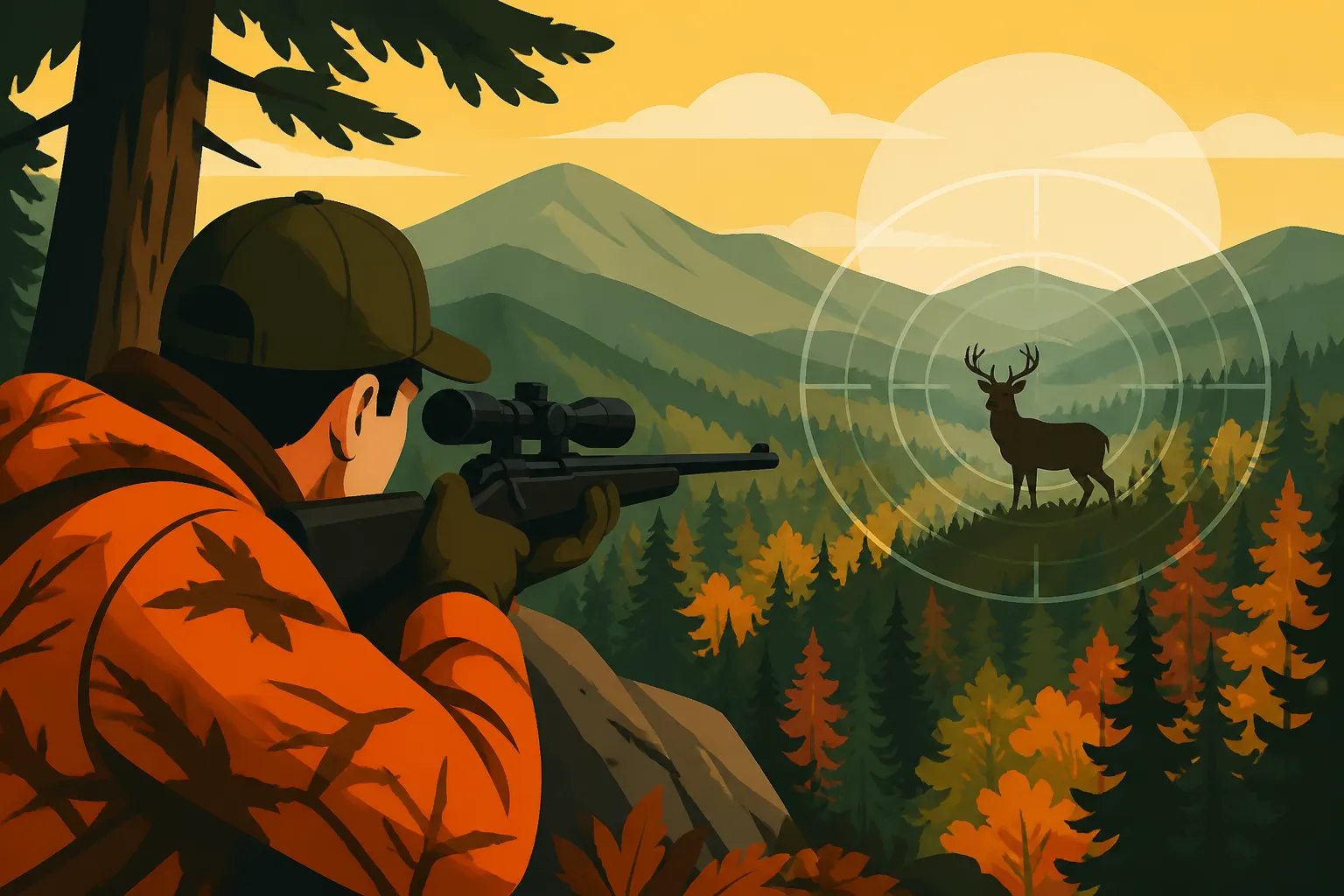
The Adirondacks are a mosaic of dense conifer stands, towering hardwoods, thick blowdowns, and rocky outcrops, all draped over some seriously steep and broken ground. This isn't your wide-open Western hunting experience where you might be dialing a turret at 500 yards. Here, the challenge isn't usually distance, but rather finding a clear line of sight and an ethical shot within a much shorter window.
Dense Cover and Limited Sightlines
When you're still-hunting through a vast stretch of Adirondack forest, especially within the deeper wilderness areas, you quickly learn that your eyes are often ahead of your weapon. That thick spruce thicket or the dense underbrush in a regenerating clearcut can swallow a deer whole in seconds. You might be able to see 100 yards down a logging road, but the moment you step off that path, your effective vision can shrink to 30 or 40 feet. Imagine walking along a ridge dotted with mature hardwoods, where the ground cover is surprisingly open, offering glimpses through the trees. Suddenly, you drop into a hemlock bottom or an area choked with young beech, and your world compresses. A deer might be standing just 70 yards away, but with a dozen saplings and a fallen log between you, a shot is simply not there. This constant change in cover is the primary reason why "practical range" in the Adirondacks is often far less than your firearm's maximum capability. It's about finding that precious window, not just seeing the animal. This is where Finding Sign in Big Adirondack Timber becomes crucial, as understanding where deer move through this cover will help you anticipate shot opportunities.
Reading Topography and Animal Movement
The rolling hills, steep ravines, and dramatic elevation changes of the Adirondacks don't just affect your legs; they profoundly influence how you perceive distance and how deer move. A deer standing across a deep ravine might appear closer than it actually is because your eye is drawn to its relative position, not the true horizontal distance. Conversely, an animal slowly working its way up a steep hillside can seem further away. Deer in the Adirondacks often utilize natural funnels created by terrain – benches on hillsides, saddles between peaks, or the edges of swamps. These are prime areas to intercept them, but they also present complex shooting scenarios. For example, a buck hugging the contour of a steep slope above you means you're not just dealing with horizontal distance, but also a sharp upward or downward angle. This requires precise range estimation and an understanding of how bullet trajectory is affected. Without a rangefinder, a 70-yard shot across a gully could easily be misjudged as 50 or 100, leading to a poor hit or a miss. Knowing Where Adirondack Bucks Bed can help you set up in areas where these shots might be shorter.
Factors Determining Your Practical Shooting Range
Your practical shooting range isn't just about what your rifle can do, but what you can do with it, ethically and consistently, in the specific conditions of the Adirondack woods. It's a combination of your equipment's capabilities, your personal skill, and the environmental factors at play.
Your Weapon and Ammunition's Capabilities
Every hunting weapon has an effective range, but this range is often quoted for ideal conditions – a shooting bench, no wind, clear target. In the real world of Adirondack hunting, those numbers shrink considerably.
- Rifles: While many modern hunting rifles are capable of taking game out to several hundred yards, an ethical shot in dense timber for most hunters is likely closer to 150-200 yards, and often much less. Calibers like a .30-06 or .308 are more than sufficient, delivering ample energy at these closer ranges. The focus isn't on flat trajectory at extreme distances, but on delivering a devastating punch within the practical limits of visibility. For Choosing a Rifle Caliber for New York Deer, consider calibers that perform well in typical timber scenarios.
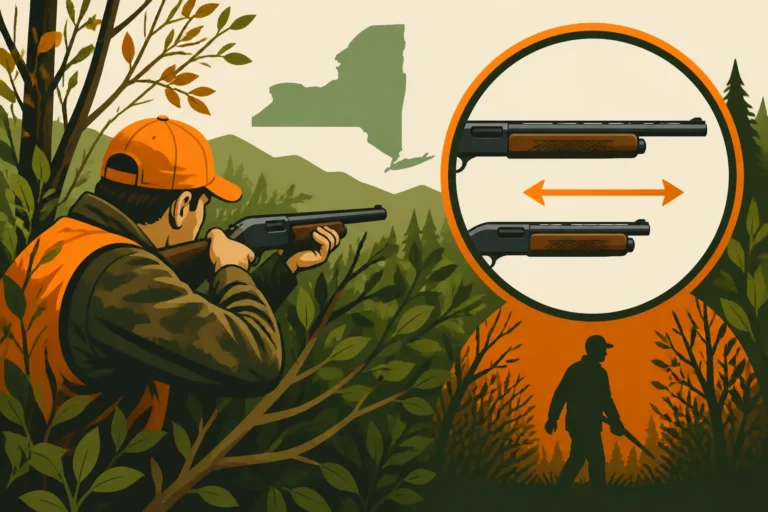
- Shotguns (Slug Guns): In areas where rifles are restricted, slug guns are common. With modern sabot slugs and rifled barrels, these can be accurate out to 150 yards for proficient shooters, but in timber, an ethical maximum for many hunters might hover around 75-100 yards.
- Muzzleloaders: Typically used in special seasons, muzzleloaders offer excellent power at moderate ranges. Similar to slug guns, 75-100 yards is a solid practical maximum for a clean kill in dense woods, though some experienced shooters may push this further with practice.
- Bows and Crossbows: Archery hunting demands the closest ranges. For a compound bow or crossbow, 40-50 yards is generally considered a maximum ethical range for most hunters, even in open country. In thick Adirondack cover, this often means 20-30 yards or even closer, especially if you're aiming for a tight window.
The type of ammunition or broadhead also plays a role. A bullet designed for rapid expansion at close range might over-expand at 25 yards, while one designed for long-range retention might not expand enough. Similarly, Fixed Versus Mechanical Broadheads each have their proponents for timber hunting, with considerations for penetration versus cutting diameter.
Here's a general guide for practical maximum ethical ranges in typical Adirondack timber conditions, assuming good light and a steady rest:
| Weapon Type | Optimal Range (Yards) | Typical Adirondack Practical Max (Yards) | Key Considerations |
|---|---|---|---|
| Rifle | 200-400+ | 75-150 | Line of sight, bullet path, target acquisition |
| Slug Shotgun | 100-150 | 50-100 | Projectile drop, brush deflection, target visibility |
| Muzzleloader | 75-125 | 50-100 | Smoke, slower projectile, shot recovery time |
| Compound Bow | 40-60 | 15-30 | Clear lanes, animal awareness, shot placement |
| Crossbow | 50-70 | 20-40 | Clear lanes, animal awareness, shot placement |
Note: These are general guidelines. Your personal skill, specific gear, and the exact conditions of the hunt will dictate your true ethical maximum range.
Hunter Skill and Ethical Considerations
No matter how capable your rifle or bow, the most critical factor in determining your practical range is you. Are you proficient with your weapon? Have you practiced shooting from various field positions, not just a bench? The Adirondacks often demand awkward shots – kneeling behind a blowdown, leaning against a tree, or even shooting quickly offhand. Your ability to consistently place a shot into a vital zone under pressure is paramount.
The ethical obligation to make a clean, humane kill should always trump the desire to take a shot. A wounded deer in dense Adirondack timber can be incredibly difficult to track and recover, leading to unnecessary suffering and a lost animal. It's a gut-wrenching experience none of us ever want to have. Knowing your personal limitations is a sign of a responsible hunter. If you feel shaky at 70 yards, then your practical range might be 50. If you can consistently group shots at 100 yards from a field rest, then that's your starting point. Remember that New York Hunter Education Requirements emphasize ethical shot placement, and this is where that training truly comes into play. Use resources like GoHunt to scout potential areas where shots might present themselves, and mentally prepare for those distances.
Environmental Conditions
Mother Nature has a way of shortening your practical range faster than anything else.
- Low Light: Dawn and dusk are prime deer movement times, but they're also when light conditions are at their worst. A deer that's identifiable at 100 yards in midday sun might be an indistinct blur at 50 yards in the gloom of a heavy timber stand just before legal shooting light ends. This is where quality optics make a huge difference.
- Weather: Rain, heavy fog, or falling snow drastically reduce visibility. What might be a clear 70-yard lane on a sunny day could be a 30-yard gamble in a downpour. Wind, while not as impactful on bullet trajectory at timber ranges, can make holding steady more difficult and mask deer sounds, forcing you to rely more on sight in already poor conditions.
- Thick Undergrowth: Even without rain, thick foliage, especially after a spring green-up, can turn what looked like an open shot into a "bullet catcher" full of twigs and leaves, risking deflection and a wounded animal.
Always assess the conditions in the moment. If it's raining heavily, your 100-yard maximum might become a 50-yard maximum. Be realistic.
Strategies for Maximizing Your Effective Range in Adirondack Timber
While the timber imposes limitations, there are proactive steps you can take to make the most of your shooting opportunities and extend your ethical range within those constraints.
Scouting and Pre-Season Practice
Successful hunting in the Adirondacks starts long before opening day. Dedicated scouting is invaluable for understanding the specific terrain you'll be hunting. This means identifying natural funnels, pinch points, bedding areas, and feeding zones. More importantly for our discussion, it means identifying potential shooting lanes. Walking through the woods and mentally picturing shot opportunities will help you develop an eye for what's truly clear. Where does a game trail cross a slightly more open area? Is there a big oak that offers a solid rest and a decent view down a ridge? Use tools like GoHunt to analyze topography and map out your hunting area, looking for those natural clearings or breaks in the cover. Then, visit those spots and mentally range distances.
Beyond scouting, rigorous practice with your hunting weapon is non-negotiable. Don't just shoot from a bench. Practice shooting from kneeling, sitting, and standing positions. Simulate shooting quickly after a long walk or a short stalk. Set up targets at realistic timber distances (30, 50, 75, 100 yards) and practice making quick, accurate shots. Pay attention to how quickly you can acquire a target and establish a stable shooting platform. This kind of practice builds muscle memory and confidence, which are critical when a buck suddenly steps out at 60 yards in fading light. Consider using your local range to practice for Practical Range in Adirondack Timber.
Positional Shooting and Field Rests
In the Adirondacks, opportunities for a perfect prone shot are rare. Most shots will be taken from a standing, kneeling, or sitting position, often with the aid of a natural or artificial rest.
- Natural Rests: A sturdy tree trunk, a fallen log, or a large rock can provide excellent stability. Learn to quickly lean into a tree, steady your elbows on your knees while sitting, or brace yourself against a solid object. These seemingly small adjustments can dramatically improve your accuracy at distances beyond an offhand shot. When Hanging a Stand on an Adirondack Funnel, always consider potential shooting lanes and available rests.
- Portable Rests: Shooting sticks (bipods or tripods) are invaluable tools in the Adirondack woods. They offer a stable platform that can be quickly deployed and adjusted for height, transforming a shaky offhand shot into a steady, confident one. They are especially useful when hunting areas with limited natural cover or when needing to shoot over brush. Having a pair of Shooting Sticks From a Catskill Ridge can make a difference in similar Adirondack terrain.
The key is to train yourself to instinctively find or create a stable shooting position the moment you spot game. It's often better to take an extra few seconds to get steady than to rush an offhand shot that might result in a miss or a wounded animal.
Mindset and Patience
Perhaps the most underrated factor in maximizing your effective range is your mindset. "Buck fever" is real, and it can turn a routine shot into a shaking, adrenaline-fueled mess. In the Adirondacks, where shots are often quick and tight, staying calm and focused is vital.
- Patience: It's almost always better to let a marginal shot pass than to take an unethical one. If a deer is moving, obscured, or at the very edge of your comfort zone, try to let it pass and wait for a better opportunity. Sometimes, waiting just a few extra seconds for an animal to clear a sapling or turn broadside can make all the difference. This might mean the deer moves closer, or it might mean it vanishes, but you'll have upheld your ethical responsibility.
- Shot Process: Practice a consistent shot process: locate game, assess distance, find a rest, settle your breathing, aim for the vitals, and execute the shot. Even in the rush of a hunting moment, consciously running through this process can help you maintain composure. Rely on your scouting with GoHunt to anticipate where deer might pause, giving you those precious extra seconds. The ethical hunter understands that Hunting Pressure on New York Public Land often means waiting for the perfect opportunity rather than rushing.
Gear That Extends Your Practical Range (Without Overextending)
While no piece of gear will magically turn a 50-yard shot into a 200-yard chip shot in dense timber, the right equipment can significantly enhance your ability to identify targets, judge distances, and make precise shots within your ethical limits.
Quality Optics for Low Light and Target Identification
In the low light of dense Adirondack timber, quality optics are not a luxury; they are a necessity.
- Binoculars: A good pair of 8×42 or 10×42 binoculars can make the difference between seeing a deer and just seeing a brown blob. They help you pick apart brush, identify antler points, and confirm the exact location of a deer's vitals in dim conditions. Look for optics with excellent light gathering capabilities and clear edge-to-edge resolution. For Binocular Power for Timber Hunting, clarity and light transmission are more important than magnification.
- Rangefinders: A rangefinder is one of the most important tools for Adirondack hunting. It eliminates guesswork, which is crucial in terrain that can be deceiving. Knowing the exact distance – whether 37 yards or 84 yards – allows you to hold precisely, especially with a bow or a slug gun. Many shots in the Adirondacks fall into that "awkward" 30-100 yard range where guessing can lead to misses.
- Rifle Scopes: A quality rifle scope with good low-light performance is essential. Variable power scopes (e.g., 2-7x, 3-9x) are ideal, allowing you to dial down for a wide field of view in thick timber and quickly dial up for a slightly longer shot down a logging road. Avoid excessively high magnification, which can make target acquisition difficult at close range in dense cover. A scope with an illuminated reticle can also be a game-changer in deep shadows or twilight. For more details, see Rifle Scope Magnification for New York Deer.
Appropriate Ammunition and Broadheads
Choosing the right projectile ensures that when you do make a good hit, it's effective.
- Rifle Ammunition: For deer and bear in the Adirondacks, look for bullets designed for controlled expansion at moderate velocities. Bonded bullets or those with heavier construction tend to perform well, ensuring good penetration and energy transfer without excessive fragmentation. Avoid ultra-light, high-velocity varmint rounds.
- Shotgun Slugs: Modern sabot slugs fired from a rifled barrel offer excellent accuracy and terminal performance. Ensure your slug is matched to your shotgun for optimal performance.
- Muzzleloader Projectiles: Conical bullets or sabots designed for deer-sized game are the way to go. Practice with your chosen projectile to ensure accuracy.
- Archery Broadheads: Whether fixed-blade or mechanical, ensure your broadheads are razor sharp and fly true with your arrows. For shots in tight cover, some hunters prefer fixed blades for their reliability, but mechanicals can offer larger cutting diameters.
Navigation and Recovery Tools
Even with a perfect shot, recovering game in the Adirondacks can be a monumental task, especially if you're deep in the woods or if the animal runs.
- GPS Units or Phone Apps: A reliable GPS unit or a hunting app like GoHunt on your smartphone is critical. Mark your stand location, the shot location, and the last place you saw the deer. This is invaluable for blood trailing, especially if you have to back out and return later or the trail is sparse. Scouting With the New York HuntFishNY App or other mapping tools can be a lifesaver.
- Headlamp and Blood Trailing Lights: Even with an early evening shot, the Adirondack woods get dark fast. A powerful headlamp is a must for recovery efforts. Specialized blood-trailing lights can help illuminate a sparse trail after dark.
- Game Bags and First Aid: While not directly related to shooting range, these are crucial for a successful and safe hunt. Game bags protect your meat during extraction, and a well-stocked First Aid Kits for Remote Adirondack Ground is vital for any unexpected situation in the wilderness.
Remember, the goal isn't to take the longest shot possible, but the most ethical shot you can confidently make. By understanding the Adirondack landscape, honing your skills, and equipping yourself wisely, you can maximize your practical range and increase your chances of a successful and humane hunt in this incredible region.
Disclaimer
This article is for general informational purposes only and does not constitute professional advice. Laws, prices and regulations vary by location and change over time. Consult a qualified professional for guidance on your specific situation.