Safety Harnesses and Lifelines
There's nothing quite like the feeling of watching a crisp New York morning unfold from your treestand, nestled high above the forest floor. The world below slowly awakens, mist rising from the swamps, and the quiet anticipation of deer movement fills the air. But that serene feeling can quickly turn to terror if you neglect the most critical piece of gear you'll ever take afield: your safety harness and lifeline. Far too many hunters in our great state, from the Catskills to the Southern Tier, have faced life-altering injuries, or worse, because they skipped this vital step. This guide is all about making sure you understand, use, and commit to the safety equipment that can genuinely save your life.
The Non-Negotiable Reality of Treestand Safety
Let's be honest, we've all been there. You're running late, the pre-dawn adrenaline is pumping, and the thought of fumbling with buckles and straps feels like a waste of precious hunting time. Maybe you think, "I'm only going up 10 feet," or "I've done this a thousand times." But that moment of complacency, that single lapse in judgment, is exactly when accidents happen. In New York, with our varied terrain and often slick conditions, the risks are real and present every time your boots leave the ground.
Understanding the Risks: Why Treestand Accidents Happen
Treestand accidents aren't just about stands failing, though that can certainly happen. More often, it's a slip, a missed step, a sudden loss of balance. Picture this: you're installing your climbing sticks in the dark, your boots are wet from dew, and your hands are numb from the early November chill. One misplaced foot, a branch breaking under your weight, or a sudden gust of wind catching your stand, and you're in freefall. It’s a terrifying scenario, and it's far from uncommon.
Many accidents occur during the critical moments of ascending or descending the stand. Transitioning from the climbing aid to the stand platform, or vice versa, is a high-risk maneuver. Your center of gravity shifts, and you're often reaching, twisting, or carrying gear. Another common culprit is simply falling asleep in the stand, especially during those long, quiet midday sits or early morning vigils. The risk isn't just for inexperienced hunters either; veterans often develop a false sense of security, assuming their years of experience make them immune. The truth is, gravity doesn't care how many deer you've tagged.
What a Full-Body Harness Does
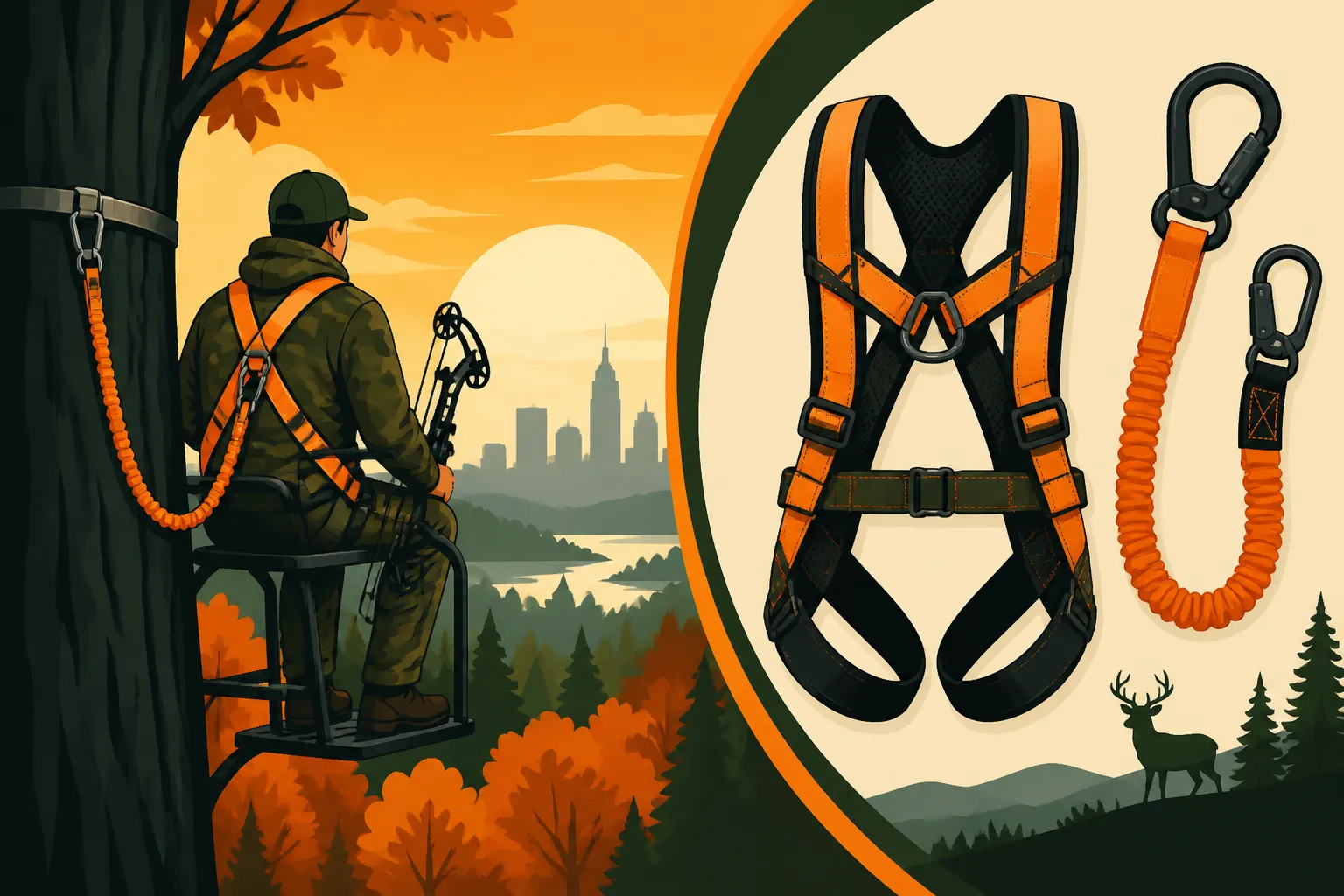
A full-body harness isn't just a strap or a belt; it's an engineered system designed to distribute the forces of a fall across your entire torso, greatly reducing the risk of serious injury. When worn correctly, it cradles you, preventing you from hitting the ground if you slip or your stand fails. Modern harnesses are designed to be comfortable and allow for a full range of motion, so they won't impede your shot or make a long sit unbearable.
Think of it as the seatbelt for your treestand. You wouldn't drive your truck without buckling up, so why would you climb 20 feet up a tree without the equivalent protection? The harness typically features straps over the shoulders, around the waist, and through the legs, all converging at a single attachment point, usually a D-ring on your back. This design ensures that if you do fall, your body remains upright or in a relatively safe position, rather than being suspended by a single, uncomfortable, and potentially dangerous point.
Bridging the Gap: The Role of a Lifeline
While a full-body harness is absolutely essential, it's only half the equation. What good is a harness if you're not attached to the tree during your ascent or descent? That's where a lifeline comes into play. A lifeline is a rope or strap system that runs from the base of the tree all the way up to your stand, and critically, above your stand. It allows you to stay connected to the tree from the moment your feet leave the ground until you're safely seated, and then back down again.
The biggest mistake hunters make is only attaching their harness once they are in the stand. This leaves you vulnerable during the entire climb and descent, which, as we discussed, is often when accidents occur. A good tree-strap lifeline, like those offered by many reputable brands, ensures continuous connection. You'll clip into the lifeline at ground level, slide your prusik knot (or similar attachment) up as you climb, and remain connected every step of the way. This simple addition completely closes the safety gap.
Types of Safety Harnesses and Lifelines for New York Hunters
The market for treestand safety gear has grown considerably, and that's a good thing for us hunters. There are more options than ever, designed for comfort, ease of use, and maximum protection. Understanding the different types available will help you choose the best system for your hunting style and the kind of terrain you face in places like the Finger Lakes or the heavily timbered Adirondacks.
Full-Body Harnesses: Comfort and Functionality
When selecting a full-body harness, comfort is key. If it's uncomfortable, you simply won't wear it, and that defeats the entire purpose. Look for models with padded shoulder straps and leg loops, and ensure it's adjustable enough to fit over your bulky cold-weather gear. Clothing for a New York November can add significant bulk, so trying on a harness with your hunting layers is a smart move. Many modern harnesses are designed to be lightweight and unobtrusive, allowing for full range of motion.
Some harnesses integrate directly with your hunting vest, which can be a great way to reduce bulk and make it feel like less of an extra step. Others have specific features for women or youth, ensuring a proper and safe fit for all body types. Ensure any harness you choose is certified by organizations like the Treestand Manufacturers Association (TMA). This certification means it has met rigorous safety standards and undergone extensive testing. Don't compromise on this; your life literally depends on it.
Tree-Strap Lifelines: Essential for Ascent and Descent
The most common and effective type of lifeline is the tree-strap system, often called a "climbing safety rope" or "prusik rope." This system consists of a sturdy rope with a continuous loop that cinches around the tree trunk at the top. A sliding knot, usually a prusik knot, is then attached to this main rope. You clip your harness into this prusik knot. As you climb, you simply slide the prusik knot up the main rope with one hand, staying connected at all times. If you slip, the prusik knot bites down on the main rope, stopping your fall instantly.
These lifelines are incredibly easy to install and use once you get the hang of it. They provide the continuous attachment that is absolutely vital. Make sure the lifeline is long enough to reach the ground from your chosen stand height, with some extra slack for tying off. Having one of these for every treestand you plan to use is a smart investment. For permanent stands, it's ideal to leave them installed for the season, just like your Treestand Setups in Adirondack Hardwoods need to be ready.
Advanced Systems and Accessories
Beyond the basic harness and lifeline, there are several advanced systems and accessories that can enhance your safety, particularly for specialized situations or if you spend a lot of time in a stand.
- Lineman's Rope (Climbing Belt): This is a separate short rope or strap with carabiners on each end that wraps around the tree. It allows you to stay connected while ascending and descending, especially useful when installing climbing sticks or adjusting your stand. You clip one end to a side loop on your harness, wrap it around the tree, and clip the other end back to your harness. This frees up both hands for work while maintaining a secure attachment. It's an excellent piece of gear for anyone using Climbing Sticks for Adirondack Hardwoods.
- Descent Devices: These are a relatively newer addition to treestand safety. In the event of a fall where you're suspended by your harness, prolonged suspension can lead to suspension trauma, a dangerous condition. Descent devices allow you to safely lower yourself to the ground after a fall, without waiting for help. They are compact and typically attach to your harness, providing a controlled descent mechanism. This is particularly valuable if you're hunting alone in remote areas of New York where immediate assistance might not be available.
- Safety Lines for Multiple Stands: If you're setting up several stands for a season, consider investing in a lifeline for each. Some hunters use a single lifeline and move it, but this adds a level of inconvenience that could lead to skipping the step. Having a dedicated lifeline for each stand ensures consistency.
Here's a quick comparison of common treestand safety components:
| Component | Primary Function | Best Use Case | Key Benefit |
|---|---|---|---|
| Full-Body Harness | Distributes fall forces, prevents impact with ground | Any treestand hunting | Saves life, reduces injury severity |
| Tree-Strap Lifeline | Provides continuous attachment during ascent/descent | Any treestand, especially during transitions | Eliminates vulnerable climbing/descending periods |
| Lineman's Rope | Keeps hands free while maintaining attachment | Setting up stands, hanging sticks, making adjustments | Enhances safety and efficiency for hands-on tasks |
| Descent Device | Allows self-rescue after a fall, prevents trauma | Solo hunting, remote locations, extended suspension | Critical for self-recovery, mitigates health risks |
Proper Use and Installation: Your Life Depends On It
Having the gear is one thing; using it correctly is another entirely. A safety harness and lifeline are only as effective as their proper application. This isn't a step you can rush or guess your way through. Taking the time to understand and practice proper usage before the season starts could literally be the difference between life and death.
Donning Your Harness Correctly
First things first, get familiar with your harness. Every harness is a little different, but they all share common elements. The goal is a snug, but not overly tight, fit.
- Orient the Harness: Hold it up and identify the shoulder straps, leg loops, and the back D-ring or attachment point. Make sure there are no twists in the straps.
- Step In/Put On: Most harnesses are stepped into like a pair of pants, pulling the leg loops up first. Then, pull the shoulder straps over your shoulders. If it's a vest-style harness, simply put it on like a vest.
- Adjust Leg Loops: The leg loops should be snug around your upper thighs, but not so tight they cut off circulation or cause discomfort. You should be able to slide your flat hand between the strap and your leg, but not your fist.
- Adjust Shoulder Straps: Tighten the shoulder straps so the harness feels secure, but again, not restrictive. The D-ring on your back should typically be positioned between your shoulder blades, at or just below the top of your head. This ensures proper alignment if you fall.
- Adjust Chest Strap (if applicable): Many harnesses have a chest strap to keep the shoulder straps in place. Cinch this snug.
- Practice: Put your harness on in your living room, or better yet, in your backyard with your hunting clothes on. Move around, bend, stretch. Get used to how it feels. This practice will make donning it in the dark significantly easier.
Installing a Lifeline: Step-by-Step Guidance
Installing your tree-strap lifeline is a crucial step that needs to be done meticulously.
- Choose the Right Tree: Make sure your tree is healthy and sturdy. Avoid dead trees, weak trees, or those with significant rot. Consider the tree size – the strap needs to fit securely.
- Attach Top Strap: Climb a few feet up the tree (with your lineman's rope attached, if possible, or using extreme caution) and secure the top loop of your lifeline around the tree trunk, high above where your stand will be positioned. This ensures that even when you stand on your platform, your attachment point is above you. If you're using a single-person treestand, make sure the lifeline is centered for easy access from your platform.
- Deploy the Rope: Toss the rest of the lifeline rope down to the ground. Make sure it's untangled and clear of any obstructions.
- Attach Bottom: Secure the bottom of the lifeline to the base of the tree. This keeps the rope taut and prevents it from swinging or getting caught. You want it relatively tight but not so much that it pulls the top strap out of position.
- Attach Prusik Knot: At ground level, clip your harness's tether into the prusik knot (or rope grab) on the lifeline.
- Climb Connected: As you ascend your Deer Drives on New York Public Land stand or your favorite spot in the public timber, slide the prusik knot up the main rope, keeping it above your head at all times. Once on your stand, adjust the prusik knot to the highest point you can comfortably reach, ensuring minimal slack in your tether. This minimizes any potential fall distance.
Many systems, like those discussed by experts using tools similar to GoHunt for planning hunts, emphasize that this continuous connection is paramount. Never, ever unclip from your lifeline until you are safely back on solid ground.
Pre-Season Checks and Maintenance
Just like your rifle needs to be sighted in or your bow tuned, your safety gear needs regular inspection. Don't just throw it in the hunting bin and forget about it.
- Inspect Annually: Before the season opens, take out all your safety gear. Examine all webbing, buckles, and ropes for signs of wear, fraying, cuts, or sun damage. Check the stitching on all stress points. If anything looks compromised, replace it immediately. Ropes can degrade over time, even if they look fine on the surface.
- Check Metal Components: Inspect all carabiners, D-rings, and other metal hardware for cracks, bends, rust, or deformation. Ensure spring-loaded gates on carabiners open and close smoothly and lock securely.
- Clean and Store Properly: If your harness gets muddy or wet, clean it gently with mild soap and water, then let it air dry completely out of direct sunlight. Store your harness and lifeline in a cool, dry place, away from rodents, chemicals, or extreme temperatures that can degrade the materials. Never store it crumpled up where critical areas might be stressed.
- Replace After a Fall: This is non-negotiable. If you ever experience a fall, even a short one, you must replace your harness and lifeline. The materials are designed to absorb and distribute impact once, and their integrity can be compromised even if no visible damage is present. Don't risk it again.
Addressing Common Concerns and Misconceptions
Despite all the warnings and advancements in safety gear, some hunters still hesitate. Let's tackle some of those common reasons and offer realistic solutions.
"I'm Only Going Up a Few Feet"
This is perhaps the most dangerous misconception. A fall from even 6-8 feet can cause severe injuries: broken bones, concussions, spinal damage, or internal injuries. You don't need to fall from 20 feet to be seriously hurt. The ground is still hard whether you're 8 feet up or 28. In fact, many serious accidents occur at lower heights because hunters are more casual with their safety.
Think about it this way: if you were working on a construction site, OSHA wouldn't care if you were 5 feet off the ground; fall protection would still be required. Your body is just as vulnerable from a short fall in the woods as it is anywhere else. Always wear your harness, always use your lifeline, no matter how low or how quickly you plan to get into your stand. Every single time.
Suspension Trauma: The Silent Killer
One of the more frightening aspects of a fall while wearing a harness is the risk of suspension trauma, also known as "harness hang syndrome." If you fall and are suspended motionless for an extended period, the pressure of the leg straps can restrict blood flow to your lower extremities. This can cause blood to pool in your legs, leading to a dangerous drop in blood pressure, dizziness, nausea, and eventually, organ damage or even death. It's a real concern, especially when hunting Opening Weekend Crowds in the Southern Zone where you might be alone for hours.
To mitigate this risk:
- Be Prepared: Always carry a sharp knife or a small emergency rope cutter to free yourself if absolutely necessary.
- Relieve Pressure: Many modern harnesses include a small "relief strap" or "suspension relief device" that allows you to stand up in your harness by placing your feet in loops. This relieves pressure on your femoral arteries. If your harness doesn't have one, consider adding a short rope with a loop that you can deploy with your feet.
- Move Your Legs: Even if you can't stand, try to pump your legs, push against the tree, or otherwise move to promote blood circulation.
- Call for Help: If you have cell service, call 911 or a hunting partner immediately. This is where tools like GoHunt, which often allow you to share your location with hunting buddies, can be invaluable.
- Get Training: Some hunter education programs or online resources offer more in-depth training on how to handle a suspension trauma situation. Knowing what to do can save your life.
Cold Weather Challenges and Layering with a Harness
Hunting in New York, especially during the firearm and late archery seasons, means dealing with cold, wet, and often snowy conditions. Layering is essential for staying warm, but it can make wearing and adjusting a harness tricky. Muzzleloader Tactics in December Cold often involve heavy clothing, presenting specific challenges.
- Size Up: When buying a harness, consider trying it on with your bulkiest winter hunting gear. You might need a slightly larger size than you'd expect to ensure a comfortable and safe fit over multiple layers.
- Adjust for Bulk: As you add or remove layers throughout the day, re-adjust your harness to maintain a snug fit. A loose harness is a less effective harness.
- Keep Straps Clear: Ensure your harness straps are not pinched, twisted, or covered by clothing in a way that would prevent them from distributing weight properly in a fall. Make sure the D-ring on your back is accessible and not buried under a heavy jacket.
- Practice with Layers: Again, practice makes perfect. Try putting on and adjusting your harness with all your cold-weather clothing on, well before opening day. This will help you identify any issues and build muscle memory.
Ultimately, treestand safety is about forming good habits. Make wearing your harness and using your lifeline as automatic as checking your safety, loading your gun, or putting on your blaze orange. It's not an inconvenience; it's a commitment to coming home safely to your family after every hunt in the beautiful New York woods.
Disclaimer
This article is for general informational purposes only and does not constitute professional advice. Laws, prices and regulations vary by location and change over time. Consult a qualified professional for guidance on your specific situation.