20 Gauge Doubles for Aspen Cover
Hunting ruffed grouse in New York's thick aspen and alder stands can be one of the most frustrating, yet deeply rewarding, experiences out there. You're constantly fighting through dense brush, trying to keep up with a flushing bird that disappears behind a wall of branches in a split second, and often, your trusty deer gun just feels cumbersome. This guide is all about why a nimble 20 gauge double shotgun, often overlooked in a world of semi-autos, is truly a stellar choice for navigating those challenging covers and tipping more grouse.
The Undeniable Appeal of a 20 Gauge Double for New York Grouse
When you're busting through a gnarly thicket of young aspen saplings or a tangled alder run along a forgotten creek bed in New York, every ounce of weight and every inch of barrel length matters. This is where the 20 gauge double gun truly shines, offering a balance of quick handling, appropriate power, and a classic aesthetic that just feels right in the grouse woods.
Why Not a 12 Gauge? The Argument for Lighter Recoil and Carry Weight
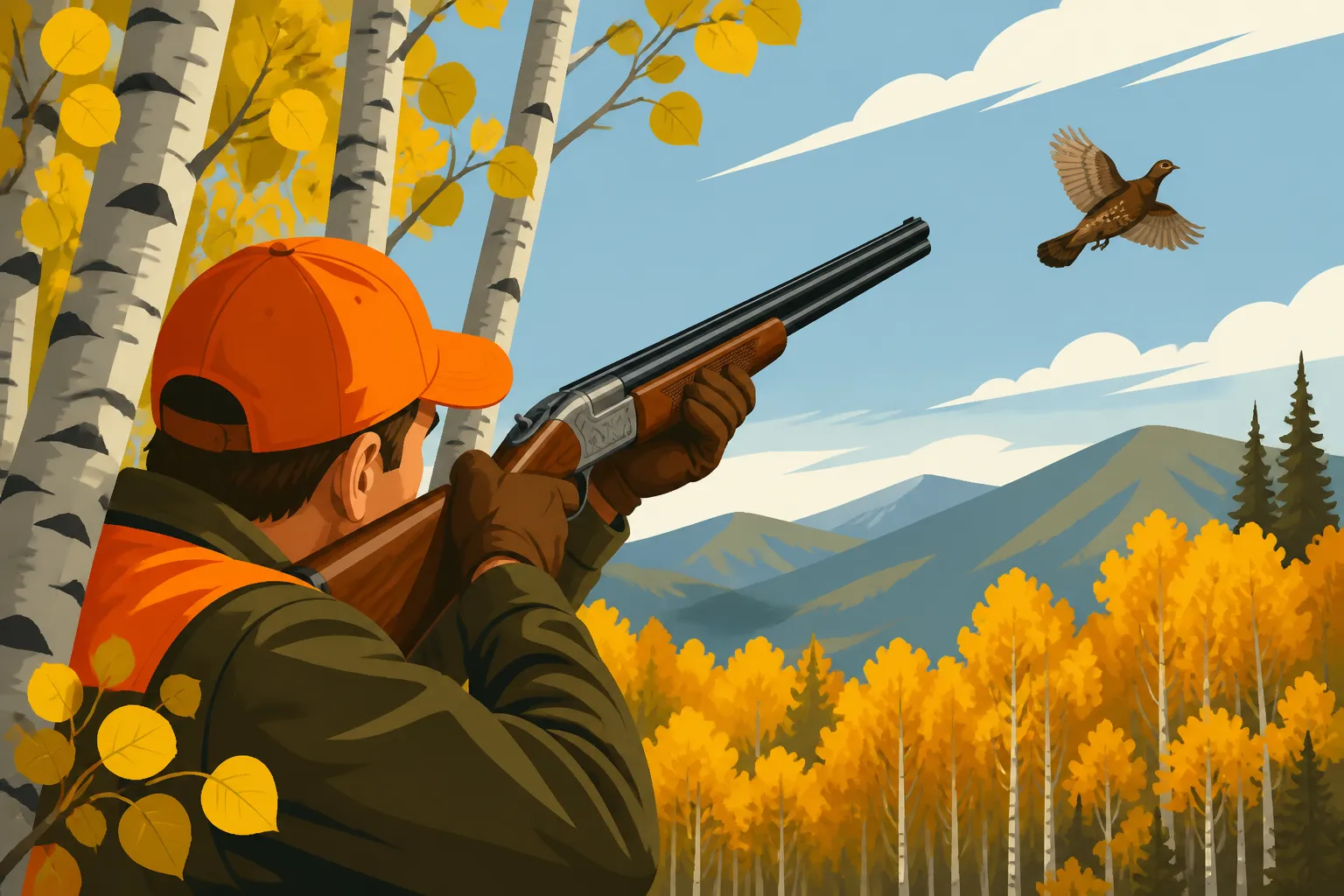
Many hunters, myself included, started with a 12 gauge because, well, that's what everyone had. And a 12 gauge is perfectly capable of killing a grouse. But after a few seasons of dragging a heavy 12 gauge through miles of dense cover, with sore shoulders and bruised cheekbones from recoil, you start to question if "more power" is always "better." A 20 gauge, on the other hand, dramatically reduces both the carry weight and the felt recoil. Imagine a crisp fall morning in the Catskills, pushing through a stand of golden aspen with a gun that feels like an extension of your arms, not a burden. That lighter weight means you can walk farther, react quicker, and stay on target longer, which is crucial when a grouse erupts unexpectedly. The reduced recoil also translates to less flinching and faster follow-up shots, which, let's be honest, we all need when those birds are jet-propelled. This allows for a more enjoyable day afield, and that's ultimately what we're after.
Quick Pointing and Follow-Up Shots in Tight Cover
New York grouse hunting isn't about long-range precision shots over open fields. It’s about instinct, speed, and putting lead on a bird that appears and disappears in a blink, often within 15-25 yards. The compact nature of a 20 gauge double, especially with shorter barrels, makes it incredibly fast to get on target. There's less mass to swing, allowing you to fluidly track a bird through the trees. And with a double, you've got two distinct shots available immediately. That’s invaluable. If you miss with the first barrel, or if a second bird flushes just as you're recovering, you have a second opportunity without fumbling with a pump or waiting for a semi-auto to cycle. This rapid follow-up capability is a game-changer when you're wading through Grouse Hunting New York Aspen Cover and those birds are exploding out of the thickest stuff imaginable.
Key Features to Look for in a 20 Gauge Double Gun
Not all 20 gauge doubles are created equal, especially when it comes to the specific demands of grouse hunting. There are certain characteristics that elevate a good field gun to a great grouse gun. Paying attention to these details can make a significant difference in your success and enjoyment in the New York woods.
Barrel Length and Balance for Maneuverability
For grouse hunting in New York, you're not going to be taking many 40-yard shots. Most opportunities are close, fast, and in heavy cover. This reality makes shorter barrels, typically between 24 and 28 inches, highly desirable. Shorter barrels mean a shorter overall gun, which is far easier to maneuver through dense tangles of brush and trees without getting snagged. Imagine trying to pivot quickly in a dense patch of multiflora rose with a 30-inch barrel – it's a nightmare. The goal is to be able to bring the gun to your shoulder swiftly and track the bird without fighting the gun itself. Beyond just length, consider the gun's balance. A well-balanced gun feels lively in the hands, neither barrel-heavy nor stock-heavy. You want it to point naturally where you look. Pick up different models and see how they feel. A gun that feels clunky in the store will feel even worse after three miles of walking uphill through a New York state forest. For more on this, check out Barrel Length for Walking Thick Cover.
Open Chokes and Trigger Options
When it comes to grouse, you're looking for a quick, dense pattern at close range. This means open chokes are your friend. Many double guns come with interchangeable chokes, which is fantastic for versatility. For grouse, a skeet/improved cylinder (IC) or improved cylinder/modified (Mod) combination is often ideal. This gives you a wide pattern for those explosive close flushes with the first barrel, and a slightly tighter pattern for a second, perhaps slightly longer, shot. If your gun has fixed chokes, look for something equally open.
As for triggers, you typically find two main types on double guns:
- Double Triggers: This classic setup gives you ultimate control. One trigger fires the right barrel (usually more open choke), and the other fires the left (usually tighter choke). This allows you to select the appropriate choke for the situation without a second thought, which is a huge advantage in fast-paced grouse encounters. If a bird flushes close, you hit the front trigger. If it's a bit farther, or it's a follow-up, you hit the rear.
- Single Selective Trigger: With this option, you have one trigger, and a selector switch (usually on the safety) to choose which barrel fires first. This can be simpler for some hunters, but it does require a conscious action to change choke selection, which might be a lost moment in the chaos of a grouse flush.
My personal preference for grouse is double triggers. The instant choke selection is simply unmatched. You can check out more on Choke Choice for Fast Flushes to fine-tune your setup.
| Feature | Double Trigger Advantages | Single Selective Trigger Advantages |
|---|---|---|
| Choke Selection | Instant, intuitive choice between barrels | Requires conscious selection via switch |
| Simplicity | Two distinct triggers, can be practiced | One trigger to master |
| Follow-Up Speed | Potentially faster for different choke needs | Still fast, but no on-the-fly choke change |
| Learning Curve | Requires practice to master trigger choice | Simpler muscle memory for a single trigger |
| Commonality | Found on classic and traditional doubles | Common on many modern over/unders and side-by-sides |
Durability and Weather Resistance
New York weather is, well, New York weather. One minute it's a glorious, crisp autumn day, the next you're walking through a sudden downpour or a wet snow. Your grouse gun needs to be able to handle it. Look for finishes that resist rust and stocks that can withstand bumps, scrapes, and moisture. While a beautifully blued and oiled walnut gun is stunning, sometimes a more utilitarian finish like a matte bluing and a synthetic stock is the more practical choice for a true workhorse in the dense cover. Many modern doubles offer robust synthetic stock options that shrug off the elements. Even traditionalists will appreciate the peace of mind that comes with knowing their firearm can get wet, get muddy, and keep performing. When you're spending your hard-earned money, you want a gun that's going to last for many seasons of Grouse and Woodcock Hunting in New York.
Carrying and Handling Your Double in the Field
Having the right shotgun is only half the battle. How you carry and handle it in the field, especially in challenging New York terrain, is just as crucial. The goal is to be safe, efficient, and ready when that bird goes airborne.
The Ready Carry and Situational Awareness
Walking through dense aspen cover means you’re often fighting through branches, pushing aside saplings, and stepping over logs. You can't carry your gun slung over your shoulder or broken open, because a grouse can flush at any second. The "ready carry" is essential. This typically means carrying the gun at the "port arms" position, across your chest, or cradled in one arm, muzzle pointed safely up or down, but always ready to swing. Your hands should be near the fore-end and grip, allowing you to quickly shoulder the gun.
Situational awareness is paramount. Be constantly scanning ahead and to the sides, not just at your feet. Listen for the subtle rustle that might precede a flush. Learn to read the cover – dense edges, fallen logs, and old apple trees are classic grouse hangouts. A valuable tool like the GoHunt app can help you identify these features on aerial maps before you even step foot in the woods, allowing you to anticipate where birds might be holding. The better your situational awareness, the more likely you are to be in a ready position when the bird flushes, giving your quick-pointing 20 gauge double the best chance to do its job.
Navigating Brush and Obstacles Safely
One of the biggest challenges in grouse hunting is safely navigating thick brush. A double gun, being shorter and often lighter, helps immensely, but vigilance is still key. Always be aware of your muzzle direction. If you have to push through a really dense spot, gently break the gun open or carry it over your shoulder with the muzzle pointed safely away from your body and any hunting partners. Never let the muzzle point at anything you don't intend to shoot.
Another common scenario involves stepping over a large blowdown or crossing a ditch. These are moments when you might stumble or lose your balance. Before attempting to cross, take a second to ensure your gun is in a safe position. If hunting with a dog, keep an eye on them; their sudden movements can sometimes cause you to react quickly. GoHunt mapping tools can help you identify areas with dense cover or steep ravines beforehand, allowing you to plan safer routes and avoid getting into precarious positions where a fall could lead to a negligent discharge. Safety in the grouse woods is a constant, conscious effort.
Ammunition and Choke Choices for New York Grouse
Choosing the right ammunition and choke combination for your 20 gauge double is just as important as the gun itself. It's about optimizing your pattern for the specific kind of close-range, fast-action shooting that New York grouse hunting demands.
Shot Size and Material
For ruffed grouse and woodcock, smaller shot sizes are generally preferred. #7.5 or #8 lead shot is the traditional choice, and for good reason. These smaller pellets create a denser pattern, increasing the likelihood of hitting a fast-moving, relatively small bird at close range. More pellets mean more chances for a vital hit. Think of it this way: when you only have a split second to swing and shoot before the bird is gone behind the trees, a wider, denser pattern is your best friend.
Some hunters might even go as small as #9 shot for very early season or extremely close-quarters work. The key is to have enough pellets to create a killing pattern without over-penetrating the bird, which can happen with larger shot at close range. For those concerned about lead in certain areas or who prefer non-toxic options, bismuth shot in #7 or #7.5 can be an excellent alternative, offering similar ballistic performance to lead without the environmental concerns. Just be sure to check any specific regulations about non-toxic shot in the area you are hunting, particularly around certain wetlands, though generally for upland birds in traditional grouse cover, lead is permitted. This is something worth considering, especially if you also hunt pheasants on stocked lands, which might have different rules for Pheasant Hunting Western New York Farmland.
Choke Combinations for Versatility
As mentioned earlier, open chokes are critical for grouse. A typical setup for a double gun might be an Improved Cylinder (IC) choke in the first (right) barrel and a Modified (Mod) choke in the second (left) barrel.
- Improved Cylinder (IC): This choke provides a relatively wide pattern, ideal for those sudden, close-range flushes that are so common in thick aspen and alder stands. It gives you a larger margin for error in your swing and allows the pattern to open up quickly, increasing your chances of connecting with a bird within 15-25 yards. This is your primary "panic button" shot.
- Modified (Mod): If the bird gets a little farther out, or if you take a second shot at a bird that's now put a bit more distance between you, the Modified choke offers a slightly tighter pattern. This maintains a good pellet density at slightly longer ranges, giving you a bit more reach if needed.
This combination provides excellent versatility for the varied scenarios you encounter in the grouse woods. Some hunters even prefer a Skeet choke for the first barrel if they expect extremely close shots, paired with an IC for the second. The best way to determine what works for you and your particular shotgun is to pattern it at the ranges you expect to shoot. Take a large piece of cardboard or paper, shoot at 15, 20, and 25 yards with both chokes and different loads, and see how the patterns look. This practical testing will give you confidence in your setup when you're facing down a flushing New York grouse.
Disclaimer
This article is for general informational purposes only and does not constitute professional advice. Laws, prices and regulations vary by location and change over time. Consult a qualified professional for guidance on your specific situation.