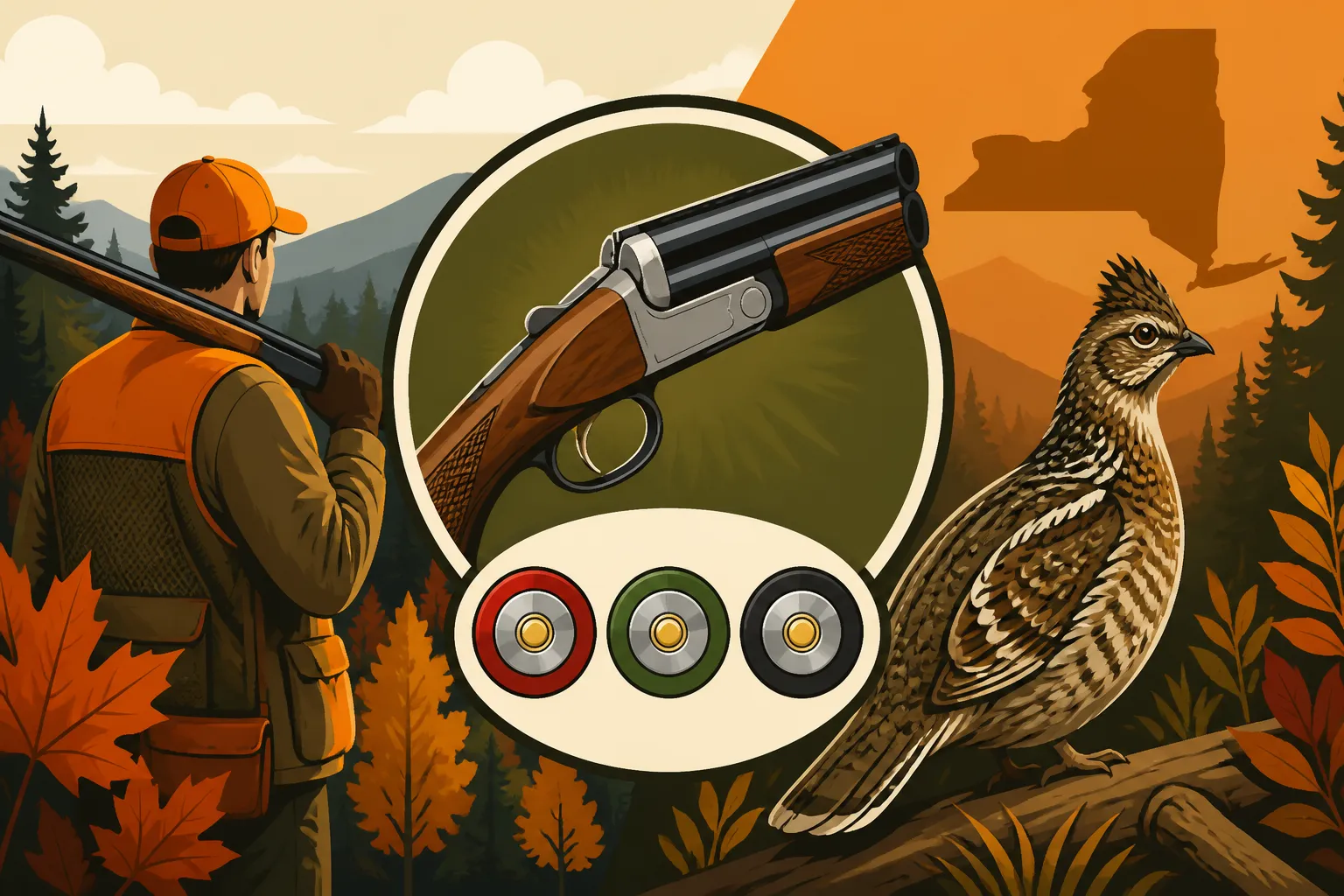
Best Shotgun Gauge for New York Grouse
Walking the dense covers of New York, flushing a ruffed grouse that explodes from beneath your feet, is an experience unlike any other. But for many hunters, the question of which shotgun gauge is "best" often leads to endless debate and confusion. This guide is here to cut through the noise, helping you understand the nuances of different gauges so you can confidently choose the perfect scattergun for those tricky New York grouse.
The Classic Debate: Understanding Shotgun Gauges for Grouse
When we talk about hunting ruffed grouse in New York, we're almost always talking about close-quarters action, quick shots, and dense cover. Unlike some other upland birds, grouse don't typically offer long, soaring shots over open fields. They erupt from thickets, dart through trees, and disappear in an instant. This specific type of hunting dictates a lot about our gear choices, especially our shotgun gauge. There isn't a single "best" answer that fits every hunter or every piece of cover, but understanding the options is key.
The Venerable 12-Gauge: Power and Pattern Density
The 12-gauge shotgun is undeniably America's workhorse, and many New York grouse hunters carry one simply because it's what they already own or what they use for other game. It's versatile, robust, and ammunition is readily available everywhere from your local sporting goods store to the gas station. When loaded with light upland loads, a 12-gauge can throw a very dense pattern, which some hunters appreciate for the sheer "shot cloud" effect in thick cover. The idea is that more pellets in the air mean a higher chance of connecting with a fast-flying bird.
However, the 12-gauge does come with trade-offs. Even with lighter loads, it tends to be heavier, and a long day of carrying it through the swamps and hills of the Southern Tier or the brushy Adirondack foothills can be fatiguing. The recoil, while manageable with target loads, can still be more pronounced than smaller gauges, which might affect quick follow-up shots or simply make for a less pleasant shooting experience over time. For the hunter who already has a 12-gauge and is proficient with it, especially in more open grouse woods, it's a perfectly capable tool. But if you're looking for something optimized purely for the grouse woods, it might not be the most agile choice.
The Nimble 20-Gauge: A Modern Favorite for Upland Birds
The 20-gauge has, in many circles, become the quintessential upland gun, and for very good reason. It offers a fantastic balance of light weight, manageable recoil, and more than enough pattern density to cleanly take grouse. Modern 20-gauge ammunition is incredibly efficient, often delivering performance that rivals a 12-gauge with lighter loads, but in a significantly lighter and more agile platform. This lighter weight makes a huge difference when you're hiking miles through tough terrain, constantly bringing the gun to the ready for an unexpected flush.
The reduced recoil also allows for faster recovery and easier follow-up shots, which can be crucial when a covey flushes or you need to put a second pellet into a bird that's diving for cover. For many new hunters or those who find the 12-gauge a bit much, the 20-gauge offers a much more pleasant shooting experience without sacrificing effectiveness. When considering a dedicated grouse gun for New York's varied terrain, from the tight Aspen Management and New York Grouse covers to the more open mature timber, the 20-gauge is a strong contender that delivers both performance and comfort.
The Classic 16-Gauge: The "Sweet Sixteen" for a Reason
Ah, the 16-gauge! Often called the "sweet sixteen," it holds a special place in the hearts of many upland purists. It's a gauge that's seen a resurgence in popularity over the last couple of decades, lauded for offering 12-gauge performance in a gun built on a 20-gauge frame. This means you get a lighter gun than a typical 12-gauge, but with a slightly larger shot charge than a 20-gauge, theoretically creating a broader, more effective pattern. For the discerning hunter who appreciates a bit of tradition and wants a unique blend of power and portability, the 16-gauge is a fantastic choice.
The primary drawback of the 16-gauge, and often why it fell out of mainstream favor, is ammunition availability. While it's certainly easier to find now than it once was, it still doesn't hold a candle to the ubiquity of 12- and 20-gauge shells. You'll likely need to plan ahead and order your ammunition online or visit a well-stocked specialty store. However, for those willing to make that extra effort, the 16-gauge offers a truly elegant and effective grouse gun. It's a conversation starter in camp and a joy to carry afield.
The Svelte 28-Gauge: Fast and Featherlight
If the 20-gauge is nimble, the 28-gauge is positively balletic. This little shotgun is incredibly light, carries like a dream, and has almost no recoil, making it an absolute pleasure to shoot all day long. For those quick, instinctive shots that grouse hunting demands, a lightweight 28-gauge can swing like a magic wand, getting on target in an instant. Despite its small stature, the 28-gauge, when loaded properly with modern loads, throws a surprisingly dense and effective pattern for close-range upland birds. The shot column tends to be long and tight, perfect for hitting that small target darting through the trees.
The main challenge with the 28-gauge is often confidence in its "power" (which isn't really an issue for grouse if you can hit them) and, similar to the 16-gauge, ammunition availability and cost. While becoming more popular, 28-gauge shells are still less common and typically more expensive than 12- or 20-gauge. But if you prioritize light weight, minimal recoil, and exceptional handling for those fleeting moments a grouse presents itself, and you're willing to commit to it, the 28-gauge can be an incredibly rewarding choice for Grouse and Woodcock Hunting in New York. It's a true specialist's tool for the dedicated upland hunter.
Matching Your Gauge to New York's Grouse Habitat
New York offers a diverse range of habitats where grouse can be found, from dense conifer stands to open hardwoods. The type of cover you typically hunt can significantly influence which shotgun gauge might serve you best. It's not just about the bird, but the environment in which you're pursuing it. Using tools like the GoHunt app can be immensely helpful here, as you can often pinpoint habitat types and plan your routes, which indirectly helps you think about the ideal gun for that specific terrain.
Hunting Tight Alder Runs and Aspen Cuts
Imagine you're walking an old logging road that borders a thick alder swamp or a dense, regenerating aspen cut in the Catskills. These are prime grouse spots, but the visibility is minimal, and the shots are almost always within 20 yards, often closer. A grouse exploding from such cover gives you mere fractions of a second to shoulder your gun and fire before it's behind a tree. In these scenarios, a quick-swinging, lighter shotgun shines.
The 20-gauge or even a 28-gauge with a short barrel (24-26 inches) becomes a real asset. Their reduced weight makes them easy to maneuver through tangles of brush, and their quick handling characteristics allow for those fast, instinctive shots. While a 12-gauge can certainly kill a grouse here, its bulk might hinder your ability to get on target rapidly in such confined spaces. When you're constantly pushing through thick cover where the bird might flush at your feet, the ergonomics of a lighter gun can significantly improve your success rate and reduce fatigue.
Navigating Open Hardwoods and Mixed Forests
While classic grouse cover is often dense, you'll also find birds in more mature hardwoods or mixed forests, particularly along edges or near old apple orchards. In these areas, the shots might be slightly longer, perhaps out to 30 or 35 yards, and the birds have a bit more room to fly before disappearing. Here, the slightly heavier hitting power and broader pattern of a 12-gauge or 16-gauge might feel more reassuring.
The extra weight of a 12-gauge can also help with a smoother swing on a slightly longer shot, and its ability to deliver a larger payload of shot can create a denser pattern at those extended ranges. If you find yourself hunting areas where the grouse tend to flush and fly a bit further before going to ground, or if you're regularly pushing through less dense woods, a 12-gauge or 16-gauge offers a good combination of reach and pattern density. It's less about raw power and more about effective pattern spread at a slightly greater distance, though still well within ethical upland ranges. For example, when exploring areas you've scouted using resources like GoHunt, and you see more mature timber than dense brush, you might lean towards these options.
Mountain Terrain and Long Hikes
New York's grouse hunting often involves serious hiking, especially if you're venturing into the state forests of the Southern Tier or some of the more remote pockets of the Adirondacks. A long day of climbing hills, traversing ravines, and pushing through thick brush can quickly turn a heavy gun into a burdensome weight. In these scenarios, the lighter the gun, the happier you'll be by the end of the day.
This is where the 20-gauge and 28-gauge truly excel. Their minimal weight makes them a joy to carry, allowing you to focus on the hunt rather than on the strain in your arms and shoulders. While a 12-gauge can still be effective, the accumulated fatigue from carrying it all day can impact your ability to swing smoothly and accurately when that sudden flush occurs. When planning a hunt where significant mileage is expected, prioritizing a lighter gun will enhance your overall experience and keep you fresher for those critical shots. This is particularly true if you are Scouting New York Public Land Before Season where you know you'll cover many miles.
Practical Considerations for Your Grouse Gun
Beyond the gauge itself, several practical aspects come into play when choosing the "best" shotgun for New York grouse. These elements often work in conjunction with your chosen gauge to create a well-rounded and effective hunting tool. Thinking about how the entire package handles will make a huge difference in the field.
Barrel Length and Balance
For grouse hunting, where quick handling is paramount, a shorter barrel is generally preferred. Barrels in the 24- to 26-inch range are common, as they reduce overall length and weight, making the gun easier to maneuver in tight cover and quicker to shoulder. A shorter barrel also brings the gun's balance point further back, contributing to a snappier, more responsive feel. This quickness is vital for getting on a bird that appears and disappears in a flash.
However, balance is just as important as length. A poorly balanced short-barreled gun can feel "whippy" and hard to control, while a well-balanced longer-barreled gun might still swing smoothly. The key is to find a gun that feels natural and responsive in your hands. Test-shouldering various shotguns, even empty, will give you a good idea of their balance and how they'll feel when you're quickly swinging on a bird. Remember, the goal is effortless pointing, not just minimum length. Barrel Length for Walking Thick Cover is a critical factor for upland hunting.
Choke Selection for Close-Range Birds
Choke is arguably more important than gauge for consistent grouse hunting success. Because most shots are close, an open choke is almost always the best choice. Improved Cylinder (IC) or even Skeet choke are excellent options for throwing a broad, forgiving pattern at typical grouse ranges (15-25 yards). A more open choke spreads the pellets out faster, giving you a wider "kill zone" that is more forgiving for those quick, snap shots.
Using a tighter choke like Modified or Full in thick cover often leads to missed birds or, worse, birds that are over-patterned and destroyed at close range. If your shotgun has interchangeable choke tubes, start with an Improved Cylinder and consider a Skeet choke if you find your shots are consistently very close. Patterning your shotgun with your chosen loads at various distances (e.g., 15, 20, and 25 yards) will show you exactly how your gun and choke combination performs and where the effective pattern begins and ends. This is a topic worth exploring further, such as understanding Choke Choice for Fast Flushes.
| Gauge | Common Uses | Pros for Grouse | Cons for Grouse | Ideal Cover |
|---|---|---|---|---|
| 12-Gauge | Waterfowl, Turkey, Deer, Upland | Powerful, dense patterns, versatile, common ammo | Heavier, more recoil, can be unwieldy in thick brush | Open hardwoods, field edges |
| 16-Gauge | Upland birds, some Waterfowl | Good balance of power and handling, lighter than 12-gauge | Ammo less common/pricier, fewer gun options | Mixed woods, slightly denser cover |
| 20-Gauge | Upland birds, Turkey, Youth/Women | Lightweight, low recoil, agile, excellent patterns | Slightly less pellet count than 12/16, ammo still common | Dense brush, alder runs, mountain terrain |
| 28-Gauge | Upland birds, informal sporting clays | Very light, minimal recoil, extremely agile, tight patterns | Ammo less common/pricier, smaller pattern spread | Extremely dense cover, close-quarters specialists |
Action Type: Over/Under, Side-by-Side, Pump, or Semi-Auto
The type of action you choose also impacts your grouse hunting experience.
- Over/Under (O/U) and Side-by-Side (SxS): These classic break-action guns are often favored by upland hunters for their elegant lines, excellent balance, and the ability to have two different chokes ready (e.g., IC in the first barrel, Modified in the second). They are generally lighter than semi-autos and pumps, and their simplicity makes them very reliable. Many believe the aesthetic and traditional feel of a fine O/U or SxS enhances the grouse hunting experience. 20 Gauge Doubles for Aspen Cover are a particularly popular choice.
- Semi-Automatic: A semi-auto offers reduced felt recoil and the potential for a quicker third shot (though New York hunting regulations typically limit shotguns to three shells total for small game). However, they can be heavier and sometimes longer than break-actions, and some hunters find them less balanced for quick swings. Reliability can also be a factor in very cold or dirty conditions if not well-maintained.
- Pump-Action: Pump shotguns are incredibly reliable and affordable. They are durable workhorses, but the manual action can be slower for follow-up shots, and they often carry more weight forward than a break-action, potentially affecting swing. For a budget-conscious hunter who prioritizes ruggedness, a pump 20-gauge is a fantastic choice, but it requires practice to master the fluid follow-up shot.
Ultimately, the "best" action type is a matter of personal preference and what feels most natural in your hands. Whatever you choose, ensure you're proficient with it before heading into the New York woods.
Making the Final Decision: What's Right for You?
The truth about the "best" shotgun gauge for New York grouse is that it's deeply personal. There's no one-size-fits-all answer, and what works wonderfully for one hunter might feel cumbersome to another. The most important thing is to choose a gun that you can carry comfortably all day, shoulder quickly, and shoot accurately.
Consider Your Experience and Comfort Level
If you're a seasoned hunter who has always carried a 12-gauge and you're comfortable with its weight and recoil, there's no inherent reason to switch. You know your gun, and proficiency often trumps perceived optimal equipment. However, if you're a newer hunter, or if you're finding your current gun heavy or uncomfortable after a long day afield, exploring a lighter 20-gauge or 28-gauge might significantly improve your enjoyment and success. Don't be afraid to try out different gauges and styles at a local sporting clays range or even by shouldering them at a gun store to see what feels best. Remember, if you want to find more spots, a service like GoHunt can help you scout and pinpoint excellent public access points where you can comfortably walk and carry your chosen firearm.
Focus on Shot Placement and Patterning
Regardless of the gauge you choose, effective shot placement is paramount. A perfectly aimed shot with a 28-gauge is far more effective than a poorly aimed shot with a 12-gauge. Spend time at the range patterning your shotgun with the specific loads you intend to use for grouse. Understand how your gun shoots, how dense your pattern is at 20 yards, and where the center of that pattern truly lies. Knowing your gun intimately will give you the confidence needed when that unexpected bird flushes. Many New York hunters can tell you tales of New York Ruffed Grouse Decline, so making clean, ethical kills is more important than ever.
The Enjoyment Factor
Hunting, at its core, is about enjoyment and connection with nature. If carrying a lightweight 28-gauge brings a smile to your face and makes those long walks through the Tug Hill Plateau more pleasant, then that's the best gauge for you. If you cherish the tradition of a 16-gauge and are willing to track down the specialized ammunition, then that's your optimal choice. Don't let internet debates dictate your personal preference. Choose a gun that you love to carry, that fits you well, and that you shoot with confidence. This enjoyment is what keeps us coming back season after season to the New York Small Game and Upland Bird Seasons.
Whether you're pushing through thickets looking for a bird or sitting quietly on a stump, having a gun that feels like an extension of yourself makes all the difference. For many New York grouse hunters, the light, fast-handling 20-gauge has become the modern standard, offering a superb blend of performance and portability for our specific terrain and hunting style. But whatever your choice, the beauty of the New York grouse woods awaits.
Disclaimer
This article is for general informational purposes only and does not constitute professional advice. Laws, prices and regulations vary by location and change over time. Consult a qualified professional for guidance on your specific situation.