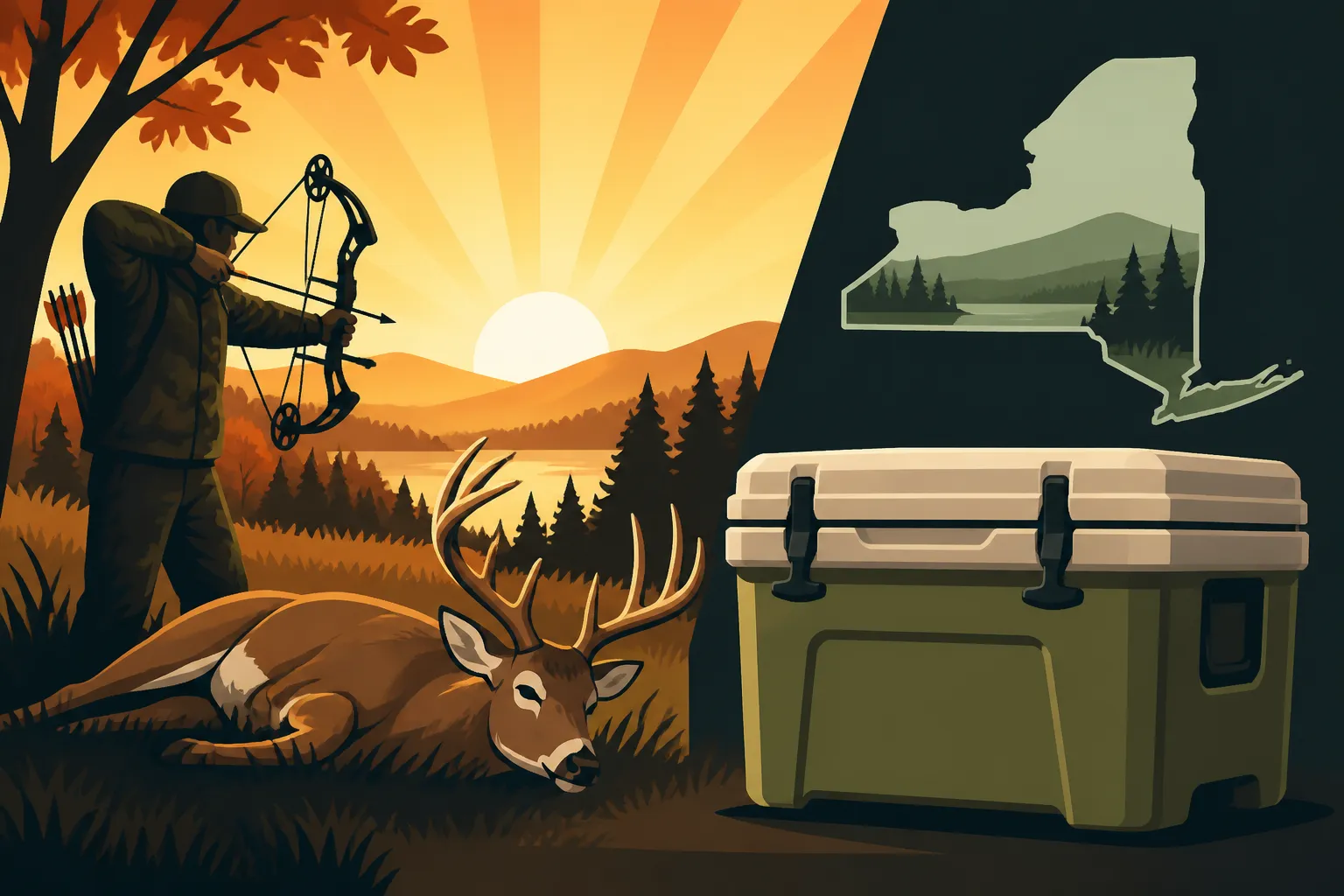
Coolers for an Early Archery Kill
Ah, the early archery season in New York. There's nothing quite like it, is there? Crisp mornings that hint at autumn, maybe a little fog lifting off the fields, and the woods just starting to whisper about the change to come. But let's be honest, those beautiful mornings can quickly turn into a downright sweaty afternoon, and that's where the real challenge begins for us hunters: keeping our hard-earned venison cool. Nothing is more heartbreaking than putting in all that effort, making a perfect shot, and then realizing your meat might be compromised because you didn't have the right strategy or equipment to handle the heat. This guide is all about making sure that never happens to you, focusing on the coolers and techniques you need to protect your early archery kill.
The Early Archery Challenge: Keeping Meat Cold in New York's Warm Starts
Early archery season in New York can be a bit of a Jekyll and Hyde experience, weather-wise. One day it feels like fall, the next, you're back in the dog days of summer. This unpredictable heat and often high humidity create a very real and pressing problem for bowhunters, especially when success comes swiftly. The window of opportunity to cool down your deer meat effectively is much smaller than it would be in, say, the thick of New York's Southern Zone Firearm Season in November.
Why Early Season Heat and Humidity Are Your Biggest Enemies
When temperatures are still climbing into the 60s, 70s, or even 80s Fahrenheit in September and early October, bacteria on and within your deer meat can multiply at an alarming rate. Imagine the deer's body temperature, which is naturally around 101-102°F, combined with the ambient air temperature. That's a perfect incubator for spoilage if you don't act fast. Humidity compounds the issue by making it harder for the carcass to cool down naturally through evaporation. The meat can start to "sour" or develop off-flavors, especially in thicker areas like the hindquarters or shoulder roasts, long before any visible signs of spoilage appear. This isn't just about losing a meal; it's about respecting the animal and ensuring every ounce of that hard-won venison is fit for the table. It's a frustrating reality many hunters face, particularly those new to early season success.
Think about it: you've just made a great shot, the adrenaline is pumping, and you're maybe a mile deep in the woods on public land that you mapped out on GoHunt. Now, instead of just celebrating, you're racing against the clock. Every minute counts. If you leave the deer to "set up" for too long in warm weather before field dressing, or if you transport it improperly, you're inviting trouble. The external hide insulates the carcass, holding in that body heat, and even once field dressed, the surrounding air temperature might not be cool enough to drop the internal temperature of the meat quickly enough. This is precisely why having a solid plan for cooling and proper gear is absolutely non-negotiable for early archery hunters.
The Critical Timeline: From Shot to Cooler
The moment your arrow finds its mark, a new clock starts ticking. Your absolute first priority, after ensuring the animal is dispatched ethically and safely, is to get it field dressed. This removes the entrails, which are a massive source of heat and bacteria, and allows the body cavity to start cooling from the inside out. Don't delay this step, not even for a triumphant photo op that can wait. The sooner you get those organs out, the better. You want to open up that chest cavity, get the windpipe and esophagus detached, and remove everything from the diaphragm down, and then the heart and lungs.
Once field dressed, the next immediate goal is rapid cooling. In warm weather, dragging a whole deer back to your truck and simply tossing it in the bed for an hour-long ride home is a recipe for disaster. That road heat and exposure to ambient air will negate much of your field dressing efforts. Instead, you need to think about breaking down the deer. For many early season hunters, this means quartering the animal in the field. This not only makes it easier to extract a deer from challenging terrain, especially if you're Dragging a Deer Off a Catskill Ridge, but it also exposes more surface area of the meat to air, allowing it to cool down faster. Getting the quarters into game bags and then into a pre-chilled cooler with ice is the ideal scenario for preserving meat quality when the mercury is high. If you're hunting smaller tracts or very close to your vehicle, you might consider a rapid extraction of a field-dressed carcass into an oversized cooler, but quartering still offers superior cooling.
Deciphering Cooler Technology for Optimal Performance
Not all coolers are created equal, and when it comes to preserving an early archery kill in New York's variable temperatures, understanding the differences is key. You're not just looking for a box to hold ice; you're looking for an insulated sanctuary for your venison.
The Enduring Power of Rotomolded Coolers
When hunters talk about "premium" coolers, they're almost always referring to rotomolded coolers. These are the tanks of the cooler world, built through a rotational molding process that creates a single, seamless piece of polyethylene. This construction method allows for incredibly thick, consistent insulation—often several inches of pressure-injected polyurethane foam—between the inner and outer walls. This is why a good rotomolded cooler can hold ice for days, even in scorching temperatures. Brands like YETI, RTIC, and Orca are well-known names in this space, and for good reason: they perform.
The benefits for an early archery kill are obvious: unparalleled ice retention means your quarters stay genuinely cold, preventing bacterial growth and maintaining meat quality over longer periods, whether you're transporting it home, holding it until a butcher shop opens, or letting it age slightly in a controlled environment. They're also incredibly durable, built to withstand abuse in the back of a truck, on a rocky trail, or just from years of heavy use. The robust latches, non-slip feet, and freezer-grade gaskets all contribute to their superior performance. The downsides? They are significantly heavier and more expensive than traditional coolers. However, for serious hunters who prioritize meat quality, the investment is often seen as well worth it. When planning your hunt, knowing you have a reliable rotomolded cooler waiting back at the truck can give you peace of mind, allowing you to focus on Scouting New York Public Land Before Season with confidence.
Soft-Sided Coolers: Flexibility and Convenience for Shorter Hauls
While rotomolded coolers are king for multi-day ice retention, soft-sided coolers have carved out a significant niche, especially for day hunts or situations where portability is paramount. These coolers are typically made from heavy-duty fabrics like nylon or polyester, with internal insulation layers that can range from closed-cell foam to specialized synthetic materials. They are much lighter and more flexible than their hard-sided counterparts, making them easier to carry on foot or fit into tight spaces.
For an early archery kill, a high-quality soft-sided cooler can be an excellent option if you are quartering your deer in the field and only need to keep the meat cool for a few hours until you reach your primary processing location or a larger, hard-sided cooler. Imagine you've shot a deer deep in a remote area; you might carry a soft-sided cooler with some ice packs to the kill site, quarter the animal, load the game-bagged meat into it, and then pack it out. This keeps the meat cooler than just in game bags alone during the pack-out, especially if it's still warm. However, they generally don't offer the same long-term ice retention as rotomolded models, and their insulation can be compromised by sharp bones or excessive rough handling over time. They are often a great secondary cooler for small game like grouse or squirrels, but for a whole deer, they are typically limited to carrying quarters for short durations before transferring to a more robust solution.
Traditional Hard-Sided Coolers: A Practical Option with Nuances
The traditional hard-sided cooler – think the classic Coleman or Igloo models you've seen at countless family barbecues – still has its place in a hunter's arsenal, especially for those on a tighter budget. These coolers typically feature a blow-molded plastic shell with injected foam insulation. While they can't compete with rotomolded coolers in terms of ice retention, they are significantly more affordable and lighter, making them a practical choice for many.
To make a traditional hard-sided cooler work effectively for an early archery kill, you need to be very intentional with your cooling strategy. They will require more ice, more frequent ice checks, and a solid pre-chilling routine (which we'll cover next). They are best suited for situations where you can get the deer quartered and into the cooler quickly, and then get that cooler to a refrigerated space within a few hours. They can also serve as excellent pre-chill vessels for your ice before transferring it to a rotomolded cooler. While they might not be the "hero" cooler for a multi-day backcountry hunt for White-Tailed Deer Across New York, they are a perfectly viable option for many early season scenarios, especially if you have a plan to get your meat cooled and processed rapidly. The key is understanding their limitations and compensating with good ice management and swift action.
| Cooler Type | Pros | Cons | Ideal Early Archery Use |
|---|---|---|---|
| Rotomolded | Superior ice retention, extreme durability, excellent seal | Heavy, expensive, bulky | Long transport, overnight holding, aging quarters, multi-day hunts |
| Soft-Sided | Lightweight, portable, flexible, easy to carry | Limited ice retention, less durable, susceptible to punctures | Field quartering pack-out, short-term transport to main cooler |
| Traditional Hard-Sided | Affordable, lighter than rotomolded, good capacity for cost | Moderate ice retention, less durable, seals may not be airtight | Quick transport home, budget-friendly option with good ice management |
Masterful Ice and Packing Strategies for Your Harvest
Having the right cooler is only half the battle; knowing how to properly pack and manage your ice and venison is equally critical, especially When New York's Archery Season Opens and temperatures are still mild. These strategies can make the difference between pristine venison and potential spoilage.
Pre-Chilling: The Unsung Hero of Ice Retention
This is arguably the most overlooked step in effective cooler management, and it's a game-changer for early archery season. Throwing warm meat and warm ice into a warm cooler on a warm day guarantees rapid ice melt. Your cooler's insulation works to keep whatever temperature is inside stable. If that's warm air and warm plastic, it's working to keep things warm!
To properly pre-chill your cooler, whether it's a rotomolded behemoth or a more traditional model, here’s how you do it: A full day or at least 12 hours before your hunt, fill your cooler with sacrificial ice or frozen water bottles. Close the lid and let it sit. This process cools down the plastic walls and the insulation itself, bringing the internal temperature of the cooler down significantly. When you're ready to load your actual ice and meat, dump out the melted water from the sacrificial ice, and you'll find your cooler is now bone-chillingly cold on the inside. This pre-chilling step can extend your ice retention by 20-30% or more, giving you precious extra hours to transport and process your deer. It's a small effort that pays huge dividends in the warm early season.
The Science of Ice: Blocks, Cubes, and Ice Packs
Not all ice is created equal, and understanding the differences can dramatically improve your cooling strategy.
- Block Ice: This is your best friend for long-term cooling. Block ice has less surface area exposed to air than cubed ice, meaning it melts much slower. If you can, make your own large blocks at home by freezing water in milk jugs or plastic containers. These big blocks will last significantly longer and are ideal for the base layer of your cooler. Just remember, they are bulky and heavy.
- Cubed Ice: Readily available everywhere, cubed ice provides quick initial cooling because of its larger surface area. It's excellent for filling in gaps around your meat and block ice. However, it melts much faster, creating more water which can be detrimental if your meat isn't protected in game bags.
- Ice Packs/Gel Packs: Reusable ice packs, often containing a gel, are great for smaller spaces or for supplemental cooling. They don't introduce water as they melt, which is a big plus for keeping meat dry. However, they don't typically have the cooling power or longevity of actual water ice for a full deer harvest. Consider using them in conjunction with block and cubed ice, especially wrapped in a towel or two.
When packing, a good strategy is to lay a bed of block ice, then your game-bagged quarters, and then fill in the remaining spaces with cubed ice. You can even consider a layer of dry ice on the very bottom before any other ice or meat, but be extremely careful. Dry ice is far colder than regular ice and can freeze meat solid, potentially damaging it if not handled properly and separated from direct contact. Always consult safety guidelines if considering dry ice.
Maximizing Space and Airflow for Proper Meat Storage
Once you've done the hard work of field dressing and quartering your deer, getting it into the cooler correctly is paramount. The goal is to keep the meat cold and dry. This means game bags are an absolute necessity. Game Bags for Warm October Days protect the meat from dirt, insects, and most importantly, from sitting in melted ice water, which can quickly turn meat mushy and promote bacterial growth. After quartering, get your meat into breathable game bags immediately. This allows air to circulate and a protective barrier to form on the surface, which is a good thing.
When packing the cooler, try to arrange the quarters so that they have some space between them if possible, or at least aren't crammed together in a solid block. This allows the cold air (or water from melting ice) to circulate around the individual pieces of meat. Lay your block ice, then your game-bagged meat, then fill voids with cubed ice. If you have any additional heavy-duty plastic sheeting or even trash bags, you can line the bottom of the cooler to further separate meat from potentially dirty meltwater, though this is less critical if your game bags are robust and tied off correctly. Don't forget to drain your cooler periodically of excess water if your meat isn't completely sealed; while cold water is good, stagnant, dirty meltwater is not. This process is similar to how you would prepare for Butchering a Deer at Camp, emphasizing cleanliness and cooling from the start.
Right-Sizing Your Cooler for a New York Whitetail Deer
One of the biggest questions for early archery season is, "What size cooler do I actually need?" The answer largely depends on whether you plan to transport the deer whole and field dressed, or quartered, and the size of the deer itself.
Whole Carcass vs. Quartered Deer: What Fits Where
For most adult New York whitetails taken during early archery, transporting the entire field-dressed carcass in a cooler is rarely practical or advisable unless it's a very young deer or you have an enormous, specialized cooler. Even then, the logistics of hoisting a whole deer into a cooler can be challenging, and achieving proper cooling of the entire mass is difficult. The hide acts as an insulating layer, trapping heat and hindering rapid temperature reduction. This method is generally more suited for much colder weather, like during Hunting the Southern Zone Holiday Hunt, when external temperatures can help do some of the cooling work.
Quartering the deer in the field is almost always the superior strategy for early season. By breaking the deer down into its primal cuts (two front shoulders, two hindquarters, and optionally the backstraps and tenderloins as separate pieces), you dramatically reduce the bulk and expose much more surface area to cooling. This makes it far easier to pack the meat into game bags and then into more manageable coolers. It also lightens your load for the pack-out, which is especially important on tougher terrain. If you're hunting in the Southern Tier on farmland, you might get a quick drag, but in the Adirondacks, quartering can be a lifesaver. This approach ensures your valuable venison cools down faster and more thoroughly.
Calculating Capacity: How Much Cooler Do You Really Need?
Estimating cooler size for a quartered deer requires a little thought. A typical adult New York whitetail, say a 150-pound buck, might yield roughly 60-70 pounds of boneless meat, plus bones. The four quarters themselves, especially on a larger deer, can be surprisingly bulky.
Here's a general guideline for quartered deer:
- Small to Medium Doe (80-120 lbs live weight): You can often fit all four quarters (plus backstraps/tenderloins) into a high-quality 65-75 quart rotomolded cooler with sufficient ice. A larger traditional cooler might also work, but will need more ice.
- Average Buck (130-180 lbs live weight): For a deer of this size, you're usually looking at a 75-100 quart rotomolded cooler for all quarters and plenty of ice. If using a traditional cooler, you might even need a 100-120 quart capacity.
- Large Buck (190+ lbs live weight): For truly big New York bruisers, you might even need two 65-75 quart coolers, or one very large 120-150 quart cooler, to properly accommodate all the meat and ice needed for safe cooling.
Always err on the side of a slightly larger cooler if you're uncertain, as you can always fill extra space with more ice. You'll need enough room not just for the meat, but for a substantial amount of ice to surround it. Remember, ice takes up volume. For instance, a 65-quart cooler might hold 50-60 pounds of meat, but only if you aren't trying to pack it with 30 pounds of ice too. The key is to have enough volume to allow for both the meat and the necessary ice. Planning this out before you head into the woods, perhaps by checking your Packs for a Day on Public Land and considering how much gear you can carry, is just as important as knowing When New York's Archery Season Opens.
By investing in the right cooler and mastering these cooling strategies, you'll ensure that your early season success in the New York woods translates into delicious, high-quality venison for your family and friends. Don't let the heat spoil your hard-earned bounty!
Disclaimer
This article is for general informational purposes only and does not constitute professional advice. Laws, prices and regulations vary by location and change over time. Consult a qualified professional for guidance on your specific situation.