Hunting the St. Lawrence River Marshes
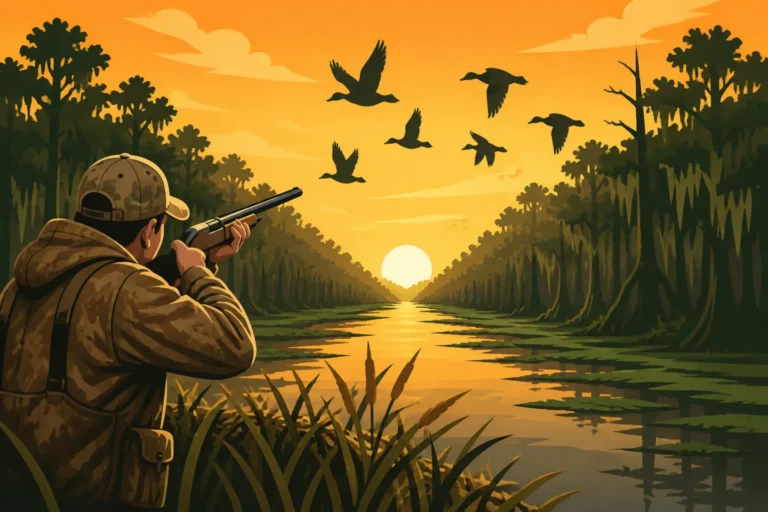
Hunting the St. Lawrence River marshes presents a truly unique challenge and reward for New York waterfowlers. The sheer vastness of this system, combined with its dynamic nature and incredible diversity of bird populations, can feel incredibly intimidating when you're first trying to figure it out. But don't let that deter you! With the right approach, a solid understanding of its intricacies, and a bit of grit, you can experience some truly memorable and productive hunts. This comprehensive guide will help you unravel the mysteries of these expansive wetlands, equipping you with the knowledge to safely and effectively pursue waterfowl along the majestic St. Lawrence.
The Unique Landscape of the St. Lawrence River Marshes
The St. Lawrence River doesn't just flow; it creates an entire ecosystem. Its expansive marshes are a world unto themselves, offering diverse habitats that attract a wide array of waterfowl. Understanding this environment is the first step toward a successful hunt.
Understanding the River's Influence on Habitat
The mighty St. Lawrence River profoundly shapes the marshes that line its shores. The consistent flow, seasonal changes in water levels, and the constant deposition of sediment all contribute to a dynamic landscape. You'll find everything from shallow, mud-bottomed flats to deeper channels and sloughs, interspersed with islands of dense vegetation. This variety is precisely what makes the hunting so good. The river's influence dictates where certain plants like cattails, wild rice, and various emergent grasses can take root and thrive, creating vital cover and food sources for ducks and geese. These areas act as natural buffet lines and safe havens, drawing birds in during their migration along the New York Waterfowl on the Atlantic Flyway. The constant interplay of current and vegetation means that what might be a shallow, huntable flat one year could be a slightly deeper, more open pool the next. It's a living, breathing system that demands constant observation and adaptation from hunters.
Navigating the Complexities of Marsh Terrain
One of the biggest hurdles, and frankly, frustrations, for new hunters in the St. Lawrence River marshes is the sheer difficulty of navigation. This isn't your local pond. You're dealing with vast stretches of shallow water, often hidden channels that can suddenly deepen or disappear, and dense, impenetrable walls of vegetation that all look identical from water level. It's incredibly easy to get turned around, especially on a cloudy day or when the fog rolls in. Even seasoned hunters can find themselves momentarily disoriented. This is why thorough scouting is absolutely non-negotiable. Beyond physical scouting, using a reliable GPS unit or a mapping app like GoHunt, loaded with up-to-date aerial imagery, is not just a convenience, it's a necessity. Mark your intended routes, potential hunting spots, and any hazards like submerged logs or rock piles. Getting stuck in the thick marsh grass or grounded on a shallow flat, especially in cold weather, can quickly turn a fun day into a dangerous situation. Always have a plan for how to get back to your launch point, and ideally, share that plan with someone not on the hunt.
Public Access Points and Conservation Areas
While much of the St. Lawrence River shoreline is private property, New York State has done a commendable job in providing significant public access for hunters. Identifying these key areas is crucial for planning your trips. You'll find various Wildlife Management Areas (WMAs) and State Forest lands that provide excellent opportunities. These areas are typically managed to enhance waterfowl habitat, meaning you often find prime conditions for hunting. For instance, the French Creek WMA near Clayton or the Perch River WMA (though slightly inland, it shares similar characteristics) are well-known hotspots. It's vital to research the specific regulations for each WMA, as some may have unique rules regarding blind construction, motor restrictions, or hunting hours. The New York State Department of Environmental Conservation (DEC) website is an invaluable resource for this. Using tools like the GoHunt app or the Using the New York HuntFishNY Map Tool can help you pinpoint public lands and identify property lines, ensuring you respect private property. Always double-check signage on the ground, as boundaries aren't always clear-cut. Remember, responsible hunting starts with knowing exactly where you are and whose land you're on. For more specific guidance on local access, check out our guide on St. Lawrence River Valley Public Access.
Prime Waterfowl Species and Their Behaviors
The St. Lawrence River marshes are a magnet for migratory birds, offering a fantastic array of waterfowl species. Knowing what to expect and understanding their typical behaviors will greatly improve your chances of success.
Divers and Dabblers: What to Expect
The beauty of hunting the St. Lawrence marshes lies in the incredible mix of ducks you'll encounter. You'll primarily be targeting two main groups: dabbling ducks and diving ducks. Dabblers, like mallards, black ducks, green-winged teal, blue-winged teal, and wood ducks, prefer the shallower, more vegetated areas of the marsh. They "tip up" to feed on submerged vegetation and invertebrates, rarely diving completely. You'll often find them working the edges of thick cattail stands, feeding in shallow pockets, or resting on mudflats. They're typically strong decoying birds, responding well to realistic spreads and calling.
Divers, on the other hand, include species like scaup (bluebills), redheads, canvasbacks, and goldeneyes. These birds are built for deeper water, where they can dive down to feed on aquatic plants, mollusks, and small fish. You'll usually find them in the more open water sections of the river, in larger pools within the marsh, or along the deeper main channels. They often fly fast and low over the water, and their decoying behavior can be a bit different, sometimes requiring larger, more open spreads. Understanding these preferences is key to choosing your setup and location, as a spot perfect for teal might see very few divers, and vice-versa. The New York Waterfowl Zones and Seasons dictate when you can pursue these various species.
Goose Hunting Opportunities
While ducks often take center stage in the marshes, the St. Lawrence system also offers fantastic opportunities for goose hunting, particularly for Canada geese. These adaptable birds use the marshes for roosting, loafing, and often as a staging area before flying out to feed in nearby agricultural fields. You'll typically find them in larger, more open sections of the marsh or on low-lying islands, where they have a good vantage point for security.
During the early goose seasons, local resident populations are often abundant, providing excellent shooting. As the season progresses, migratory geese begin to filter in. While you might occasionally see snow geese or brant, Canada geese will be your primary target. Hunting geese in the marsh often involves setting up large decoy spreads, sometimes mixing in duck decoys, and being prepared for their high-flying approach. Understanding New York Resident Population Goose Zone Rules is essential, as bag limits and season dates can vary. Scouting for their flight paths between roosting areas and feeding fields is critical for pass shooting or setting up a field edge hunt nearby.
Reading Bird Behavior and Movement Patterns
Successful marsh hunting relies heavily on your ability to read the birds and adapt to their movements. Waterfowl are creatures of habit, but those habits are heavily influenced by environmental factors. Wind is perhaps the most critical factor; ducks and geese almost always land and take off into the wind. This means positioning your blind and decoys downwind of your expected flight path is paramount. Weather fronts, precipitation, and temperature changes will also dictate bird activity, often pushing new birds into the area or making existing birds more active.
Observe how birds are flying – are they high and focused on a long journey, or are they low, cupped-up, and looking to land? Watch for "working" birds that circle your spread or respond to calls. Learn to distinguish between ducks that are simply passing through and those that are actively looking for a place to feed or rest. Flight paths often follow natural contours like marsh edges, open water leads, or even slight rises in terrain. Pay attention to how birds enter and exit the marsh system. This can give you clues about their preferred routes and where to position yourself for the best shooting lanes. Patience and keen observation are your best friends in the St. Lawrence marshes.
Strategic Hunting Methods for River Marshes
Hunting the expansive St. Lawrence River marshes demands specific strategies. You can't just walk out there and expect birds to magically appear. It's about careful planning, effective decoying, and understanding when to use different tactics.
Decoying for Dabblers and Divers
Decoy placement is an art form in the St. Lawrence River marshes, and it often differs significantly between dabbling and diving ducks. For dabblers, you'll typically want to set up in shallower, more vegetated areas. A common spread might be a loose "J" or "U" shape, with the open end facing into the wind, inviting birds to land in the "pocket" directly in front of your blind. A mix of mallard, black duck, and pintail decoys works well. Don't be afraid to add some motion with a jerk string or spinner decoy, especially on calm days, as it can be incredibly effective at grabbing attention.
Diver spreads, conversely, tend to be much larger and more open, often strung out in a long line or a broad "V" to simulate a raft of birds on open water. Decoys for scaup, redheads, and canvasbacks are essential, placed in deeper water. Divers are often less responsive to calling than dabblers, so visual appeal is even more critical. Keep your decoys clean and realistic, as they're often visible from a great distance. Understanding Decoy Spreads for New York Divers can give you an edge, ensuring your setup looks natural and inviting to incoming birds. Always consider the sun's position – you want the sun at your back, if possible, to illuminate your spread and keep birds from flaring due to glare.
The Art of Jump Shooting and Pass Shooting
While decoying is a primary method, jump shooting and pass shooting also have their place, especially in the vastness of the St. Lawrence marshes. Jump shooting involves slowly and stealthily navigating through marsh channels or along edges, surprising ducks and taking them as they flush. This requires quiet movement, often with a canoe, kayak, or small boat, using a push pole or oars rather than an outboard motor. It's exhilarating and can be highly effective in areas where birds are loafing or feeding in small, secluded pockets. Safety is paramount here; always be aware of your shooting lanes and what's beyond your target. Never shoot at low-flying birds if you can't clearly identify them and have a safe backdrop. For more on this technique, our guide on Jump-Shooting a New York River offers valuable insights.
Pass shooting, on the other hand, involves positioning yourself along known flight corridors or choke points where ducks and geese consistently fly between feeding, resting, or roosting areas. This might be a narrow channel between two large marsh sections, a gap in a line of trees, or a point of land jutting into the river. It requires scouting to identify these flyways and then setting up in a well-concealed position. Pass shooting often means taking longer shots at fast-moving birds, so practice with your shotgun and understand its effective range with your chosen Waterfowl Loads for New York Divers.
Blind Selection and Concealment
Being well-hidden is non-negotiable when hunting waterfowl in the St. Lawrence marshes. The open nature of many areas means birds have excellent visibility. Your blind needs to blend seamlessly into the environment. Natural blinds, constructed from local vegetation like cattails, reeds, or willow branches, are often the most effective. Take the time to brush them in thoroughly, breaking up your outline and matching the surrounding colors and textures. Birds have incredible eyesight, and a slight glint off a face or an unnatural silhouette can send them flaring out of range.
Portable blinds, such as layout blinds or boat blinds, can also be very effective, but they still require careful brushing. If you're using a boat blind, ensure the boat itself is well-camouflaged and doesn't stick out like a sore thumb. Remember to hide everything – your face, your gun, your dog (if you have one, and ensure they are wearing a Dog Vests for Cold Water Retrieves). On bright, sunny days, even the shadow you cast can be enough to spook wary birds. Always consider the sun's position relative to your blind and try to have it at your back if possible.
| Waterfowl Species Group | Preferred Habitat | Typical St. Lawrence Marsh Location | Effective Hunting Tactics |
|---|---|---|---|
| Dabbling Ducks | Shallow, vegetated water; mudflats | Marsh edges, shallow bays, vegetated channels, hidden pockets | Decoying (J/U spreads), jump shooting, calling |
| Diving Ducks | Deeper, open water; submerged vegetation | Main river channels, large open pools, deep marsh leads | Decoying (large open spreads), pass shooting, minimal calling |
| Canada Geese | Open water, low islands, adjacent fields | Wide-open marsh sections, large islands, nearby cut fields | Decoying (large field/water spreads), pass shooting, calling |
Essential Gear, Preparation, and Safety
Hunting the St. Lawrence River marshes isn't just about tactics; it's about being prepared for a challenging and potentially dangerous environment. The right gear and a strong focus on safety are paramount.
Watercraft and Wading Gear
Given the nature of the St. Lawrence marshes, a reliable watercraft isn't just recommended, it's essential. For accessing shallow, tight areas, a canoe, kayak, or a small, stable jon boat equipped with a shallow-running outboard or even just a push pole is ideal. You'll often be navigating through dense vegetation and over mudflats, so silent propulsion with a Marsh Boats and Push Poles can make all the difference when trying to slip into a spot unnoticed. Always make sure your boat is in good repair and capable of handling the conditions, which can change rapidly from calm to choppy.
Beyond the boat, quality wading gear is absolutely critical. Chest waders are a must, as you'll invariably find yourself in water much deeper than hip boots can handle. Invest in a good pair that fits well and is appropriate for the expected temperatures. Cold, wet feet or a leaky wader can ruin a hunt and quickly become a safety hazard in the chilly New York weather. Our guide on Waders for New York Marsh Hunting can help you choose the right pair to keep you dry and comfortable during long hours in the marsh.
Ammunition, Calls, and Navigation Tools
When it comes to ammunition, always remember that New York State, like federal regulations, requires the use of nontoxic shot for all waterfowl hunting. This means no lead shot. Steel, bismuth, or tungsten-alloy shots are your options. Understanding Where Nontoxic Shot Is Required in New York is vital not just for legality, but for environmental responsibility. Choose a shot size appropriate for the birds you're targeting; larger shot (like BB or 2s) for geese and divers, and smaller shot (like 3s or 4s) for dabblers.
A variety of calls can be beneficial. A good mallard call is almost always a staple, but having calls for pintails, widgeon, or even a goose call can broaden your appeal to passing flocks. Practice makes perfect with calls – a poorly executed call can spook birds faster than no call at all.
Finally, don't underestimate the importance of navigation tools. The St. Lawrence marshes can be disorienting. A reliable GPS unit or a robust mapping app on your smartphone, like GoHunt, is invaluable. Download offline maps before you head out, as cell service can be spotty. Mark your boat, your blind, and your intended route. This can be a lifesaver, especially when trying to find your way back in the dark or heavy fog. Remember to carry a compass and physical map as a backup, just in case your electronics fail. Don't forget your New York Migratory Bird Certification either!
Safety First on the Water
Hunting the St. Lawrence River marshes comes with inherent risks, and safety should always be your top priority. The number one rule is always wear a life vest. Cold water immersion is a serious danger, especially during the colder months. Even if you're a strong swimmer, the shock of cold water, combined with heavy hunting clothes and waders, can quickly incapacitate you. Ensure everyone in your party has a properly fitting life vest and knows how to use it. A throwable PFD should also be readily accessible in your boat.
Never hunt alone. Always go with a partner or a group, and make sure someone not on the hunt knows your float plan, including where you're going and when you expect to return. Be realistic about your physical abilities and the capabilities of your watercraft. The weather on the St. Lawrence can turn quickly, with strong winds whipping up dangerous waves. Check the forecast before you leave and be prepared to cut your hunt short if conditions become unsafe. Carry a fully charged cell phone (in a waterproof bag), a whistle, and a signaling device. Being prepared means you can focus on the hunt, knowing you've taken the necessary precautions to stay safe.
Disclaimer
Please note: Hunting regulations and seasons can change. Always consult the official New York State Department of Environmental Conservation (DEC) website or the current hunting regulations guide for the most up-to-date and accurate information before planning any hunting trip in New York.