Recovering a Deer From a Steep Ravine
There's nothing quite like the rush of successfully harvesting a deer, that moment of triumph after all your hard work and patience. But let's be honest, that initial joy can quickly turn into a sinking feeling when you realize your hard-earned venison has decided to expire at the bottom of a steep, gnarly ravine. It's a common, gut-wrenching scenario in New York's rugged terrain, especially in places like the Catskills or sections of the Southern Tier, where the hillsides drop off abruptly. This guide is all about helping you tackle that daunting task, turning a potential nightmare into a successful, albeit strenuous, recovery.
The Immediate Aftermath and Assessment
Finding your deer is the first step, but the real work often begins the moment you lay eyes on it, especially if it's in a less-than-ideal location. That initial elation can fade fast when you're staring down into a brush-choked, slippery ravine with your prize at the bottom.
Taking Stock of the Situation and Safety First
The absolute first thing to do, after you've confirmed your deer is down, is to pause. Take a deep breath. Your adrenaline is likely still pumping, but rushing into a dangerous situation is how accidents happen. Assess the immediate surroundings. Is the ground stable? Are there loose rocks, slippery leaves, or treacherous ice patches? Many ravines in New York, particularly after a rain or early season frost, can be incredibly slick and unstable. If you’re hunting solo, your safety is paramount. A sprained ankle or a bad fall in a remote ravine could turn a successful hunt into a full-blown emergency. Always prioritize getting yourself out safely over immediately recovering the deer.
Once you’ve got your bearings, mark the spot where the deer lies as accurately as possible. Use your GPS, a physical marker, or even the sun's position relative to a prominent tree. This is especially crucial if you need to leave the area to get help or retrieve specialized gear. We've all been there, thinking we'll "remember that big oak," only to find every oak looks the same from a different angle. If you're Blood Trailing After Dark in New York, marking the precise location before it gets too dark is even more critical.
The Ethical Imperative to Recover
Every hunter understands the deep responsibility that comes with taking an animal's life. We owe it to the game we pursue to make every effort to recover them, regardless of the difficulty of the terrain. Leaving a deer to waste, especially one you’ve successfully harvested, goes against the very core principles of ethical hunting. It's not just about the meat; it's about respect for the animal and the hunt itself.
Beyond the moral obligation, proper reporting is a legal requirement in New York. While recovering a deer from a ravine might not directly involve the reporting process until it's out, the act of not recovering a lawfully taken deer could raise questions if it's discovered later. The DEC expects hunters to make a diligent effort. This commitment to recovery is what distinguishes responsible hunters and reinforces our dedication to conservation and the proper management of wildlife resources like the White-Tailed Deer Across New York.
Planning Your Recovery Strategy
Once you've assessed the situation and confirmed your deer's location, it’s time to formulate a solid plan. A little foresight and preparation can save you hours of struggle and prevent injury when trying to extract an animal from a truly difficult spot.
Solo Hunter vs. Calling for Backup
Trying to recover a full-grown New York whitetail from a steep ravine by yourself is an incredibly challenging, if not downright dangerous, task. If you're hunting solo and the terrain is truly treacherous, the best move might be to call for backup. A second or third person can make a world of difference, not just for the physical labor but for safety. They can help navigate, secure ropes, or simply offer moral support when you're exhausted.
Consider who you can call. Friends or family who understand hunting and physical exertion are ideal. If you're in a remote area without cell service, this is where a satellite messenger or knowing Using HuntFishNY Without Cell Service becomes vital. While professional game recovery services exist in some regions, they are less common for deer in New York's typical hunting grounds compared to, say, bear hunting in the Adirondacks. Before you call for help, make sure you can clearly articulate the location and the nature of the terrain. If you do attempt it solo, be honest about your physical limitations. A deer can weigh upwards of 150-200 pounds or more, and even a small buck feels like a ton when you're pulling it uphill through thick brush.
Essential Gear for Ravine Recovery
Going into a recovery mission in a steep ravine unprepared is a recipe for disaster. You need more than just your hunting knife. Here’s a rundown of gear that can make a huge difference:
- Rope: Sturdy, synthetic rope (at least 50-100 feet, 1/2-inch or 5/8-inch diameter) is non-negotiable. You’ll use it to lower yourself, to secure the deer, and to potentially set up a makeshift pulley system if you have enough anchor points.
- Gloves: Heavy-duty work gloves will protect your hands from rope burn, sharp branches, and rough terrain.
- Headlamp/Flashlight: Even if it’s midday, the bottom of a ravine can be surprisingly dark. And recoveries often extend into twilight or Blood Trailing After Dark in New York. A powerful headlamp with extra batteries is essential.
- First-Aid Kit: A compact, well-stocked First Aid Kits for Remote Adirondack Ground is critical. Sprains, cuts, and scrapes are common when navigating rough terrain.
- Water and Snacks: This will be strenuous work. Stay hydrated and keep your energy up.
- Game Bags: If you decide to quarter the deer and pack it out, quality game bags are crucial for keeping meat clean and protected. This is often the most practical method for genuinely steep, impossible-to-drag terrain.
- Knife and Small Saw/Axe: For field dressing, and potentially clearing small branches for a drag path.
- Mapping App: Apps like GoHunt or the New York DEC's HuntFishNY app are invaluable. Use them to mark the deer's exact location, scout potential routes, and identify contour lines that might reveal less steep approaches or egress points. Understanding the topography is key to finding the path of least resistance.
While a traditional deer cart is usually useless in a steep ravine, a durable plastic sled (like those used for ice fishing or hauling firewood) can be a lifesaver if you can get the deer to a more gradual slope or an old logging road. For deep snow, a Deer Sleds for Snow Country can make even a tough drag manageable once you're out of the ravine's jaws.
Mapping and Route Planning
Before you take a single step into that ravine, pull out your map or mapping app. This is where modern technology really shines. Services like GoHunt offer detailed topographic maps and satellite imagery that can reveal subtle terrain features you might miss on the ground. Look for:
- Contour Lines: Areas where contour lines are spread further apart indicate gentler slopes, while tightly packed lines mean very steep grades. Try to find a path that follows the wider-spaced lines.
- Natural Funnels and Benches: Deer often use these features themselves. An old game trail might provide a slightly easier path down or up, though it won't be made for hauling heavy loads.
- Water Features: Follow a small stream bed? Sometimes they cut through the steepest terrain, but they can also be incredibly slippery, icy, or filled with deep pools. Use caution.
- Exit Points: Don't just plan your descent; plan your ascent. Where will you realistically be able to haul the deer out? Is there a relatively flat area nearby where you can quarter the animal if dragging it whole is impossible?
By using your map, you can often identify a safer, more efficient route that avoids sheer drops or impenetrable thickets. This forethought saves time, energy, and significantly reduces the risk of injury. Remember to check Scouting With the New York HuntFishNY App before the season even starts to familiarize yourself with these potential hazards and plan accordingly. Even if you're not planning a multi-day trip, knowing the lay of the land is a crucial part of hunting preparation.
Executing the Recovery from the Depths
With a plan in place and your essential gear at hand, it’s time to get down to business. This is where the physical and mental fortitude of a New York hunter truly comes into play.
Safely Accessing the Ravine Floor
Descending into a steep ravine requires extreme caution. Don't try to "slide" or "jump" down. Even if it seems like a shortcut, it's dangerous. Instead, move slowly, testing each foothold. If you have rope and can safely anchor it to a sturdy tree at the top, use it for a handline. This provides crucial stability, especially on slippery leaves, wet rocks, or loose soil. Facing the slope as you descend, maintaining three points of contact (two hands, one foot, or one hand, two feet) whenever possible, is a good general rule.
Be mindful of what's below you. Dislodged rocks or branches can pick up speed and cause injury. If you have a partner, communicate constantly. One person can descend while the other observes from above, pointing out hazards or helping guide. The terrain in places like the Catskill Forest Preserve can be particularly unforgiving, with hidden ledges and sudden drops, making careful movement essential when Entry Routes on Steep Catskill Ground.
Preparing the Animal for Extraction
Once you reach your deer, the first task is often field dressing. In a truly difficult, cramped, or steeply angled spot, the traditional field dressing method might be awkward. This is where the gutless method can be a game-changer. Instead of opening the body cavity, you skin and debone the animal from the outside, removing the four quarters, backstraps, tenderloins, and neck meat. This significantly reduces the weight you need to haul and allows you to pack it out in smaller, more manageable loads.
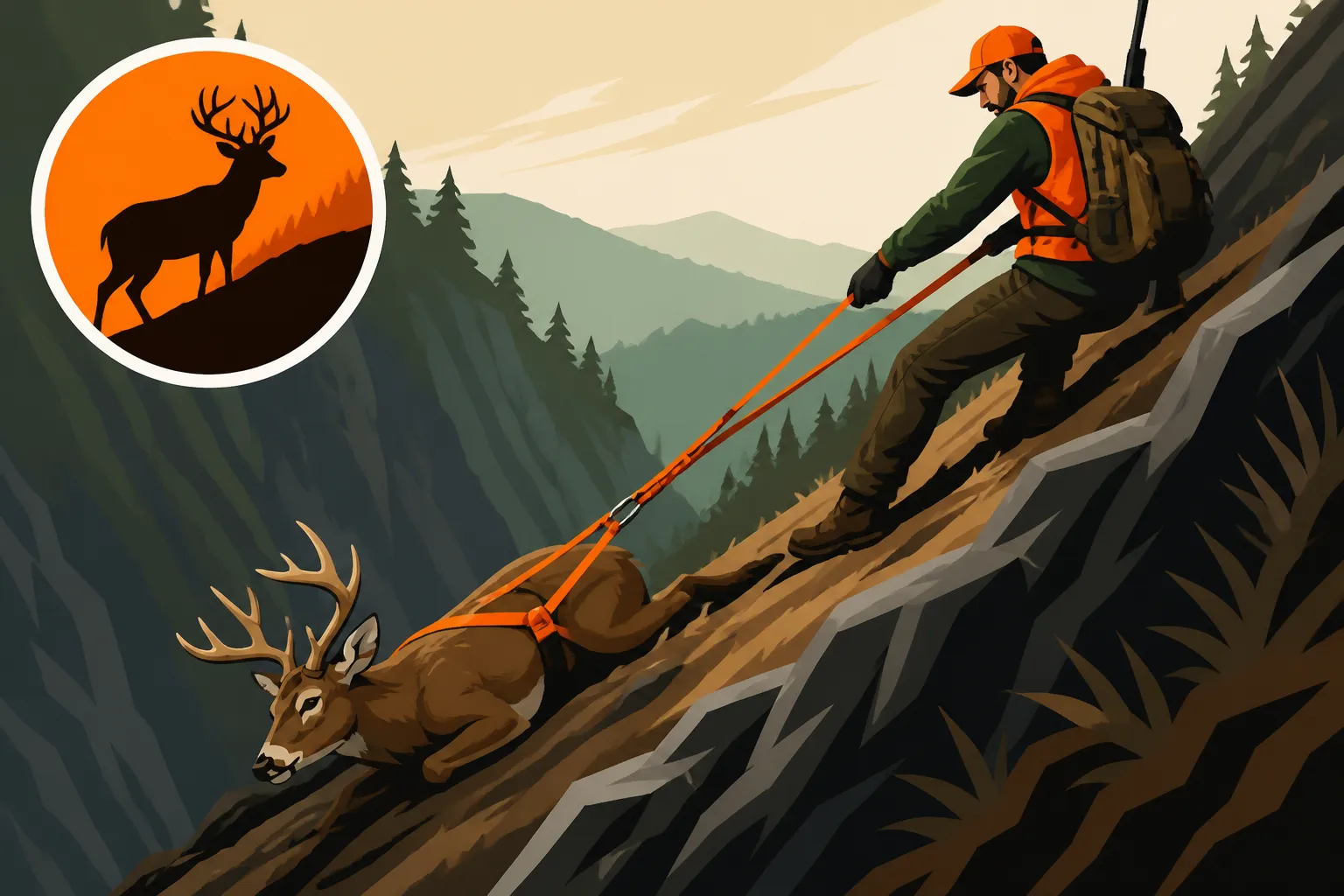
If you opt for quartering, ensure you have strong game bags. These will protect the meat from dirt, leaves, and insects during the arduous climb out. If you’re attempting to drag the whole animal out, which is only feasible if the ravine isn't excessively steep or long, secure a rope around its antlers or neck. Be sure the rope is long enough to give you leverage and to allow you to maintain a safe distance from the deer as you drag, preventing the carcass from rolling back on you. For advice on handling meat, check out "Field Dressing a Deer in Cold Weather," though the principles apply to warm weather too, especially regarding cleanliness.
The Ascent: Hauling Your Harvest Out
This is arguably the most challenging part. Hauling a heavy deer, whether whole or quartered, up a steep, unstable slope will test your limits.
- Dragging: If you're dragging the whole deer, don't try to pull it straight up the steepest section. Instead, zig-zag across the slope, finding the most gradual path. Take frequent breaks. Even 10-20 feet of progress can be exhausting. If you have a partner, one can pull while the other pushes or guides from behind. A good quality dragging harness can distribute the weight to your hips and shoulders, saving your back.
- Rope Systems: For truly vertical sections, a block and tackle system with sturdy anchor points (large trees) can be invaluable. This mechanical advantage allows you to move heavy loads with less force, but it requires knowledge of rigging and secure anchors. This isn't something to learn on the fly; practice before you need it.
- Quartering and Packing: Often, the most practical method for a very steep ravine is to quarter the deer and pack it out using a frame pack. While it means multiple trips, each trip is lighter and safer. This is especially true if you're hunting alone. Think of it like a backcountry hunt, where Packs Built for a Multi-Day Backcountry Hunt are designed for this exact purpose. Place the meat in game bags inside your pack, distributing the weight evenly. This method is slower but significantly safer and less prone to injury than trying to drag a whole deer up a near-vertical slope.
Regardless of the method, remember to go slow. Listen to your body. Dehydration, exhaustion, and muscle strain are real risks. There's no shame in taking an hour to move 50 yards if it means getting yourself and your deer out safely.
Post-Recovery Considerations
You’ve done it. You’ve conquered the ravine, and your deer is finally out. The immediate relief is immense, but the job isn't quite finished yet.
Meat Care After a Tough Haul
After all that effort, the last thing you want is for your hard-earned venison to spoil. The strenuous recovery process can generate a lot of heat in the carcass, even in cooler weather. Once the deer is out of the ravine, prioritize getting the meat cooled down as quickly as possible. If it was quartered, get those game bags into coolers with ice. If you dragged it whole, prop the cavity open and allow air to circulate. Get it back to camp or home to begin processing.
Inspect the meat carefully. If the deer rolled or dragged through particularly dirty areas, trim off any contaminated sections. If you used the gutless method, ensure all fur and external debris are removed from the cuts. Consider how you will process it. Many hunters swear by aging venison, and with a deer recovered from such a tough spot, ensuring clean cuts for aging is even more important. You can find more tips on "Coolers and Game Bags for Early Archery" which offers valuable insight into warm weather meat care, a common concern even in the shoulder seasons.
Learning from the Experience
Every challenging hunt is a learning experience. Recovering a deer from a steep ravine is one of those moments that really sticks with you. Take some time to reflect on what happened:
- Shot Placement: Could a different shot have prevented the deer from reaching such a difficult spot? Sometimes, even a perfectly placed shot results in a short run downhill, but it's always worth reviewing your technique.
- Tracking Skills: How well did your initial tracking efforts go? Could you have found the deer faster or minimized its travel distance? Understanding Tracking a Deer in Fresh New York Snow provides valuable insights, even if you weren't in snow.
- Preparation: Did you have the right gear? Was your map reading adequate? Could you have scouted the terrain more thoroughly before the hunt to identify potential hazards or easier recovery routes? Utilizing tools like onX Layers for New York Land Status or the HuntFishNY app for detailed topographic analysis can be a game-changer for future hunts, helping you identify these tricky spots ahead of time.
- Physical Conditioning: A tough recovery highlights the importance of being physically ready for the demands of hunting New York's diverse landscapes.
Ultimately, successfully recovering a deer from a steep ravine is a testament to perseverance, respect for the game, and a commitment to ethical hunting. It's an exhausting experience, but the satisfaction of bringing that animal home, even after such a trial, is a feeling few other endeavors can match.
Disclaimer
The information provided in this guide is for general informational purposes only and does not constitute professional advice. Hunting regulations, safety protocols, and outdoor conditions can change rapidly. Always consult the official New York State Department of Environmental Conservation (DEC) regulations before hunting, and prioritize personal safety above all else. Engaging in outdoor activities like hunting carries inherent risks, and participants should be adequately prepared, trained, and equipped for all potential scenarios.