Shed Hunting on New York Public Land
That post-season itch is a real beast, isn't it? The deer firearms season wraps up, and suddenly you're longing for any excuse to be back in the hushed, winter woods. Shed hunting scratches that itch beautifully, offering a chance to connect with nature and understand buck movements without the pressure of a tag. But let's be honest, finding those elusive antlers on the vast public lands of New York can feel like searching for a needle in a colossal, snow-covered haystack. This guide is all about maximizing your chances, understanding the nuances of where and when to look, and making your shed hunting excursions in the Empire State truly rewarding.
The Allure and Challenge of Shed Hunting in New York
There's something incredibly satisfying about stumbling upon a naturally dropped antler. It's like finding a hidden treasure, a tangible piece of a buck's life story, and a direct link to the animals you pursue. For many, shed hunting is more than just a scavenger hunt; it's a vital part of their overall hunting strategy, a way to scout and learn long before next season's opener.
Why We Hit the Woods After Season
Beyond the simple joy of finding a shed, these bone treasures offer invaluable insights. Each antler found is a data point. It tells you that a buck, possibly a mature one, was in that exact spot at a specific time of year. This information is gold for planning your next hunting season. By collecting sheds, you can start to piece together a buck's winter range, understand their travel patterns between bedding and feeding areas, and identify potential core areas. You might find a heavy six-point side from a buck you've been seeing on trail camera, or perhaps even a missing piece from a deer you chased all last fall. This kind of post-season detective work is a crucial aspect of Scouting New York Public Land Before Season. It keeps you engaged, physically active, and mentally sharp, long after the orange army has packed up their rifles.
The New York Public Land Gauntlet
New York boasts an impressive amount of public land, from the sprawling Adirondack Forest Preserve to the rugged Catskill Mountains and the countless State Forests scattered across the Southern Tier. While this abundance of access is fantastic, it also presents a significant challenge for shed hunters. Unlike private parcels where you might have intimate knowledge of every field edge and bedding thicket, public land is vast and often less predictable. You're competing not only with other shed hunters but also with the sheer scale of the landscape. Dense cover, steep terrain, and varying snow depths mean that a methodical approach is critical. Without a clear strategy, you can walk for miles and see nothing, leading to frustration. The sheer size of these tracts, like those discussed in How Many Acres of Public Land New York Has, means you need to be smart about where you focus your efforts.
Timing is Everything: When to Start Your Search
One of the most common questions about shed hunting is "When should I go?" The answer, especially in New York, is often "it depends." Deer don't operate on a strict calendar; their antler drop is influenced by a complex mix of biological and environmental factors.
Peak Drop Times and Environmental Factors
Generally, most New York bucks will begin to cast their antlers from late December through April, with the peak often occurring in late January and February. However, this isn't a hard and fast rule. The severity of winter plays a huge role. In a harsh winter, with prolonged cold and deep snow, bucks are under more stress. Their bodies divert energy from antler retention to basic survival, often leading to earlier drops. A mild winter, on the other hand, might see bucks holding their antlers well into March or even April. Nutrition is also a significant factor; bucks that entered winter in poor condition or found themselves in areas with scarce Late-Season Food Sources for New York Whitetails are more likely to shed sooner. Similarly, older, more mature bucks tend to hold their antlers longer than younger deer, though there are always exceptions.
| Factor | Typical Impact on Shed Drop Timing | Explanation |
|---|---|---|
| Severe Winter | Earlier drops, concentrated areas | Bucks expend more energy for survival, leading to earlier antler abscission in critical wintering grounds. |
| Mild Winter | Later drops, more dispersed | Less physiological stress on bucks, allowing them to retain antlers longer into the spring. |
| Food Availability | Ample food = later drops | Good nutrition and readily available browse help bucks maintain condition and hold antlers for extended periods. |
| Buck Health/Age | Older, healthier bucks may drop later | Prime bucks generally maintain better condition, influencing their ability to retain antlers longer. |
| Hunting Pressure | Can push deer to drop in security cover | Stressed deer, especially those pressured during late seasons, might shed in dense, hidden escape cover. |
The Thaw and The Search Window
While bucks might start dropping in January, actually finding them can be tricky with heavy snow cover. The prime "search window" for shed hunters in New York often opens as the snow begins to melt and recede in late February, March, and early April. This is when sheds that have been buried under drifts start to become visible. However, this also means you're racing against other shed hunters and, in some areas, small rodents like mice and squirrels who will quickly chew away at the antlers for their calcium and minerals. A shed found in February is often pristine, while one discovered in May might be a gnawed-on stub. Paying attention to local weather patterns and snow reports is crucial for timing your trips, especially if you're targeting areas like the Tug Hill Plateau which can hold deep snow well into spring. Knowing When New York Bucks Shed Antlers is key to optimizing your efforts.
Decoding Public Land for Antlers
The biggest challenge on public land is deciding where to start looking. You can't just wander aimlessly and expect to consistently find sheds. You need a strategy based on deer behavior and habitat preferences, particularly during the harsh winter months.
Bedding Areas and South-Facing Slopes
During winter, deer prioritize two things: food and thermal cover. Bucks, especially after the rigors of the rut, need to conserve energy. This often means they'll bed in thick, south-facing cover that receives direct sunlight throughout the day. South-facing slopes warm up faster, melt snow, and offer a slight reprieve from bitter winds. Look for dense conifer stands, thick clearcuts, or brushy hillsides that offer both security and warmth. Deer will spend significant amounts of time in these areas, increasing the likelihood of an antler being dropped there. Scour the edges of these bedding thickets, paying close attention to where deer might have jumped over a log, squeezed through a fence, or made an abrupt movement – these are classic "shed spots." In the Adirondacks, for example, a buck might bed on a south-facing ridge with a good view, near some thick spruce or fir, and this is where you'll want to concentrate your efforts, similar to how you might think about Treestand Setups in Adirondack Hardwoods.
Food Sources and Travel Corridors
Even in winter, deer need to eat, though their diet shifts dramatically. They'll browse on woody stems, evergreen leaves, and any remaining acorns or mast they can find. Public lands often have a mix of timber stands. Look for areas with young saplings, multiflora rose, honeysuckle, or other browse species that deer can access. Regenerating timber cuts, often found within New York State Forest Hunting lands, can be winter buffets. Focus your search along the trails that connect these feeding areas to bedding cover. These travel corridors are high-traffic zones, and any obstruction – a fallen log, a ditch, a stream crossing – can jar an antler loose. Remember, deer might not be moving far between bedding and feeding in winter, so these corridors might be short and well-defined. Think about the specific dynamics of Deer Density by New York Wildlife Unit when considering how concentrated deer activity might be.
Water Sources and Natural Funnels
While less critical in snowy conditions when deer can get moisture from snow, water sources still concentrate deer activity, especially during milder periods or early spring. Creeks, springs, and even drainage ditches can be natural travel routes and points of congregation. Bucks will often follow these low-lying areas. Beyond water, be on the lookout for natural funnels – narrow strips of cover that force deer movement into a concentrated path. This could be a pinch point between a steep ridge and a swamp, a narrow strip of woods between two open fields, or a saddle between two hilltops. These funnels are prime locations to find sheds because many deer will pass through them, increasing the odds of an antler being dislodged. Understanding how deer use these landscape features is similar to deciphering how to hunt a Hunting a Funnel Between Two Swamps.
Strategies for Success on Vast Tracts
Finding sheds on public land requires patience, persistence, and a strategic approach. It's rarely a walk in the park, but with the right mindset and tactics, you can significantly improve your chances.
Grid Searches and Thoroughness
When you've identified a promising area – maybe a south-facing slope with thick cover, or a travel corridor between known feeding and bedding – the most effective method is a slow, methodical grid search. Don't just walk through; mentally divide the area into smaller sections and cover each one systematically. Walk slowly, scanning not just the ground directly in front of you, but 10-20 feet to either side. Antlers can be surprisingly camouflaged, blending in perfectly with fallen leaves, sticks, and snow patches. Train your eyes to look for the distinct curve of an antler, the texture of bone, or the darker color against the forest floor. A shed often looks like a stick at first glance, but the tell-tale shape is what gives it away. It’s hard work, but being thorough in a smaller, high-potential area will almost always yield better results than covering huge distances haphazardly. Remember, the goal isn't just to cover ground, but to see the ground effectively.
Leveraging Technology and Topography
Modern technology has revolutionized how we approach public land hunting, and shed hunting is no different. Mapping apps are your best friend. Services like GoHunt or the Scouting With the New York HuntFishNY App allow you to mark potential bedding areas, food sources, and travel routes directly on an aerial map. You can use topography layers to identify south-facing slopes, saddles, and natural funnels before you even step foot in the woods. When you're out there, these apps act as your GPS, helping you stay on track during your grid search and allowing you to mark exactly where you found a shed. This data is invaluable for future trips and for understanding overall deer movement in the area. By Reading Aerial Photos for Southern Tier Deer or any other region, you can narrow down vast public lands to manageable, high-percentage spots, avoiding unnecessary miles in unproductive terrain.
What to Do When You Find One (or Don't)
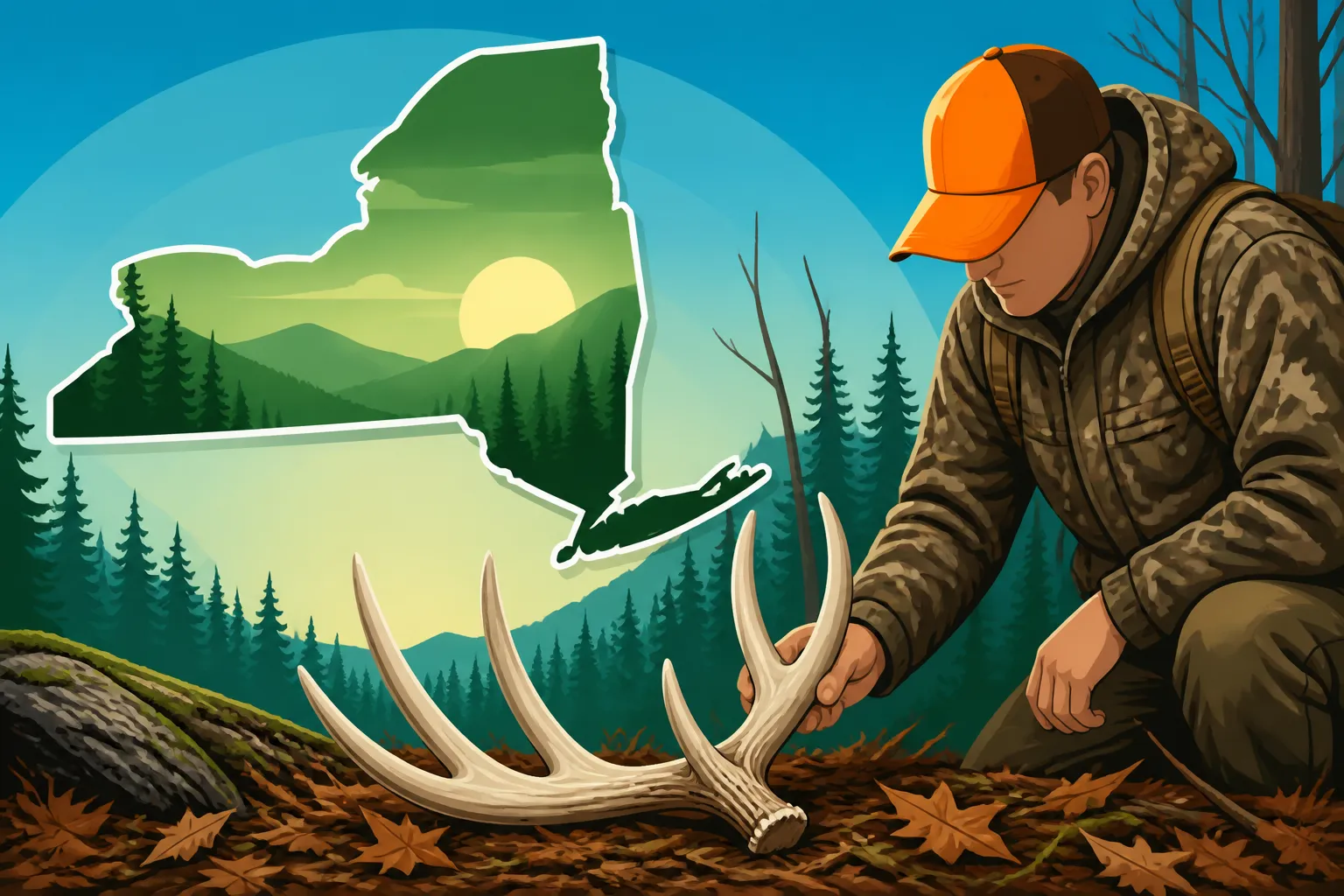
Finding your first shed is an incredible feeling! Take a moment to appreciate it. Examine it – what side is it? How many points? Look for any signs of chewing by rodents. If you find one side, the other side is often nearby, sometimes within a few yards, or it could be miles away if the buck traveled between dropping each side. Look for rub lines, fresh tracks, or other signs of deer activity in the immediate vicinity. Mark the location on your GPS and take a photo.
If you don't find any, don't get discouraged. Shed hunting is tough, especially on public land with its significant New York Deer Herd Size. Every trip into the woods is a learning experience. You're scouting, getting exercise, and deepening your understanding of deer behavior. Even if you walk out empty-handed, you've gained valuable knowledge about where deer aren't wintering, or what kind of habitat they're not using. This helps you refine your strategy for the next trip. Consistency is key; the more time you put in, the higher your chances of success. And remember, sometimes the best finds are not the antlers themselves, but the renewed connection with the quiet, wild spaces of New York.
Ethical Considerations and Regulations
Before you head out, always double-check the current New York DEC regulations regarding shed hunting. Generally, shed antlers are considered naturally occurring wildlife parts and can be legally collected on most public lands without a permit. However, there can be specific local rules or restrictions, especially in certain parks or designated areas, so a quick check on the DEC website or with a local ranger is always a good idea. Also, respect private property boundaries. Never trespass to retrieve a shed. If an antler is clearly on posted private land, resist the urge to cross the line, even if it's "just for a shed." Adhering to these simple ethical guidelines ensures that shed hunting remains a positive and respected activity for all outdoor enthusiasts in New York. You should also be mindful of Finding Ground Others Walk Past and give other shed hunters their space.
Disclaimer
Please be aware that hunting regulations and wildlife management practices in New York State can change. Always consult the official New York State Department of Environmental Conservation (DEC) hunting and trapping regulations guide for the most current and accurate information before planning any hunting or shed hunting activities. This content is for informational purposes only and should not be considered a substitute for official legal guidance.