Hunting Pressure on New York Public Land
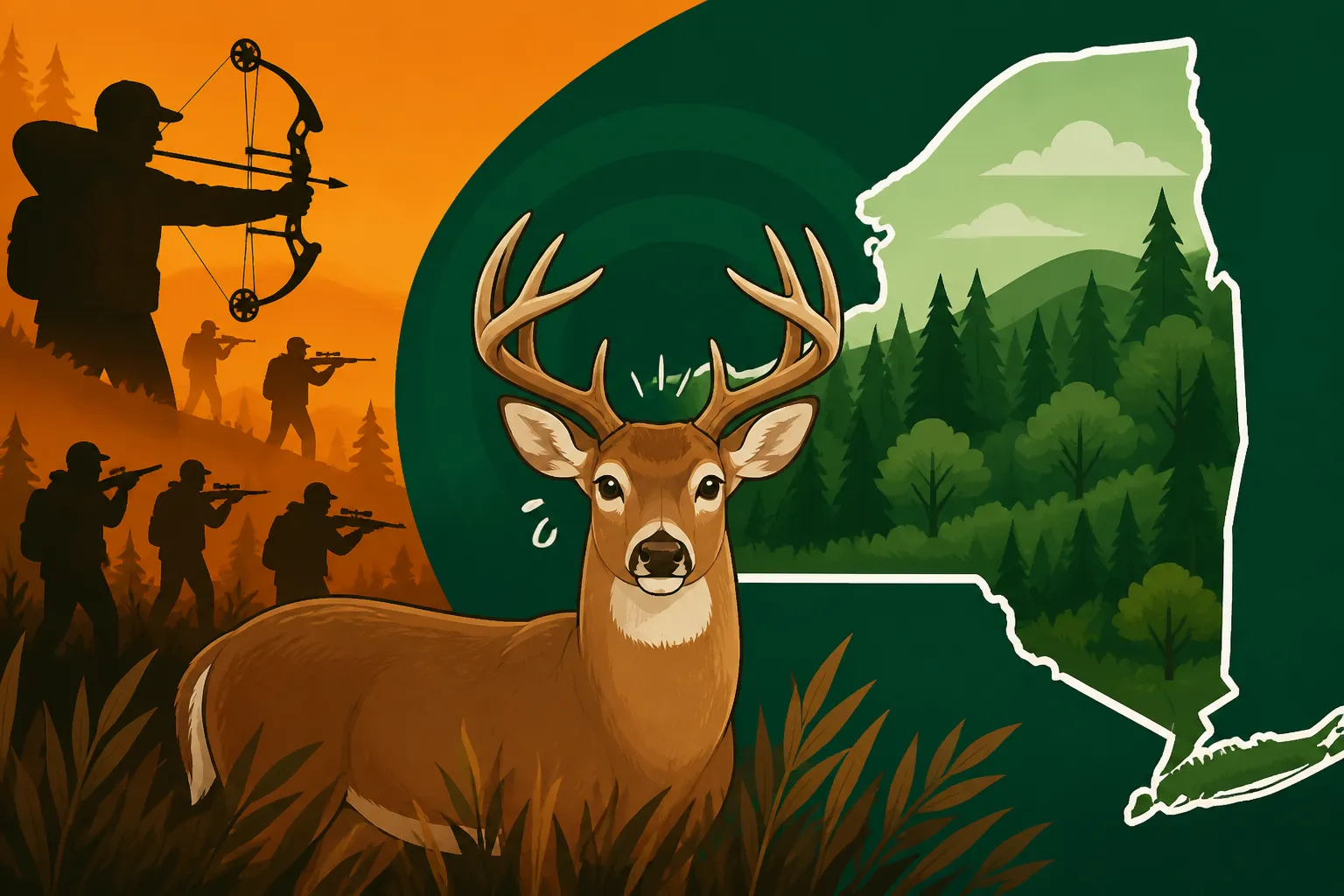
There’s no getting around it: hunting on New York public land can sometimes feel like you’re sharing the woods with half the state. The frustration is real when you spend hours scouting, only to pull up to your chosen spot on opening morning and find four other trucks already there. Dealing with hunting pressure is an undeniable part of the public land experience here, and understanding how it impacts deer behavior, as well as how to adapt your strategies, is key to success. This guide will walk you through the realities of public land pressure in New York and equip you with tactics to help you find deer even when the woods seem crowded.
The Inevitable Truth of Public Land Hunting Pressure in New York
Let's be honest, we all love the idea of vast, untouched wilderness, but the reality for most of us in New York is that accessible public land often sees a fair share of boot prints. This isn't just a perceived problem; it's a quantifiable factor that shapes deer behavior across the state, from the sprawling Adirondacks to the smaller state forests and Wildlife Management Areas (WMAs) in the Southern Tier.
Why Public Land Draws a Crowd
The primary reason for public land pressure is, quite simply, accessibility. For many hunters, especially those without private land access, public parcels are their only option. As hunting participation generally remains strong, and with the increased popularity of mapping apps and social media showcasing specific areas, more hunters are converging on the same spots. The convenience of driving up to a parking area, strapping on a pack, and walking into the woods is appealing, but it also means those "easy access" areas often bear the brunt of early-season and weekend hunter traffic. This can be particularly noticeable on opening weekends, where popular destinations like certain state forests in the Southern Tier or larger WMA parking lots fill up quickly.
How Deer React to Human Presence
Deer are incredibly adaptable and intelligent creatures, and they learn quickly. When faced with consistent human intrusion, they don't just vanish; they adjust. Their activity patterns shift, often becoming more nocturnal, especially in areas with heavy daytime pressure. Instead of feeding openly in fields during daylight, they'll wait until the cover of darkness. They'll also seek out "sanctuary" areas – dense thickets, steep ravines, unappealing swamps, or private land borders where they know hunters rarely tread.
Think about it: if you’re a mature buck, constantly being bumped by hunters walking trails or sitting predictable spots, you're going to change your routine. You'll move later, bed tighter, and use escape routes and cover that most hunters avoid. This is why you might see plenty of deer sign, but struggle to see deer during legal shooting hours. They're still there, but they've gone into full evasion mode. This behavioral change is one of the biggest challenges for hunters on public land, and it requires a shift in our own approach.
Identifying and Interpreting Signs of Pressure
Understanding where and how pressure manifests is the first step to avoiding or mitigating its effects. It's not just about seeing another hunter; it's about recognizing the subtle (and not-so-subtle) cues that tell you how much human activity an area has experienced, and how deer are reacting to it.
Visual Cues and Hunter Sign
When you scout or hunt an area, keep your eyes peeled for obvious signs of other hunters. Truck parking lots full of vehicles, especially on weekdays, are a dead giveaway. Beyond that, look for well-worn foot trails that aren't marked hiking trails, discarded blaze orange flagging, old treestand straps, or even ground blinds left out from previous seasons. These are all indicators that an area sees regular human traffic.
Even more subtly, observe the terrain. Are there fresh boot prints in soft ground near bottlenecks or pinch points? Are there signs of recent deer drives, like trampled brush leading towards an opening? While some hunters clean up after themselves, others leave obvious evidence. These visual cues tell a story about where hunters have been and, by extension, where deer might be avoiding.
Deer Behavior as a Pressure Indicator
The deer themselves will tell you a lot. If you're seeing only does and fawns, or if the bucks you do see are skittish and bolt at the slightest disturbance, that’s a strong sign of pressure. A lack of fresh daytime deer sign in an otherwise prime-looking area (think rubs, scrapes, or droppings) should also raise a red flag. If you're finding buck sign that looks a few days old but no fresh activity during daylight, it could mean the bucks are moving primarily at night. Similarly, if you're not seeing deer in traditional feeding areas during legal shooting hours, but find plenty of droppings from overnight, they've likely adjusted their schedule due to human presence. Learning to read these subtle shifts is crucial for successful public land hunting.
Using Technology to Assess Pressure
Modern mapping applications are invaluable tools for understanding potential pressure points. Apps like GoHunt, onX Hunt, and even the New York State DEC's Scouting With the New York HuntFishNY App allow you to view satellite imagery, topo maps, and land ownership boundaries. You can use these to identify remote access points that are further from main roads and parking areas. Look for obscure logging roads, old two-tracks, or even just patches of public land that require a longer walk through less appealing terrain. These often translate to areas with less hunter traffic. A good strategy is to find public land that abuts large tracts of private land that might serve as a sanctuary. You can then try to intercept deer as they move between these areas.
Here's a quick look at common signs of hunting pressure and how deer might react:
| Sign of Pressure | Deer Behavioral Response |
|---|---|
| Numerous vehicles at trailheads | Increased nocturnal movement, avoidance of roads |
| Well-worn foot trails | Deer will often parallel trails in thick cover or cross only at night |
| Old treestands/ground blinds | Bucks avoid these "known" ambush points, especially during daylight |
| Lack of fresh daytime sign | Shift to nocturnal feeding and bedding patterns |
| Skittish deer, quick to bolt | Increased wariness, use of dense cover for bedding and travel |
| Calls/rattling going unanswered | Deer become call-shy in heavily pressured areas |
| Deer entering/exiting private land | Utilize private land as a sanctuary during hunting hours |
Strategic Approaches to Hunt Pressured Deer Effectively
Hunting pressured deer requires a different mindset. You can't just walk into the most obvious spot and expect unpressured deer behavior. It's about thinking like a deer, understanding their vulnerabilities, and putting in the effort to find the spots other hunters overlook.
Getting Off the Beaten Path
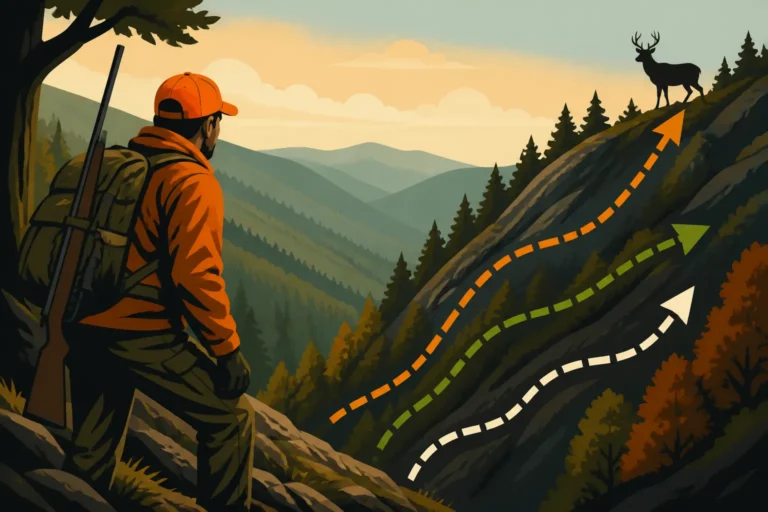
This is perhaps the most fundamental and effective strategy. Most hunters are creatures of habit, sticking to easy-to-access areas or walking only a quarter to half-mile from the truck. To find deer that haven't been constantly pushed, you need to go where others won't. That often means a longer, tougher walk, navigating through thick cover, or tackling steep terrain. In the Adirondacks, this might mean a multi-mile hike into a remote basin, while in the Catskills, it could involve climbing to a high, steep bench that's a grunt to reach.
Consider using less obvious access points. Sometimes, parking on a side road or even getting permission from a landowner to cross a corner of their property to access public land can put you in a spot with significantly less competition. Always verify property boundaries with an app like GoHunt to ensure you're not trespassing and to accurately pinpoint where public land begins. You'd be surprised how much good hunting ground lies just beyond the typical "comfort zone" of most hunters. For insights on navigating these challenging areas, check out tips on Packs for a Day on Public Land to ensure you're equipped for a longer haul.
Still-Hunting and Low-Impact Methods
When deer are pressured, sitting in a static treestand for hours might not be the most effective method, especially if your stand is in a high-traffic area. Still-hunting, moving slowly and deliberately through the woods, pausing frequently to observe, can be incredibly effective. This method allows you to cover ground, find active sign, and potentially jump a deer that's bedded tight in thick cover. It demands patience and stealth, but it mimics the movement of a predator, forcing you to pay attention to wind, thermals, and subtle changes in terrain. Learning how to move silently and read the woods is an art that pays dividends when deer are wary. Our article on Still-Hunting Catskill Ridges provides excellent details on this approach.
Similarly, consider using ground blinds in areas where a treestand might be too exposed or difficult to set up, such as in dense swamps or thickets. A well-brushed-in ground blind offers excellent concealment and allows for quick setup in less-traveled areas. The key is to minimize your impact and avoid alerting deer to your presence, becoming part of the landscape rather than an intruder.
Hunting Overlooked Cover and Sanctuary Areas
Deer don't just disappear when pressured; they retreat to the thickest, nastiest cover they can find. This could be a dense stand of pines, a swamp choked with alders, a steep hemlock-filled ravine, or a field edge with an impenetrable fencerow. Most hunters avoid these spots because they're difficult to navigate, noisy, and often don't offer clear shooting lanes. This is precisely why deer seek them out – they are their safe zones.
Focus on hunting the edges of these sanctuary areas, or even slipping into them, especially during the middle of the day when most hunters are taking a break. Look for transition zones where thick cover meets more open timber, or natural funnels and pinch points that deer would use to travel between bedding and feeding areas. A swampy area, for example, might hold multiple deer that have been pushed out of nearby woods. A dense briar patch that no one wants to walk through can be a deer magnet, especially if it's near a food source. For complex movements through challenging terrain, understanding how deer use specific features, such as those described in Hunting a Funnel Between Two Swamps, can give you a significant advantage.
Leveraging Technology and Scouting to Outsmart Other Hunters
In today's hunting landscape, technology is a game-changer, not just for finding deer, but for predicting and reacting to human pressure. Combining advanced mapping with dedicated pre-season scouting will give you the edge you need.
Advanced Digital Mapping and Reconnaissance
Modern mapping applications are your secret weapon against hunting pressure. Services like GoHunt provide detailed satellite imagery, topographic maps, and public/private land overlays that are essential for planning your hunts. Instead of just looking for food and cover, use these tools to identify:
- Remote Access Points: Find those obscure pull-offs or faint two-track roads that lead deep into public land.
- Topographical Barriers: Look for steep ridges, deep ravines, or large swamps that naturally funnel deer away from easily accessible areas and deter most hunters. These features can create natural sanctuaries that are harder to reach.
- Private Land Edges: Often, deer will use the border between public and private land as a safety corridor. Setting up on these edges, on the public side, can be highly effective. The detailed property line information from platforms like GoHunt is indispensable here.
- Overlooked Patches: Sometimes, a small, isolated parcel of public land that's tricky to get to will hold deer because it's simply ignored.
By studying these maps, you can develop an entry and exit strategy that minimizes your disturbance and takes you to areas less impacted by other hunters. For more detailed guidance, learn about Reading Aerial Photos for Southern Tier Deer.
Dedicated Pre-Season and In-Season Scouting
There’s no substitute for boots on the ground. Digital maps give you a great starting point, but actual physical scouting confirms your theories and reveals fresh sign. Before the season, dedicate time to exploring potential hunting spots, specifically looking for areas that show little to no human sign. This is where you put into practice the advice from Scouting New York Public Land Before Season and learn how to be truly effective at Finding Ground Others Walk Past.
During the season, pay attention to current deer movement. If you're encountering too much pressure in one spot, be willing to move. A mobile approach, where you can quickly relocate based on fresh sign and observed pressure, often outperforms sitting in a crowded area. For example, if you find a logging road with fresh scrapes, but realize it's a popular walking path, you might decide to set up a stand deeper in the woods, along a parallel deer trail that is less exposed. Understanding where and how to place your gear, especially for specific setups like Treestand Setups in Adirondack Hardwoods, becomes critical in these situations.
Understanding Deer Drives and Hunter Movements
While traditional Deer Drives on New York Public Land can be effective in some scenarios, they often create significant pressure. Knowing when and where these drives typically occur can help you anticipate deer movement. If you know a group of hunters usually pushes a certain block of woods on opening day, you might position yourself downwind, on an escape route that deer are likely to use.
Additionally, paying attention to the time of day can make a difference. Many hunters are out early morning and late afternoon. The middle of the day often sees a lull in activity, which can be a prime time to still-hunt or slip into a thick bedding area. Consider carrying a First Aid Kits for Remote Adirondack Ground if you plan on extended pushes into more remote areas, as being prepared for anything is always a good idea.
Ultimately, dealing with hunting pressure on New York public land isn’t about eliminating it entirely; it’s about acknowledging its presence and using smart strategies, persistent scouting, and available technology to hunt smarter than the average hunter and find success.
Disclaimer
Always consult the most current New York State Department of Environmental Conservation (DEC) hunting regulations before heading into the field. Regulations can change, and it is your responsibility to be aware of and adhere to all applicable laws and rules.