New York Fall Turkey Zone Windows
Hunting fall turkeys in New York can be a bit of a head-scratcher, especially when you start diving into the different season dates depending on where you plan to chase gobblers. It’s frustrating to think you’ve got everything lined up, only to realize the dates you had in mind don’t apply to your specific hunting grounds. This guide is here to clear up that confusion, breaking down New York’s fall turkey season windows by zone so you can plan your hunt with confidence and avoid any unwelcome surprises.
Navigating New York's Fall Turkey Hunting Zones
New York State is a fantastic place for turkey hunting, offering opportunities in both spring and fall. However, the fall season comes with its own set of rules, particularly regarding when and where you can hunt. Unlike the more unified spring gobbler season, fall turkey hunting is meticulously divided by zones, each with its own specific calendar window. This can feel a little overwhelming when you’re just trying to figure out if you can head out next weekend, but understanding these zones is the first crucial step to a successful autumn hunt.
Why Zones Matter for Turkey Hunters
Imagine waking up early, driving an hour to your favorite hunting spot, only to find out the season hasn't opened there yet, or worse, it's already closed! This scenario is a real possibility if you don't pay close attention to New York's fall turkey zones. The primary reason for these different zone windows boils down to turkey population dynamics, historical hunting pressure, and varying habitats across the state. In areas with robust turkey numbers and less hunting pressure, the season might be longer. Conversely, regions where turkey populations are more sensitive or habitat is scarcer might see shorter, more restricted seasons.
The New York Department of Environmental Conservation (DEC) carefully monitors turkey populations through brood surveys, harvest data, and public input to set these varying dates. They're trying to balance hunting opportunities with the need to sustain healthy turkey populations for future generations. So, while it might seem like an extra hoop to jump through, these zones are actually a vital management tool. For us hunters, it means we have to do our homework, using resources like the DEC website or detailed mapping apps to confirm the exact Wildlife Management Unit (WMU) we're hunting in and its corresponding dates. It's not just about compliance; it's about being an informed and responsible participant in wildlife conservation.
Defining the Major Zones
New York's fall turkey hunting is primarily split into three distinct categories: the Southern Zone, the Northern Zone, and a special, often overlooked, segment for Long Island. Each of these broad categories encompasses multiple Wildlife Management Units (WMUs), but the general season framework applies to all WMUs within that zone.
The Southern Zone covers the vast majority of the state south of the New York State Thruway (Interstate 90) and west of the Hudson River, extending down into the Southern Tier, Catskills, and Hudson Valley regions. This is where most New York turkey hunting takes place, and consequently, it often has the most generous season lengths, though specific WMUs can still have their quirks. Think of the rolling hills of Chemung County or the dense hardwoods of Delaware County – that's Southern Zone territory.
The Northern Zone is generally defined as the area north of the Thruway and the Mohawk River, primarily encompassing the Adirondack Park and its periphery, extending across to the St. Lawrence River Valley. This region is characterized by vast tracts of forest, more rugged terrain, and typically harsher winters, which can impact turkey survival and population density. As a result, the fall season here tends to be considerably shorter.
Finally, Long Island (WMU 1C) has its own unique, often later, fall turkey season. Due to its dense human population, limited huntable land, and specific turkey population dynamics, Long Island requires distinct management. It's not just a subset of the Southern Zone; it's truly its own entity with rules tailored to its unique environment. Understanding these geographical distinctions is paramount before you even think about loading your shotgun or crossbow for a fall bird.
Unpacking the Southern Zone Fall Turkey Season
The Southern Zone is where the bulk of New York's fall turkey hunting action happens, covering a massive geographical area from the Pennsylvania border north to the Mohawk Valley. For many hunters, this is their home turf, offering plenty of opportunities to chase fall flocks. However, even within this large zone, there are nuances that can trip up the unwary hunter.
Opening and Closing Dates for Most WMUs
Generally, the Southern Zone fall turkey season typically opens on October 1st. This early start gives hunters a chance to pursue birds before heavy leaf fall and colder temperatures really set in, often finding turkeys still in larger, less-pressured flocks. The closing dates, however, are where things get a little trickier, and it’s critical to double-check the specific Wildlife Management Unit (WMU) you intend to hunt.
For most WMUs in the Southern Zone, the fall turkey season runs from October 1st right up until the day before the regular firearms deer season opens. This often means a season lasting into mid-to-late October, sometimes even brushing up against November, providing a solid month of opportunity. For example, a hunter in Broome County (WMU 7S) or Livingston County (WMU 8G) could expect this longer window. This extended period allows for diverse hunting strategies, from early-season calling to later-season ambush tactics near prime food sources. However, it's worth noting that a few WMUs, like the special 1C (Long Island, which we'll discuss more later), 3S (Southeastern New York), 8 (Finger Lakes), and 9 (Western New York), might have slightly different closing dates or even shorter windows. Always consult the current DEC Hunting & Trapping Regulations Guide or use a mapping tool like GoHunt to verify the exact dates for your chosen WMU. These resources are invaluable for keeping track of the specific calendar, especially when managing multiple licenses or planning hunts across different regions. Knowing How Long New York's Southern Zone Fall Turkey Runs for your specific WMU is your best bet for avoiding a wasted trip.
Bag Limits, Regulations, and Hunter Pressure
Beyond the dates, understanding the bag limits and other regulations for the Southern Zone is crucial. For most of the Southern Zone, the fall turkey bag limit is one turkey of either sex. This means you can harvest a hen or a gobbler, but only one total for the season. This contrasts sharply with the spring season, where the limit is typically two bearded turkeys. The "either sex" rule in fall is a nod to the different hunting dynamics; fall hunting often involves breaking up flocks and calling birds back, making it harder to selectively target gobblers.
Another key regulation to remember is that hunting turkeys with a shotgun or bow/crossbow is permitted. However, rifles are generally not permitted for turkey hunting in New York. Always ensure your chosen weapon complies with the regulations for turkey. Additionally, New York Legal Shooting Hours apply, generally from one-half hour before sunrise to sunset. Hunter orange requirements are typically not in effect for fall turkey season itself, but if you're hunting during an overlap with another season (like early bow for deer), it's wise to wear orange for safety, or if you're participating in a youth hunt. Hunter pressure can vary wildly across the Southern Zone. Popular public land tracts in the Catskills or Southern Tier might see a good number of hunters, especially on opening weekend. Conversely, vast private land holdings or less accessible public parcels might offer a more solitary experience. Keep an eye on popular hunting apps like GoHunt that sometimes show public land boundaries and even report user activity, which can give you a sense of potential pressure.
The Northern Zone's Brief But Exciting Fall Turkey Window
When you head up north, things change considerably for fall turkey hunting. The rugged beauty of the Adirondacks and the dense forests of the St. Lawrence Valley offer a vastly different hunting experience than the southern parts of the state. This difference extends directly to the fall turkey season, which is notably shorter and requires hunters to be strategic and adaptable.
Shorter Season, Distinct Challenges
The Northern Zone fall turkey season typically runs for a much more condensed period compared to its southern counterpart. For most WMUs in the Northern Zone, the season usually opens on October 1st but closes sharply on October 14th. This gives hunters a mere two weeks to fill their fall turkey tag. This brief window is a direct reflection of the ecological realities of the region. Northern Zone turkey populations often face tougher winters, with deeper snow and prolonged cold, which can significantly impact survival rates and breeding success. The DEC manages this population more conservatively to ensure its long-term health.
This shorter season presents distinct challenges for hunters. You have less time to scout, less time to hunt, and less margin for error. If you get a stretch of bad weather, say a heavy, early snowfall or relentless rain, it can eat into a significant portion of your limited hunting days. This means that every outing counts, and thorough preparation becomes even more critical. Hunters in the Northern Zone need to be dialed in from day one, ready to capitalize on any opportunity that arises. It's not uncommon for hunters to take time off work specifically for this two-week window, knowing how quickly it comes and goes. Knowing How Long New York's Northern Zone Fall Turkey Runs can help you prioritize your limited time.
Adapting to Mountainous Terrain and Early Snow
Hunting turkeys in the Northern Zone often means dealing with more challenging terrain. You're likely to encounter steep hills, vast timber blocks, and remote areas that require significant hiking and navigation skills. This isn't your typical leisurely stroll through a woodlot. The turkeys here are wilder, often less accustomed to human presence, and can cover vast distances in a day. As such, tactics need to evolve beyond simply sitting and calling. Run-and-Gun Turkey Tactics on Public Land can be particularly effective in these large, wild areas, allowing you to cover ground and locate scattered flocks.
Furthermore, the threat of early snow is a constant companion during the Northern Zone fall turkey season. While October 1st typically sees mild conditions, by mid-October, especially in higher elevations, a significant snowfall is not out of the question. Fresh snow can make tracking easier, but it can also make access difficult, silence leaves for quieter stalking, and change turkey behavior dramatically. Turkeys might alter their feeding patterns, concentrating on areas where food is still accessible, or head for thermal cover. Planning for diverse weather conditions, carrying appropriate gear, and understanding how to locate birds when the landscape changes are essential skills for Northern Zone fall turkey hunters. A good topo map and familiarity with the area, perhaps from prior Scouting New York Public Land Before Season, will serve you well.
Long Island's Distinct Fall Turkey Hunting Regulations
When we talk about New York hunting, Long Island often feels like its own little world, and for good reason. Its unique blend of suburban sprawl, dense population, and surprisingly robust pockets of wild spaces means that hunting regulations, especially for fall turkeys, are often tailored specifically to its distinct environment. Don't assume Long Island operates under the same rules as the rest of the Southern Zone.
The Special Case of WMU 1C and Other Areas
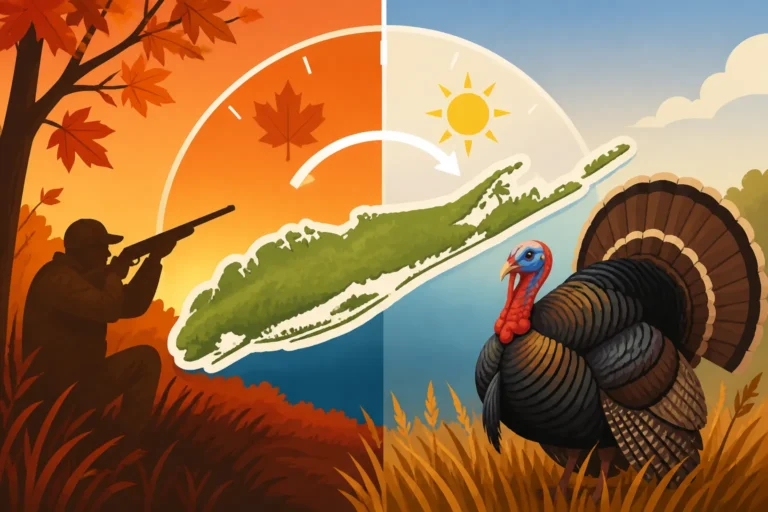
Long Island, primarily designated as Wildlife Management Unit (WMU) 1C, operates under a distinctly different fall turkey season calendar. While the rest of the Southern Zone is well into its season by October, Long Island's fall turkey window often starts much later, typically in mid-to-late November and can extend into December. For instance, recent seasons have seen it open around November 19th and run through December 23rd. This late start is primarily due to the unique dynamics of turkey populations in an urban-adjacent environment, as well as managing hunter density and potential conflicts in more populated areas.
The bag limit for WMU 1C is usually one turkey of either sex, similar to the rest of the Southern Zone. However, access is often the biggest challenge here. Much of the available hunting land is controlled by various state parks, county parks, and other municipal entities, often requiring special permits, applications, or even lottery systems on top of your standard New York hunting license. It's not as simple as walking onto state forest land up north. You really need to do your research, not just on dates but on specific access points and requirements. For more specific details on this challenging but rewarding hunt, you might want to check out Hunting the Long Island Fall Turkey Window. Knowing Why Long Island's Fall Turkey Window Runs Latest also helps understand the reasoning behind these specific regulations.
Navigating Suburban Hunting Challenges and Access
Hunting turkeys on Long Island is not for the faint of heart, or for those unprepared for unique challenges. The proximity to residential areas means strict adherence to firearms discharge setbacks and heightened awareness of non-hunters. Safety is paramount, and stealth is key to avoid disturbing residents. Public land access is often limited to specific areas like the Rocky Point Pine Barrens State Forest or parts of Suffolk County that permit hunting. Even then, these areas might have additional local rules on top of DEC regulations.
Securing access to private land is another avenue, but it requires diligent networking and relationship-building with landowners. You'll likely encounter a mix of pine barrens, oak forests, and even some agricultural pockets, but the consistent theme is finding enough contiguous, huntable land that isn't bordering someone's backyard. Tools that offer detailed property line information, like the premium features of GoHunt, can be invaluable here, helping you understand exactly where you can legally hunt and avoid accidental trespass. This is a very different kind of hunting experience, requiring patience, respect for boundaries, and a deep understanding of local regulations.
Effective Strategies for New York Fall Turkey Hunters
Fall turkey hunting isn't just a rehash of spring tactics. The birds behave differently, their social structures have changed, and the landscape itself presents new opportunities and challenges. To be truly successful in New York's fall woods, you need to adapt your approach.
Locating Flocks and Breaking Them Up
In the fall, turkeys typically gather into larger, mixed-age flocks. These can be hen-and-poult groups, or bachelor groups of gobblers, sometimes numbering dozens of birds. Unlike the spring, when a lone gobbler is looking for love, fall birds are focused on food and safety in numbers. Your primary goal, therefore, is often to locate a flock and then break it up.
Finding these flocks involves a lot of scouting. Listen for yelps, clucks, and cutting as turkeys communicate. Look for tracks, droppings, and scratch marks in the leaves, particularly in areas rich with mast crops. Once you've located a flock, the classic fall tactic is to charge in, yelling and waving your arms to scatter them. The idea is to make them fly or run in all directions, disrupting their social order. After the initial chaos, you retreat, set up quickly, and wait. The turkeys, being highly social animals, will want to regroup. This is where your calling comes in. Soft yelps, clucks, and lost-poult calls can mimic a lone bird trying to find its way back to the flock. Patience is key; it can take anywhere from 15 minutes to an hour or more for a bird to cautiously come back to your calls. This strategy is so effective that there's even a dedicated technique for it, often referred to as Breaking Up a Fall Turkey Flock. Remember, in areas like the Southern Tier, birds often frequent open fields in the fall, making scouting from a distance or using optics critical.
Scouting for Key Fall Food Sources
Turkeys are driven by their stomachs in the fall. Their primary goal is to pack on weight before the lean winter months, making food sources absolutely critical to locating them. Unlike spring, when strut zones and nesting cover are primary draws, fall turkeys will be where the groceries are.
Mast crops are king. Acorns, beechnuts, and wild cherries are highly sought after. Spend time scouting oak and beech ridges, looking for areas where mast has fallen. The more sign you find – scattered shells, droppings, fresh scratchings – the hotter the spot. If you find a patch of particularly productive oaks, chances are turkeys won't be far. Agricultural fields are also huge magnets, especially after harvest. Cut cornfields, picked soybean fields, and even standing grains can draw in large flocks. Many New York farmers will allow access if you ask politely and respect their land; just make sure to get permission. Utilizing mapping tools, perhaps even those found on platforms like GoHunt, can help identify different tree species (like oak concentrations) or pinpoint agricultural fields in your chosen WMU, making your Scouting New York Public Land Before Season much more efficient. Also, don't overlook natural openings like old logging roads or clearings that might have clover or other herbaceous growth still palatable in the fall. Turkeys will often dust themselves in these open areas too, leaving tell-tale signs.
Essential Regulations and Responsible Hunting Practices
As with any hunting endeavor in New York, understanding and adhering to the regulations is paramount. This ensures not only your safety and legal compliance but also contributes to the ethical and sustainable practice of hunting. From what you need to carry to what you do after the shot, every step has a rule.
Licenses, Permits, and Legal Shooting Hours
Before you even step foot in the woods, you need the right paperwork. For fall turkey hunting in New York, you'll need a valid New York State hunting license that includes small game privileges, and critically, a turkey permit (often included with a big game license or as a separate add-on). You can find details on all the options and associated costs in New York Hunting Licenses and What They Cost. If you're a bowhunter, ensure your bowhunting privilege is current; if using a crossbow, verify that it's legal for turkey in the zone you're hunting, though generally crossbows are permitted statewide for fall turkeys. Always carry your physical license and permits, or have them readily accessible on the New York DEC's HuntFishNY app on your phone, as conservation officers conduct checks frequently.
Beyond licenses, paying close attention to New York Legal Shooting Hours is non-negotiable. For turkeys, this typically runs from one-half hour before sunrise to sunset. Setting up too early or staying out too late not only violates the law but can be unsafe and unethical. It's always a good idea to know your sunrise and sunset times for your specific location each day you hunt. Planning your approach and exit routes with these times in mind can prevent accidental violations and ensure a safer hunt, especially when hunting alone in unfamiliar territory.
Harvest Reporting and Carcass Transport
The hunt doesn't end when the bird is on the ground. Responsible hunting includes properly handling your harvest and fulfilling your reporting obligations. In New York, all harvested turkeys must be reported to the DEC. This is crucial data for wildlife biologists to monitor New York Turkey Population Trends and set future season dates and bag limits. The easiest way to report your harvest is through the online DEC reporting system, often accessible via the same HuntFishNY app you use for your license, or directly on the DEC website. Make sure to report your bird as soon as possible, and definitely within seven days of harvest. Missing this step can result in penalties. The process is usually straightforward, requiring information like the date of harvest, WMU, and sex of the bird.
When it comes to carcass transport, there are generally fewer restrictions for turkeys than for deer, especially regarding Chronic Wasting Disease (CWD). However, it's always best practice to field dress your bird promptly to cool the meat, especially on warmer fall days. If you plan to travel a significant distance, consider bringing a cooler with ice to preserve the quality of the meat. Be mindful that if CWD ever became a concern for turkeys (which it currently isn't), regulations could change, so staying informed is key. For now, focus on hygienic handling and prompt reporting to ensure the data collected helps manage our valuable Wild Turkeys in New York.
New York Fall Turkey Zone Windows Summary
To help you keep track of the different fall turkey season windows across New York, here’s a quick summary. Always double-check the current year's DEC regulations, as dates can shift slightly.
| Zone / WMU | General Opening Date | General Closing Date | Bag Limit (Either Sex) | Key Considerations |
|---|---|---|---|---|
| Southern Zone (Most WMUs) | October 1st | Day before firearms deer season (late Oct/early Nov) | One | Longest season, varied terrain, higher hunter numbers. |
| Southern Zone (WMUs 1C, 3S, 8, 9) | October 1st | Specific dates (check DEC; often shorter than above) | One | Specific WMU variations, important to confirm dates. |
| Northern Zone (Most WMUs) | October 1st | October 14th | One | Short season, rugged terrain, early snow risk. |
| Long Island (WMU 1C) | Mid-to-late November | Late December | One | Latest season, specific access rules, suburban challenges. |
Note: Dates are generalized. Always consult the most current New York DEC Hunting & Trapping Regulations Guide for precise dates for your specific WMU.
Disclaimer
The information provided in this guide is for general informational purposes only and is subject to change. Hunting regulations, season dates, and bag limits are set by the New York State Department of Environmental Conservation (DEC) and can be modified annually. It is the responsibility of every hunter to consult the most current official DEC Hunting & Trapping Regulations Guide before participating in any hunting activity. Failure to do so may result in fines or other penalties.