New York Deer Tag Transfer Rules
It's a question that pops up in deer camps and online forums all the time, often fueled by good intentions or a moment of desperation: "Can I just transfer my extra deer tag to my buddy?" Or, maybe you've heard a story about someone using their spouse's tag. The truth is, navigating New York's deer tag transfer rules can feel like trying to track a mature buck through a swirling snowstorm—confusing, with many false trails. This guide will cut through the fog, explaining exactly what New York State regulations say about transferring deer tags, the critical reasons behind these rules, and how to stay compliant while out in the woods.
The Immutable Rule: New York Deer Tags Are Strictly Non-Transferable
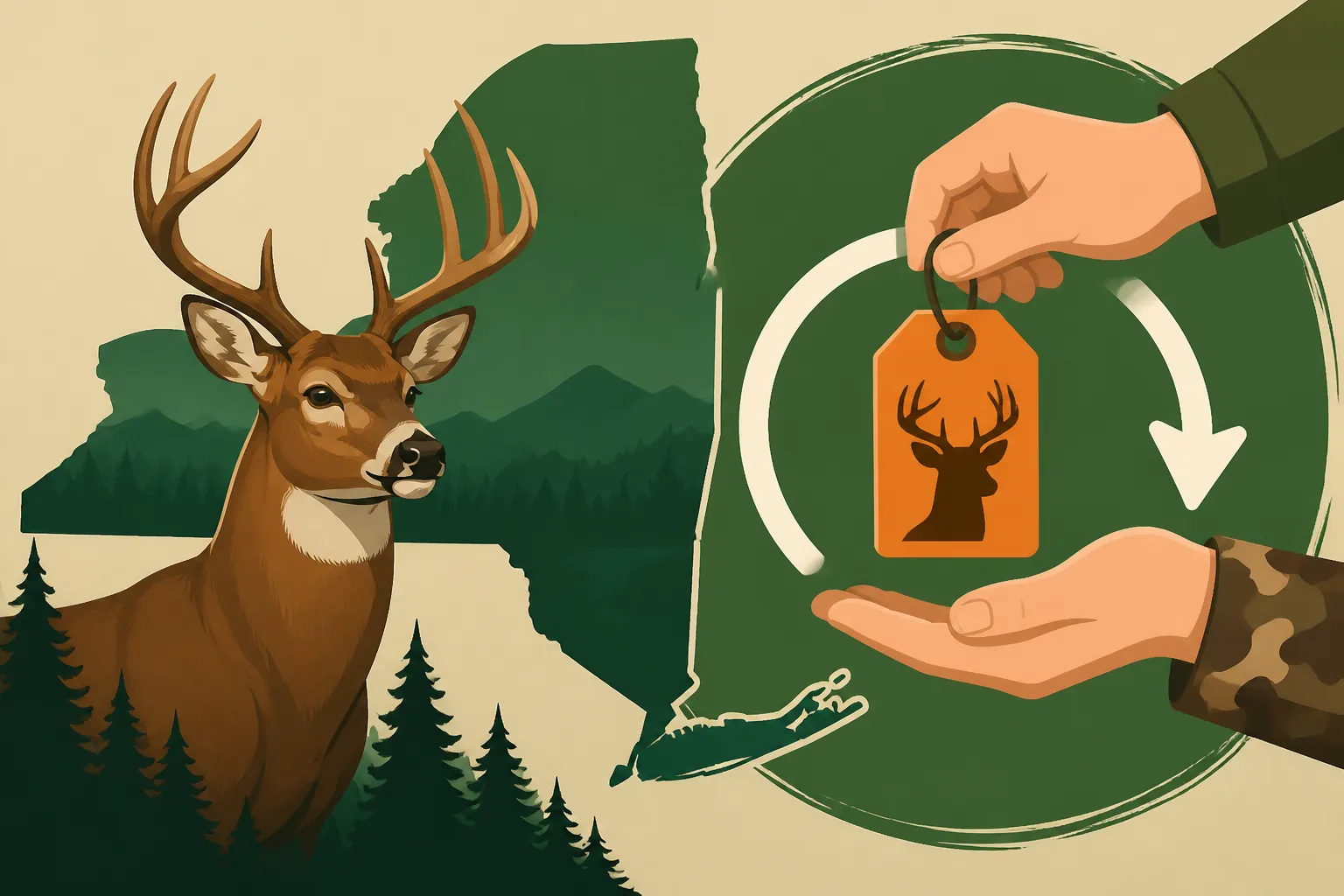
Let's get straight to the point because this is where many hunters trip up: in New York, hunting licenses and their associated tags, including deer tags (both regular Big Game tags and Deer Management Permits, or DMPs), are explicitly non-transferable. They are issued to a specific individual, and only that individual is legally permitted to use them. This isn't just a minor administrative detail; it's a fundamental principle of wildlife management and hunter accountability in the state.
Why This Rule Exists: More Than Just Bureaucracy
It might seem overly strict, especially if you have an unused tag late in the season and a friend who's still looking to fill their freezer. However, the non-transferability rule serves several vital purposes that directly impact New York's deer herd and the integrity of the hunting system. Understanding the "why" can often make the "what" a lot easier to swallow.
First and foremost, it's about harvest data accuracy. The New York State Department of Environmental Conservation (DEC) relies heavily on hunters accurately reporting their harvests. Each tag is tied to an individual hunter. When you report a deer, that harvest contributes to the DEC's understanding of deer populations in specific Wildlife Management Units (WMUs). If tags were freely transferable, it would become nearly impossible to track who harvested what, where, and when. This data is crucial for setting future season lengths, bag limits, and even for determining the number of available Deer Management Permits. Without reliable data, the DEC can't make informed decisions, which could lead to overharvesting or underharvesting, ultimately harming the resource we all cherish.
Secondly, it's about hunter accountability and safety. Every hunter, by purchasing a license, agrees to abide by all hunting laws and regulations. These rules cover everything from legal shooting hours to safety protocols and ethical hunting practices. When a deer is tagged by the hunter who actually harvested it, there's a clear line of accountability. If a tag could be transferred, it would create a loophole where an individual might harvest a deer illegally (e.g., shooting more than their limit, shooting a buck without a proper tag for antler restrictions) and then use another person's tag to cover up the infraction. This undermines the entire regulatory framework and the safety of the hunting community. Imagine a scenario where a hunter makes a poor shot, and someone else tags the deer to avoid admitting fault or responsibility. The system is designed to prevent such situations.
Finally, it ensures fair chase and equal opportunity. Hunting licenses and tags are part of a regulated system designed to manage wildlife populations while providing recreational opportunities. Allowing transfers could lead to a black market for tags or give an unfair advantage to some hunters over others, particularly if certain WMUs have limited DMPs. Each hunter gets their allotted opportunity, and that opportunity isn't meant to be traded or sold.
The Specifics: What "Non-Transferable" Really Means for Your Tags
When the New York DEC states a tag is non-transferable, they mean it in the strictest sense. Your hunting license, your deer carcass tags (for the regular season and bonus DMPs), and any special permits like bowhunting or muzzleloader privileges are all personal to you. You cannot physically hand your unused tag to someone else to use. You cannot let someone else tag a deer they shot with your tag. The person whose name and license number are printed on the tag is the only person authorized to use that tag. This also extends to the act of reporting. When you harvest a deer, you must personally report it, linking it back to your unique license and tag number. Many hunters find helpful tools like the GoHunt app useful for keeping track of their own tag allocations and reporting requirements, ensuring they don't accidentally run afoul of the rules, particularly when managing multiple tags or hunting different zones.
Situations Where Tag Transfers Are (and Aren't) Allowed by NYSDEC
Given the strict non-transferability, it's crucial to understand specific scenarios that often cause confusion. Many hunters have legitimate questions rooted in common hunting situations, so let's break down what's acceptable and what crosses the line.
The Hard Truth: No Direct Transfer of Unused Tags
This is the most straightforward part of the rule, yet it's probably the most tempting to bend. You've filled your buck tag, maybe even your regular antlerless tag, but you have an extra DMP for an unlimited WMU and the season is winding down. Your hunting partner, on the other hand, hasn't seen a deer all season and has an unfilled tag. The thought crosses your mind: "I'll just give him my extra DMP." This is absolutely not allowed. Your Deer Management Permit, like your regular Big Game tag, is tied directly to your license. It's for you to use, and only you. Giving it to another hunter, even a close friend or family member, constitutes a violation.
Consider the example of a hunting trip to the Catskills. You're hunting a state forest near Phoenicia, and you've got your regular buck tag and two DMPs. Your cousin, hunting the next ridge over, hasn't had any luck. You fill your buck and one DMP. You still have one left. You can't just walk over and hand your cousin that last DMP. It's meant for your harvest. This is where hunters need to truly understand New York Deer Management Permits Explained to maximize their own legal harvest opportunities.
Assisting Another Hunter vs. Illegal Tagging
Here's where things can get a little nuanced and where good intentions can sometimes lead to trouble. It's perfectly legal and encouraged for hunters to assist each other during a hunt. You can help a friend track a deer, retrieve a downed animal, or even participate in a deer drive. The key distinction is who harvests the animal and who tags it.
- Legal Assistance: You can certainly help a new hunter, perhaps a mentored youth, field dress their first deer. You can help your buddy drag his deer out of a steep ravine. These are all part of the camaraderie of hunting.
- Illegal Tagging: If your hunting partner shoots a deer, and they don't have an appropriate tag (e.g., they've filled all their tags, or it's an antlerless deer in a WMU where they only have an antlered tag), you absolutely cannot put your tag on their deer. This is a direct violation of the non-transferability rule and misrepresents the harvest data. The same applies to situations where a junior hunter might take a deer, and an adult, perhaps out of habit or confusion, tags it with their own tag instead of the youth's specific tag. Junior hunters have specific rules under New York Youth Deer Hunt Rules that allow them to tag their own deer.
The Role of Mentored Youth Hunts
New York's Mentored Youth Hunting Program is a fantastic way to introduce new generations to the sport. However, it also has specific rules regarding tagging. A mentored youth hunter, even if hunting under the direct supervision of an experienced adult, must use their own tags for any deer they harvest. The adult mentor cannot tag the youth's deer, nor can the youth use the mentor's tag. This ensures that the youth is learning the full process of hunting, from harvest to tagging and reporting, and that harvest data remains accurate for junior hunters. The youth's license and tags are personal to them, just like an adult's.
Special Considerations: Who Can Legally Possess a Tagged Deer
Once a deer is legally tagged, the carcass must remain tagged until it is processed or stored. The tag needs to stay with the animal until it's consumed or transferred to another person after processing.
For instance, if you harvest a deer and properly tag it, you can transport it back to camp or home. You can even give portions of the processed meat to friends and family. This transfer of meat is perfectly legal and common. What you cannot transfer is the unprocessed carcass with an untagged or improperly tagged status. The moment of tagging is critical and must be done by the hunter who harvested the deer, using their own tag. For those who track their hunts and plan trips, a mapping application like GoHunt can be invaluable for understanding WMU boundaries and confirming local regulations on the go, helping to prevent accidental violations.
The Practicalities of Lending or Borrowing a Deer Tag (And the Risks)
Let's be realistic: the idea of "lending" or "borrowing" a tag isn't about being malicious. It often stems from a desire to share success, help a friend, or avoid waste. However, the practical application of New York's regulations means that such actions carry significant risks and are, in fact, illegal.
When Good Intentions Lead to Bad Outcomes
Imagine a common scenario: you and your long-time hunting buddy, let's call him Dave, are hunting in the Southern Tier. You both have your regular Big Game tags and a couple of DMPs for the area. You're set up on a beautiful ridge overlooking a cut cornfield, and you drop a doe with your first DMP. A few hours later, Dave calls you, excited. He's got a big buck down, but he realizes he left his buck tag back at camp, and he’s already used his regular antlerless tag. In a moment of panic, he asks if you can just run your unused buck tag over to him. This is a critical moment. While your intention is to help a friend in a bind, handing over your tag or allowing him to use it is a direct violation.
The consequences for Dave could be significant, including fines, confiscation of the deer, and potentially even revocation of his hunting privileges. And you, by facilitating this, could also face penalties. The regulations are clear: the hunter who pulls the trigger or releases the arrow is the one whose tag must be affixed to the deer.
The Legal Ramifications: It's Not Just a Slap on the Wrist
Violating New York's hunting laws, especially those related to tagging and licenses, can lead to serious consequences. The DEC takes these regulations very seriously, and for good reason—they protect the resource and ensure fair play.
- Fines and Penalties: Expect substantial monetary fines. These aren't just small fees; they can range from several hundred to over a thousand dollars depending on the specific violation and whether it's a first offense.
- Forfeiture of Game: Any deer harvested improperly (e.g., untagged, improperly tagged, or tagged with another person's license) will be confiscated by Environmental Conservation Officers (ECOs). That means your hard-earned venison is gone.
- Loss of Hunting Privileges: Perhaps the most severe consequence for a dedicated hunter is the suspension or revocation of hunting licenses. This could mean you're prohibited from hunting in New York for a period of years, or even permanently in extreme cases. This extends beyond just deer hunting; it often applies to all hunting privileges. You can read more about potential penalties under New York Wildlife Violation Penalties.
- Criminal Charges: In certain egregious cases, particularly those involving repeat offenses or attempting to cover up other illegal activities, violations could escalate to criminal charges.
It's a stark reminder that even seemingly minor infractions, when it comes to the legal framework of hunting, can have a profound and lasting impact on your ability to enjoy the sport. Many hunters use digital tools, such as the New York HuntFishNY app or private mapping services like GoHunt, not just for scouting, but to quickly reference regulations or even verify their own tag status to avoid such pitfalls. Being able to confirm you have the correct tag before heading afield can save a lot of headaches.
Navigating Group Hunts and Drives
Group hunts and deer drives are common and effective hunting methods, especially in areas like the Southern Tier. They often involve multiple hunters working together to move deer. The rule of non-transferability is still paramount here. If a deer is harvested during a drive, the hunter who successfully made the shot is the one who must tag the animal with their own valid tag. There's no "group tag" or "first available tag" system. Each individual's responsibility for their own harvest remains. This is particularly important when considering tactics like those covered in Deer Drives With Three or Four Hunters.
| Scenario | Legal or Illegal? | Explanation |
|---|---|---|
| Giving an unused DMP to a friend | Illegal | Tags are tied to the individual license holder. Your DMP is for your harvest only. |
| Your friend shoots a deer, you tag it | Illegal | The hunter who harvests the deer must use their own valid tag. This misrepresents harvest data and violates personal accountability. |
| Youth hunter shoots a deer, mentor tags it | Illegal | Mentored youth hunters must use their own tags. The mentor is for supervision and guidance, not for tagging the animal. |
| Helping a friend track a wounded deer | Legal | Assisting other hunters with tracking, retrieval, or field dressing is encouraged, as long as the legal hunter tags their own animal. |
| Transporting a legally tagged deer for a friend | Legal (with caveats) | Once properly tagged by the harvesting hunter, you can generally help transport it. However, the tag must remain affixed, and ownership details should be clear. |
| Sharing processed venison with others | Legal | After a deer is legally harvested, tagged, and processed, the meat can be shared or gifted. The non-transferability applies to the tag and carcass, not the processed meat. |
Official Guidance and Resources for Tag Management
Understanding the rules is one thing; staying on top of them throughout the season is another. New York provides several official channels and resources that hunters should absolutely utilize to ensure they're managing their tags correctly and staying within the bounds of the law.
Always Refer to the Current New York Hunting and Trapping Regulations Guide
This might sound obvious, but it's the single most important resource. Every year, the New York DEC publishes the official Hunting and Trapping Regulations Guide. This document is the definitive source for all hunting laws, season dates, bag limits, and licensing requirements. Before the season, and certainly if you have any questions about specific rules like tag transfers, you should consult the most current guide. It's available online on the DEC website and in print wherever hunting licenses are sold.
The regulations are updated periodically, so relying on what you "heard" last year or what "everyone does" can lead to trouble. What might have been a rule years ago, or in another state, might not be the current regulation in New York. This guide clearly outlines requirements for New York Deer Reporting Requirements and other critical obligations.
The HuntFishNY App and Online Resources
The New York DEC has made it easier than ever to access crucial information. The official Scouting With the New York HuntFishNY App provides a wealth of information at your fingertips, including regulations, WMU maps, and your personal license and tag information. This app is incredibly useful for double-checking your tag status, verifying WMU boundaries, and, most importantly, for legally reporting your deer harvest.
When you harvest a deer, you are required to report it online or via the app within seven days. This process is simple and links your harvest directly to your specific license and tag number, reinforcing the non-transferability principle. You can learn more about Reporting a New York Deer Harvest Online to ensure you complete this crucial step correctly. Using these official resources helps ensure that the data collected is accurate, which in turn helps the DEC manage New York's healthy deer population effectively.
When in Doubt, Contact the DEC Directly
If you ever find yourself in a gray area or are genuinely unsure about a specific regulation, don't guess. The best course of action is to contact the New York DEC directly. Their regional offices and general inquiry lines are staffed with knowledgeable individuals who can provide accurate, up-to-date information. Environmental Conservation Officers (ECOs) are also a great resource for clarification, though it's best to reach out for questions before you're in a situation where a violation might occur.
It’s always better to ask a question beforehand than to face penalties later. This proactive approach not only keeps you compliant but also shows respect for the resource and the regulatory system designed to protect it. Understanding the various New York Hunting Licenses and What They Cost and their associated privileges is a critical first step, and the DEC can clarify any ambiguities you might encounter.
The Ethos of Responsible Hunting
Ultimately, the strict rules around deer tag transfers are rooted in the ethos of responsible hunting. It's about personal responsibility, ethical behavior, and contributing to the conservation efforts that ensure healthy wildlife populations for generations to come. Every hunter plays a part in this system. By understanding and adhering to regulations like the non-transferability of deer tags, we uphold the integrity of the sport and demonstrate our commitment to conservation. Tools like the GoHunt app or the official HuntFishNY app can be great aids in staying organized and informed, helping you focus on the hunt itself rather than worrying about compliance.
Disclaimer
The information provided in this guide is intended for general informational purposes only and is not a substitute for the official regulations published by the New York State Department of Environmental Conservation (DEC). Hunting laws and regulations can change, and it is the hunter's responsibility to consult the most current official New York State Hunting and Trapping Regulations Guide and any relevant local ordinances before engaging in any hunting activities. Always prioritize safety and legal compliance in the field.